
An approved prototype cut part is a useful reference, but it does not automatically release repeat orders from an outsourced aluminum cutting supplier. The prototype may have used one stock bundle, a hand-adjusted fixture or an inspection effort that the routine route will not repeat. Before accepting the first production lot, a buyer needs a controlled bridge from the sample to the intended production process, with a named quantity and a clear decision owner.
This guide assumes the cutting supplier remains the same. It addresses the transition from prototype or pilot pieces to repeat supply under a defined drawing and order. If the supplier, cutting site, extrusion source or drawing changes as well, record each as a separate change; a good earlier sample cannot approve an unidentified new route.
Write down exactly what the prototype approval covered
Retrieve the approved sample, the drawing and revision it represented, the stock identity, cut length, end condition, finish or handling requirement, inspection method and the buyer’s actual acceptance note. Ask whether approval was for appearance, assembly fit, dimensional characteristics or all specified features. A message saying “sample looks good” is not a production release unless the purchase agreement explicitly makes it one.
Separate three objects in the record: the physical reference sample, the manufacturing process used to make it and the contractual specification for future parts. A retained piece can help compare shape and finish, yet it does not replace the drawing or prove that the same method can produce repeated accepted lots. Likewise, an approved drawing does not identify the stock bundle used for a later shipment. If the sample was made from substitute material or a different section, state that limitation before the first order is scheduled.
Where the buyer’s industry or contract requires a formal production-part approval package, follow that agreed procedure. The Automotive Industry Action Group describes PPAP as evidence that a process can repeatedly meet the design record during an actual production run at production rates. That automotive context is useful for understanding the distinction between a sample and a production process; it is not a universal PPAP obligation for every aluminum cut-part purchase.
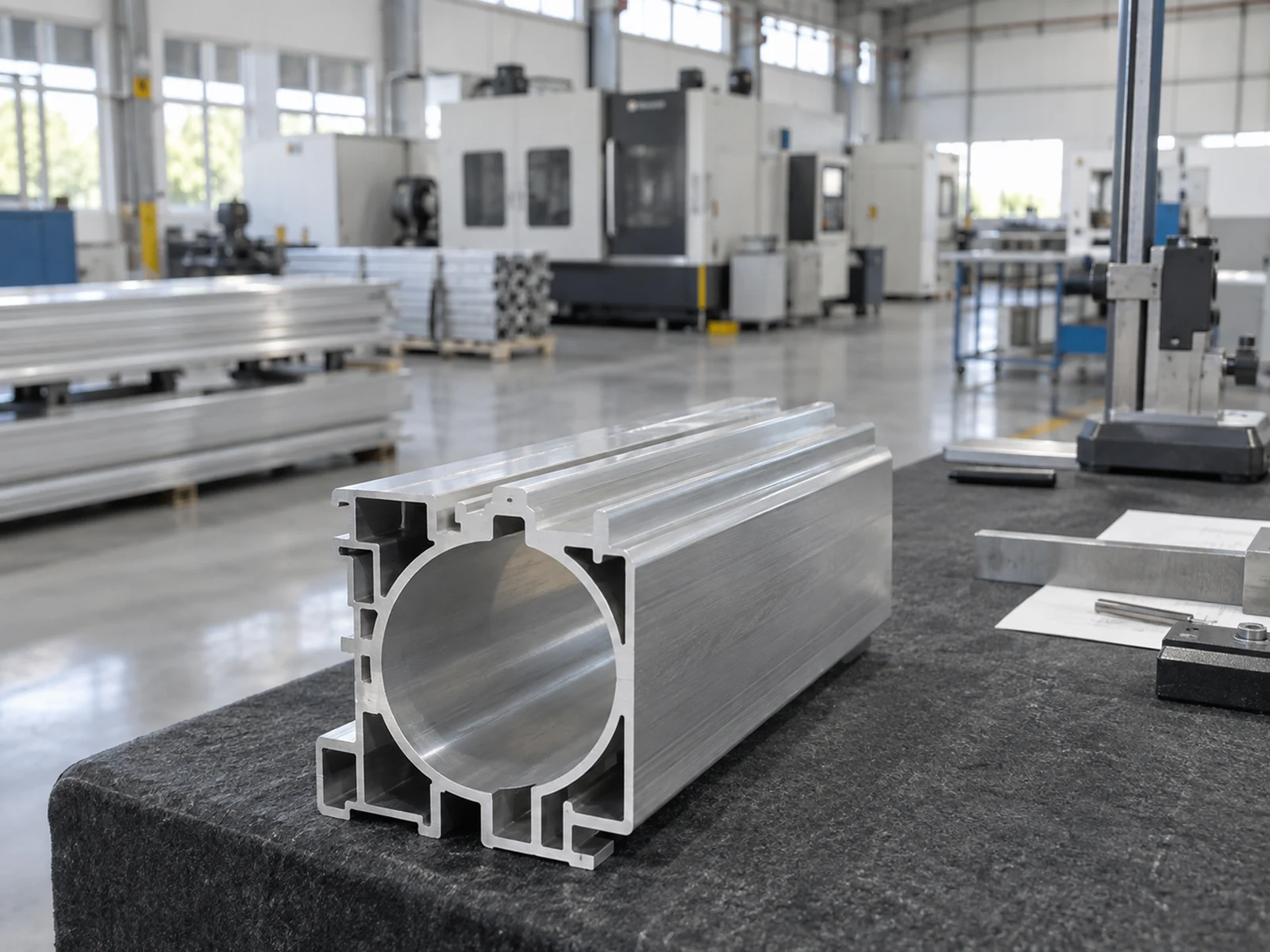
Freeze the first production lot’s identity before cutting
Define the proposed lot before work starts: part and drawing revision, alloy and temper, extrusion source or approved stock identity, cut supplier and site, stock bundle or heat, intended cutting route, fixture or support arrangement, quantity and delivery window. The buyer should know which of these matched the prototype and which did not. If a new extrusion mill is involved, run the separate stock-source approval gate; if the drawing changed, use the drawing-revision cutover rather than mixing two changes into one sample signoff.
Make the lot traceable through receipt, cutting job, inspection and package label. Avoid treating a purchase-order number as a substitute for stock and output identity when the same order may contain multiple bundles or production days. The National Institute of Standards and Technology’s supplier-selection guidance emphasizes quality documentation, production and inspection records, and the ability to identify affected groups of parts. Those are supplier-control principles to apply to the actual order, not evidence that this supplier has already passed them.
For example, a prototype may be marked P while a proposed first routine lot is L1. The buyer can compare P and L1 against the same released drawing, but a matching photograph cannot connect L1 to its input stock, fixture, inspection or shipment. The supplier needs records that make the boundary auditable. P and L1 are illustrative labels, not Jiurun customer lots.
Inspect a representative run on the intended route
Agree what must be observed before the supplier starts the first production lot. A single carefully selected piece from a manual setup may answer a fit question but leave variation across stock lengths, repeated starts, operators or shifts unknown. The buyer and supplier should choose a sampling and inspection plan that fits the drawing, order risk and production pattern. Do not invent a universal sample count or assume that a short trial proves a quoted hourly output.
Ask for a first-piece check against the released drawing and a defined method for the characteristics that matter: cut length with its datum, end squareness or angle if specified, burr or edge condition, profile deformation, visible finish and assembly fit where relevant. Record the measuring instrument and method, but distinguish instrument capability from finished-part acceptance. If a result fails, hold the affected quantity and trace back to the last accepted state before deciding on rework, replacement or concession.
Confirm the intended stock presentation and cutting setup: section orientation, support and clamping contact, blade and process route, handling after the cut, and any subsequent deburring or finishing that the purchase order assigns to the supplier. The buyer need not prescribe undocumented machine settings. The supplier should show that the process actually proposed for repeat supply, rather than a one-off demonstration, produced the inspected pieces. If the supplier intends a different site or second cut-part supplier, use the separate second-supplier qualification decision.

Use five gates for the sample-to-repeat decision
| Release gate | Buyer evidence to request | Hold when unresolved |
|---|---|---|
| Specification baseline | Released drawing, revision, sample acceptance scope and all order-specific requirements | The sample and repeat part are being judged against different or undefined criteria |
| Input and route | Stock-source and lot trace, supplier site, fixture and intended cutting/finishing route | The proposed routine route cannot be connected to the inspected pieces |
| First-lot result | Defined inspection method, actual results and fit evidence for the agreed characteristics | A critical characteristic lacks an acceptable result or a failure’s affected quantity is unknown |
| Repeat controls | In-process and final checks, nonconformance handling, records and package identity | The supplier can demonstrate a sample but cannot separate later accepted and held output |
| Commercial release | Named buyer approval, covered quantity, schedule, price basis and remaining conditions | Dispatch or invoicing would exceed the buyer’s written authorization |
The gates are a decision framework, not a claim that every customer must use the same form. A buyer may approve one identified L1 lot, approve a defined repeat route after specified evidence, conditionally release a limited quantity for a named follow-up check, or reject the lot. Record the exact scope. Do not write “production approved” when the decision only covers a prototype or a single pilot shipment.

Protect delivery while the first lot is under review
Ask the supplier to distinguish prototype pieces, inspected first-lot parts, accepted output, held output and uncut stock in its status report. A planned completion date is not an accepted-part delivery date. If the buyer needs material before full release, decide whether an authorized limited shipment is possible under the purchase terms; specify its quantity, inspection, labeling, receiver and any segregation. Do not silently ship unapproved pieces as ordinary repeat supply to preserve a promised date.
Price and timing also need a boundary. Confirm whether the quote includes first-lot inspection, retained sample, fixture preparation, extra scrap, any deburring or finish and repeat delivery packaging. Distinguish the cost of a pilot batch from the unit price for a stable run, and ask how later stock or drawing changes would be priced and reapproved. A cheap sample price does not prove routine total cost or capacity. The cut-part quality agreement helps allocate inspection, records and release authority; the receiving lot-match guide helps the buyer preserve the approved identity after shipment.
Equipment context and the next buyer request
The video below is from Jiurun Machinery’s YouTube channel. It shows general aluminum cutting equipment. It does not show this buyer’s prototype, first production lot, stock source, supplier approval, exact machine configuration, inspected result or repeat-production performance.
Send the cutting supplier a specific request: “Link the approved prototype to the released drawing; identify the proposed routine stock, site and cutting route; provide first-lot inspection and fit evidence; show lot and package trace; state which quantities are held or requested for release.” If repeated outsourced orders are prompting an in-house saw comparison, send Jiurun the actual profile drawing, alloy and temper, stock length, cut lengths, acceptance method, expected mix and delivery constraints through the contact page. Any machine suitability, process result or commercial offer must be checked against the actual stock and agreed acceptance plan.