
A buyer may already have a clean saw trial for an aluminum bumper beam and wonder whether the same result approves crash box blanks. It does not answer that second question. A crash box extrusion saw trial needs its own released part definition, samples and acceptance record, even when the same saw is proposed for both jobs. The useful comparison is which parts of the equipment trial can be shared and which part-specific evidence must be repeated.
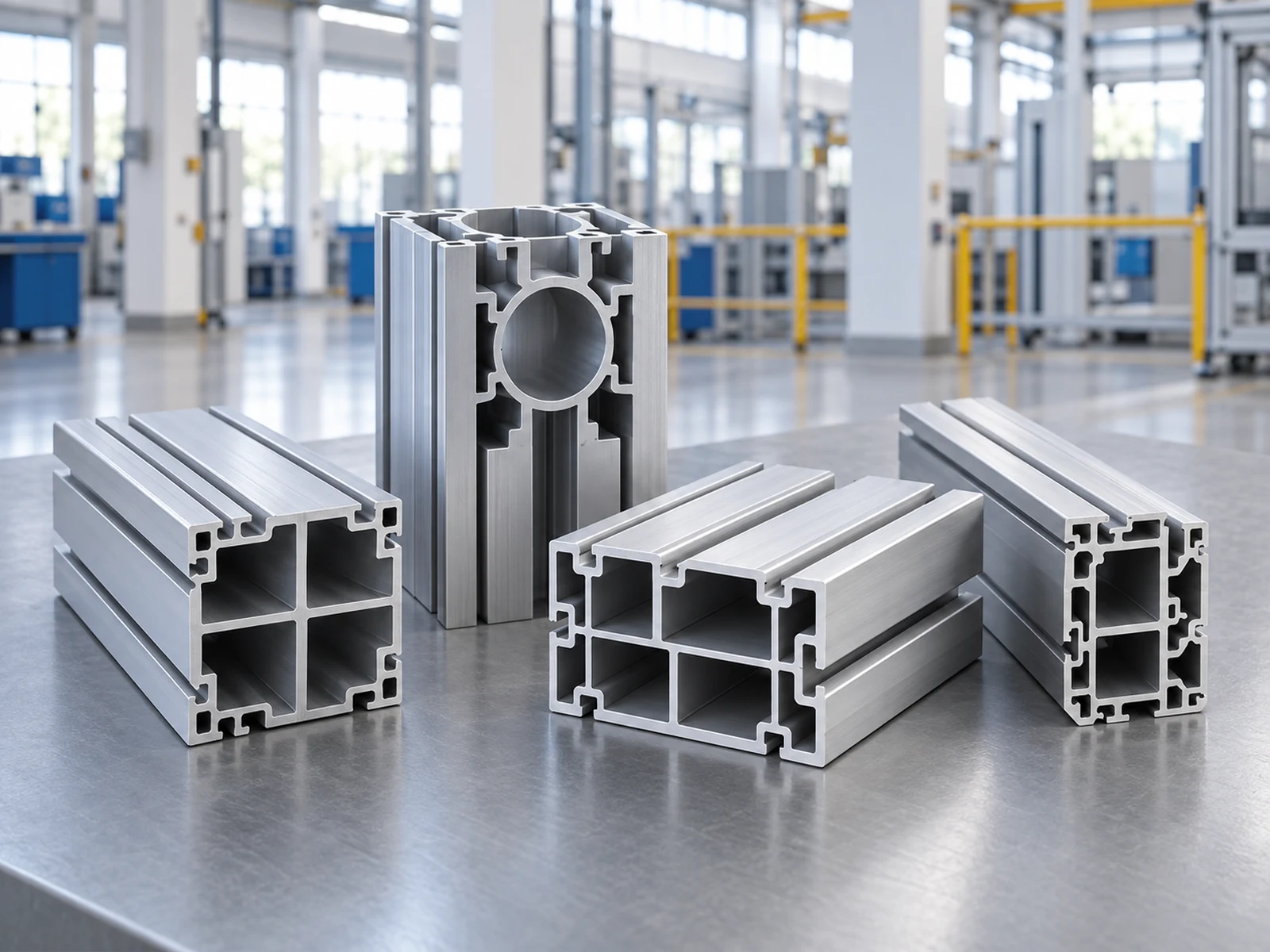
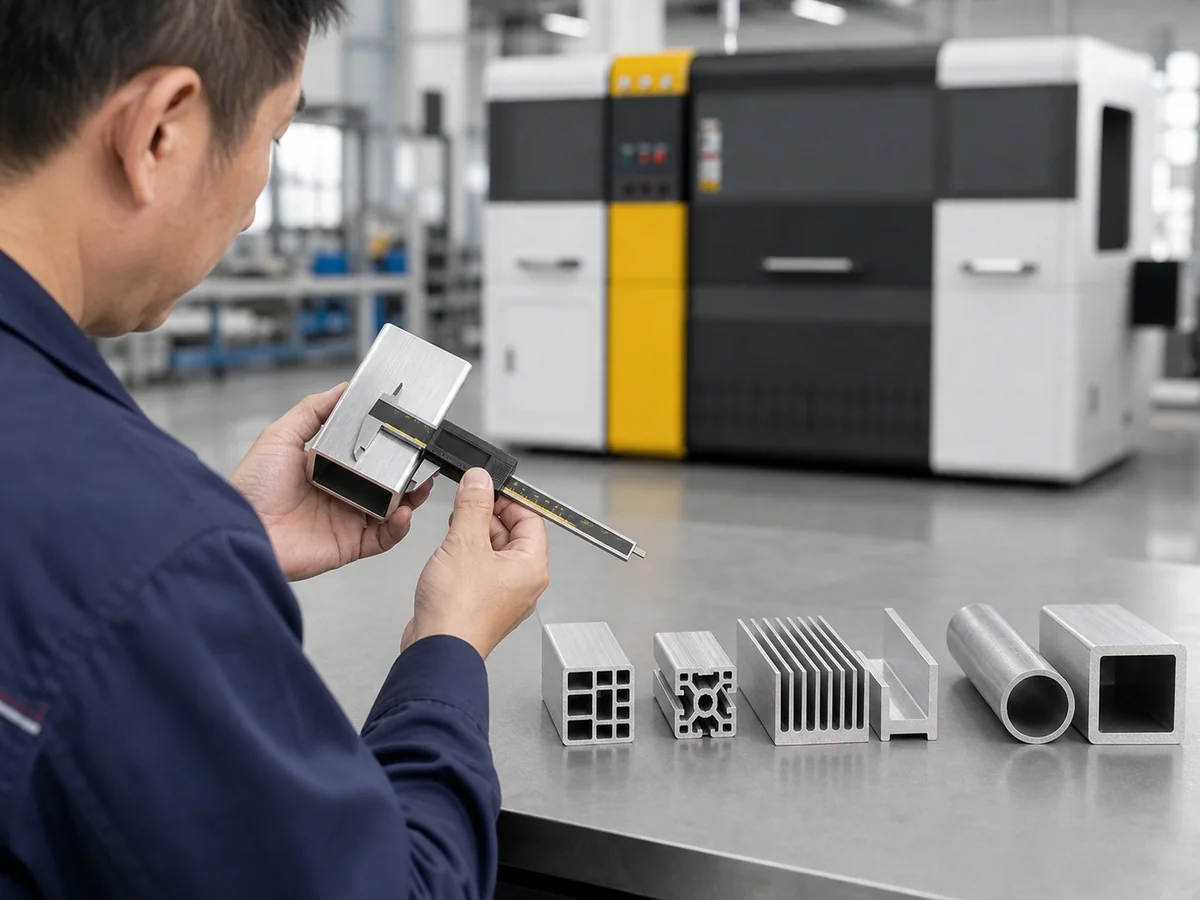
Featured image: related aluminum profile stock and cutting equipment. It is an illustrative view, not either released automotive component, a customer trial or crash-performance evidence.
Hydro identifies bumper beams and crash boxes as different crash-management components: a crash box is designed around axial energy absorption, while a bumper beam is designed to transfer forces. This describes component design intent. A saw trial checks the cutting operation; it cannot establish vehicle crash performance or approve a material grade.
Start with two released blank definitions
Put the bumper beam and crash box drawings side by side before asking a supplier to quote a common cutting cell. For each item, identify the approved extrusion section, material and condition, incoming stock form, cut length definition, end-face requirement, datum, handling restrictions and next operation. Record the revision and the person authorized to accept each blank. These inputs come from the buyer’s engineering documents; a machine catalog cannot supply them.
A bumper beam may be supplied as a straight extrusion for later forming, or as a formed part that needs trimming. A crash box may be a different, shorter multi-chamber extrusion that moves to machining, joining or another approved fabrication step. Those are examples of possible routes, not a claim about a particular customer program. Constellium describes extrusion and later crash-management assembly as separate stages, which is why the handoff after sawing needs an explicit owner.
What can the two trials share?
The supplier can use one documented machine identity, guarding review, operator method and general setup record where the hardware and operating conditions really are common. The same blade family, fixture or feed path may be proposed, but the buyer should ask for a configuration list rather than assume interchangeability. A change of stock section, wall layout, length or contact zone can change how the piece sits and clamps.
Ask the supplier to show both profiles at the intended loading, clamping and outfeed positions. Mark the permitted contact faces on each drawing. If the crash box section has internal webs or an asymmetric outer shape, make the trial use that actual approved section and orientation. A clean cut on a convenient substitute extrusion is useful for a machine demonstration, not for accepting the released blank.
Crash box extrusion saw trial: what needs a separate record?
Run a first-off and a short repeat set for each released part. Record the incoming stock identity, actual machine and blade setup, cut sequence and the measurement method. Inspect length at the specified datum, end condition at the relevant faces, visible clamp marks and handling damage. The buyer should set the limits from its drawing and downstream process. Do not turn an example saw tolerance into an OEM component requirement.
For the crash box extrusion saw trial, include the end and orientation used by the next operation, then confirm that the handed-off piece can be located there without reinterpreting the drawing. If the next operation adds holes, triggers, weld features or heat treatment, name that operation and its owner; do not present a saw-cut sample as evidence those later features or crash behavior are approved. For the bumper beam, keep its own formed or straight-stock route and measurement record. The two records should remain traceable to their separate revisions.
A purchasing decision before the RFQ goes out
Send the saw supplier two separate sample packets and request a price and trial plan that identifies shared equipment and part-specific tooling. The packet for each blank should include a revision-controlled drawing, representative stock, required output rate, allowed contact zones, cutting and measurement definitions, and the named downstream recipient. Ask the supplier to flag any missing input before it prices the fixture.
Use a joint demonstration only if both real sections and their separate acceptance steps are included. If one released section is unavailable, quote that work conditionally and leave its capability unaccepted. The conclusion should be explicit: the proposed saw may serve both programs, but the approved bumper-beam cut does not qualify the crash-box cut by itself.
For a deeper bumper-beam-specific trial plan, see our bumper beam extrusion saw trial guide. For measurement ownership, use the saw acceptance measurement guide.
Equipment footage and its limits
The Jiurun Machinery channel video below shows a JR-455Q aluminum cutting machine as a general equipment example. It is playable equipment footage, not a crash-box or bumper-beam sample trial. It does not establish a material, machine configuration, customer program, dimensional result or crash performance for either part.
Ask for a two-part trial plan
Contact JiurunCut with both released drawings, representative extrusion samples and the next-operation requirements. Ask us to identify the common saw setup, the part-specific support and inspection steps, and what still needs an approved customer trial. That gives purchasing a quote whose scope can be checked against each part.
Frequently asked questions
Does a saw-cut crash box blank prove energy absorption?
No. Axial crush behavior belongs to the approved component design, material, fabrication and validation program. A saw trial can document the cut blank and its handoff.
Can the same machine cut both sections?
Possibly. The supplier needs the released profiles and required outputs to assess capacity, workholding, access and part handling. Test each actual section before accepting the shared setup.
Which record should purchasing request first?
Request the two revision-controlled blank definitions. Without them, a supplier cannot distinguish a shared equipment check from separate part acceptance.