
A cleanroom frame extrusion saw trial should answer a narrow purchase question: can the quoted saw prepare the released aluminum frame members so the receiving team can identify them, inspect the cut ends, and dry-fit the intended corner? It cannot qualify a cleanroom, prove a pressure boundary, or certify an assembled wall. Those outcomes depend on the complete system and its project-specific acceptance process. For a saw quotation, the useful evidence is a traceable member kit, agreed inspection references, and a repeatable cutting sequence.
Start with the actual drawing revision and the stage your factory retains. A cleanroom builder may receive finished panels, doors and connectors while cutting only selected rails, posts or tracks. Another project may deliver pre-cut members and require no production sawing at all. Count only the members that the buyer has released for the proposed saw stage. The trial below is a way to test that stage before committing to a machine configuration.
Freeze the member kit before choosing the sample
Give each sample a member code, drawing revision, extrusion cross-section, material and finish condition, stock length, required cut length, end orientation and receiving assembly. Mark whether the saw cuts both ends, one end, or a preparation blank for later machining. Do not silently treat a drilled hole, connector slot, gasket seat or completed panel opening as a saw output. The buyer should also identify the face that remains visible after assembly and the face that can safely contact a stop or clamp.
An official PortaFab cleanroom wall installation manual distinguishes tracks, corner trim and panel connectors, and shows that panel interfaces depend on the particular wall system. Its dimensions and installation method belong to that product. They are a useful reminder to obtain the buyer’s released drawing, not a universal cutting specification for another system.
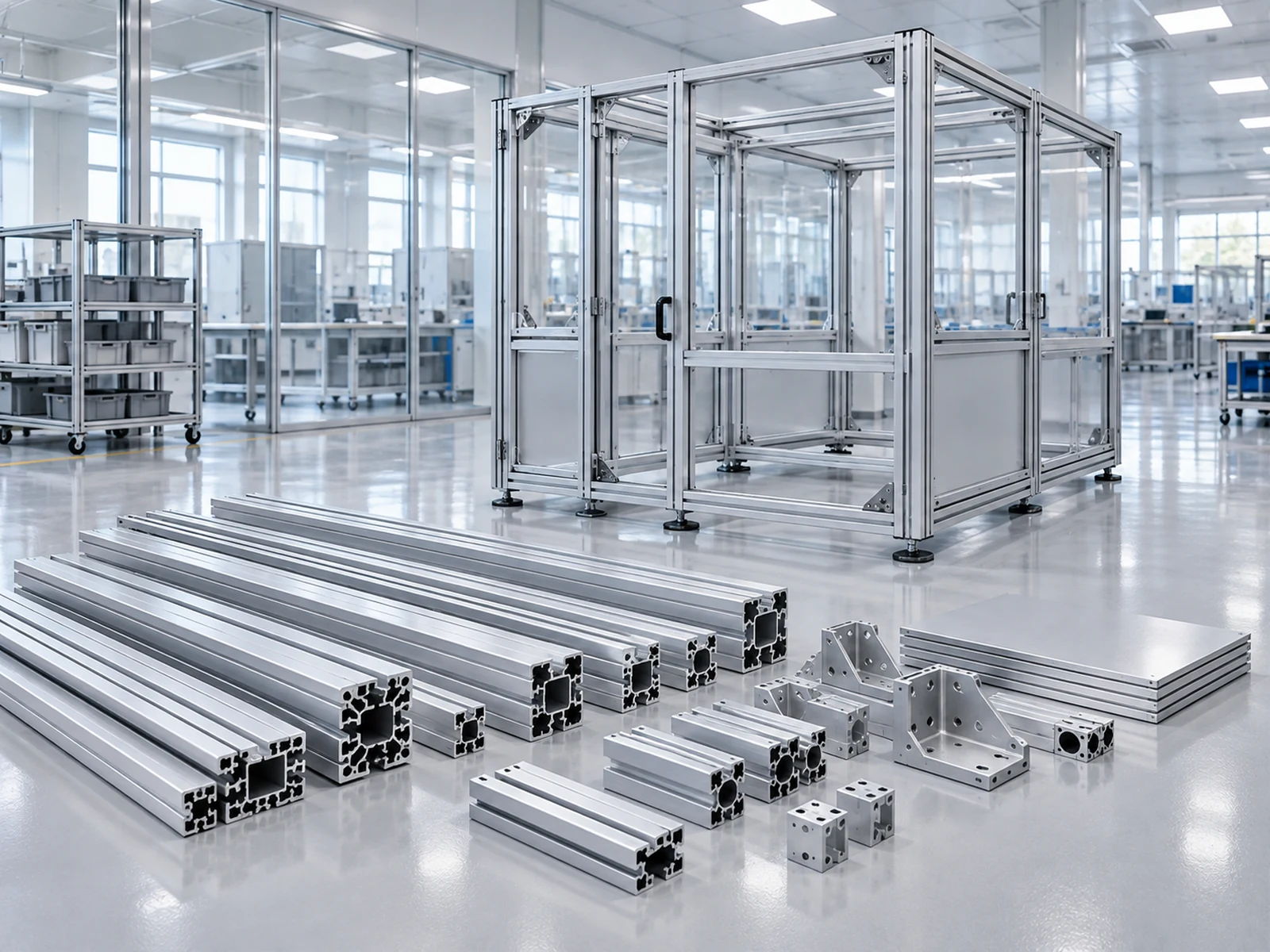
Cleanroom frame extrusion saw trial: choose a risk-led sample matrix
A single easy straight cut is not enough when the order includes different section heights, thin walls, channels, visible faces and joint orientations. Build a small matrix from the released kit. Include the longest member that challenges support, the shortest permitted member that challenges holding, a representative hollow or slotted section, and any distinct miter or end direction actually required. If a condition is absent from the released order, leave it out rather than inventing a “worst case.” Label every sample with its original stock identity and intended downstream joint.
- Stock and stage: record the incoming extrusion condition, cut allowance, protective film, finish and any pre-existing features. Identify later drilling, milling, deburring, coating or assembly as separate work.
- Cut references: name the drawing datum, measured length reference, viewing face, end orientation and inspection instrument agreed by the buyer.
- Support and restraint: record where the member rests, how it is clamped without distorting a hollow wall, and how long stock is supported before and after the blade.
- Receiving interface: identify the connector, corner, track or panel opening used for a dry fit and who will judge the fit.
Ask the supplier to mark which samples fit the proposed standard saw and which require different fixturing, blade selection, angle capability or handling. The result is a configuration discussion, not a blanket promise that one machine handles every cleanroom extrusion.
Inspect the end against a named reference
Measure a cut member from the datum named on the drawing. Do not substitute feed-axis repeatability for accepted finished-part length. Record which end was cut first, whether the stop contacted a finished or unfinished face, and whether a miter was referenced from the long point, short point or a separate gauge face. If the section can rotate in the clamp, make the orientation visible in the sample record. Those details explain a difference that a single length number cannot.
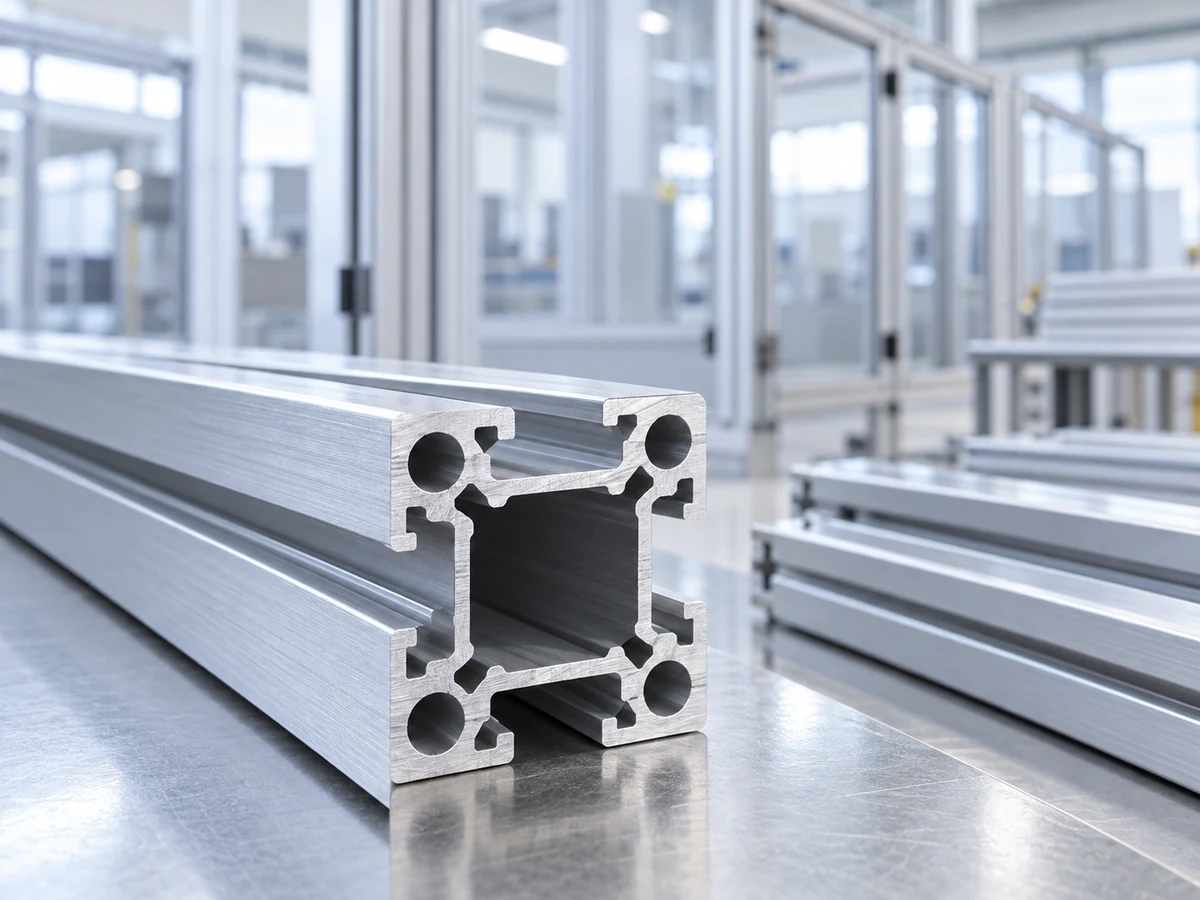
On the cut end, inspect the surfaces that matter for the next operation: burrs near a connector path, smeared material at a hollow wall, chipped visible finish, squareness or miter relation to the datum, and any distortion from clamping. Set the acceptance limits from the released drawing and receiving process. A photo can document a condition, but it does not replace a measured record or the buyer’s sign-off. If a rough cut is intentionally left for later machining, judge it as a blank at that stage.
Dry-fit the corner without claiming room performance
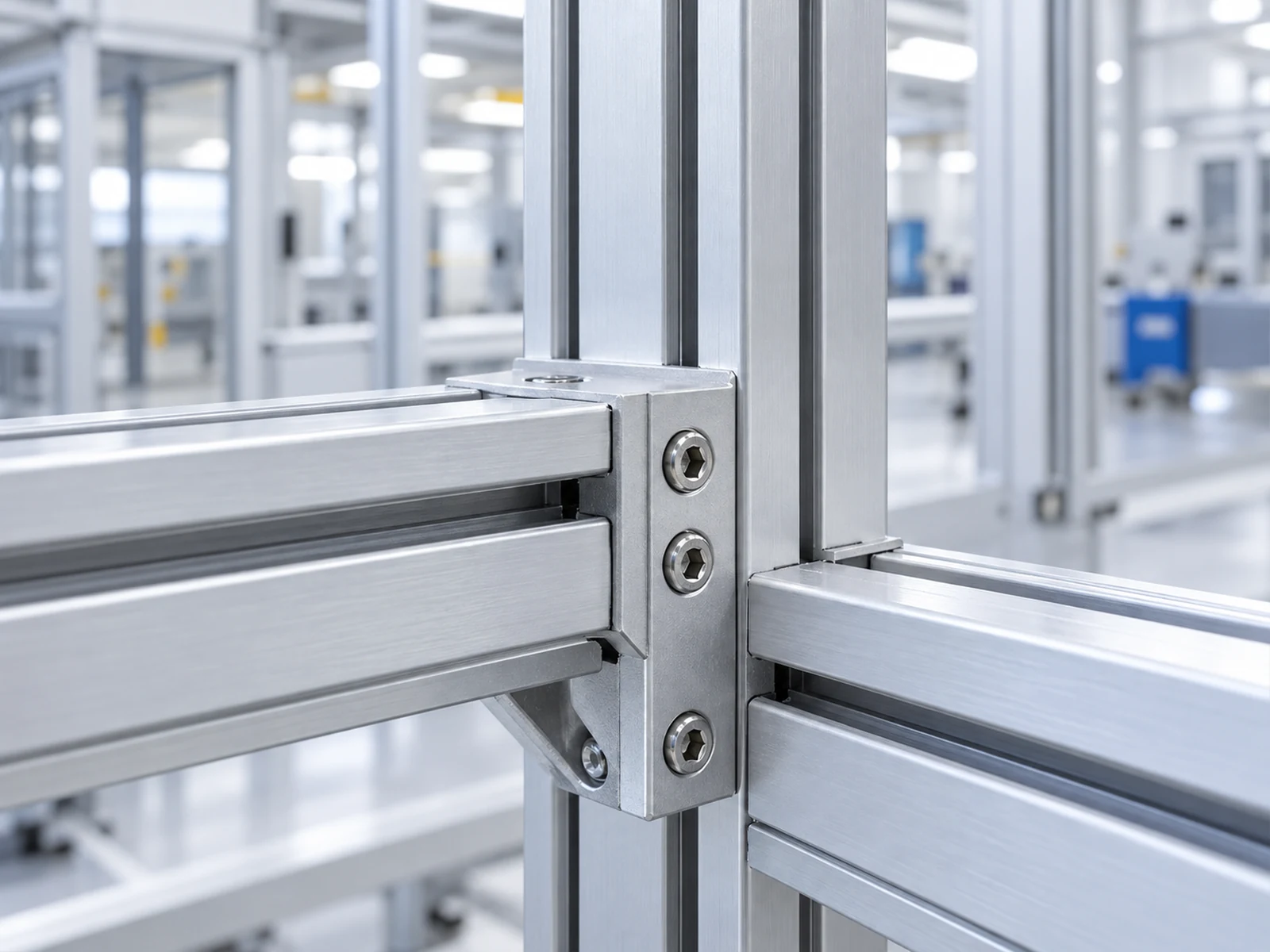
A clean cut end is necessary but does not by itself show that the prepared members belong to the intended assembly. Use the actual released connector and two mating members to check seating, visible face alignment, end gap and fastener access at a representative corner. If a panel or door frame is part of the handoff, place a controlled mating component next to the frame and record only the interface that this saw-stage trial can observe. Do not infer gasket sealing, air leakage, particle control, structural capacity or cleanroom classification from a corner dry fit.
Photograph both sides of the joint with a member code and revision in the record. If the fit fails, separate the possible causes: incorrect member identity, an end referenced from the wrong face, a cut-length error, a miter orientation error, a downstream-machining issue, or an assembly component outside the saw quote. Assign the correction to the proper process owner before changing the machine specification.
Repeat the setup, then separate pass from unknown
Run more than one member from the same setup if the planned production order includes repetition. Record the first accepted part, later parts and any changeover between distinct sections. Note blade and fixture identity, orientation, support arrangement, operator adjustments, measured results and rejected pieces. A changed clamp or stop is a new setup and should be labeled as such. The aim is not to claim a universal cycle time; it is to learn whether the proposed configuration can reproduce the buyer’s accepted reference under the agreed sample conditions.
Use three result labels: pass for this released sample, fail with an identified cause, and not tested. “Not tested” matters when a quote contains an optional angle, short-part fixture or automatic loading device that never appeared in the trial. Request a separate demonstration or keep that capability conditional in the purchase order. Do not turn a demonstration on one profile into acceptance of every profile family.
Turn the trial into a comparable saw RFQ
Ask each supplier to quote against the same member matrix and inspection sheet. State the incoming stock condition, maximum and minimum released members, required end types, finish protection, required manual or automated handling, accepted cut-end condition, and the receiving dry-fit step. Ask what is included in the machine price: blade and guarding, clamps and profile-specific supports, angle setting, measurement method, chip management, training and sample support. Mark every optional fixture or modified configuration separately. Do not assume the base machine includes it.
Compare the returned offers by the accepted sample and unresolved risk, not only by advertised blade size or feed accuracy. One supplier may meet the straight member but leave the short connector rail untested. Another may need a dedicated support or a different clamping approach. The buyer should decide whether to release the saw purchase, request another sample, or retain an existing preparation route until the interface evidence is complete. For whole-factory sourcing scope, see the cleanroom system manufacturing saw guide; for initial profile identity questions, see the cleanroom aluminum profile RFQ guide.
Video: a general equipment view
The following video from Jiurun Machinery shows general aluminum-saw equipment and material support. It is a process illustration only. It does not show this cleanroom member kit, a quoted model or configuration, a customer, a cleanroom trial, or any cut-quality or room-performance result.
Send the evidence needed for a useful response
When contacting Jiurun Machinery, send the released profile drawings and revisions, section photos, stock and finish condition, cut-length and angle list, expected batch mix, receiving corner or panel interface, and the pass/fail limits used by your assembly team. Tell us which operations occur before and after sawing. We can then discuss an appropriate industrial aluminum-cutting saw and identify which sample conditions require a real trial. Any proposed capacity or configuration must be confirmed against the specific machine and the actual member kit before an order is approved.