
Cleanroom aluminum profiles are frame components specified for a particular cleanroom application. Ordering them requires more than a profile size and a cut length. The quote also needs the correct surface configuration, joint interfaces, delivered condition and evidence that belongs to that stage of the project.
A cut-member supplier and a complete cleanroom-system supplier may be offering very different deliverables. Make that difference visible before comparing prices. This guide identifies four RFQ gaps that can leave a seemingly complete frame order unclear.
Define the frame order in four layers
- Name the exact profile and its exposed surfaces.
- Connect member lengths to the approved assembly interfaces.
- State which operations and delivery steps are included.
- Match each acceptance claim to the evidence it actually needs.
On this page
Gap 1: cleanroom aluminum profiles without a surface configuration
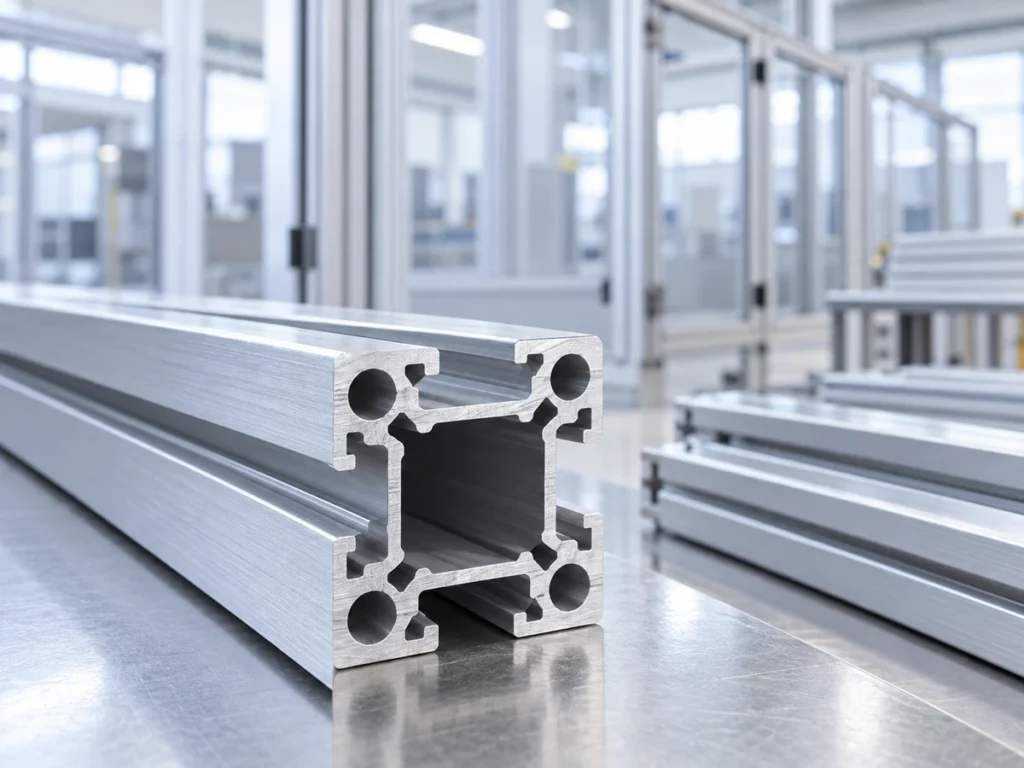
Two profiles with the same outside dimensions can have different exposed groove arrangements. A section name such as “square aluminum profile” does not tell the supplier which sides need to be open or closed.
item’s overview of aluminum profile types distinguishes open and closed grooves and describes smooth profile variants used in cleanroom production. The relevant buying question is which exact configuration the approved assembly requires.
Mark the orientation on a section view. Identify the side facing the occupied space, the panel side and any connection side. If the specification calls for a closed surface, name the approved profile or closure arrangement instead of leaving the supplier to choose.
Keep surface finish separate from groove configuration. An anodized description alone does not define whether a groove is open, how a joint closes or what a later cleaning procedure permits. Include the required finish and the document that controls its acceptance.
Also define which surfaces must remain protected through cutting and handling. A drawing note should distinguish an appearance requirement from a dimensional feature. If there is a protective film, specify its required condition at delivery; do not assume that every film can remain through subsequent processing.
Gap 2: assembly dimensions without panel and joint interfaces
A frame’s outside width is not automatically the cutting length of every member. Connectors, upright positions, panel locations and end treatments determine how the member fits into the assembly.
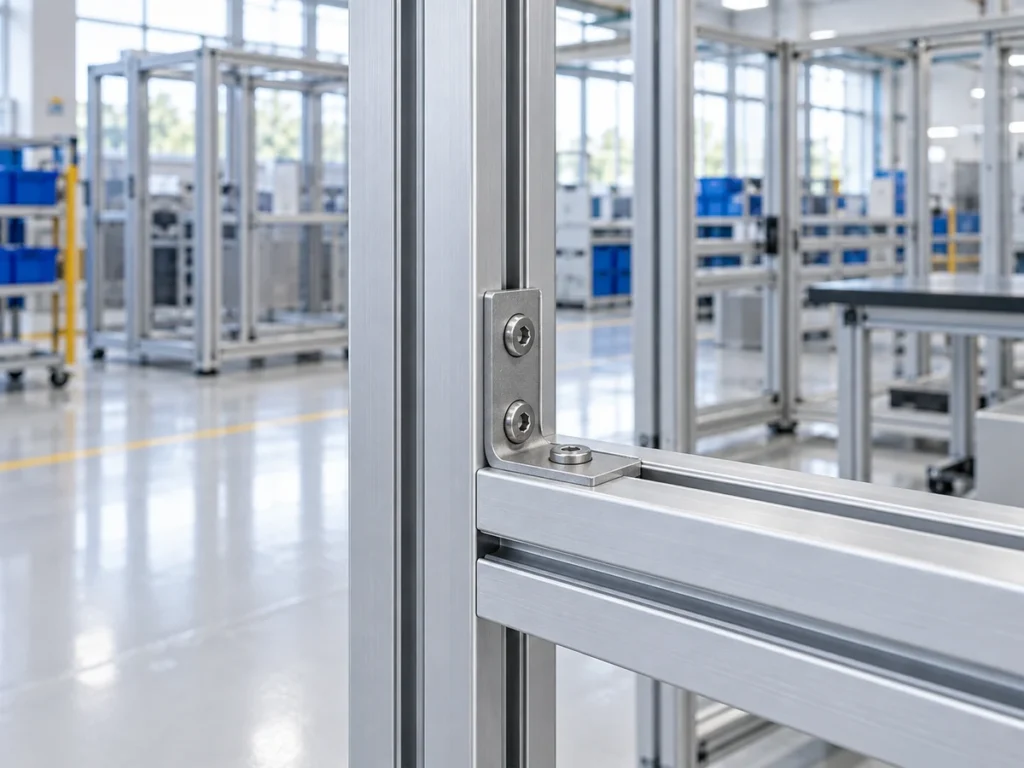
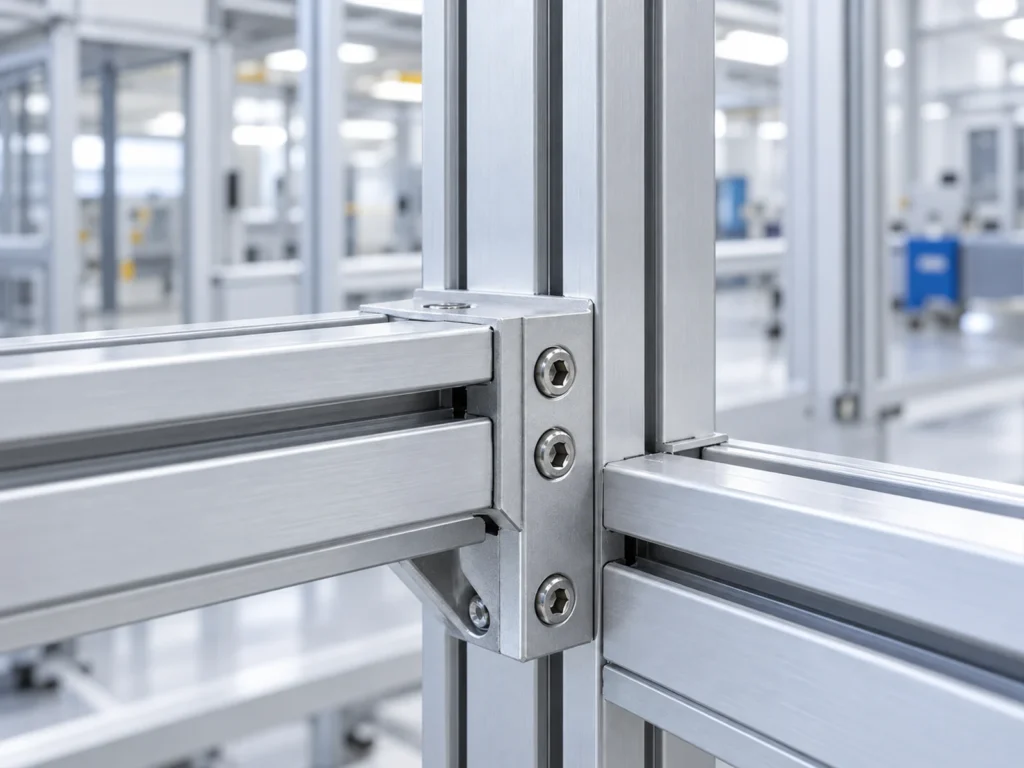
For a panel-support frame, request the approved assembly view as well as the member list. The view should show the intended connection arrangement and which dimensions control the completed frame. A photograph of a bracket is useful context, but it does not replace that drawing.
Identify any machining beyond sawing. Drilled access holes, tapped ends, panel-retaining features and end-cap arrangements belong in the scope when they are required. State who supplies the compatible hardware and who approves the interface.
A covered groove or an end cap can change access to a connection. Resolve installation order with the assembly owner. Do not solve an unclear joint by adding an unapproved hole or changing the cut length on the shop floor.
For a mixed frame kit, give each member its own identity and orientation. Two pieces can have the same length but different open faces or later features. A shared length does not make them interchangeable. Our aluminum frame kit guide explains how to keep member quantities and identities separate.
Gap 3: no defined supplied condition
“Cut profiles for a cleanroom frame” can mean raw stock lengths, deburred blanks, machined members or parts prepared for a specified assembly process. These are different orders. List the included operations in their intended sequence.
Specify the edge condition after cutting, including any agreed deburring or chamfer requirement. A cover fitted later is not a reason to leave the underlying cut condition unspecified. The required edge treatment should be supported by the drawing and the assembly process.
Then assign responsibility for cleaning, protection, packaging and transport. Name the applicable procedure when a particular delivered condition is required. The cutting supplier should know whether it is supplying ordinary protected parts or meeting a defined preparation and packaging requirement.
Do not add a generic cleaning recipe to the RFQ as a substitute for the project specification. Compatibility with the chosen material, finish, panel, seal and working environment belongs with the responsible system or process owner.
Check how identity will survive those steps. A label attached to an exposed face, for example, may conflict with the delivery requirement. Agree a labeling method and package reference that preserve traceability without changing the approved surface condition.
Gap 4: component inspection treated as whole-system evidence
Separate acceptance of a cut member from acceptance of the assembled cleanroom. A correct length and a documented material identity answer component questions. They do not demonstrate the air cleanliness of an installed room.
The public abstract for ISO 14644-1 concerns classification of air cleanliness by particle concentration. That is a different subject from confirming a frame member’s drawing dimensions. This article does not reproduce the standard or specify a classification procedure.
| Acceptance question | Evidence to define |
|---|---|
| Was the correct member supplied? | Part identity, drawing revision and the agreed material and finish records. |
| Does the cut part meet its drawing? | Defined features, measurement method and recorded results for the supplied stage. |
| Does the completed system meet its requirements? | System-level evaluation assigned to the responsible project owner. |
item’s cleanroom construction overview discusses profiles within a broader system that can include panels, wall structures and air-handling components. This helps explain why a component quote should identify its own boundary clearly.
Ask the supplier to state which records it will provide and which requirements remain outside the order. A photo of a smooth surface, a correctly cut member or an assembled bracket cannot establish an air-cleanliness class.
Resolve a fictional frame order before cutting
Imagine a buyer requests a frame with an outside width of 1,200 mm and a depth of 800 mm. The quote lists square profiles, but the drawing does not show connector overlap, panel position or end-cap interfaces. These numbers are a fictional procurement example, not a validated design.
The supplier cannot derive approved member cut lengths from those two assembly dimensions alone. The next step is to obtain the controlled assembly drawing and identify which member ends meet which interfaces. Guessing a subtraction would hide the missing design decision.
The buyer then identifies one member as P30 and marks its required closed face on the drawing. The RFQ can now distinguish P30 from a similarly sized member with open grooves facing a different direction. Keep the approved part identity through cutting, later operations and packing.
Finally, record the delivery boundary: which cut and machined features are included, which preparation procedure applies and which assembly or system checks belong to the project owner. This makes two offers comparable without implying that a cut-part supplier has qualified the whole cleanroom.
Build a clear RFQ package
- Exact profile reference, section view, orientation and required finish.
- Controlled member drawings, assembly interfaces and quantities by part.
- Cutting and later operations, including the agreed edge condition.
- Applicable preparation, protection, packaging and identification requirements.
- Required component records and the owner of system-level acceptance.
If the drawing is still changing, mark the RFQ as a review package and identify the unresolved items. Release a cutting order only against the agreed revision. Use our cutting-machine RFQ checklist when reviewing how the actual stock, handling and cut requirements relate to equipment selection.
Buyer questions
Are ordinary T-slot profiles automatically suitable?
Suitability depends on the approved application and its surface, interface and preparation requirements. Confirm the exact configuration with the responsible system owner. A generic profile name or photograph is insufficient.
Does anodizing prove a cleanroom classification?
No. A finish description identifies a component characteristic. It does not establish the particle concentration classification of an installed cleanroom.
Can I order using only the outside frame dimensions?
Use them as assembly requirements, then provide the controlled member and interface information. Do not treat them as approved cut lengths unless the drawing explicitly defines that relationship.
What should I send JiurunCut for a cutting review?
Send the section drawing, required part lengths, quantities, orientations and supplied-stage requirements. Add the approved connection details when they affect cutting or later features. Request a cutting review with the unresolved items marked so that equipment and delivery scope can be discussed clearly.