
Bonded vs extruded heat sinks should be compared using the complete construction, drawing and application requirements. A fin count or an attractive profile photo is not enough to approve a cooling solution or compare two suppliers’ prices.
First ask what each supplier is delivering: a cut profile, a machined part or an assembled heat sink. Then check the required geometry, supporting thermal information, finishing scope and release records. The five questions below help keep those requirements visible in an RFQ.
On this page
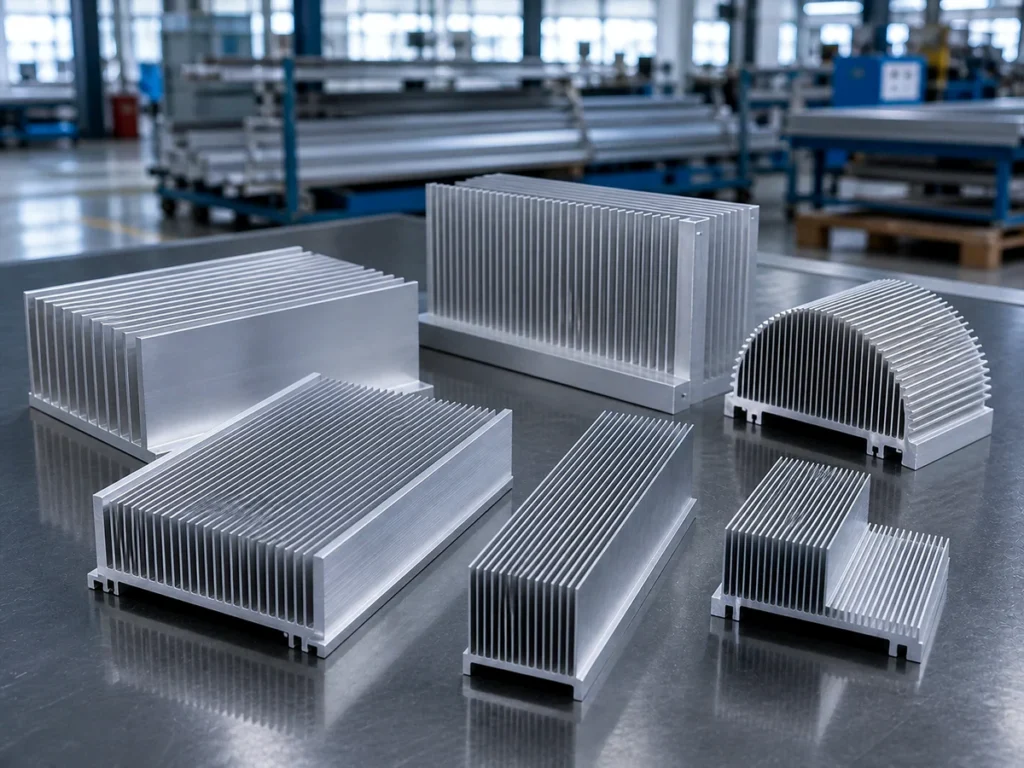
1. Identify bonded vs extruded heat sinks by construction
Wakefield Thermal’s bonded fin overview describes individual straight fins cut and bonded into a grooved base plate. It discusses this construction where the required combination of heat sink size, fin height and fin density makes a simple extrusion impractical.
The manufacturer’s thermal extrusion overview describes aluminum passing through a die to form the profile. It identifies cutting to the required length and later fabrication, including holes and pockets, as subsequent operations.
This distinction identifies a construction route. It does not select the correct heat sink for your project or prove that one quotation will outperform another.
State what arrives at your receiving desk
Ask each supplier to name the delivered item and its product reference. A stock extrusion price and a price for a completed bonded assembly concern different scopes. Write the included operations beside each line before comparing cost.
- Stock or cut profile: identified section and ordered length.
- Machined component: released geometry and included operations.
- Assembled heat sink: identified construction and assembly scope.
- Completed cooling package: explicitly listed accessories and verification scope.
These are quotation categories, not claims that every supplier offers all four. Request an explicit response for the actual item being purchased.
Keep a proposed construction change separate from the accepted design. Have the responsible thermal and mechanical teams review it before ordering, and record which drawing or specification changes are required.
2. Define the drawing features and delivery stage
Provide the envelope dimensions, mounting arrangement, mating surfaces and required tolerances from the released drawing. Keep the part revision visible on both the enquiry and the supplier’s response.
Ask whether the quote includes machining of the mounting face, holes, pockets and other specified features. State which features must be delivered complete and which remain for a later operation.
Separate length from the complete part definition
A cut length is only one field in the drawing. Retain the orientation and reference surfaces needed to identify the finished part, especially where a family of heat sinks uses a common section with different later features.
Use the finished-length datum guide to communicate the cutting reference. Keep the drawing’s other requirements alongside it instead of allowing the cut list to replace the complete part definition.
For a bonded construction, ask the supplier to identify the approved base and fin arrangement in the offered assembly documents. Record any proposed construction or material alternative so the responsible team can review the actual offer.
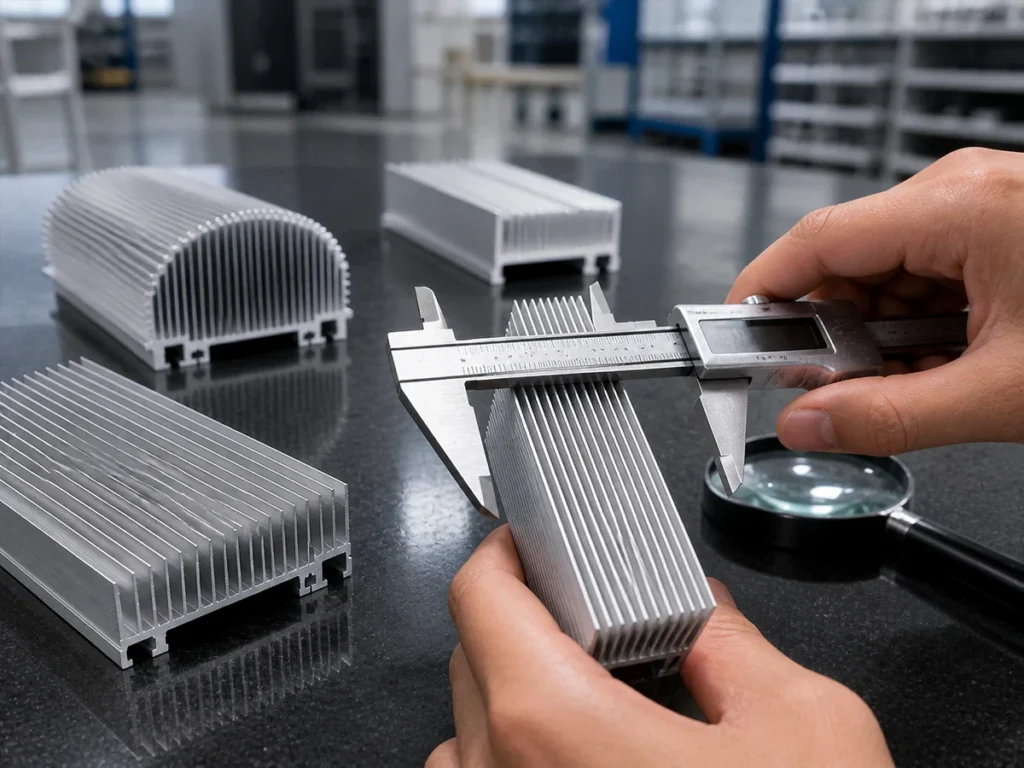
Keep the inspection stage visible
State whether dimensional requirements apply to a blank, a machined component or the delivered assembly. If the order spans several suppliers, identify who supplies each required inspection record.
A dimensional report should name the part and revision it concerns. Have the responsible team resolve an unexplained difference between the supplied record and the released requirement before closing that field.
3. Compare thermal information under identified conditions
Ask the thermal supplier which product configuration its performance information represents. Retain the relevant report, calculation or catalog reference together with its stated conditions.
For the project review, request the fields the responsible team needs: heat source, installation arrangement, ambient conditions, cooling arrangement and the temperature or other acceptance requirement. Treat this as an information request rather than a new design prescribed by the cutting supplier.
Read natural and forced convection labels
Wakefield’s bonded fin overview discusses natural and forced convection applications. If the offered data distinguishes those conditions, keep the distinction visible. Do not remove the stated airflow or installation basis when copying a result into a comparison sheet.
Ask the reviewer whether the supplier’s evidence represents the project’s intended configuration. A favorable catalog entry can be useful information while still leaving that project review open.
Where the RFQ specifies testing or analysis, identify who performs it, the configuration reviewed and the deliverable included in the quote. If an offer excludes that work, record the exclusion before comparing its price with a more complete scope.
The thermal conductivity guide addresses material-property information. Keep that property record separate from evidence for a completed heat sink in an identified cooling arrangement.
4. Confirm finishing, accessories and assembly scope
List the finish requirement and the surfaces it applies to. Include any approved masking, mating-face or marking instructions in the project documents. Ask the supplier to identify exceptions to those instructions.
If a fan, bracket, hardware or other accessory is required, list its product reference and quantity. Do not assume that an accessory shown beside a heat sink in a catalog is included in the quoted item.
Keep the assembly boundary clear
Name which supplier delivers each component and who completes the assembly. Retain the released instructions for the actual product. A purchaser should not invent bond, mounting or interface procedures from a general article.
For finned aluminum parts, describe the required end condition and handling expectations. Our thin-fin cutting guide focuses on the preparation discussion. It does not approve the thermal design or the condition of a fin-to-base joint.
Where the finish scope is not settled, list it as an open requirement. Resolve it with the responsible team before the order is released rather than letting each supplier make a different assumption.
5. Agree the evidence needed for release
Organize the acceptance package by requirement. Keep dimensional inspection, finishing records, assembly documentation and specified thermal evidence in separate fields with a clear connection to the ordered item.
A practical release checklist
- Identity: offered product, drawing and revision match the approved order.
- Geometry: required features have the agreed inspection evidence.
- Finish: the identified surfaces and finish scope are documented.
- Assembly: included parts and supplied instructions match the approved configuration.
- Thermal review: the authorized team has reviewed the required evidence and conditions.
Use the first article inspection guide to organize the initial release record. Mark unresolved fields as open instead of allowing one dimensional approval to close the entire cooling requirement.
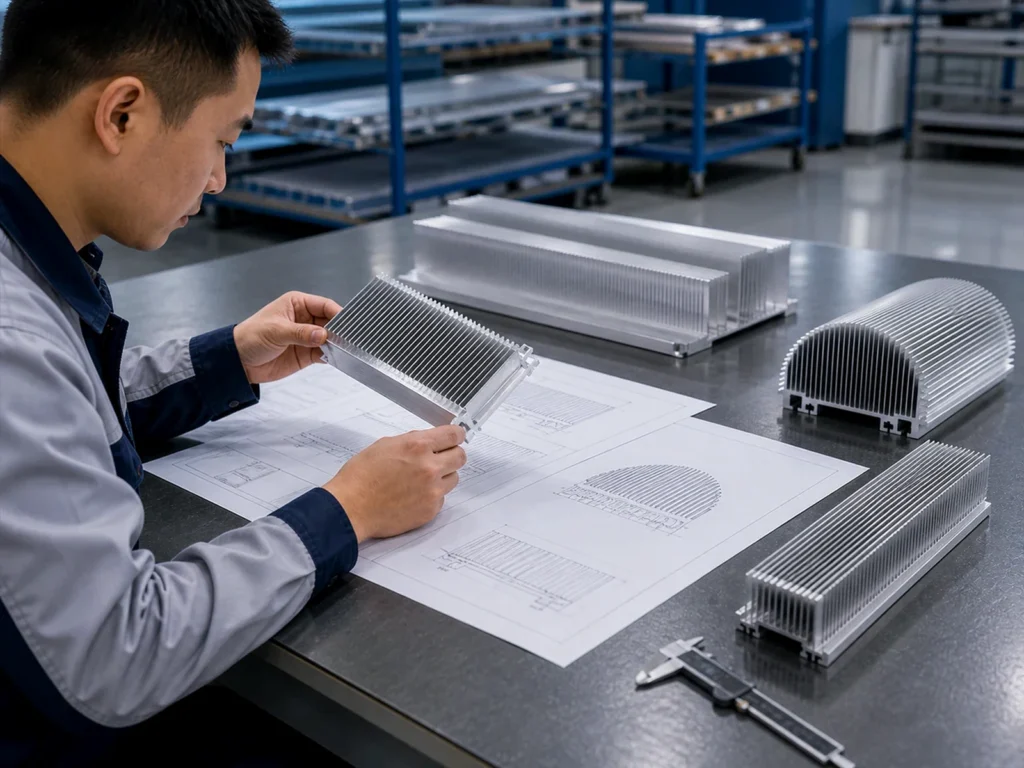
Control changes after the first approval
If the supplier proposes a different base, fin arrangement, material, finish or construction, record the change and the affected documents. Ask the responsible team which evidence must be reviewed again.
Preserve the previous approval with its original configuration. Update the accepted revision after review so the purchasing record does not contain two conflicting definitions of the delivered item.
Buyer questions
Is a bonded heat sink always better than an extrusion?
No universal choice follows from the route name. Compare the approved configuration, application requirements and relevant evidence for the actual project.
Can a photo establish the manufacturing route?
Use the supplier’s identified construction documents. A finned section photo helps explain geometry but does not prove the method or joint quality.
Does a cut-profile quote include a finished heat sink?
Only the listed scope is included. Confirm machining, finish, assembly, accessories and verification explicitly before comparing prices.
Can material conductivity approve cooling performance?
Keep material-property information and the completed cooling configuration review as separate requirements. Obtain the evidence the responsible thermal team specifies.
Discuss the aluminum preparation stage
Contact JiurunCut with the identified aluminum section or blank, cut lengths, quantities and required end condition. Include the next-operation scope so the cutting review fits the complete manufacturing plan.