
Boat windshield aluminum frame cutting is a component operation inside a marine glazing system. A saw can prepare identified straight extrusion members and mitered ends. It cannot bend a wraparound rail, form or certify the glazing, establish a watertight seal, or approve the installed windshield. A useful saw RFQ begins with the windshield maker’s released member drawings and ends with measured cut parts that the system owner can accept.
This guide is for an OEM, marine glazing supplier or frame fabricator deciding whether to cut approved aluminum members in-house. It is not a windshield design, boat modification, installation or safety procedure. The designer and glazing supplier remain responsible for the complete assembly and its applicable requirements.
Confirm the frame route before quoting a saw
Marine windshields may combine straight, mitered, bent and separately joined members. Wellste’s boat-windshield extrusion description identifies mitered and radiused frame possibilities, while Taylor Made describes curved tempered glass, aluminum-extrusion welding and post-cut finishing among its broader manufacturing capabilities. These are supplier examples, not a universal boat-windshield bill of materials or proof that every member can be sawn to final shape.
Ask the product owner which parts actually arrive at the saw: long straight extrusion, pre-bent profile for an authorized trim cut, a prefinished member, or a bought prepared kit. Mark every bent, welded, machined, coated and glazed step that occurs outside the saw quote. If the job is a replacement windshield, establish whether the original manufacturer supplies a complete approved assembly instead of releasing an independent cutting route.
Release the member identity and the accepted cut stage
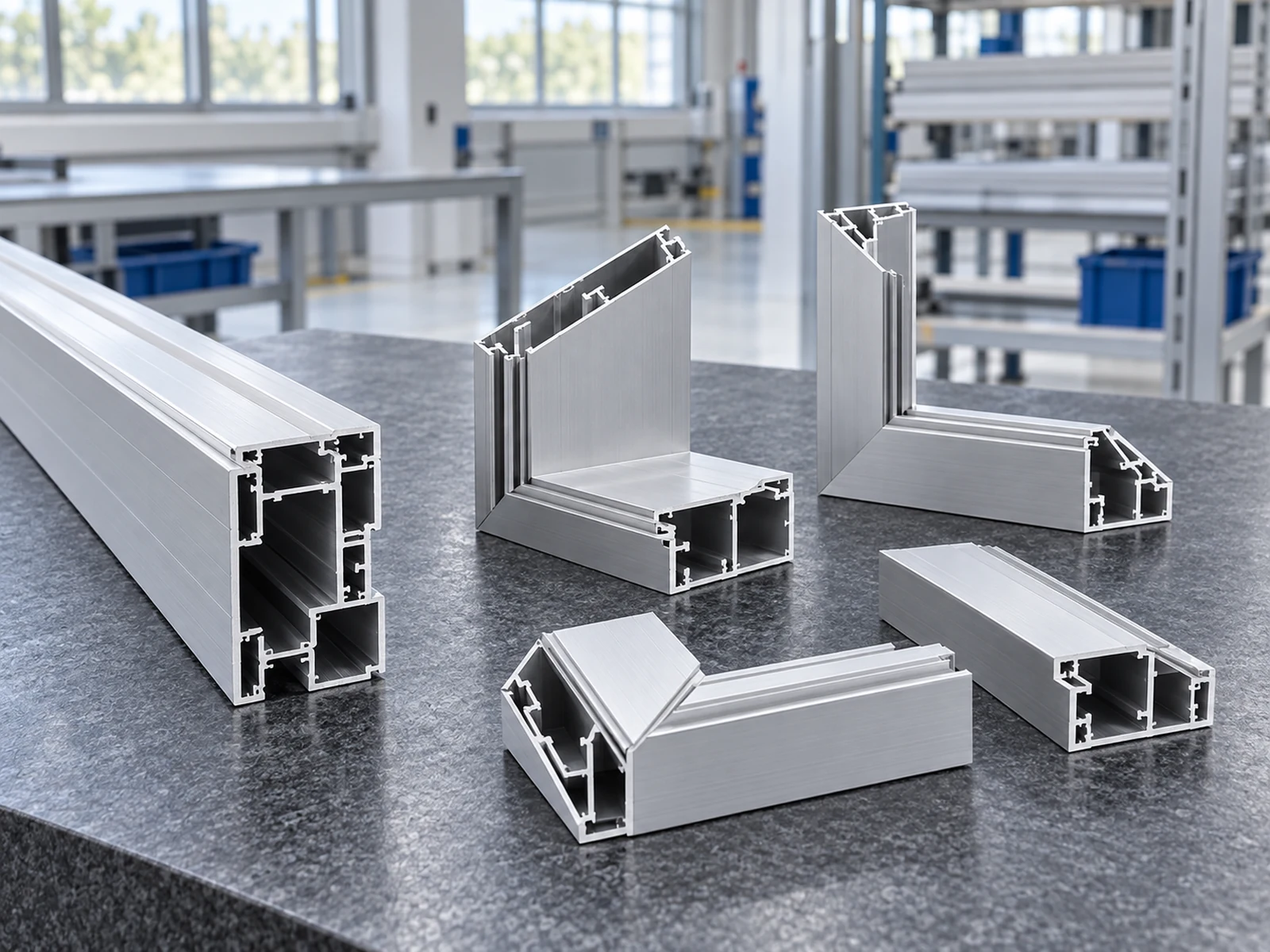
Give the saw supplier a drawing and revision for each upper rail, lower rail, side post or intermediate member actually within the cutting scope. Include the real cross-section, straight or curved state at the saw, handedness, finish condition, incoming length range and quantity per windshield. A headline overall windshield width is not a cut list: glass opening, seal channel, corner joint and frame outside dimensions can refer to different surfaces.
For each released part, specify whether acceptance is a raw cut blank, a deburred member, a labeled miter pair, or a part that will still need machining, bending, welding or coating. Record the physical measuring faces and the end condition on the part drawing. Do not infer a blank length from a boat model, advertised glass size or rough opening. Our finished-length datum guide explains why both parties must measure from the same named faces.
Check miter geometry against the actual section
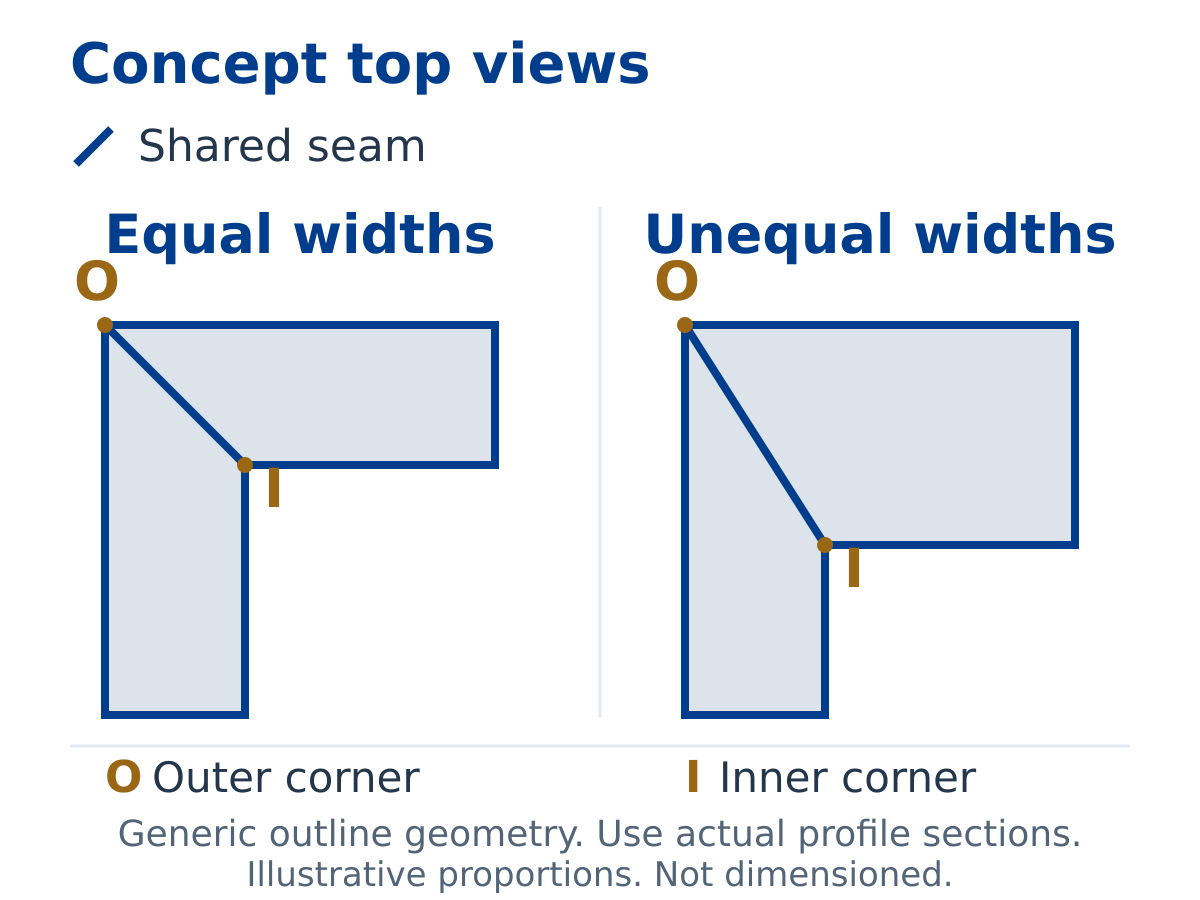
At a windshield corner, the visible outer edge, glazing-side channel and fastening-side edge may not share one simple length. If two members have unequal widths or dissimilar cross-sections, a nominal 45-degree notation alone does not establish which ends will meet. Release the actual corner detail and identify the outside and inside reference points, the intended miter direction, any permitted gap and who performs the fit check.
Do not apply a straight-member saw trial to a bent corner without a separate approved process. A bent profile may need a different support, reference or subsequent trim operation. The sawing supplier should quote only the released straight or trim-cut work it can demonstrate; the glazing-system owner decides whether the joined frame satisfies the assembly drawing.
Protect the seal channel and visible finish during a trial
The actual extrusion may have a glazing pocket, gasket groove, drainage feature or decorative face. Map those surfaces on the section drawing before choosing back-fence, top-clamp and outfeed contact. Trial the orientation intended for production with the real surface finish. Check the part after unclamping for dents, twist, coating damage, burrs and chips in any functional channel; keep the release criteria with the windshield maker.
Finish order changes the comparison. Taylor Made describes post-painting trim after cutting and machining in its own process, whereas a buyer cutting prefinished stock must decide who accepts the exposed end and visible-face condition. Neither route can be assumed for another supplier’s frame. Our profile-orientation RFQ guide gives a way to document contact faces and support without guessing a machine configuration.
Witness a small, traceable first-off set
Agree a test kit that covers the actual quoted variety: longest and shortest straight member, left and right miter, any distinct upper or lower section, and the relevant finish state. Measure the released length datum, end angle or squareness, burr, channel condition, and visible face. Label each sample with section, revision, orientation and saw setup so the result can be traced to the actual operation.
Run more than one attractive first piece. Include the real long-stock support, repeated stop or feed cycles, a changeover if the order mix requires it, and a last-piece check. Record the blade, fixture and inspection method used in the witnessed trial. Passing a generic solid aluminum bar proves little about a thin-walled gasket-channel extrusion. Frame fit, glazing retention and completed-system tests remain separate decisions by the authorized windshield supplier.
Compare offers at the same accepted output
One quote may cover a saw and labeled cut members; another may include deburring, protective pads, secondary machining or a prepared frame kit. Ask every bidder to price the same approved stock, cut-list mix, support, fixture, blade and inspection plan. State who pays for trial stock, scrap, finish damage, remnant handling and rework. Then compare cost per accepted member set, not just purchase price or theoretical cut rate.
A bought windshield assembly may still be the better route for a low-volume replacement, curved glass or a supplier-controlled seal and warranty. The saw investment case belongs to repeatable, authorized metal cutting work with a defined accepted part stage. Do not turn a successful saw cut into a claim of marine-system compliance or installed performance.
Send the windshield-frame saw RFQ pack
- Released frame-member drawings, revision, actual extrusion samples and the system owner’s approval boundary.
- Part numbers, handedness, incoming straight or bent state, finish, lengths, miter references and quantities per set.
- Protected faces, glazing and seal channels, permitted clamp contacts and long-stock support constraints.
- First-off and repeat-piece measurement sheet, with a named decision maker for the cut stage.
- Explicit downstream bending, welding, finishing, glazing, installation and product-test work outside the saw acceptance.
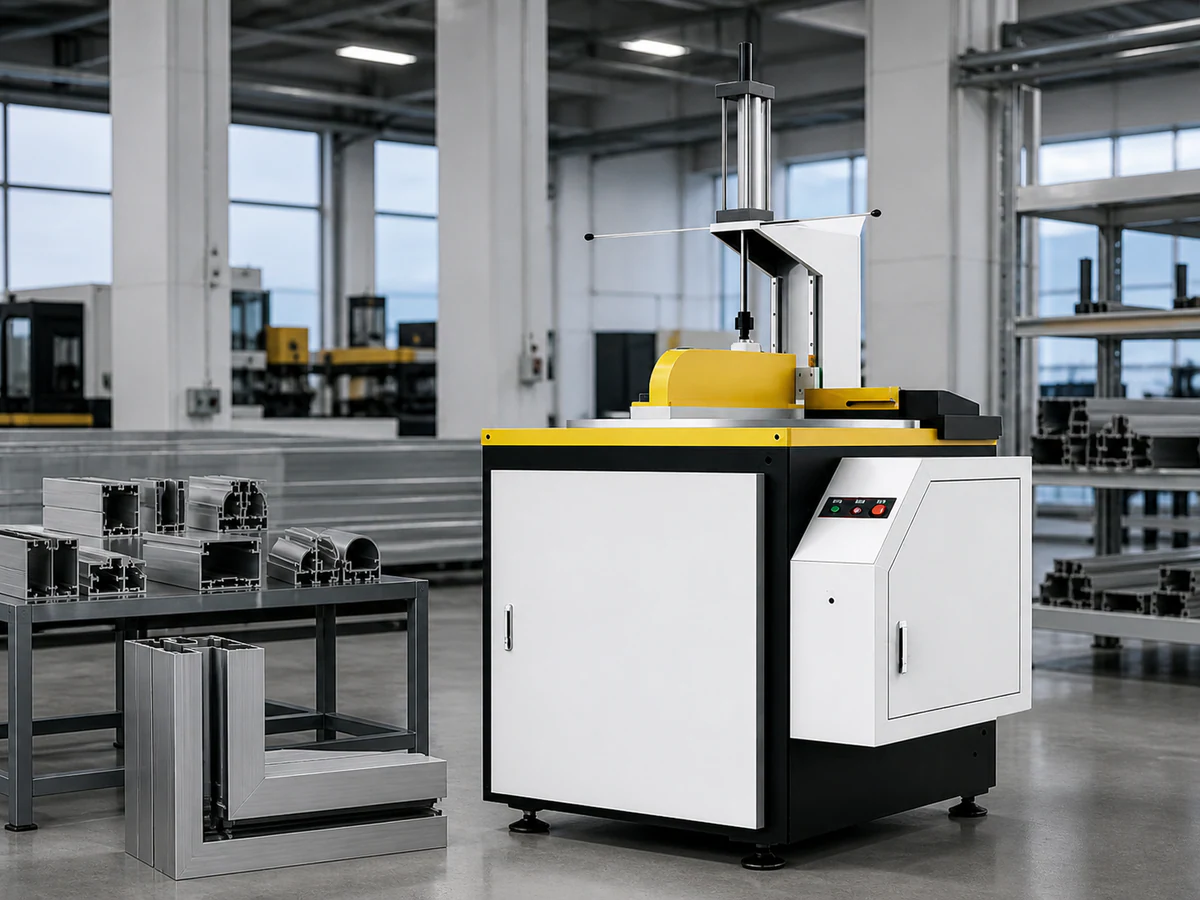
Video context: The Jiurun Machinery video below shows a separate automatic aluminum-profile cutting machine scene. It illustrates a relevant equipment process only. It does not show a boat-windshield extrusion, the quoted fixture or model configuration, a customer project, a windshield trial, or frame and glazing performance.
If you have the released frame section and member list, send them to Jiurun with your cut acceptance sheet. We can discuss a representative saw trial while your marine glazing team retains authority for the complete windshield.