
An automotive roof rail can pass through extrusion, cutting, forming, machining, surface treatment and assembly before it becomes a delivered part. A saw quotation is meaningful only when the buyer identifies which physical version of the rail enters the saw and which version leaves it. A length from a finished-vehicle drawing does not, by itself, define a cut length for straight stock. This guide turns an automotive roof rail extrusion saw trial into a purchase decision about the cut stage, trial material, receiving handoff and evidence.
Hydro describes automotive roof rails and decorative trims as customized extrusion products that may also be bent, machined, polished, anodized, painted, assembled and packed. Those are possible manufacturing stages, not a fixed route for every rail. The buyer should bring the released route for the particular member to a saw supplier rather than assume the saw performs or replaces downstream operations. See Hydro’s roof rails and trims overview and its forming and bending overview for the distinction between extrusion and later shaping.
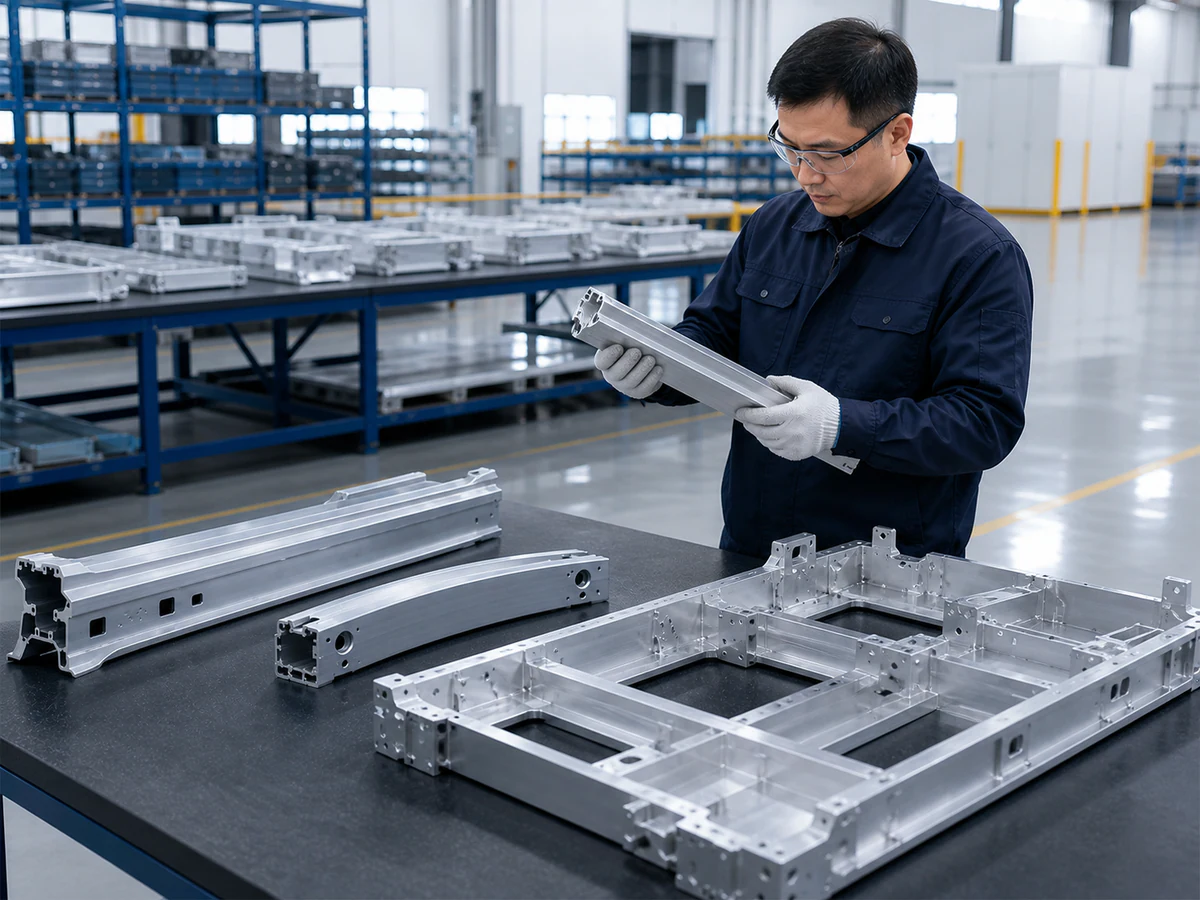
Automotive roof rail extrusion saw trial: decide what the saw receives
There are two very different purchasing cases. In a straight-stock blanking case, the saw receives an approved extrusion section before forming. The released blank length must leave whatever material the downstream forming and end-finishing route requires. The saw trial can evaluate straight-stock handling, support, datum selection, cut-end condition and the identity of each blank. It cannot establish that a subsequently formed rail will fit a vehicle.
In a post-forming recut case, the saw would receive a shaped component. Its path, available datum, contact surfaces, clearances and end geometry can differ radically from a straight bar. A supplier’s demonstration on a straight extrusion is therefore only a screening example. Do not include a formed-rail recut in the purchased capability unless the offered configuration, approved sample and receiving fixture have actually been reviewed for that stage. Some projects may put final end preparation on a separate machining cell rather than on the saw.
For either case, put the process map on one page: incoming state, saw operation, outgoing state, downstream owner and the acceptance record at the next station. Mark bending, CNC machining, polishing, coating, assembly and packing as retained, bought out or outside the saw quotation. Hydro’s published list of those operations establishes that routes can include them; it does not establish their sequence or a particular Jiurun machine’s capability.
Translate the released drawing into a trial sheet
A roof-rail RFQ should not arrive as a vehicle envelope dimension and a target pieces-per-hour figure. Send the actual extrusion section and revision, stock condition, nominal starting length range, the proposed cut location in the route, handedness if left and right members differ, and a controlled drawing that defines the relevant end. Identify the datum used to accept the saw blank rather than borrowing an assembly datum that is not accessible on straight stock.
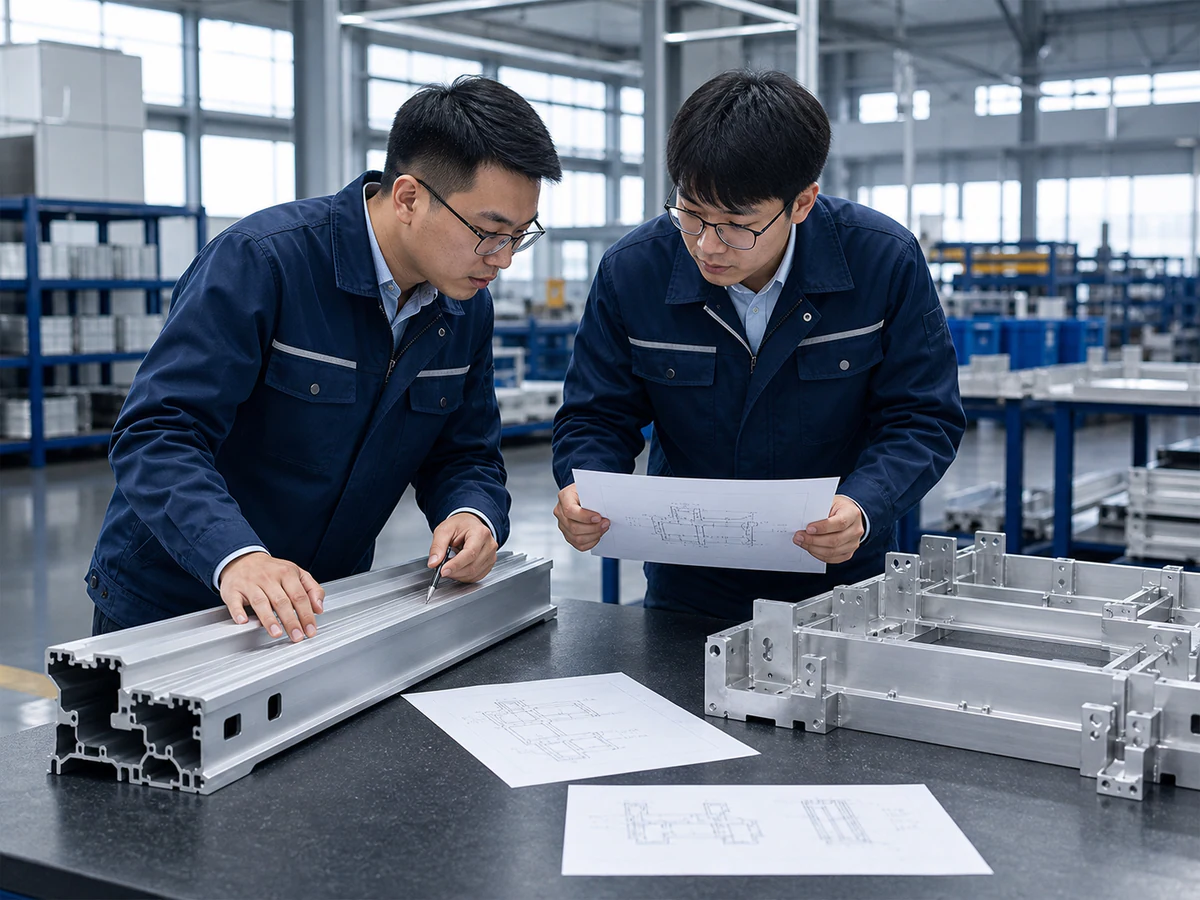
Separate three dimensions in the trial sheet: the incoming bar reference, the saw blank’s measured length and end condition, and the later formed or assembled rail reference. These are not interchangeable. If the downstream forming supplier establishes a trim allowance, quote that allowance as a project input supplied by that owner, not as a generic rule or a capability claim by the saw vendor. Likewise, identify whether cut-end angle is an approved saw feature, a later machining feature or still unresolved.
Attach a sample label to every trial piece: section/revision, batch, planned route, left/right identity where relevant, cut program or setup reference, measured saw-stage result, and receiving disposition. The point is traceability across a route, not an unsupported claim that the trial qualifies the finished rail.
Protect the visible face while proving contact and cut-end control
Automotive exterior trim brings a different risk from a hidden structural blank: a support or clamp can touch a surface that the customer will later see. Ask the product owner to mark visible faces, permitted contact zones, protective-film state and any finish already present at the proposed saw stage. If coating or polishing comes later, do not assume every scratch can be repaired there. If the incoming stock is already finished, the approved handling method may be different again.
The supplier should show where the profile is supported, how it is oriented, how the cut end is kept accessible for inspection and how the outgoing piece is segregated. Request before-and-after photographs tied to the same sample ID, plus an agreed inspection description. Avoid judging a finish from a single glamour image or a generic machine video. A trial on a different profile can demonstrate a workflow, but it does not establish contact safety for the released rail.
Compare offers against the same saw-stage output
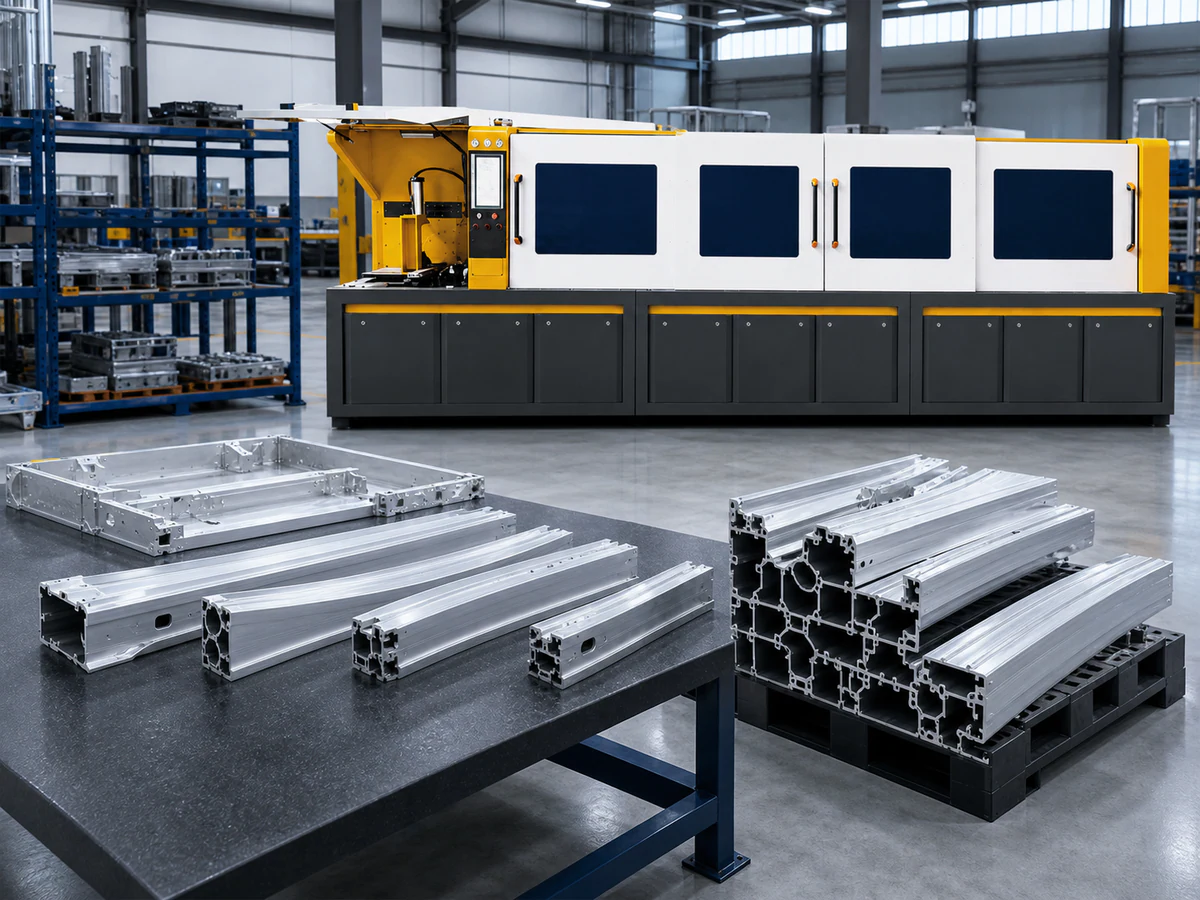
Ask competing suppliers to quote the same defined input and output. If one offer covers only straight-stock blanking and another includes a proposed shaped-part recut, do not compare their prices as though they buy the same result. Record any profile-specific support, guarding, handling, measurement fixture and trial work as included, excluded or conditional. A useful offer also states what sample and drawing revision the supplier needs before committing to its final configuration.
| Buyer question | Evidence to request | Decision it supports |
|---|---|---|
| What arrives at the saw? | Actual straight or formed sample, section revision and stock condition | Whether the proposed station sees the real workpiece |
| What leaves the saw? | Saw-stage drawing, length datum, end features and piece identity | Whether the receiving operation can use the blank |
| Where does the machine touch it? | Contact-zone plan and representative trial photographs | Whether support and finish handling need a different scope |
| What remains downstream? | Named forming, machining, coating, assembly and inspection owners | Whether the quote covers only the intended cut stage |
| What is accepted? | Recorded measurements and receiving-station disposition for each sample | Whether a repeatable handoff has been demonstrated |
Keep throughput comparisons tied to the same released family mix and complete handling cycle. A fast cut on one easy, straight bar says little about a campaign that includes finish protection, handed labels, short runs and later receiving inspection. Do not translate a feed-position specification into finished-part accuracy; the accepted cut result must be measured against the relevant saw-stage datum.
Run a representative trial and make the handoff explicit
Choose trial samples from the real family rather than the most convenient extrusion. Include the section and surface states that drive the purchase, plus both left and right release identities if they are different. If the business case includes a post-forming operation, treat it as a separate trial branch with its own approved shaped sample and fixture decision. Do not extrapolate from a straight-stock demonstration to the formed branch.
Before cutting, the buyer and supplier should agree on the inspection points, tools, measurement responsibility, sample count and disposition categories. During the trial, record setup identity, material identity, contact observations, cut-end observations and interruptions that alter the handoff. After cutting, let the named downstream team accept, reject or conditionally accept the blanks. A measurement alone is not proof that a forming or assembly station can receive them.
Close the trial with a short exception list: which family and process stage were actually demonstrated, which configurations remain conditional, who owns a revised support or finish-handling step, and which evidence is still missing. This makes the quotation reviewable without presenting a sample-cut video as performance certification.
Video: general equipment context
The following video is from Jiurun Machinery’s YouTube channel and shows general cutting equipment footage. It is a process illustration only. It does not show this roof-rail material, an approved model configuration, a customer part, a roof-rail trial or proven performance.
What to send with the RFQ
- The approved roof-rail extrusion section, revision, stock state and relevant finish or protective layer.
- A process map marking the proposed cut stage and the owners of forming, machining, surface treatment and assembly.
- The saw-stage blank drawing: length datum, end requirement, piece identity and separate downstream finished-part reference.
- Representative samples and permitted support/contact zones, including handed or variant members.
- A trial acceptance sheet naming the measuring party and receiving station.
- A quotation response template for included equipment, fixtures, changeovers, exclusions and conditional capabilities.
For a broader comparison of structural automotive blank handling, see our side sill saw-trial guide and bumper beam saw-trial guide. Those articles address different downstream acceptance questions; the roof-rail decision here starts with the cut stage relative to forming and visible finishing.
Frequently asked questions
Can a straight-stock trial approve cutting a bent roof rail?
No. It can evaluate the defined straight-stock operation. A formed rail changes the physical workpiece, datum and support question, so a proposed post-forming recut needs its own approved sample and scope review.
Should the saw quote include polishing or anodizing?
Only if the agreed supply scope explicitly includes those services. A saw-stage offer should identify the condition of the piece it hands to the next operation and name the separate finish owner.
What proves a buyer can use the cut blank?
The receiving operation’s recorded disposition against a released saw-stage specification is the useful evidence. A machine demonstration or unlinked measurement sheet cannot substitute for that handoff.
Need a saw-stage quotation for a released extrusion? Send JiurunCut the section, process stage and trial acceptance sheet. We can review the proposed cutting scope against the actual incoming material and required blank; any machine configuration or result remains subject to the agreed sample trial and written quotation.