
An asymmetric aluminum heat sink extrusion can sit securely on one face and rock on another. For a saw buyer, the important question is not simply whether the blade can cross the maximum width. It is whether the quoted workholding and material path support the actual section without using delicate fins as a datum or clamp surface. This guide turns that question into a drawing review, a supplier RFQ, and a representative trial plan. It concerns the saw-cutting stage; extrusion manufacture, CNC finishing, thermal testing, and downstream assembly are separate scopes.
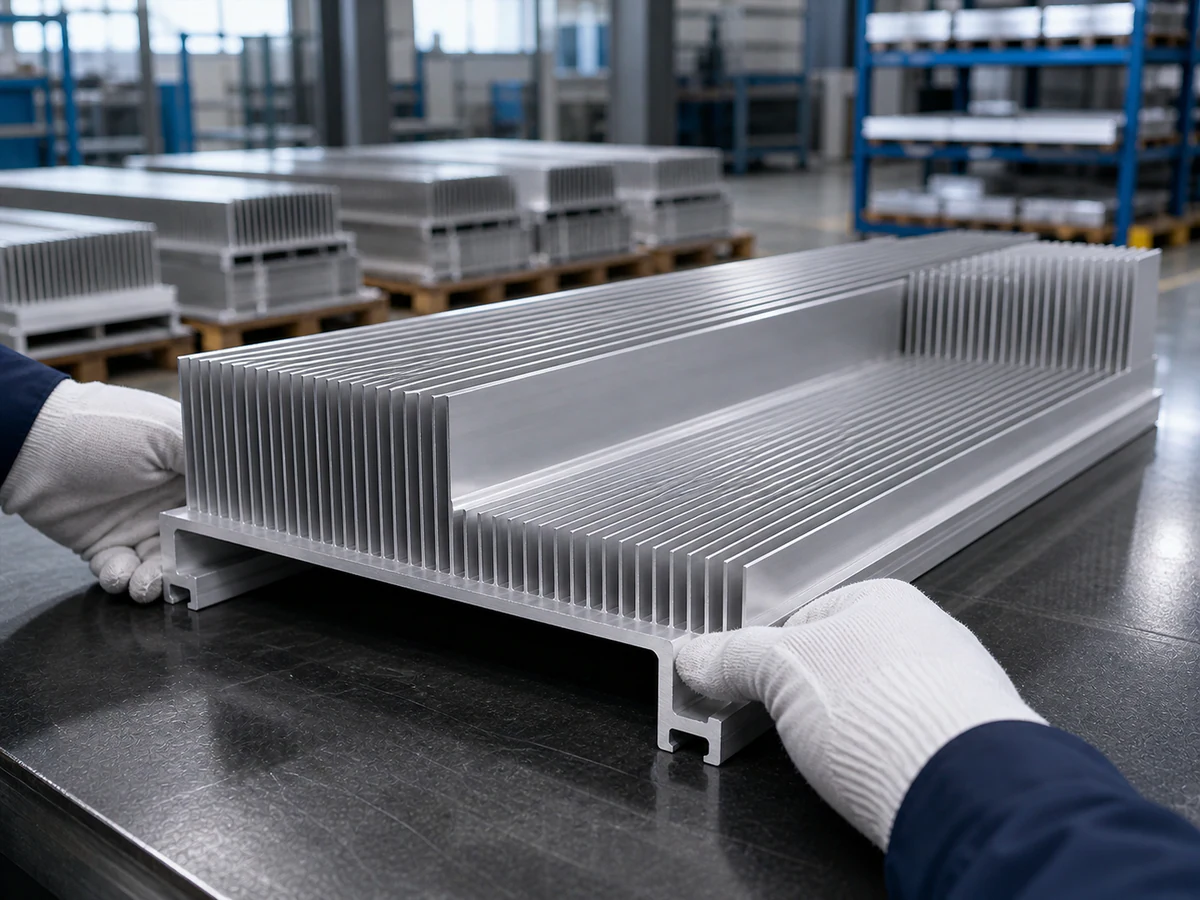
Why an asymmetric aluminum heat sink changes the saw question
A catalog envelope describes a machine’s nominal cutting space, but it does not define how a particular extrusion will be located and restrained. On an offset heat sink, the thicker base, open fin field, and outer edges may lie at different heights. A contact that appears broad in a section drawing can become a narrow line once the bar is rotated. A support that works before the cut may leave the short offcut free to tip afterward. The buying decision therefore needs a defined orientation and a contact plan for the incoming bar and the cut piece, rather than a dimension-only comparison.
The Aluminum Association’s extrusion-tolerance guidance is useful context for distinguishing section variation from saw performance. Hydro’s heat-sink profile overview also shows why heat-sink extrusions are specific profiles whose later processing route has to be defined. Neither source establishes a Jiurun configuration or an achievable result for your part; the supplier must answer those points against your drawing and samples.
1. Freeze the section and the production hand
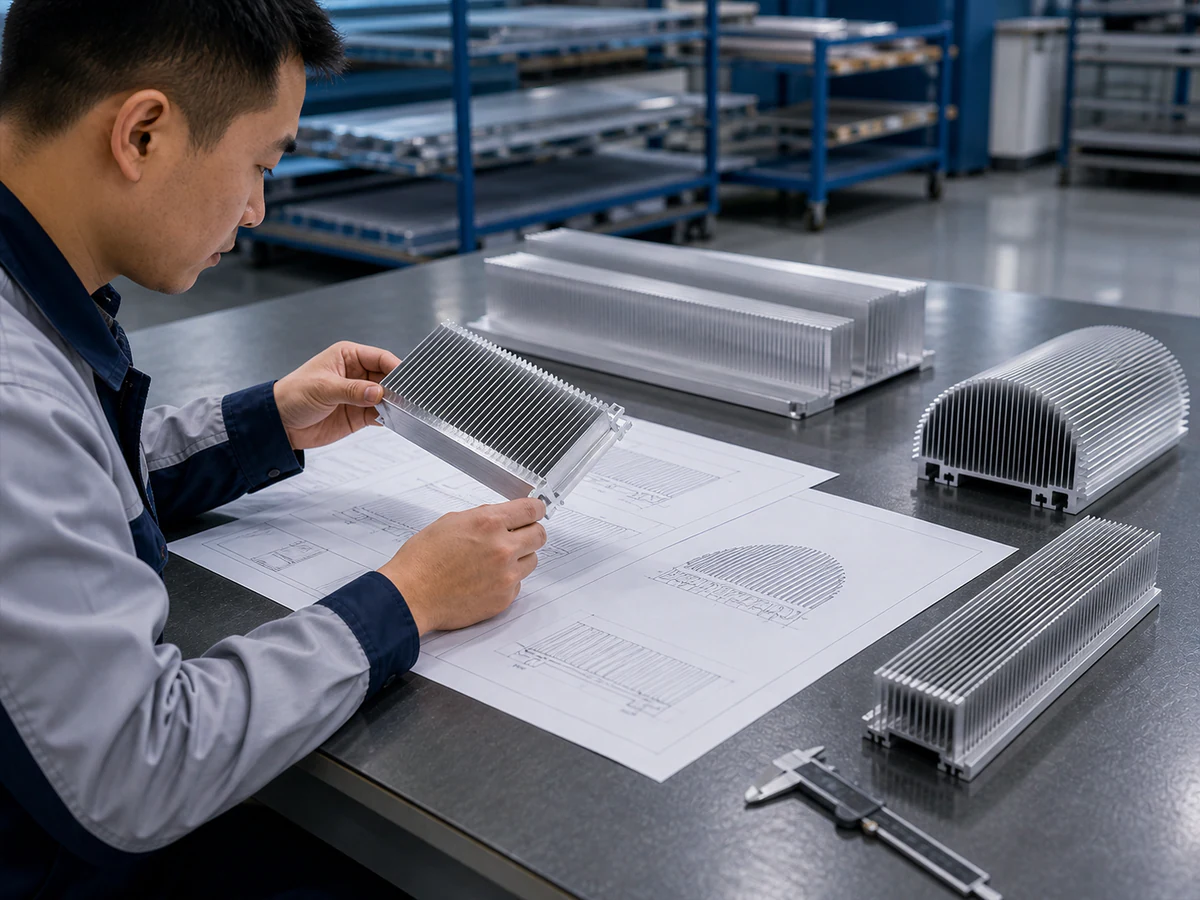
Send the current section drawing with revision, alloy and temper if known, nominal envelope, intended cut lengths, and a photograph of the actual bar end. Mark the base, each fin field, any mounting ledge, and any surface that cannot be marked. Indicate which face is down at the saw, which way the bar enters, and which end of the finished blank is the reference. If the extrusion can be supplied in two mirrored hands, name both; a fixture accepted on one hand is not automatically accepted on the other. If the extrusion supplier has not released the final section, label the RFQ preliminary and make final workholding approval conditional on a released sample.
A separate profile-orientation guide addresses general face and end-hand records. Here the extra problem is the offset load path of a finned section: the base and fin fields do not give interchangeable bearing surfaces.
2. Ask for a support and contact map
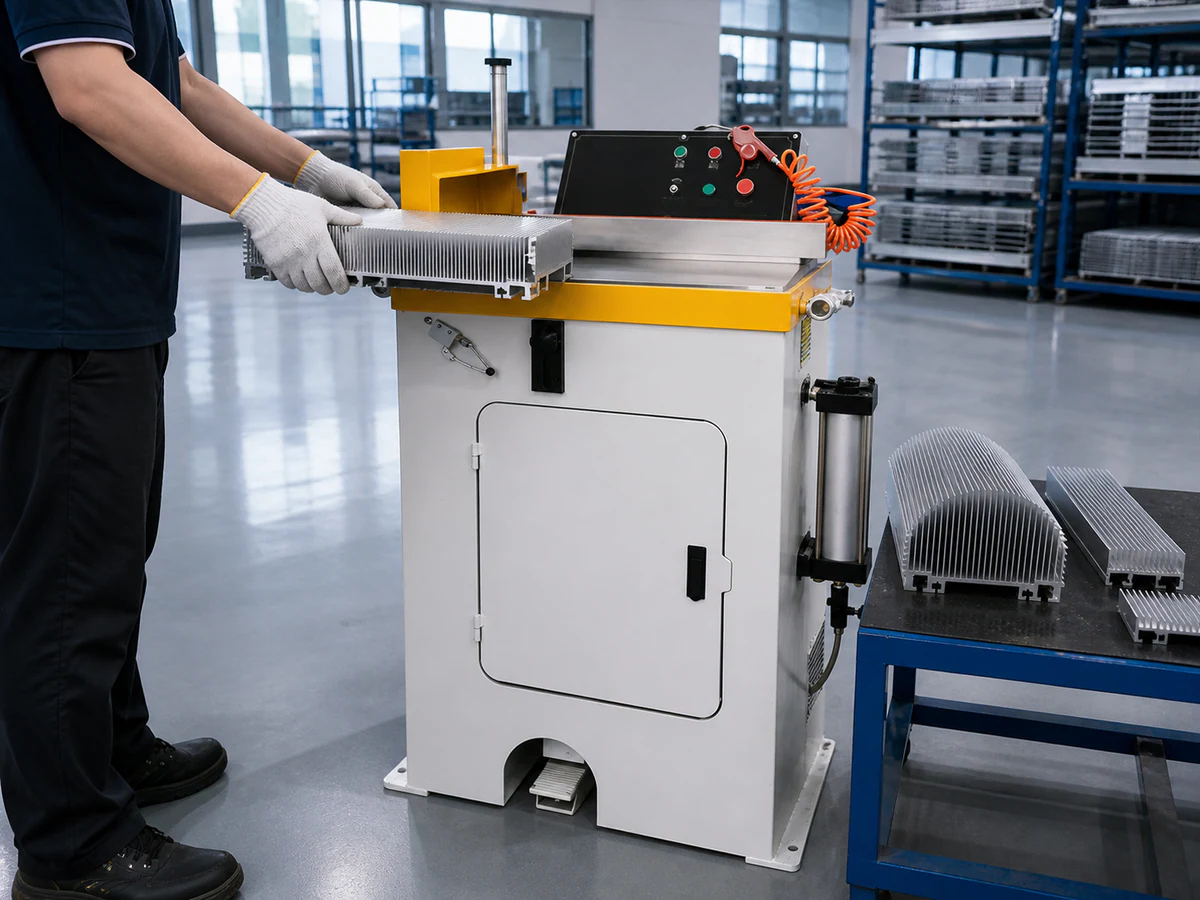
For an asymmetric aluminum heat sink, request a sketch or annotated photograph of the proposed infeed, cut-zone, clamp, and outfeed contacts. For each contact, record which surface it touches, when it engages in the cycle, whether it is fixed or adjustable, and how it avoids the fins. The machine supplier should say what is included in the quoted configuration and what requires a custom fixture or buyer-provided support. Do not translate a brochure photograph or another manufacturer’s accessory into a claim that your quote contains that hardware.
- Primary bearing: Where does the extrusion base carry its weight through the cut? If only a narrow foot contacts the table, how is rocking prevented without squeezing a fin?
- Side location: Which robust face establishes lateral position? Is a side stop clear of any projecting fin or mounting lip across the released section tolerance?
- Vertical restraint: Where can a pad apply force without bending the fin field or shifting the bar? Ask for the pad footprint and replaceable-contact provision if these matter to your part.
- Short-piece support: What holds the final blank and tail when their contact length is shorter than the incoming bar? Ask where they land after separation.
- Changeover: If section revisions or mirrored hands are part of the order mix, what must be adjusted, replaced, and checked before production restarts?
These are questions for a quote, not an assertion that a particular Jiurun machine includes a special clamp. The answer may be a standard setup, an agreed custom fixture, or a finding that the proposed machine is unsuitable for the released part. A useful quote makes that boundary explicit.
3. Separate section fit, cut quality, and part acceptance
Three different questions are often compressed into “can the saw cut this profile?” First, can the bar be fed and supported in the specified orientation throughout the cycle? Second, is the cut end acceptable for the next operation, including burr, deformation, and face condition at the buyer’s defined inspection points? Third, will the resulting blank meet the buyer’s length, squareness, appearance, and handling requirements under an agreed measurement method? A feed-position figure, if quoted, must not be treated as finished-part accuracy. Ask the supplier to state which quantity it describes and how the finished blank will be checked.
Define the end-use before choosing acceptance criteria. A blank going to CNC finishing may have different stock allowance and cosmetic limits from a visible, ready-to-assemble part. Mark the inspection locations on a drawing or sample: base-to-end relationship, the most vulnerable fin tips, the opposite end, and any mounting feature that serves downstream assembly. Agree who owns each downstream operation; a circular saw quote is not a promise of milling, deburring, coating, thermal performance, or final assembly.
4. Build a representative trial, not a flattering demonstration
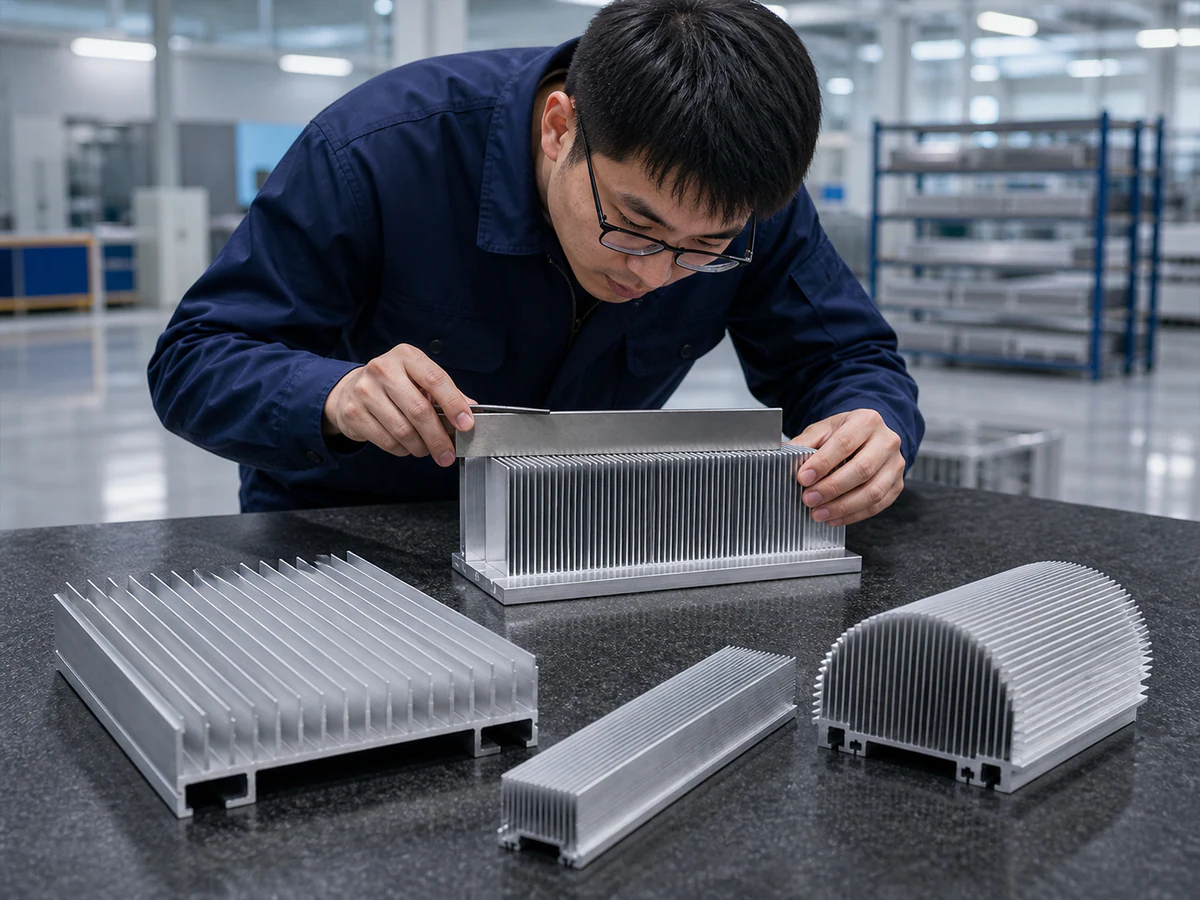
If the asymmetric aluminum heat sink purchase depends on a sample cut, provide bars from the released section and identify any variation that could change contact: mirrored hand, revision, wall or fin condition, incoming bow, protective film, or cut length. Choose at least one challenging but real production case. Document the setup before the first cut: orientation, contacts, blade specification, support lengths, and any special pads or fixtures. Then inspect the first part and the repeat parts with the same agreed method. A short demonstration on a convenient rectangular bar cannot establish heat-sink performance.
Ask the supplier to return the sample pieces and a concise trial record: sample identity, machine and quoted configuration, contact arrangement, cut list, inspection points and results, observed handling issues, and changes made between attempts. If a result fails, record whether the proposed remedy changes the fixture, the incoming stock condition, the process, or the acceptance criterion. Re-test the revised condition rather than treating an explanation as acceptance. The buyer should retain approval of the final trial criteria.
5. Put these items in the RFQ
| RFQ line | What the buyer supplies | What the supplier returns |
|---|---|---|
| Part identity | Released section drawing, revision, physical sample, finish and protected faces | Named part and drawing revision used in the proposal |
| Orientation | Feed direction, base-down face, finished end reference, mirrored hands | Annotated loading and cut-zone orientation |
| Contact | Permitted and forbidden clamp/support faces | Infeed, side, vertical and offcut contact map; included versus custom items |
| Output | Lengths, lot mix, downstream route and acceptance locations | Quoted scope, measurement basis and unresolved exceptions |
| Trial | Representative bars and written criteria | Sample identity, configuration, observations and inspection record |
For comparable quotations, require each supplier to answer the same document revision and list exclusions next to the corresponding RFQ line. Price is difficult to compare when one quote includes a section-specific fixture and another assumes a generic clamp. If fixture service or replacement is important, use the fixture rebuild-or-replace checklist to define spares and later requalification as a separate decision.
Related machine footage: general example only
The following Jiurun Machinery channel video shows general equipment and a narrow bar at an infeed. It does not show this asymmetric heat-sink section and is not evidence of a specific material, model configuration, customer job, trial result, cut quality, or performance. Use it only to visualize a machine/infeed context while asking for part-specific support and clamp evidence.
Decision before purchase
Approve the saw proposal only when the released section, contact map, quoted hardware boundary, representative sample, and inspection method agree. If any of those remain open, state the exception in the quote rather than converting a brochure capacity into a part guarantee. Send Jiurun Machinery the section drawing, a bar-end photograph, target lengths, protected faces, and the intended acceptance method through the contact page; ask for a configuration and trial proposal for that exact input.