
Aluminum shoring beam cutting starts with a question that a trailer width alone cannot answer: what length of extrusion must reach the assembly station? An adjustable cargo beam has end hardware, a travel range and a track interface. The distance between trailer walls, the beam’s published working range and the saw-cut aluminum blank are different dimensions. Mixing them can produce a clean cut that leaves the finished beam unable to engage its intended track.
A real product example makes the boundary clear. Kinedyne describes an adjustable aluminum decking and shoring beam for Series E or A logistics track, with a separate hardened-steel head assembly and release latch. Its published length range and load limits describe that specified assembled product and compatible track. They do not become specifications for a generic extrusion or evidence that a Jiurun-cut blank has any cargo-restraint rating.
Decide whether the order is a blank or a finished beam
The buyer should write one line for the aluminum cut blank, another for any drilled or machined beam body, and a separate line for the complete beam with heads, latch and any adjustment parts. A saw quotation can cover stock support, cutting, end condition and part identification. It cannot silently include track fittings, assembly, proof load testing or a working load rating. If the supplier is expected to provide a finished cargo-control product, name the party responsible for the whole assembly and its validation.
Record the intended track series and approved head part number before cutting. A fitting that looks close to another E or A style may not engage or retain the same way. The assembly owner should approve the interface, installation instructions and safe working use. A cut-part supplier should receive the released drawing and acceptance criteria rather than infer them from a web catalog.
Translate working length into a cut-blank length
Start with the required minimum and maximum usable span in the actual vehicle or fixture. Then obtain an assembly drawing showing head insertion depth, the extension mechanism, end-to-end reference points and the measurement state for each dimension. A nominal trailer width is not a saw stop setting. Even two products sold for the same vehicle can use different blank lengths when their heads and adjustment stroke differ.
Ask the beam designer to identify the cut datum at both ends. Should the saw measure between raw end faces, a fixed head shoulder and an end face, or two assembled fitting faces? State allowable length variation, end squareness and burr condition on the aluminum member itself. Specify which later operation creates holes, slots, swages or retaining features. If the extrusion is prefinished, define how the saw and stock supports may contact the visible surface.
Release the exact extrusion section and end interface
The beam’s outer width and height are only part of the input definition. Wall thickness, internal ribs, corner radii, cavity size and straightness affect how an end head fits and where a clamp can support the profile. Give the saw supplier the approved cross-section drawing, alloy and temper, stock length, finish, quantity mix and revision. If more than one beam family is ordered, separate each section and cut list. Do not treat a visually similar square tube as an approved substitute.
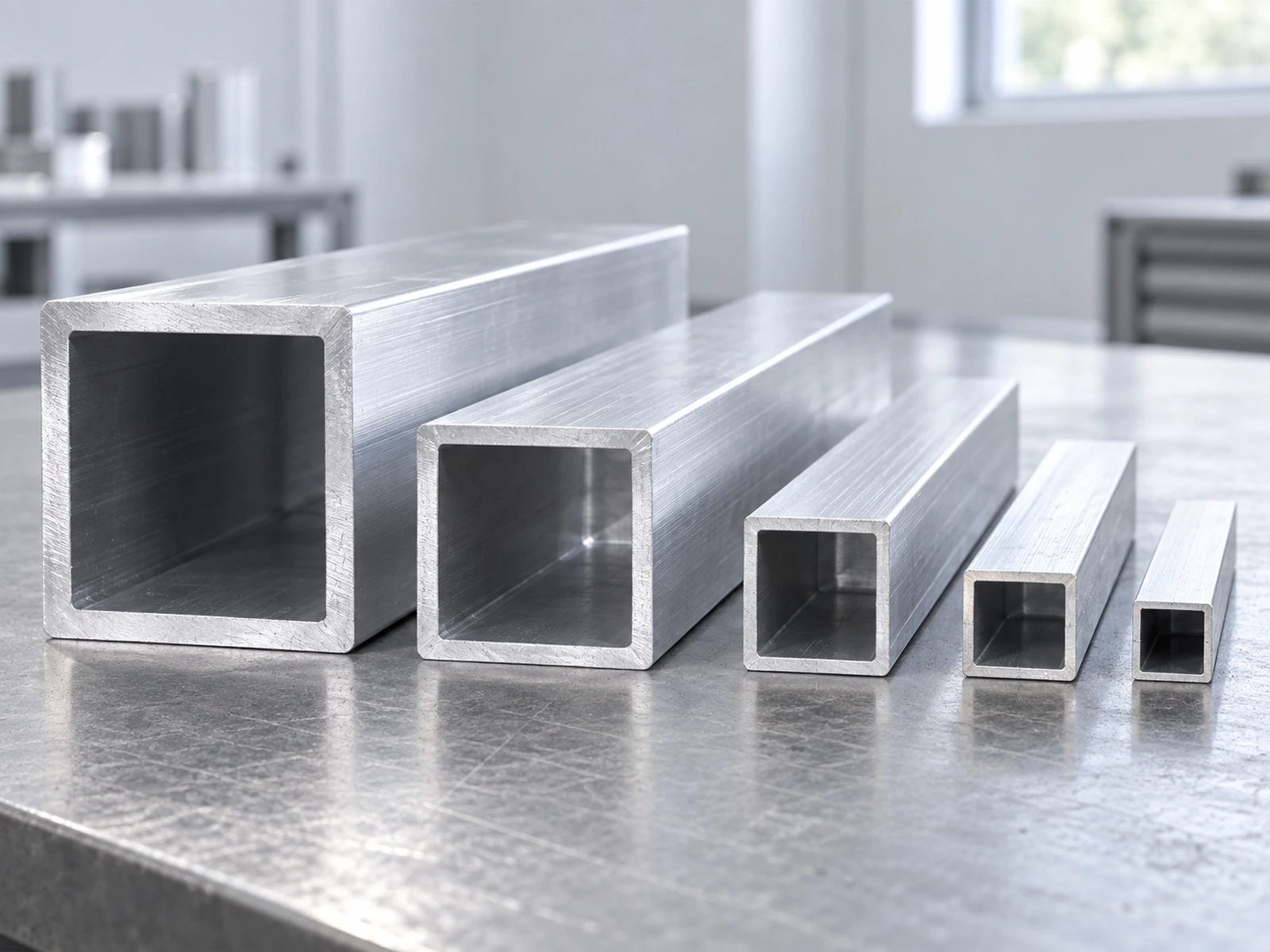
Protect the cavity as well as the outside face. Chips left inside a hollow beam can interfere with a sliding head or later fastener. Agree whether the blank supplier removes chips, deburrs internal edges, caps ends for transport and keeps beam families separated. The acceptance method should say how the buyer checks an end opening without claiming that visual inspection alone proves the finished cargo-control assembly.
Trial the support and clamp before quoting output
Long extrusions need stable infeed and outfeed support. Unsupported overhang can change the effective datum, shift a light section against a stop or damage a surface during transfer. Record the longest stock and shortest finished blank, the number of lengths per section, remnant policy and how labels follow the cut pieces. The buyer should provide representative stock for a trial rather than expect an output estimate from an unrelated shape.
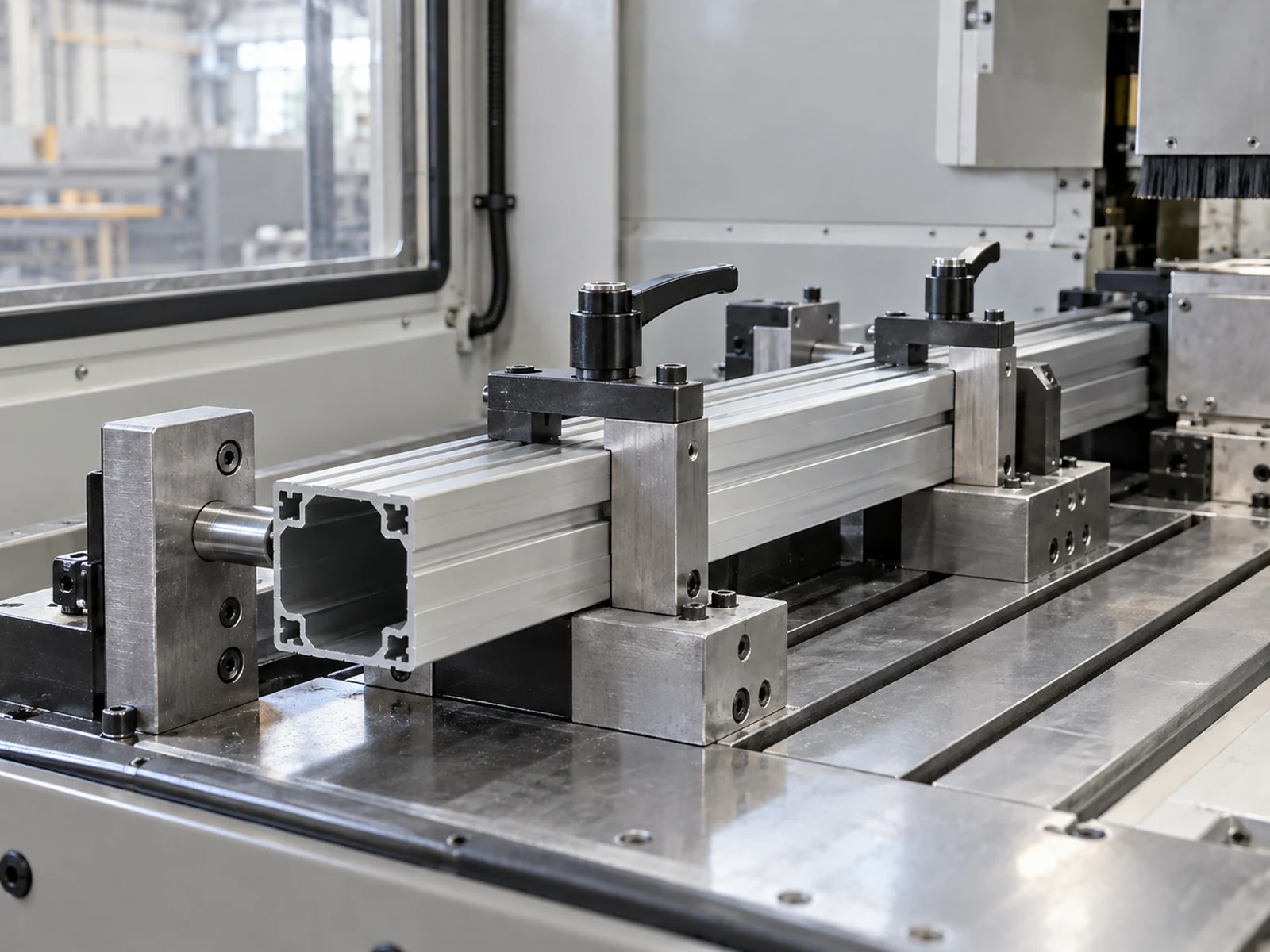
Mark where clamping is allowed on the released profile. A thin wall or open internal cavity may need a different contact surface or support arrangement from a heavy solid member. During the first-off trial, inspect movement against the stop, squareness, external marks and the internal edge where the end fitting enters. Do not infer a machine’s capacity, precision or throughput from these illustrative photographs or the video below.
Separate cut-piece acceptance from cargo-system approval
Measure a first-off blank against the drawing, then insert the approved head and assemble a representative beam. Check the specified minimum and maximum working positions, positive engagement with the intended track, latch access and clearances in the real installation. Record the drawing revision, stock lot, first-off dimensions and who accepted the assembly. Any load-rating, fatigue or in-service approval belongs to the responsible finished-product authority under the applicable design and instructions; a clean saw cut does not establish it.
If the procurement scope includes a wider vehicle structure, our truck-body fabrication guide separates member cutting from a complete body program. The air-cargo pallet edge-rail guide is another example of releasing an approved blank before judging a different assembled system. Neither article supplies shoring-beam dimensions or certifications.
Jiurun channel equipment demonstration. This is a general aluminum-saw example; it does not show a shoring beam, its specified material, an approved setup, a customer job, a load test or performance for this RFQ.
Aluminum shoring beam cutting RFQ checklist
- Attach the current beam and end-fitting drawings with revision IDs and the intended E or A track interface.
- State whether the quote covers cut blanks, prepared members or fully assembled beams, with separate responsibility for each stage.
- List the approved extrusion section, alloy, temper, finish, stock length, blank lengths and quantities by beam family.
- Define the datum at each cut end, length tolerance, squareness, burr and internal-chip acceptance method.
- Mark permitted clamp contact, support points, visible-surface protection and packaging requirements.
- Request a representative first-off cut, end-head insertion check and assembled span and engagement check.
- Name the finished-product authority for track compatibility, working load limits and any required validation.
Send Jiurun the approved extrusion drawing, cut list, stock dimensions, required end condition and first-off plan through the contact page. We can discuss a representative aluminum-cutting trial and the measurements it should capture. The beam designer and finished-product supplier remain responsible for the head, track, latch, load rating and safe use of the assembled cargo system.