
An aluminum saw for truck body fabrication should be purchased against the complete set of cut components needed for an approved body design. A supplier can demonstrate one easy extrusion and still leave unresolved whether the offered station supports your actual mix of rails, posts, frame members and other specified blanks. Start with the body builder’s released component requirements, then define the cutting work and the handover to the next operation.
This purchasing guide concerns a factory producing components for its own truck bodies or trailer bodies. It does not select a vehicle structure, calculate load ratings or authorize changes to a designer’s material specification. The decision is which complete cutting arrangement can serve a defined manufacturing job, with evidence that refers to the quoted equipment.
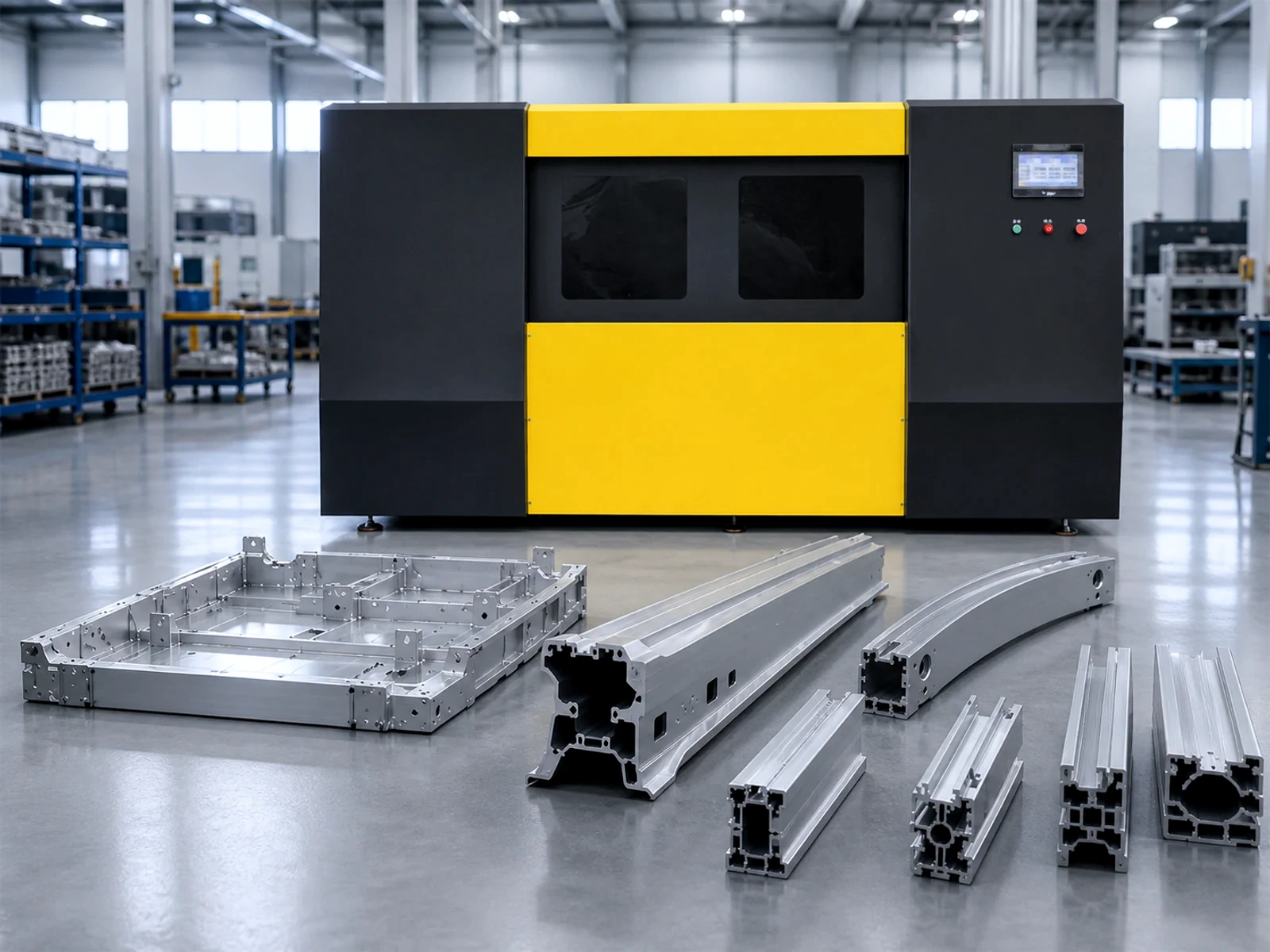
1. Define the aluminum saw for truck body fabrication job
Write down the body families the proposed saw will serve. A standard product with repeated dimensions and a body built to an individual order are different workload descriptions. If both occur, provide both. Do not turn a convenient demonstration part into the specification for the whole factory.
Hydro’s trailer application page describes supplying extruded aluminum components for dry vans, refrigerated trailers and platform or flatbed trailers. That establishes a range of extrusion applications, not a common bill of materials, section size or cutting method. Your actual approved design must define the material and component requirements.
Use the current body drawing set and bill of materials to identify the items that genuinely enter the saw. Some purchased parts may arrive finished. Some components may require sheet processing or another operation rather than extrusion crosscutting. A body product can contain several material forms; the word aluminum does not make them one saw input.
Separate planned manufacture from future ideas. An option that is not yet released for production can be shown as a conditional requirement, with its missing evidence identified. It should not silently expand the confirmed machine scope. Conversely, do not omit a known difficult component merely because its final order quantity is small.
2. Translate body drawings into individual cutting records
For each saw input, provide the actual profile drawing, alloy and temper, supplied length, finish and packaging. State the part identifier, required cut length, end geometry and the drawing reference that controls measurement. Where a left and right member differ, keep separate records rather than assume the second is just another copy.
The saw’s output may be a finished-length member or an intermediate blank. Identify which is required. If later machining establishes the final reference or removes material from an end, that relationship belongs in the approved process information. The buyer should not invent an allowance to make an available machine appear suitable.
Also identify features outside the cutting scope. Holes, slots, local cut-outs, joining preparation, finishing and assembly may belong to other equipment or to purchased services. Ask the bidder to show where its proposed saw operation stops. An end cut is not proof that a supplier will deliver every feature shown on the assembly drawing.
Do not accept a generic accuracy statement as a complete response. Requirements should distinguish the dimensions and conditions your next operation accepts. A feeding-positioning specification does not itself demonstrate finished-part accuracy, fit in a vehicle assembly or control of every cut face.
| Requirement | Provide to the bidder | Keep separate |
|---|---|---|
| Profile member | Actual section, material condition and supplied stock | A drawing of a superficially similar profile |
| Cut-stage output | Controlling part record, length reference and end requirements | Final assembly dimensions established later |
| Further processing | Next operation and its accepted blank condition | Unquoted drilling, joining or finishing |
| Body family | Component quantities and production release information | An unreleased future variant |
| Quoted arrangement | Exact saw, feeding, receiving and handling scope | Optional equipment pictured in a brochure |
3. Specify usable body sets as well as individual parts
A body builder needs the required members available when their manufacturing or assembly work calls for them. Producing many copies of an easy rail does not necessarily release a usable body set if its matching members are still missing. Give the bidder both the quantities by component and the production sequence you expect the station to support.
Define what you mean by a body set. It may be all required cut components for one body, a group for one assembly stage or another controlled production unit. This is a buyer-defined handover, not a promise that the saw automatically identifies, sorts or packages sets.
Decide how cut components retain their identities after collection. If different body variants have similar-looking members, explain the existing identification and release arrangement. Confirm whether this work belongs to the supplied station, factory personnel or a separately quoted process. Avoid assigning an unconfirmed labeling feature to the machine.
Invented planning example: a builder’s approved cutting list calls for 24 rail blanks and 36 post blanks per body. Three bodies therefore require 72 rails and 108 posts, or 180 blanks in total. Producing all 72 rails but only 72 posts gives 144 cut blanks, yet the post quantity supports only two complete sets on this simplified basis. The remaining rail quantity does not create a third released set.
The example assumes that all listed pieces meet their required condition and that no other saw-made components are needed. It is not a machine output claim or an assembly design. In a real enquiry, include every required item and the actual acceptance status; a count of produced blanks is not a count of accepted bodies.
Ask how the offered arrangement handles this stated mix: stock preparation, changes between profile families, end requirements, receiving and any factory work required between batches. Compare it with the release pattern your assembly process needs. The purpose is to test the complete proposed job rather than optimize an isolated demonstration.
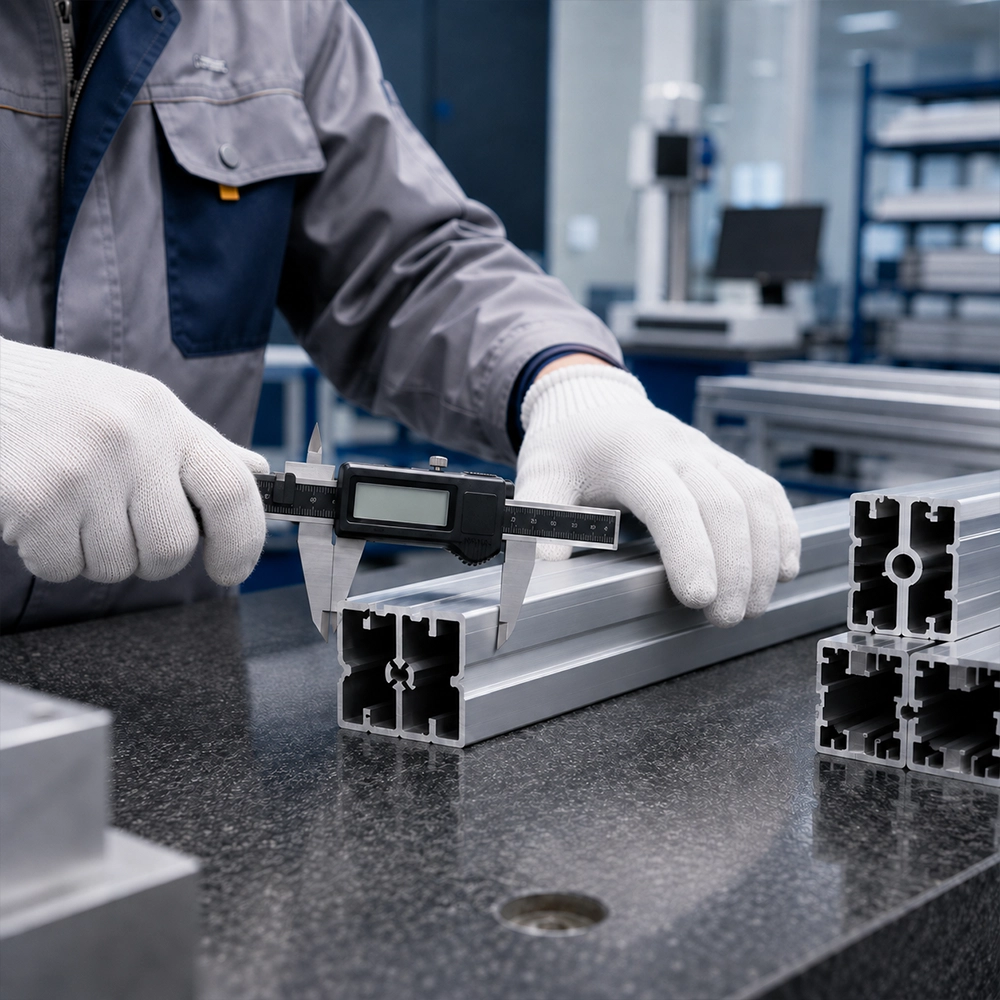
4. Review stock movement and cut-part receiving together
Incoming stock is part of the machine purchase problem. Show where profiles originate, how they become ready for the saw and what the quoted inlet accepts. The supplier should distinguish equipment in its offer from handling items retained by the factory. A photograph of a loading rack does not establish that the offered configuration includes it.
Review the longest supplied profiles and the range of required blanks with the bidder. Their actual support and receiving needs must come from the proposed equipment and the workpiece assessment. Do not infer a safe handling arrangement or a clearance from the overall machine-body dimensions.
At the outlet, show the receiving method and the destination of each accepted group. A collection container that works for one component may leave another component’s condition or identity unresolved. Confirm the proposed handover for the actual job without assuming automatic stacking, sorting or protection of finished surfaces.
Include unfinished and held work. Components awaiting inspection, further processing or a missing matching member need a defined status and destination. Otherwise the proposal may rely on an empty floor and immediate assembly collection that the factory cannot consistently provide.
Use the same physical assumptions when comparing offers. One quotation may include a complete receiving arrangement; another may expect the buyer to provide it. That difference affects the scope comparison even if both machine names suggest automatic cutting. Obtain an explicit included, buyer-supplied or unresolved answer for each handover.
5. Compare the complete manufacturing routes
The choice need not be framed as the fastest listed saw versus the cheapest listed saw. First determine which alternatives address the approved component set. A quoted crosscutting station, a different confirmed saw configuration and purchased finished components are different manufacturing routes. Compare only the part families each route actually covers.
If some parts remain with an existing process, show that allocation. The proposed purchase may solve one defined portion of the body production workload without replacing every machine. Make that boundary explicit so the purchase is judged against the correct requirement.
An offer also needs a clear distinction between confirmed supply and further assessment. A supplier may need actual samples, drawings or input-condition information before confirming a particular component. Record that item as unresolved rather than convert an encouraging conversation into an accepted capability.
Evaluate quotations on a shared job pack. The same approved versions, component quantities and receiving requirements should reach each bidder. If the buyer changes the body variant or material input, update the comparison basis. A result obtained for a previous version cannot automatically answer the revised purchase question.
The technical comparison and the commercial comparison should remain linked. A cheaper quotation with an unresolved part family is not yet a like-for-like alternative to one covering the required mix. Equally, a larger scope is not inherently valuable if it supplies work the factory does not need. State the remaining production route for every required component.
Keep body variants visible in the purchase decision
Build a scope matrix for the released body families. Its rows should be actual saw-made component families; its columns should show the relevant body variants and the cutting route proposed for each. Mark an item as included only when the bidder has assessed its input and output requirements. A repeated part number may support several variants, while a visually similar member may have a different controlling record. Let the approved records decide which case applies.
Use the matrix to examine an apparent one-machine solution. Does the quotation cover every released family, or only the repeated straight members? Which items stay with the present process? Which items need further assessment? The buyer can accept a deliberately limited purchase, but should be able to name the remaining route before relying on the quoted station for a complete body programme. An unresolved low-volume item can still prevent the intended set from being released.
Keep the work assigned to the saw separate from the rest of body fabrication. For example, if an approved production route supplies certain panels as purchased components, those panels do not become a required saw input simply because they belong to the same body. Conversely, a rail needing another operation after sawing still occupies that operation before it becomes usable for the specified handover. This allocation lets you compare a component-manufacturing proposal rather than a brochure showing a finished vehicle.
Review design changes against the same matrix. A new drawing revision, stock form or end requirement needs an identified owner and a decision about whether it remains inside the assessed equipment scope. The enquiry should ask how the supplier will assess such changes; it should not ask for a guarantee that every future body design will run on the same machine. Preserve the agreed baseline so a later revision does not obscure what the purchase originally covered.
Check release status before counting another body set
Extend the invented three-body example above with an acceptance check. Suppose the 72 produced rails include 12 awaiting review, while all 72 produced posts are released for the defined next operation. The available quantities are then 60 rails and 72 posts. Dividing by 24 rails and 36 posts per set gives upper bounds of two complete sets from each family, after rounding down. The remaining 12 released rails and the 12 held rails must retain their separate statuses; neither is a third complete set.
Now suppose only 60 posts meet the release condition. The available posts support just one complete set on this simplified list, even if 60 rails are available. This is not a proposed factory scrap rate or a predicted saw performance. It shows why an enquiry needs both the component mix and the condition accepted by the next stage. In an actual review, add the other required components, work already allocated to orders and the production sequence before claiming an available body set.
Use this distinction in the demonstration record: produced, accepted for the defined next operation, held and assigned elsewhere are different quantities. Ask for the cutting arrangement to be assessed against that defined handover. Vehicle assembly completion and road-use approval remain separate decisions.
Agree evidence for the actual mixed job
Choose representative components from the released list before agreeing a demonstration. Include the inputs or end requirements that drive the purchase decision, not simply whichever sample is already beside the supplier’s machine. Preserve the sample identity, drawing version and equipment configuration so the result can be interpreted later.
The evidence should answer the agreed output and workflow questions. Record whether the demonstration covered stock preparation, profile changes, receiving, inspection and the handover required by the buyer. If an activity was excluded, name it. A cutting-only observation is useful within that boundary but cannot prove the complete body’s production route.
Where a demonstration produces blanks for a set, reconcile the quantities and acceptance status by component. Record missing, held or further-processing items separately. This prevents a successful-looking total from hiding that the stated handover has not yet been demonstrated.
Keep application acceptance with the responsible body manufacturer and its qualified design or process reviewers. A saw trial does not validate structural design, road-use approval, joining performance or vehicle load capacity. Those decisions are outside the equipment evidence described here.
For the order comparison, request a record of the exact offered configuration, the tested inputs, the agreed acceptance criteria and any conditions that remain. Resolve material or component gaps before transferring a conditional proposal into an unconditional production commitment.
6. Send a body-production enquiry that can be answered
Prepare one pack containing the body families in scope, released component records, actual incoming stock and the accepted cut-stage outputs. Add quantities by part and by usable production set, the required release pattern, existing factory equipment and the proposed handovers. Mark future variants and missing information clearly.
Ask the supplier to return a component-by-component response: confirmed against the identified input, requiring further evidence, excluded from the offer or assigned to another defined process. Request the complete equipment boundary and the evidence needed for unresolved items. This creates a reviewable machine proposal rather than an open-ended assurance that aluminum can be cut.
JiurunCut, Zhangjiagang Jiurun Machinery Technology Co., Ltd., manufactures industrial aluminum and nonferrous circular-saw equipment. For an aluminum cutting machine enquiry, contact Jiurun with the approved component drawings, actual stock and production-set requirements. Discuss the offered configuration for that job. This article establishes no Jiurun truck-body customer, approved vehicle application, cutting rate, assembly automation or structural performance.
See the cutting stage before discussing the complete body job
This Jiurun equipment video gives general cutting-stage context. It does not demonstrate a truck body set, vehicle approval or the quoted configuration for your component mix.