
Imagine opening a spare seal kit for an aluminum saw clamp cylinder after it has sat on a shelf for several years. The part number matches the maintenance list, but its bag has no legible manufacturing date or storage instruction. Can the kit still be used? Aluminum saw seal kit shelf life is a purchasing and inventory question before it becomes a service problem: the machine-specific kit, maker’s storage rule, packaging condition and planned use date all have to agree.
This article concerns only a saw that actually has a serviceable cylinder or other sealed assembly with a manufacturer-approved repair kit. It does not establish that a particular Jiurun model uses the illustrated cylinder, nor does it authorize opening a pressurized assembly. The machine maker and component maker must confirm the repair path for the installed serial number.
Start with the installed assembly, not a generic O-ring
A seal kit is not interchangeable merely because two rings look alike. Ask maintenance to identify the saw, clamp station or other function, installed actuator’s full model and suffix, and the current parts drawing. Ask the responsible supplier whether repair is supported, which kit number belongs to that revision, and whether its contents include all required seals, gaskets, bumpers or other consumables. A complete replacement actuator may be the supported choice if a kit or qualified repair route is unavailable. The clamp cylinder replacement guide deals with assembly fit; this article deals with the usable storage window of a confirmed repair kit.
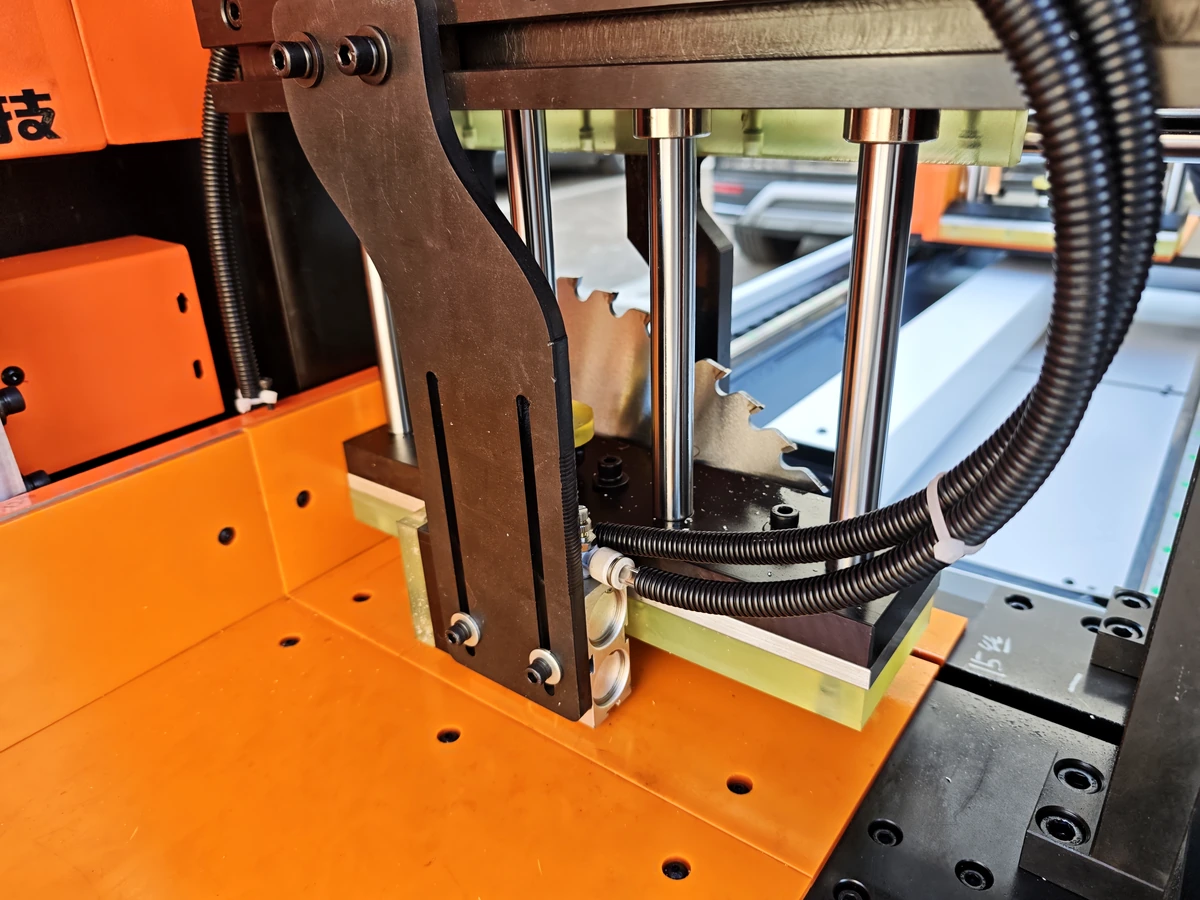
Do not infer seal material, dimensions or approved lubricant from the photograph below. It is a related saw clamping view with visible actuators, useful for locating the machine function in an RFQ; the seal kit itself is not shown.
Why the number on a shelf-life chart is not your answer
Manufacturer guidance can differ even before the saw application is considered. An SMC cylinder manual lists particular seal-kit numbers and says a seal supplied without independent sealed storage packaging should be used within one year. It then describes packaging and storage measures when a longer period is expected. That statement belongs to the documented SMC products in that manual; it is not a one-year rule for every saw seal kit.
Parker’s O-Ring Division shelf-life letter assigns different storage periods by polymer family for its materials and explains how its manufacturing date is defined. A separate Parker Prädifa storage guide gives its own material-dependent recommendations and emphasizes protection from heat, light, ozone, deformation and unsuitable contact. These are manufacturer documents with different scope. A buyer should request the rule attached to the exact kit and packaging offered, rather than transfer a number from a different maker, division or polymer.
For the same reason, a label saying only “NBR” or “FKM” does not identify the machine-approved kit, its compound, cure or manufacture date, packaging condition, or the maker’s release decision for an aged item. An unlimited category in one maker’s guidance is not a promise of unlimited usability for an unknown kit stored beside heat or ozone-producing equipment.
Aluminum saw seal kit shelf life: quote a usable storage window
For aluminum saw seal kit shelf life, put the intended use window in the RFQ. Is this kit for an already diagnosed repair, for one planned overhaul, or for contingency stock that may sit for years? Ask the supplier to state the kit part number and revision, manufacturing or cure-date identification, its own shelf-life basis, the packaging supplied, required storage conditions, and the minimum remaining period on receipt. Ask whether a shorter-dated lot can be refused or replaced and how an unopened kit is reviewed when its stated period expires.
Compare that answer with realistic consumption. Buying ten kits to obtain a lower unit price is not economical if only two can be used while the documented storage window remains open. Conversely, relying on just-in-time delivery may be unsuitable when the validated repair kit has a long replenishment lead time. The purchasing decision is a usable-stock quantity, not merely a box count. Keep the serial-number interchangeability check separate: two saws do not necessarily share a kit even when their clamp function looks similar.
Receive and store the kit as a traceable part
At receiving, match the invoice, kit label, manufacturer drawing and machine-station record. Preserve the original lot, date and packaging identity. A handwritten “seal set” label on a loose bag loses the information needed to apply the maker’s rule later. Isolate torn, unmarked or suspect stock for supplier disposition; a visual check cannot establish remaining service life by itself.
Assign a storage location that meets the exact supplier instructions, with protection from direct sunlight, heat, ozone sources, contamination and crushing where those conditions apply. Record receipt date, lot, expiry or review date, quantity, and the saw or station for which the kit is approved. Rotate by the documented usable date while preserving original packaging. Do not put loose seals in a drawer shared with blades, metal parts or chemicals and then treat a printed shelf-life period as still proven.
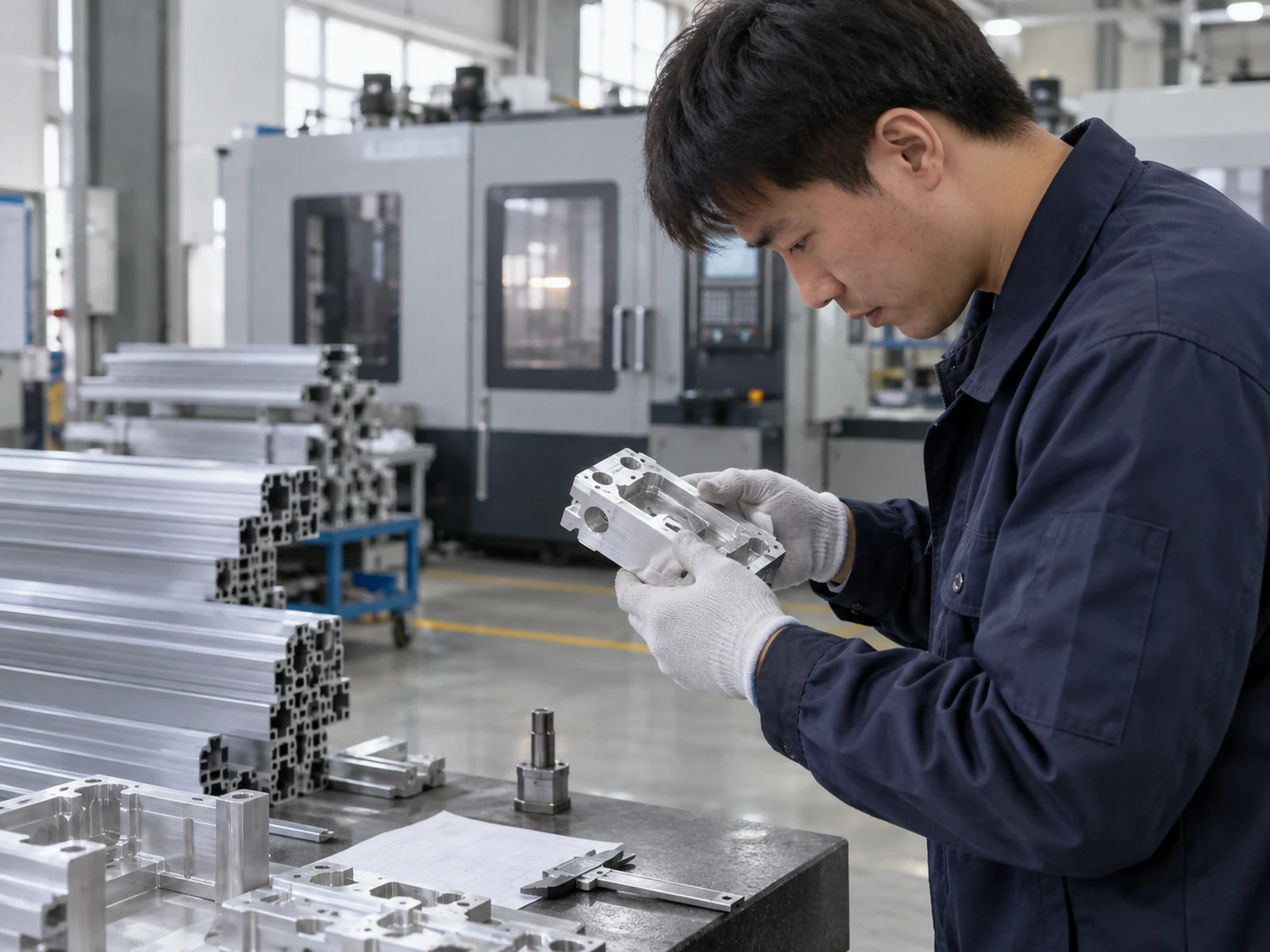
The image below shows related aluminum component inspection, not a seal-kit receiving inspection or this saw’s repaired assembly. The useful comparison is procedural: a physical item and its controlled identity must be checked together.
Keep the repair decision with qualified service
A kit can be within its stated storage period and still be the wrong remedy. The failed function must be diagnosed and the repair authorized for the actual actuator. Qualified personnel should follow the machine and component makers’ isolation, installation and restart procedures. The SMC manual’s service section explicitly discusses removing supply pressure and exhausting residual air before work on its equipment; use the applicable instructions for the real saw rather than this article as a procedure.
After approved service, record the fitted kit identity and lot, the removed component, functional checks and a representative first accepted cut against the job’s own criteria. Do not claim that storage age alone predicts in-service life or that one successful cut proves a repair’s long-term reliability. If the supplier cannot document a usable kit, compare a newly supplied kit with a complete approved assembly and the downtime involved.
What a running saw video can show
The Jiurun machinery video below shows a semi-automatic aluminum saw and a visible clamping and cutting sequence. It is related equipment context only. It does not show an opened cylinder, elastomer material, kit lot, storage history or post-repair test, and it cannot establish which seal kit fits the reader’s machine.
Send a spare request the supplier can answer
Send JiurunCut the saw model and serial number, actuator station and full installed marking, parts-list revision, reason for stocking, expected use period, and a photograph of the existing kit label if one exists. Ask for the approved repair route, exact kit and packaging, date traceability, minimum remaining storage period on delivery, and disposition of an aged or damaged pack. If the machine is from another maker, take the same packet to its responsible supplier. The purchase should result in a documented, usable spare for an identified machine—not a bag of plausible rubber parts.
Source boundary: SMC and Parker documents describe their own specified products and storage guidance. They are examples of why the exact kit maker’s current instructions matter; they do not certify a Jiurun saw configuration, seal material, service procedure or shelf life.