
Two aluminum saws can look alike while carrying different controls, clamping assemblies or safety components. If a purchasing team plans to hold one shelf of replacement parts for both machines, appearance alone is a costly basis for that decision. Aluminum saw spare parts interchangeability should be approved against each installed machine’s identity and the supplier’s written part cross-reference before the stock is pooled.
This guide is for buyers comparing spare-stock proposals across a small saw fleet. It separates a shared purchasing category from a genuinely interchangeable replacement part, and gives the supplier a practical evidence list for each line item. No part shown in the illustrations below is claimed to fit another machine.
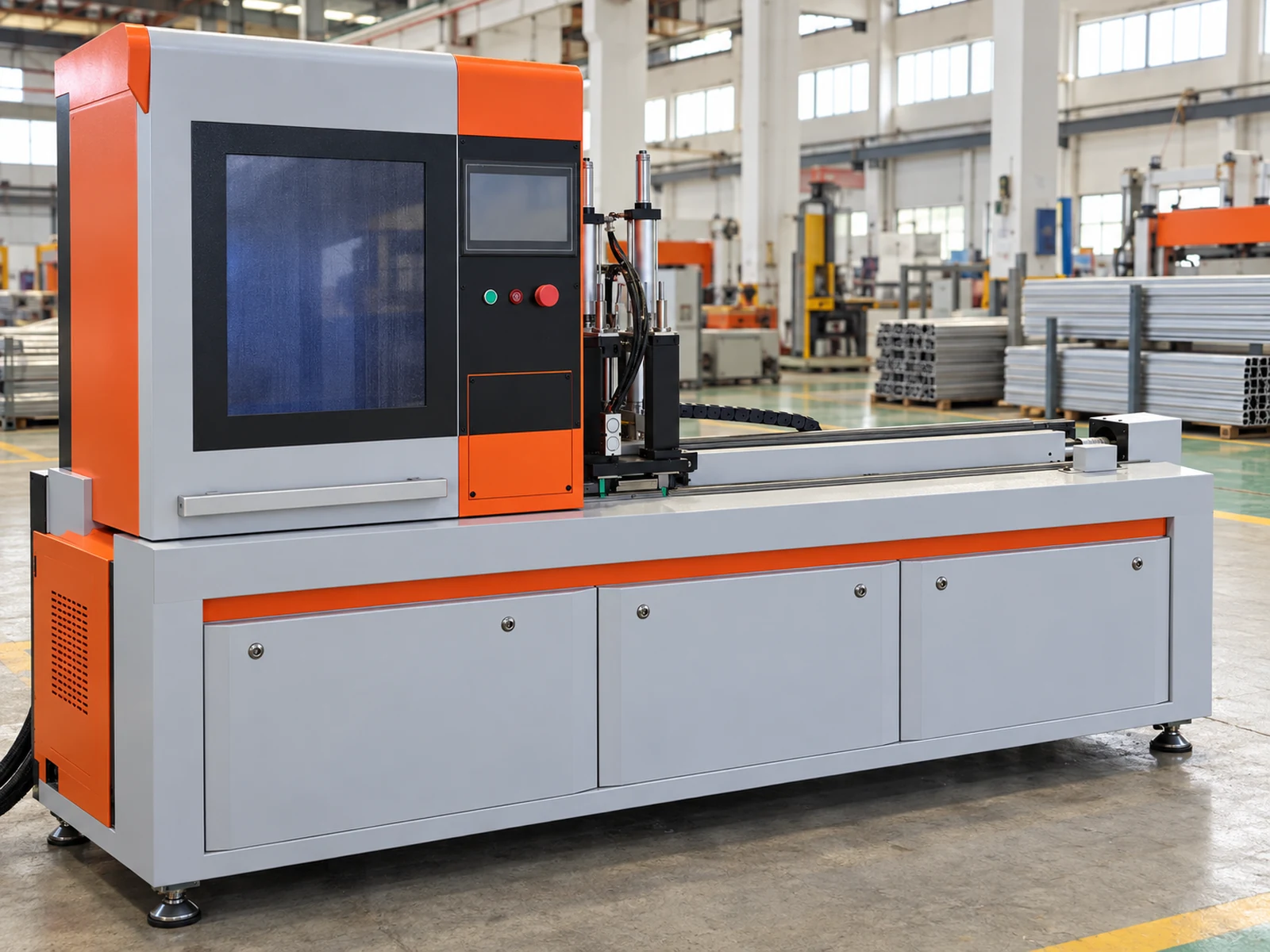
Why a matching machine name is not enough
A model name helps you start the conversation, but it may not describe the exact equipment in service. A machine can have a different production revision, controller, voltage, guard arrangement, feed system or customer-approved modification. A quoted item can also be a complete assembly on one machine and an individual component on another. Record the installed machine serial number and configuration before the supplier labels a part as common stock.
The buyer’s useful question is not simply, “Do these saws use the same spare parts?” Ask, “For this exact supplier part number and revision, which installed serial numbers are approved, and what changes or checks are needed on each machine?” If the answer is unknown, keep the item machine-specific until it is confirmed.

Aluminum saw spare parts interchangeability starts with a serial-number matrix
Start with one row per installed saw, not one row per model family. Capture the manufacturer’s machine designation, serial number, build or commissioning record if available, electrical supply, controller identity, key options and any later approved retrofit. Keep the equipment record with the maintenance team so a buyer does not have to reconstruct it during a breakdown.
Then create a second table for proposed spares. It can be a spreadsheet or an attachment to the request for quotation. The minimum useful fields are:
| Field | Why it matters |
|---|---|
| Machine serial numbers covered | Defines the actual installed population rather than an assumed model range. |
| Supplier part number and revision | Identifies exactly what is being bought and which version is approved. |
| Part description and assembly level | Separates a complete unit from a seal, cable, switch or other subcomponent. |
| Approved substitute or supersession | Records the supplier’s written replacement path and any conditions. |
| Quantity per machine and installation location | Prevents a common item from being counted once when two positions are exposed. |
| Commissioning or restart check | Shows what must be verified after installation before production resumes. |
Mark each row confirmed common, machine-specific or unresolved. The unresolved category is important: it keeps a buyer from ordering a supposed universal spare merely because a photograph or connector looks familiar.
Check the three groups of parts differently
Wear and consumable items
Blade size or a general label such as “coolant nozzle” does not prove fit. Confirm the exact dimensions, mounting, material or fluid compatibility and the supplier’s recommended operating range for the installed configuration. Keep the approval for a consumable separate from the approval for a safety-critical machine part. For a broader replenishment decision, see our aluminum saw consumables supply plan.
Mechanical assemblies
Compare mounting interfaces, handedness, travel, guarding clearance and the complete assembly boundary. A clamp jaw or head component that belongs in the same visual area may have a different geometry or fastening pattern. Ask the supplier whether a quoted supersession installs directly or requires an approved kit, adjustment or revalidation. Do not infer mechanical interchangeability from a drawing title that omits a revision.
Electrical, control and safety components
For a controller, sensor, switch or drive-related replacement, obtain the supplier’s exact hardware revision, electrical rating, connection and parameter or software requirements. Safety-related replacements deserve an explicit authorization and restart test from competent personnel. An identical enclosure or similar screen is not evidence that electronics or control logic can be exchanged.
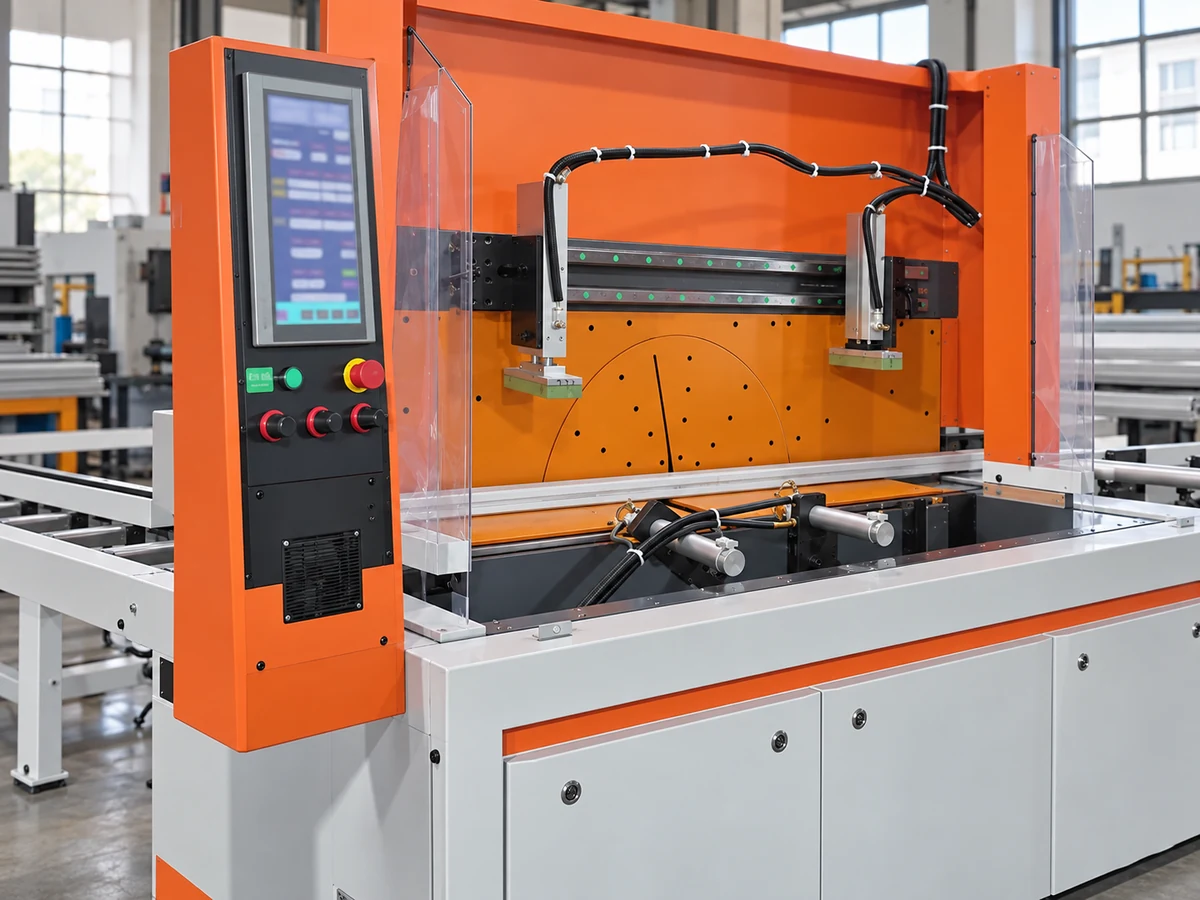
Ask for a supplier-confirmed cross-reference
A useful spare-parts offer identifies the part by supplier number and maps it to the machines it supports. It should state whether a newer part supersedes an older one, whether the earlier part remains serviceable, and whether the change requires a kit or a technician. Request the supporting parts list, diagram or service note that applies to your serial numbers. Treat “fits this series” as a prompt for clarification, not as a final authorization.
This machine-specific approach is consistent with the way saw makers present spare support: KASTO describes spare packages tailored to the machine or system and its use, while Behringer describes matched original spares and individually tailored packages. These are examples of supplier practice, not evidence that one manufacturer’s parts fit another’s machine or that any JiurunCut model shares a particular component.
Decide what can actually share a stock bin
Only pool stock after the cross-reference identifies the same approved part and revision, or an expressly approved substitute, for every listed serial number. Label the bin with the supplier part number and the approved machine list; link it to the controlled equipment records. If a part is approved for only some machines, segregate it physically or in the inventory system so a hurried repair does not draw the wrong item.
For each shared item, weigh the lead time and failure consequence against the carrying cost. A machine-specific part with a long supply time may deserve its own buffer even if it serves only one saw. A common low-risk consumable may be purchased on a regular replenishment cycle. Agree who owns reorder triggers and who updates the applicability matrix when a machine is modified or replaced. Our fleet standardization guide covers the wider equipment decision; this article covers the evidence needed for one stocked spare.
Plan the installation and restart evidence
The purchase order is not the last control point. The maintenance plan should identify who is authorized to install the replacement, the applicable isolation and service instructions, and the checks required before the saw returns to production. The exact procedure belongs to the machine documentation and qualified personnel; a blog photo cannot substitute for it. A guard-related repair may require a different restart record from a routine wear-part change. For that narrower issue, see the guard spare-parts quotation guide.
Record the installed part number and revision, the machine serial number, the reason for replacement, any approved configuration change, the checks completed, and the person who released the machine. If the proposed substitute fails the supplier’s fit conditions or the restart checks, stop the substitution and obtain a corrected part recommendation.
Copy these questions into the RFQ
- Which exact machine serial numbers and installed revisions have you used to select each quoted spare?
- What is the supplier part number, revision and assembly boundary for every line?
- Which items are confirmed common across our machines, which remain machine-specific, and which need further verification?
- If a part is superseded, what written substitution approval and installation conditions apply?
- What commissioning, safety and production checks are required after each replacement?
- What are the lead time, minimum order quantity, shelf-life or storage requirements, and replenishment route for each item?
Ask the supplier to answer against your machine list and return the completed matrix with the quote. That turns an attractive “common spares” promise into an orderable, auditable stock plan.
Frequently asked questions
Can two saws of the same model share all spares?
Not automatically. Match each part and revision to both installed serial numbers and configurations. A confirmed common part can be pooled; an unverified part should remain separate.
Does an OEM supersession make an old part safe to replace?
It can, but only when the supplier confirms the supersession for the particular machine and specifies any kit, configuration change or restart check. Record that approval with the stock item.
What should a buyer send when requesting a spare-parts list?
Send the machine model and serial number, photographs of the identification plate and affected assembly where permitted, the existing part number and revision if legible, and the symptom or replacement purpose. Avoid relying on a generic model name alone.
Next step: Contact JiurunCut with the installed-machine list and the proposed spares matrix. Ask for written applicability and a quotation tied to the exact equipment before authorizing shared inventory.