
An aluminum saw scrap chute can look adequate on a machine drawing and still fail at the shortest piece it must carry. A wide, stable cut part may slide clear while a thin trim, a hollow section, or a finned remnant turns, catches an edge, or lands across the opening. The purchase question is therefore specific: which of your actual offcuts will leave the guarded cut zone, reach the intended receiver, and remain accessible if they stop?
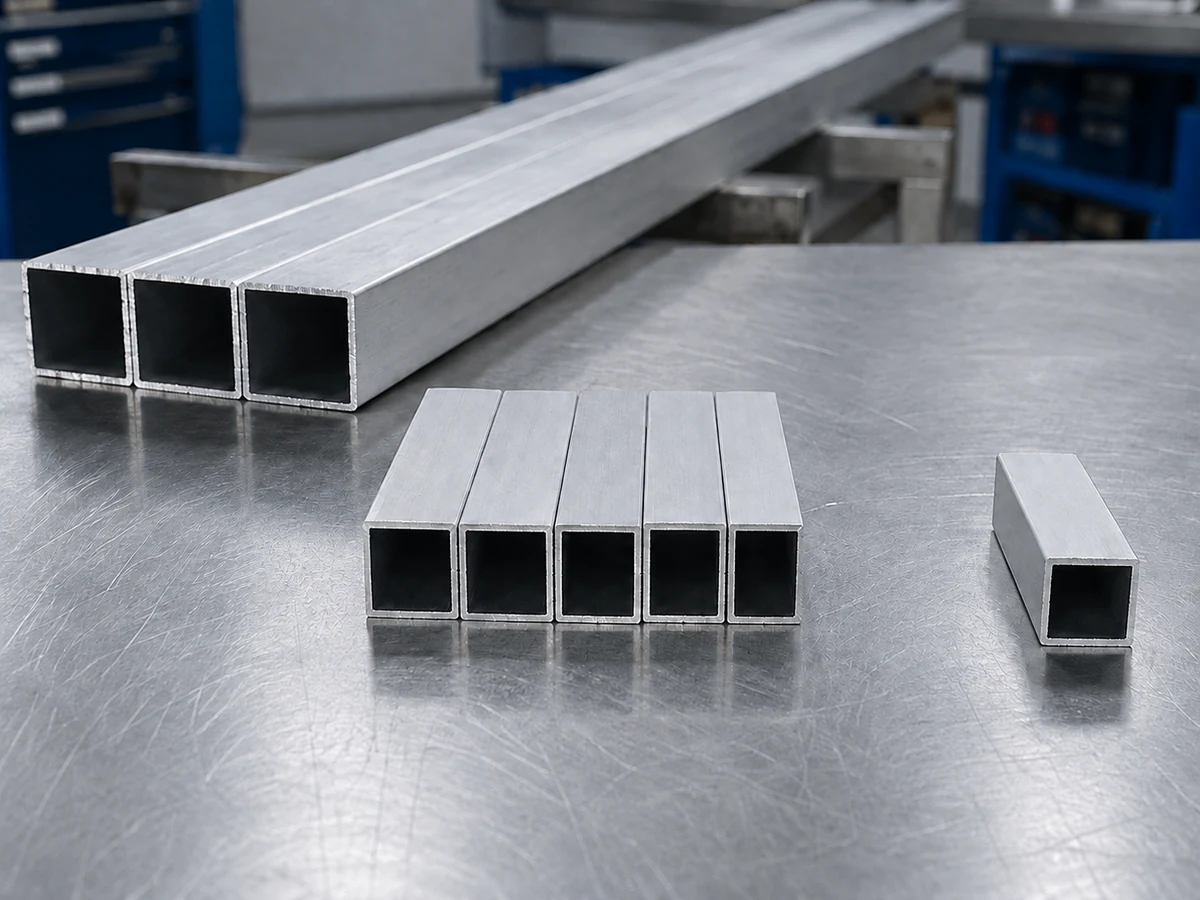
The featured photograph shows a saw exit area with cut aluminum profiles. It is an illustrative equipment view; no scrap chute or discharge result is visible in that image.
What an aluminum saw scrap chute must carry
Do not define the trial with a convenient finished part alone. List the smallest setup trim, the shortest recurring end piece, the final remainder from a stock bar, and any reject that operators expect to remove through the same route. Record each piece’s length, section width and height, mass, open channels or fins, cut-end condition, and intended destination. These are trial inputs, not claimed limits of a JiurunCut machine.
Ask the supplier to identify where each piece is released after the cut. The decision changes if it drops directly, is pushed by a following part, leaves on a belt, or requires an operator to remove it. For a profile with a projecting leg or fin, test more than one landing orientation. A nominal opening dimension alone does not show how a real offcut rotates, bridges, or slides.

Keep chips, trim, finished parts, and reusable remnants distinct
These streams can leave the same saw, but they do not automatically belong in one opening or one bin. Chips require their own collection path. A short trim may be scrap. A conforming cut part needs protection and identification. A long remainder may be reusable stock. Decide which physical route and receiver applies to each before interpreting a video of the saw cycle as proof of discharge.
For comparison, Behringer describes aluminum-saw disposal equipment that separates good parts, trim cuts, and remnants with a discharge belt and sorting gate. That is a third-party example of a possible route architecture, not a JiurunCut specification or evidence that the quoted saw includes a gate. If your requirement is to keep accepted short pieces in different lots, the short cut-part sorting guide addresses that later release decision; this article addresses whether the physical offcut route works at all.
Watch a complete discharge sequence, including a stopped piece
For the aluminum saw scrap chute under consideration, witness a full sequence for each representative offcut with the proposed guard, conveyor, gate, and receiver arrangement in its intended operating state. Capture the cut, release, movement through the exit, arrival in the correct container, and the next cutting cycle. A sample placed directly into the bin skips the critical interface. One successful drop also does not establish repeated flow; run enough consecutive pieces to expose accumulation at the opening and the receiver.
Record any piece that stays on the table, bridges across the chute, bounces into a neighboring route, or is retained by a cut edge. Note where the machine stops and who can identify the blocked location. Agree on a clearout method using the supplier’s guarded access and isolation procedure for the quoted configuration. Do not treat reaching into an active saw or bypassing a guard as an acceptable recovery plan.
A separate Behringer equipment example discusses a chute with a sorting switch and gives limits for that specific system. Its dimensions and mass limits must not be carried over to another machine. Ask for the applicable limits and a trial on the saw and offcut mix you are actually buying.
Quote the receiver and the recovery work
The aluminum saw scrap chute is only one link. Draw the boundary from the cut zone to the floor bin, trolley, conveyor, or other receiver. Include the required bin position, changeover space, overflow indication if offered, and who supplies or installs each interface. If good parts and scrap share a downstream path, state how a change of destination is commanded and how an operator checks it before a batch starts. An outfeed buffer solves a different question: what happens when the receiver for acceptable parts pauses.
Ask the supplier to distinguish standard equipment from optional chute, gate, conveyor, enclosure, receiver, sensor, and controls work. Record the trial stock and offcut dimensions alongside the quoted drawing revision. The acceptance record should show the tested routing, any manual handling that remains, and unresolved shapes rather than turning a general saw demonstration into a promise about every future profile.
A saw demonstration is context, not chute evidence
JiurunCut channel video: an automatic saw feeds, clamps, and cuts aluminum extrusion. It does not show or verify the proposed scrap chute, offcut routing, a buyer’s material, or discharge performance.
Use a video like this to discuss where the cutting cycle ends and the discharge decision begins. For the buying decision, request a separate recording or witnessed run that follows the actual shortest trim all the way into its assigned receiver. If that run is unavailable, keep the discharge function as an open item in the quote instead of marking it accepted.
The decision to release
An aluminum saw scrap chute acceptance statement names the offcut family, the tested piece range, the physical route, the receiver, and the clearout responsibility. It also names exceptions. This lets a buyer compare a simple manual collection route with a proposed aluminum saw scrap chute on the same production basis, without assuming that a saw which cuts accurately also disposes of every remnant reliably.
Share the profile drawing, shortest trim and final-remnant samples, proposed bin location, and intended good-part route with JiurunCut. Ask for a configuration-specific discharge plan and a trial method before treating the chute as part of the purchased solution.