
Infeed rollers can look like minor hardware beside a much larger aluminum saw. For a buyer, however, a worn or damaged roller can turn a simple service event into a long production interruption if the replacement part, removal path, and restart checks were never defined. This aluminum saw infeed roller replacement checklist helps you compare quotations and plan a handover. It is a purchasing and acceptance framework, not a replacement procedure for an unidentified machine.
Start by marking the exact boundary in the proposed line. A free-turning support roller on an upstream table, a powered feed roller inside an enclosure, and a guide wheel touching the side of a profile are different assemblies. The first may be part of a separate table supplier’s scope; the second may affect the machine’s feed sequence; the third may belong to the guide system. Ask the seller to identify each on the arrangement drawing and parts list before anyone quotes a spare.
Aluminum saw infeed roller replacement: define the boundary
For each proposed infeed station, request a drawing that shows where the profile enters, what supports its underside, what locates its sides, and which elements actively move it. Mark the roller or roller group that would be replaced. If the buyer will retain an existing roller table, identify its owner and the physical interface to the new saw. A statement that the saw “accepts roller tables” is not enough to establish height, load path, guiding datum, clearance, or responsibility for installation.
- Is the roller passive support, powered feed, or lateral guidance?
- Is it supplied with the saw, a loading rack, or the buyer’s existing table?
- Which drawing and revision identify its position, quantity, and mounting arrangement?
- Which part numbers cover the roller alone, its bearings, shaft, supports, fasteners, and guards?
Where several rollers appear alike, ask whether they are genuinely interchangeable. A common tube diameter does not establish a common installed length or shaft end. Label any left/right, driven/idler, or position-specific differences before building the spare inventory.
2. Describe the replacement unit, not just a diameter
A usable spare specification needs the dimensions and interfaces that determine fit. Record tube material and outside diameter, usable contact width, overall installed length, shaft form and end fixing, bearing arrangement, and any coating or surface requirement for the actual profile. Also ask how the supplier defines the reference length on its drawing. Interroll’s roller selection guidance shows why diameter, material, load, length and conveying conditions belong together; its catalog illustrates different shaft and bearing options. That is general component guidance, not evidence that an Interroll part fits a Jiurun saw.
Request the machine supplier’s approved spare number and a dimensioned, revision-controlled drawing for the quoted configuration. If a proposed substitute differs in surface, bearing seal, shaft retention, or contact width, obtain written compatibility approval for the actual machine and profile before treating it as interchangeable. A spare that can be fitted mechanically but changes the support height or creates a new contact mark is not an equivalent purchasing outcome.
3. Make maintenance access visible in the layout
Ask the seller to show the clearance for a competent technician to reach and remove the identified assembly. The access review should include nearby guards, side guides, wiring, pneumatic lines where applicable, adjacent stock racks, and space to handle a removed roller without lifting a long profile by improvisation. Do not infer an access route from a closed-machine product photo; have the actual configuration demonstrated at a planned stop.
The UK Health and Safety Executive explains that maintenance is non-routine work, calls for competent people and manufacturer instructions, and requires safe isolation and control of stored energy before maintenance. Its maintenance guidance is useful when writing a buyer’s witness plan. It does not certify a particular saw or replace the site’s safety procedure. Ask the supplier to provide the applicable instructions, isolation points, guarding restoration steps, and required tools for the delivered equipment.
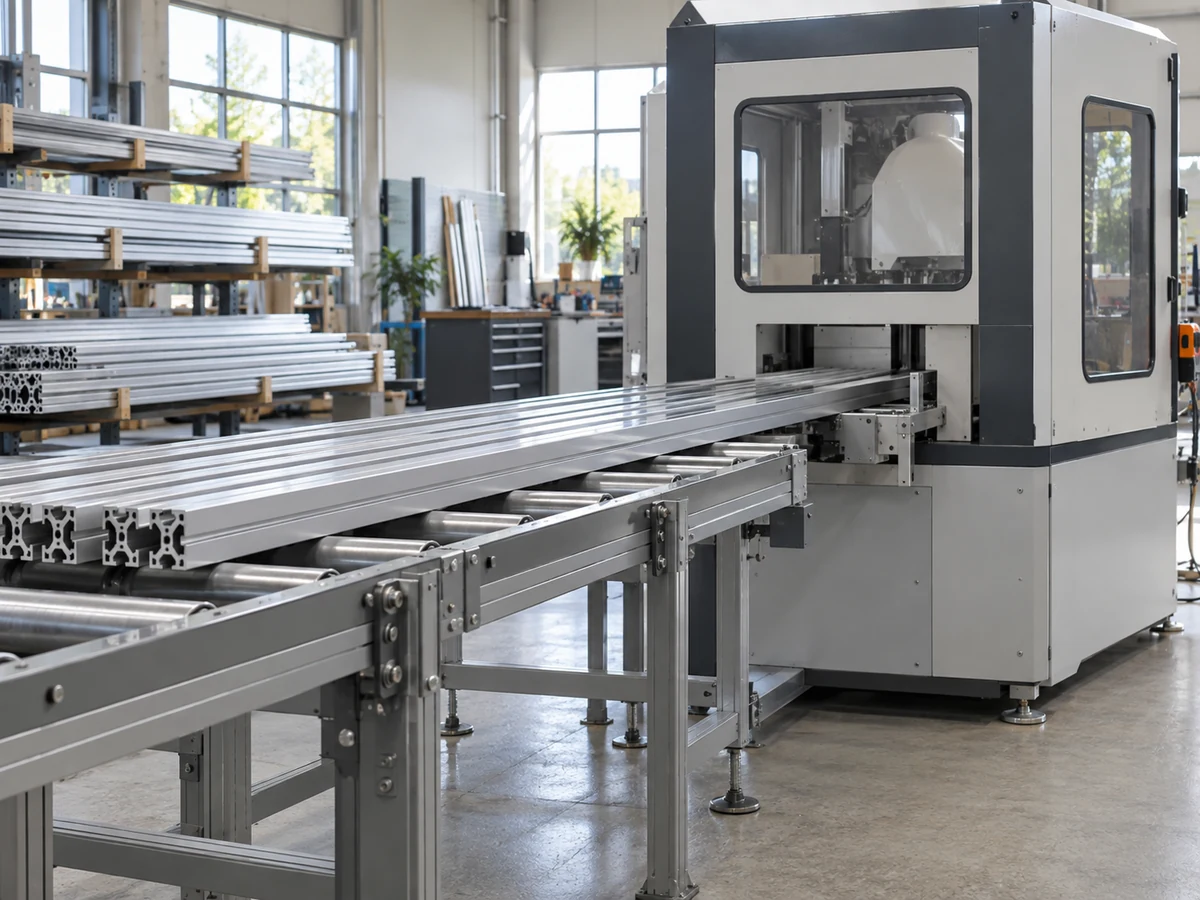
At factory acceptance, the buyer can ask for a stopped-machine walkthrough: identify the roller, the isolation method, the guard or cover that must move, the tool and handling space, and the sequence for restoring the machine to its approved operating condition. Record what was observed, what remains a site-installation responsibility, and which questions need a written answer. No one should perform an unplanned removal merely to produce a marketing demonstration.
4. Separate a spare fit check from a process acceptance check
A roller change is not finished commercially when a new part is bolted in. The acceptance plan should distinguish the component check from a representative feed-path check. For the component, verify identification, correct mounting, secure retention, freely rotating or commanded movement as applicable, guard reinstatement, and the supplier’s required adjustment. For the process, use an agreed sample profile and documented setup to examine whether it enters without unintended side contact, unsupported span, visible marking, or abnormal transfer at the saw entrance.
Record before-and-after observations and the person who releases the line. If finished-length or cut-face acceptance is part of the purchase, define its separate method, sample plan, and tolerances in the contract; a smooth roller is not proof of finished-part accuracy. The site’s qualified personnel and the delivered manufacturer’s instructions control the actual restart. The saw acceptance-measurement guide can help separate feed observations from dimensional product acceptance.

5. Compare downtime and spare strategy in the RFQ
Ask whether the offered spare is a complete preassembled roller unit or a kit of tube, shaft, bearings and fasteners. A complete unit may reduce some site assembly work, while individual parts may change inventory cost and repair flexibility. Neither route is inherently faster without the actual access path, tools, qualified people, and stock availability. Request separate prices and lead-time assumptions for the initial installed assembly, one approved spare, replacement labor or support, and any special tool. Do not accept a generic “low maintenance” claim in place of this scope.
Also distinguish a single failed roller from an uneven or incompatible whole infeed bed. If the existing table lacks a stable datum, adequate capacity for the real longest/heaviest profile, or a safe service route, a roller-only purchase may leave the original system problem unresolved. Conversely, replacing the entire bed because one catalog number is missing can be avoidable if the supplier can document a compatible repair. Compare both routes against the same production job and site constraints.
What the channel video does and does not show
The following video from the Jiurun Machinery YouTube channel shows a general guarded saw and feed sequence. It helps a buyer visualize the broad equipment context only. It does not show roller removal or replacement, and it does not verify this article’s material, a quoted model or configuration, a customer trial, a safety function, or performance.
Copyable buyer questions
- For the proposed aluminum saw infeed roller replacement, which exact assembly, location, drawing revision and owner are in scope?
- What are the approved spare number, tube and shaft interfaces, bearing specification, installed length and contact-surface requirements?
- Can a competent technician remove it with the delivered guards, guides and surrounding racks in their planned site positions?
- Which instructions cover isolation, stored energy, handling, reassembly and authorization to restart?
- What stopped-machine and representative-profile observations will be witnessed at FAT and repeated after site installation where needed?
- What are the prices, stock position and lead-time assumptions for a complete spare versus components or a wider table remedy?
Send the supplier a drawing of the proposed line, the longest and heaviest real profiles, surface-contact restrictions, site clearance, existing-table details if retained, and the agreed acceptance method. Ask for a revised quote that answers the six questions with named documents rather than informal assumptions. If the roller issue is one part of a larger service plan, the blade-change access checklist illustrates how to document another maintenance interface separately.
To discuss a JiurunCut saw quotation, contact our team with the profile drawing, expected feed arrangement, and service questions. We can review the applicable equipment scope before discussing an approved spare; no photograph or general video on this page substitutes for a configuration-specific drawing or test.