
The cut ends, but the saw head lingers above the work before returning home. A cycle that feels slow may actually contain a wait for permission to move, a slow travel stroke, or a late home signal. If an aluminum saw head return changes, identify which interval changed before ordering a valve, raising pressure, or blaming the blade. The aim here is to prepare a reproducible service case and a safe release check. The machine maker’s instructions and the site’s qualified maintenance team govern any diagnosis or adjustment.
Where the aluminum saw head return time goes
Start with five events visible through the normal guarded interface or in an authorized cycle log: cut complete, return commanded, first head movement, home reached, and home confirmed by the control. A machine may also have a separate blade stop or clamp-release event. Record the time between events rather than one total cycle time. The useful question is whether the extra seconds appear before movement, throughout travel, only at the end, or after the head is visibly home.
Compare several normal cycles with several affected cycles on the same approved job and settings. Note whether the symptom occurs from cold start, after a longer run, on one profile only, or after a maintenance change. Record actual observation time, machine identity, alarms and the person who saw the event. A phone video taken outside the guarded zone can help show the sequence, but it cannot establish the internal cause. Stop the trial if guarding, interlocks or head movement are abnormal.
A wait before movement points to a different question
If the aluminum saw head return command is delayed after the cut, or the command is present but no movement begins, do not treat the elapsed time as proof that a cylinder is weak. The relevant evidence is the machine’s approved sequence: which guard, clamp, blade, position or other permissive must be satisfied before return? A home or end-position indication that changes late can make a healthy stroke appear slow in the cycle record. Only a qualified person should compare the live indication and the machine’s documented logic; do not bridge a sensor or defeat an interlock to make the cycle finish.
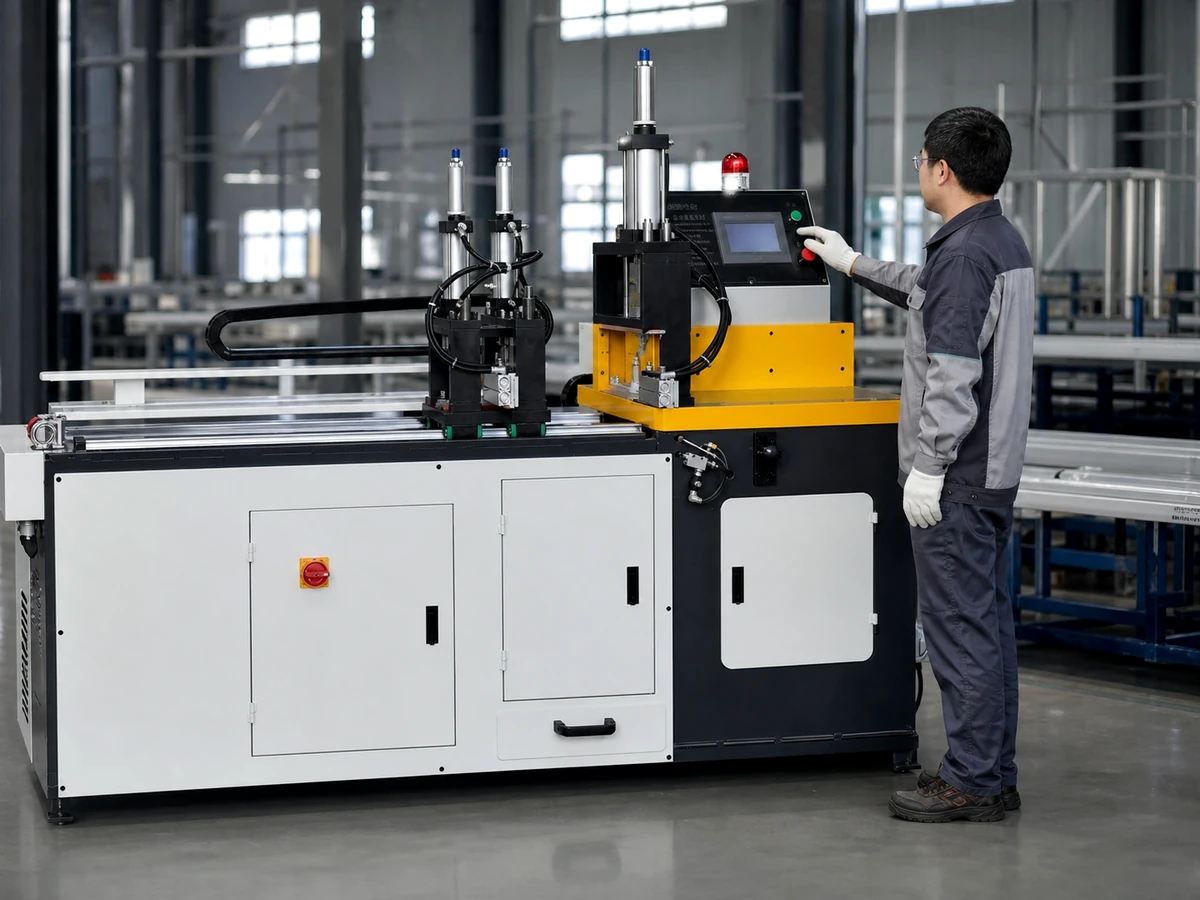
Capture the exact alarm text and the state of the normal operator display at the delayed point. If the return command does not occur until another event completes, the supplier needs that timing and the approved sequence diagram. This is also why a feed that stalls during the cut is a separate investigation: it happens in a different part of the cycle and should not be bundled into an assumed return fault.
When the head moves, identify the actuation first
A head that starts promptly but travels slowly needs a configuration-specific review. The return may be pneumatic, hydraulic or driven by another arrangement; this article cannot identify that from the machine exterior. Ask the OEM or authorized maintainer to confirm the installed circuit, recent service changes, supply condition under the approved test, flow-control arrangement and any mechanical obstruction. Note whether the forward stroke is also affected. A one-direction symptom is useful evidence, not a diagnosis.
For a confirmed pneumatic circuit, a flow-control component can govern speed by controlling exhaust or supply air. Festo’s flow-control guide shows that these functions differ, including between advance and return strokes. That guide explains a component principle; it does not specify a setting for a Jiurun saw. For a hydraulic or other drive, use its own schematic and manufacturer procedure instead. Blindly opening a throttle or increasing supply pressure can change motion and stopping behavior without fixing the underlying fault.
A delay near home needs an endpoint record
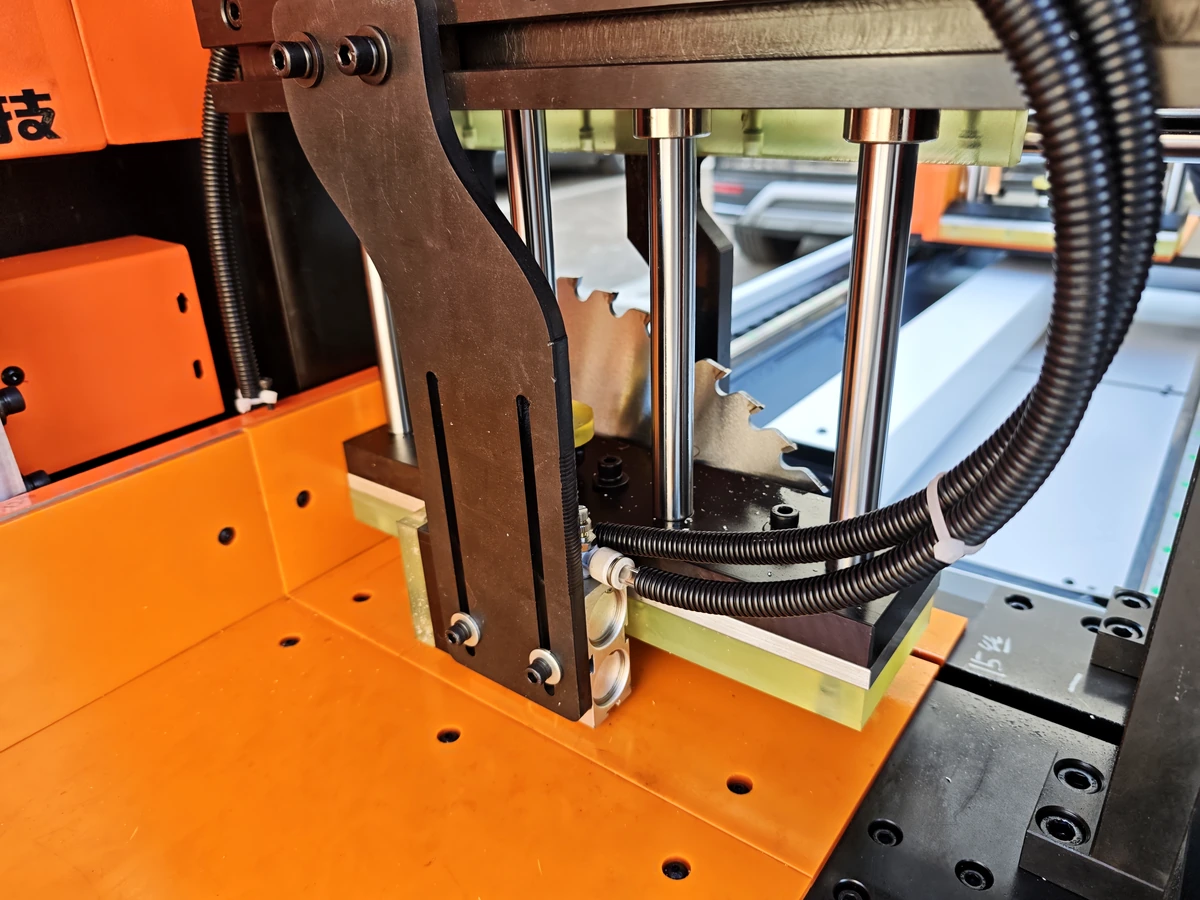
If the aluminum saw head return starts promptly but slows only near the endpoint, note the location and whether a normal deceleration or cushioning stage is specified for this configuration. Also compare the physical arrival with the control’s home confirmation. A late sensor indication, an endpoint change and a slow entire stroke lead to different service questions. Do not infer a sensor defect solely because the display changes late; the approved geometry, adjustment range and test method matter.
Keep blade run-down separate. A blade may still rotate after head travel ends, and a machine may intentionally delay access until movement is safe. The blade run-down guide addresses stop and access timing; it is not evidence that head travel is slow. Likewise, a cut-face return mark is a surface symptom with its own controlled sample check. A service report should name the event observed, not use “slow return” for every delay after cutting.
Stop, service and release in the right order
Operators can document normal-cycle indications without opening a guard. Inspection inside the danger zone, clearing an obstruction, changing a component or adjusting an actuator belongs to authorized maintenance under the site’s energy-control procedure. OSHA’s machine-maintenance guidance calls for electrical, mechanical, pneumatic and hydraulic energy sources to be controlled during maintenance. OSHA also describes a controlled sequence for temporary energization for testing by authorized personnel. Apply the governing local rules and the machine maker’s instructions; the cited U.S. guidance is background, not a universal legal instruction.
After the authorized repair, verify the aluminum saw head return with more than a single successful motion. Confirm the guard and interlock state, run the OEM’s approved functional test, compare the event intervals with the recorded baseline, and inspect representative cut pieces under the job’s existing acceptance criteria. Note the exact configuration and part changed. If the symptom recurs or the return path remains uncertain, keep the machine out of production and escalate to the OEM or qualified service team.
Send the evidence that separates the causes
A useful aluminum saw head return service request identifies the machine model, serial number and installed options; the approved job, profile and blade; the date and sequence of the change; any alarms; a guarded cycle video if permitted; timestamps for cut complete, return command, first movement and home confirmation; and recent maintenance or supply changes. State what was observed and what remains untested. Ask the supplier to specify the applicable diagnostic procedure, responsible technician and acceptance record. Do not send a guessed part number or request a faster setting as a substitute for that evidence.
For a Jiurun machine, contact JiurunCut with the machine identity and cycle record. We can review the reported return stage against the actual configuration and direct the next service discussion. No photograph, general video or article establishes that a particular valve, sensor, drive or saw head is defective.