
An aluminum saw guard window can help an operator observe the stock and cut area while a fixed guard remains in place. A clear-looking panel in a brochure, however, does not tell a buyer what can be seen from the actual control position after chips and mist accumulate. The useful purchase question is specific: what must the operator see, how will the panel be kept usable, and how will a damaged panel be replaced on the quoted configuration?
This guide provides an RFQ and acceptance checklist. It does not certify any pictured machine or prescribe a guard design for every saw. Ask the supplier to demonstrate the exact configuration against your task and local safety requirements.
Define the view before specifying the window
Start with the production decision the operator needs to make. Is the goal to confirm that a long extrusion is seated against a stop, that the clamp area is clear before a cycle, or that chips are accumulating where they should not? Put each observation in a table with the operator’s normal standing position, the machine state in which it is needed, and what action follows. A guard window is valuable only if that information remains visible without opening a guard or leaning into a hazardous area.
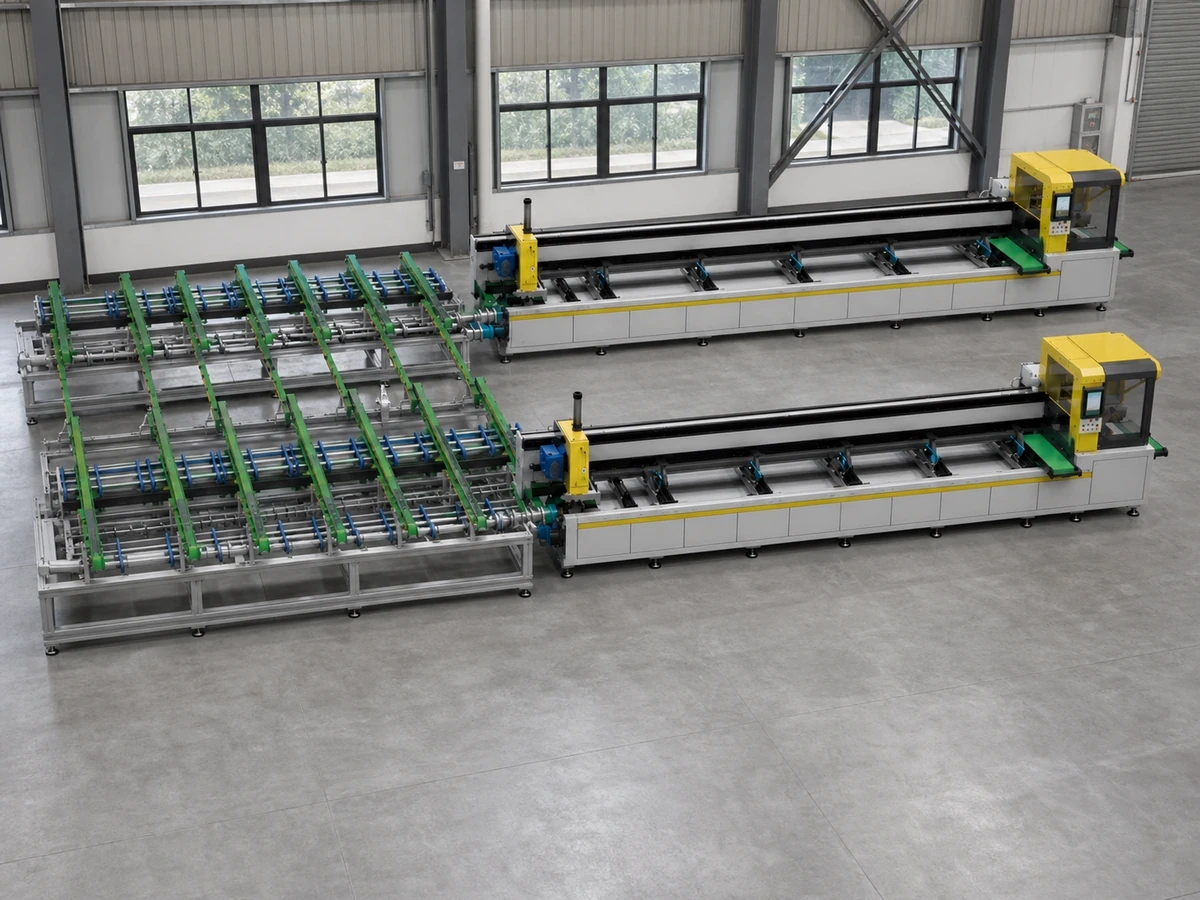
Ask for a photograph or short supervised demonstration from the real control position with a representative profile loaded. Specify the profile height, finish, cut orientation and expected chip or lubrication conditions. If the supplier offers multiple enclosures, ask which guard and window are included in the quotation. An exterior photograph of another model is useful context, but it cannot establish the view through your proposed window.
The UK Health and Safety Executive’s EIS12 guidance for manually fed pivoting-head metal-cutting circular saws notes that transparent or mesh material may be used in fixed guards when a direct view is necessary. That guidance addresses a particular saw type. Treat its visibility and maintenance principles as prompts for the supplier’s risk assessment, not as a universal specification for Jiurun machines.

Check visibility under operating conditions
Evaluate the aluminum saw guard window with the machine and stock in the state in which the operator actually needs to look through it.
Ask the supplier to show the view before a run and again after a representative cutting interval. Look for glare, internal reflections, chip deposits and any mist film. Record the machine state, lighting, profile and viewing position used for each observation. A window that appears clear with an empty machine may be less useful with stock in place; a panel that is easy to see through immediately after cleaning may need attention during normal production.
Keep the questions separate from other visibility decisions. Operator sightline concerns where people stand and what they can see across the machine. Cut-zone lighting concerns illumination. The guard window adds a distinct question: whether the panel itself preserves a useful view and can be restored safely when it becomes dirty or damaged.
Specify safe cleaning access
For the aluminum saw guard window included in the quote, ask which side of the panel normally collects deposits and which surfaces can be reached after the machine has been stopped and isolated according to the manufacturer’s procedure. Request the approved cleaning method, permitted materials and any restrictions for the supplied window. Do not assume that a solvent, scraper or abrasive is compatible with an unidentified panel. Cleaning should not require removing a guard for routine production observation unless the supplier has a documented safe procedure for that task.
Have the supplier demonstrate the sequence on the quoted configuration: stop and isolate; confirm the cutting equipment has reached a safe state; access the panel; clean it by the approved method; restore all covers; and perform the required checks before restarting. Record who may do the work and whether a tool, platform or second person is needed. The HSE’s work-equipment inspection guidance emphasizes inspection appropriate to the equipment, its use and conditions, informed by risk assessment and manufacturer recommendations.
Plan for inspection and replacement
The aluminum saw guard window is a service item as well as a viewing aid. Ask how its condition will be judged over time.
Ask the supplier for the window’s inspection criteria. Potential concerns include haze that obscures the required view, scratches, cracks, loose mounting and damaged seals. The acceptance threshold and repair method must come from the manufacturer and the applicable risk assessment; this article cannot determine them from a photograph. Confirm whether the quoted part is a separate replaceable panel or part of a larger guard assembly.
Request a parts list with the panel identifier, mounting or seal components, lead time, access requirements and instructions for restoring the guard after replacement. If the same enclosure has multiple window versions, ask for the part number tied to the offered serial or configuration. Coordinate this with your broader guard spare-parts plan, while keeping the viewing panel’s optical condition and cleaning procedure explicit.
Use a witnessed acceptance check
Before accepting the proposed machine, agree on a short demonstration with the supplier. Use one representative profile and the exact guard, control station and lighting arrangement in the quote. From the normal operating position, verify the agreed observations with the guard closed. After the representative run, document any buildup that affects the view. Then witness the approved isolated cleaning sequence and the required guard restoration and restart checks.
Keep photographs, the configuration identifier and a dated checklist with the acceptance record. This is evidence for the particular unit and conditions tested, not a general claim about every machine or material. If visibility or safe access is insufficient, record the specific observation that failed and seek a revised guard, cleaning arrangement or operating method before relying on the window.
Six RFQ questions for an aluminum saw guard window
- Which guard and window version are included in the quoted machine configuration?
- What can the operator see from the normal control position with our representative profile loaded and the guard closed?
- How does the view change with our expected chips, lubrication and lighting?
- What are the approved isolated cleaning steps, materials and access points?
- What inspection criteria, replacement part numbers and lead times apply to this panel and its mounting parts?
- What witnessed demonstration and documentation will confirm visibility, cleaning and guard restoration before acceptance?
Compare aluminum saw guard window proposals on demonstrated observation, service steps and documented parts, not on a generic promise of a clear guard. Send your profile drawing, operating position, chip/lubrication conditions and these six questions with the RFQ. Contact JiurunCut to discuss the offered enclosure and a configuration-specific demonstration.
Related equipment video
The following video is from Jiurun’s own channel and shows a guarded aluminum saw as general equipment context. It does not demonstrate this article’s guard window, cleaning method, replacement procedure, proposed configuration or performance.