
What the buyer must see
Aluminum saw cut-zone lighting is easy to overlook when a purchase trial takes place in a bright showroom. The question is not whether the machine looks bright in a photograph. It is whether the person assigned to a specific task can distinguish the relevant stock, clamp contact, offcut, and cut condition from the approved working position, with the guard in its intended state. Ask the supplier to demonstrate that view using your representative profiles and the lighting that will actually be included in the delivered installation.
Define the observation task first. A running-cycle check through a closed viewing panel is different from a stopped inspection of a finished end, a tool change, or clearing accumulated chips. A buyer should record who performs each task, where they stand, what detail they must distinguish, and the machine state that permits it. Good task lighting cannot compensate for an unsafe access route or a missing guard. The UK’s HSE guidance on safe use of work equipment discusses viewing panels and, where appropriate, internal lighting while preserving the guard’s protective function. Apply the principle to the offered configuration, rather than treating it as a claim about any particular Jiurun model.
Four views for an aluminum saw cut-zone lighting trial
Start with the operator’s normal position. Can the operator see whether a profile is seated against its reference and whether a short cut part has cleared the zone, without leaning around a cover? Then check the view through a closed transparent panel. Reflections from overhead fixtures, scratches, chips, and coolant film can obscure a well-lit interior. Next check the stopped setup position, where a technician may need to inspect contact faces or a blade area under the machine’s specified safe procedure. Finally, check the outfeed and sample-inspection station. These views can require different lighting and may belong to different parties in the purchase scope.
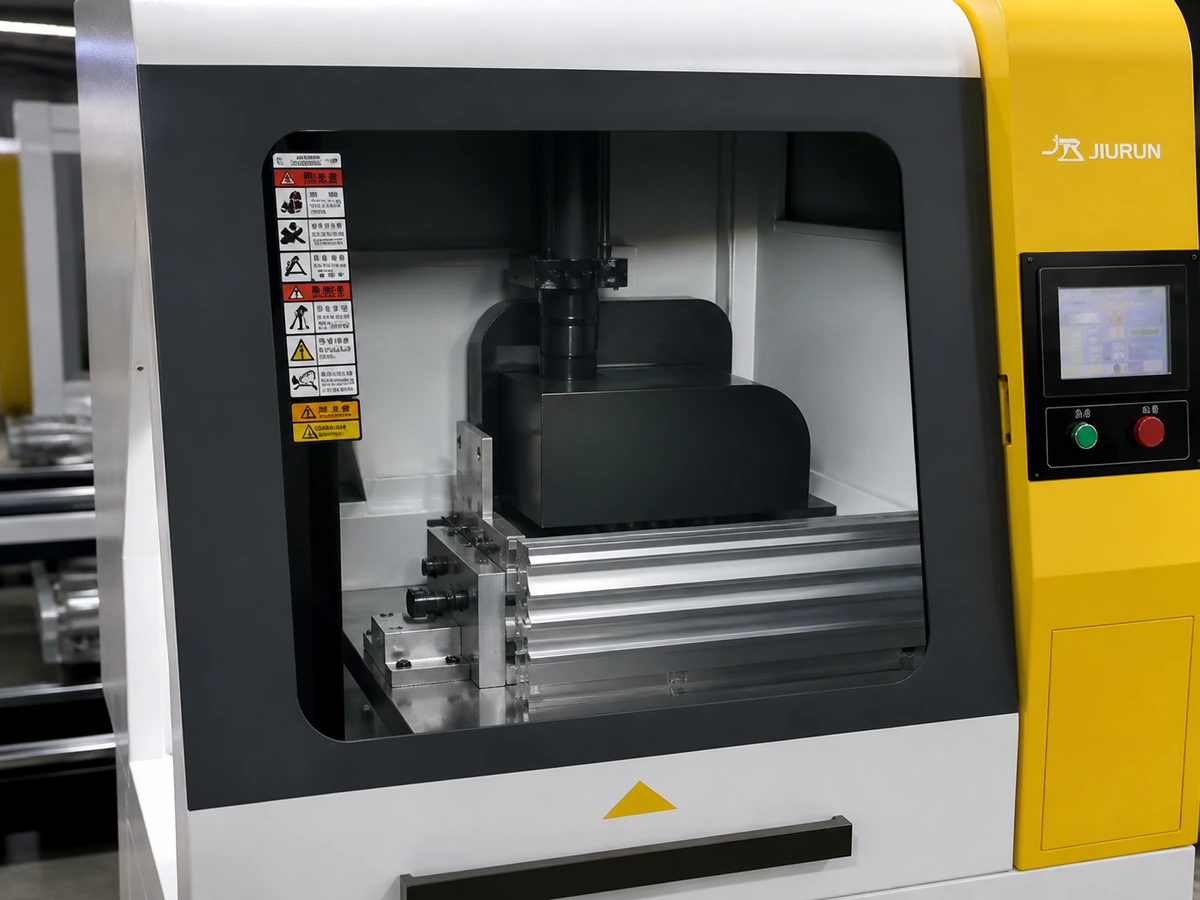
Ask for a task-by-task viewing map, not a single brightness number. Record the target detail, observer position, guard position, ambient-light condition, and whether the detail remained visible after a normal run of your own representative material. If the supplier proposes a camera instead of direct sight, include the camera position, lens contamination, screen placement, failure indication, and maintenance access in the same trial. Do not assume a camera or work light is supplied unless the quote names it.
Test glare, shadow and contamination in the real enclosure
A light source can make one part of the zone brighter while creating a hard shadow under a clamp or a reflection on the viewing panel. Bring both reflective and dark-surfaced representative sections if they are part of the released job mix. Observe the machine from the planned standing positions, with the guard closed and with the overhead lighting expected at your site. Photograph the task target and note whether the operator had to change position to see it. If the relevant detail is only visible with the guard open, treat that as an unresolved design or procedure question; never use a trial that bypasses safeguarding to make the view appear acceptable.
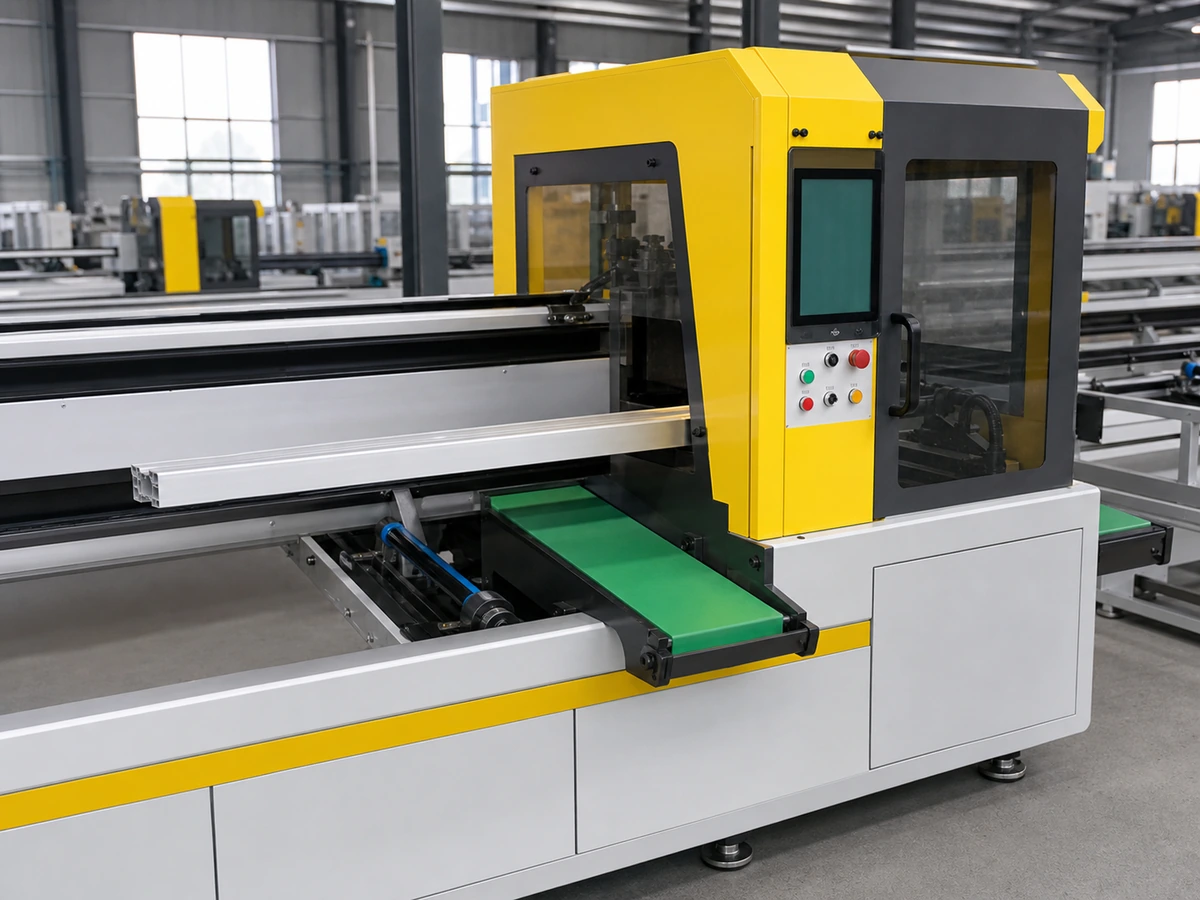
The HSE’s Lighting at work guide describes task visibility, glare, reflections, shadow, maintenance, and changes in work conditions as parts of a lighting assessment. It does not provide a universal lux target for every aluminum saw. If your site sets an illuminance target, have the responsible team specify the task plane, measurement method, acceptance condition, and applicable local requirements. A vendor’s lamp wattage or promotional image cannot substitute for a task-level observation.
Run the view check after representative cutting as well as before it. A clean panel and lamp may look adequate on the first cycle while chips or mist build up at the actual viewing line. Note the frequency and safe method of cleaning the panel, lamp cover, and camera lens if fitted. Confirm that maintenance can be carried out with energy controlled according to the machine instructions. The HSE work-equipment maintenance guidance stresses planned maintenance and safe isolation. The cleaning plan should be part of the accepted operating method, not an assumed operator workaround.
What is included in the quotation?
Ask the supplier to identify each included light or visibility aid by location, mounting, power supply, switching logic, protective cover, and service access. Confirm whether the light is integral to the quoted saw, an option, or a buyer-supplied site item. Clarify whether it stays available during a stopped inspection, whether it goes dark when main power is isolated, and how a safe temporary inspection light would be used if isolation removes illumination. The answer must come from the actual electrical and safeguarding design; do not modify an interlock or energize hazardous motion just to keep a light on.
Agree who provides overhead lighting, local task lighting, wiring, replacement parts, and commissioning checks. If the saw is moved to another line, identify who reassesses the viewing conditions. Request the supplier’s installation drawing or a marked photograph showing the intended viewing positions and proposed light locations. This is a quote-scope check, not a promise that any shown machine has the same equipment.

A practical buyer-witnessed trial
- Fix the task list: choose the actual profiles, shortest and longest relevant parts, finish conditions, and the details the operator or inspector must see.
- Record the offered setup: machine model and options, guard and panel arrangement, lamp or camera location, ambient lighting, and planned operator position.
- Observe guarded operation: run the representative cut list without changing normal safeguards; record visibility of the stock reference, clamp area, cut-part path, and abnormal-condition indicators from the intended position.
- Repeat after contamination: inspect through the panel after a realistic run, noting reflections, chip deposits, film, and cleaning needs.
- Inspect only in the permitted state: follow the machine’s stopped and isolated procedures for any hands-on check, and determine whether adequate safe inspection lighting remains available.
- Close the quotation gap: list corrective changes, who supplies them, and which configuration must be retested before acceptance.
Keep separate observations for a closed-guard operating view and a stopped, safely accessed inspection view. An operator who can see a cut part through a window has not thereby demonstrated safe access to it. Conversely, a good stopped inspection light does not prove the cycle can be supervised from the operator station. If stop and access timing is unresolved, review the related blade run-down buying check. If a tall profile changes the opening or view, use the tall-profile guard-opening trial as a separate check.
General equipment video
The following video from Jiurun Machinery shows general saw equipment footage. It is an equipment-view illustration only. It does not demonstrate this article’s task-light arrangement, the photographed machine configuration, a customer’s site, a witnessed lighting trial, or any measured visibility or safety performance.
General equipment footage from the Jiurun Machinery YouTube channel; not a cut-zone lighting acceptance test.
Decision and RFQ handoff
For aluminum saw cut-zone lighting, accept a visibility plan when the named people can complete each defined observation from an intended safe position, the guard and stop/access logic remain effective, the view remains usable after representative operation, and the purchase documents allocate every light, panel, camera, cleaning item, and site responsibility. If a critical detail remains hidden, request a revised arrangement and repeat that part of the trial. Do not convert a photograph or a showroom observation into a production acceptance claim.
Send the supplier your representative profile list, cut sequence, planned cell layout, normal overhead lighting, observation tasks, and site rules. Ask for a configuration-specific trial and a quotation that identifies included visibility equipment and unresolved site work. Contact JiurunCut with those inputs to discuss an appropriate saw configuration and the evidence needed before an order.