
An aluminum saw for a job shop has to earn its place across a changing order book, not on one attractive demonstration cut. A shop may receive short repair batches, recurring frame members, long extrusions, and urgent jobs with different revisions in the same week. The buying question is which work should stay in-house, what physical stock and finished parts the saw must handle, and whether the complete route still works when the next job is unlike the last.
This guide is for a buyer comparing an in-house industrial saw with bought prepared parts and, if justified, more automated cutting. It does not assume one Jiurun model can process every section. Drawings, material, fixtures, acceptance criteria and the actual quoted configuration must be checked for each proposed job family.
Define an aluminum saw for a job shop against real orders
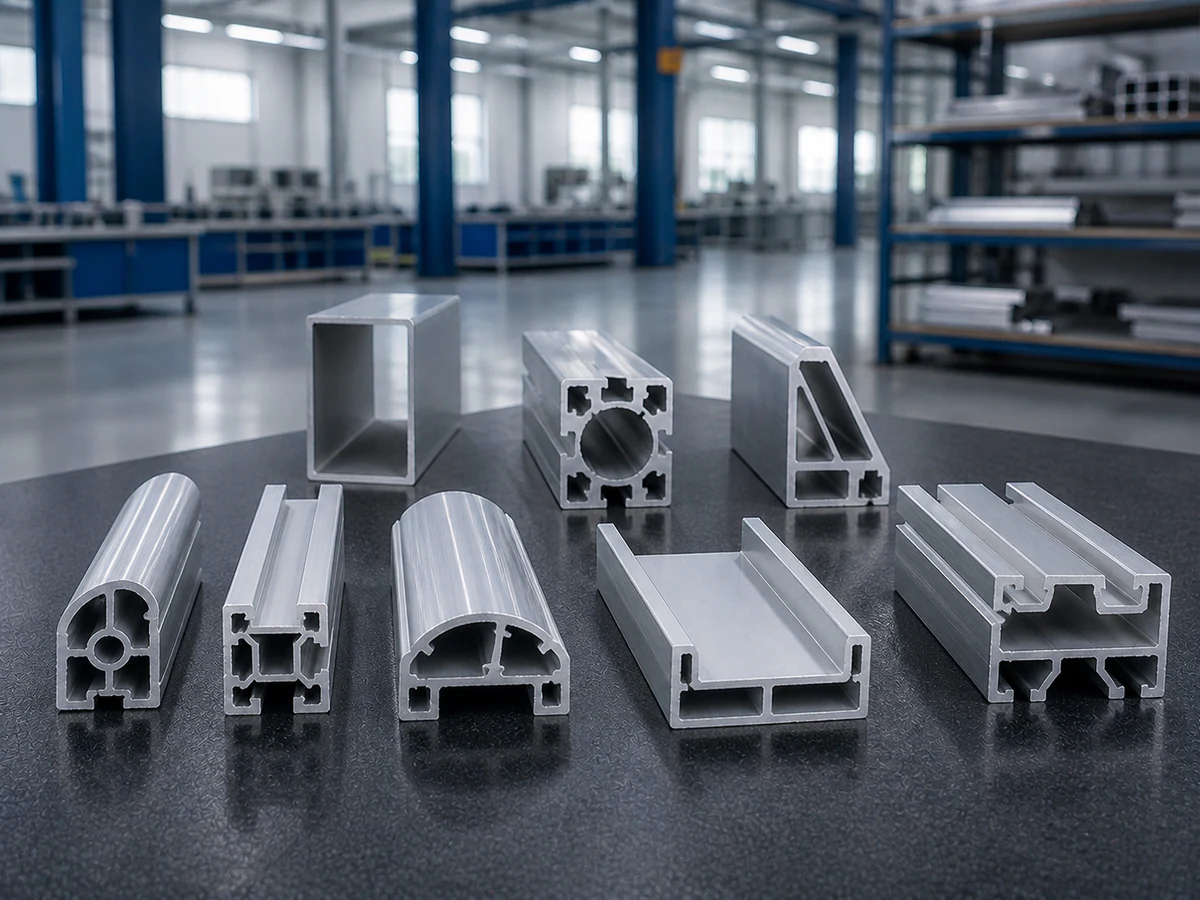
Start with real released orders rather than a catalogue maximum. Group work by incoming form, section geometry, cut length and angle, batch size, required end condition, downstream operation, and delivery unit. Separate recurring parts from one-off work. Note the drawing revision and who approves a substitute profile or an altered cut. A saw that is efficient on a repeated straight-cut member may be a poor purchase if the shop’s constraint is frequent setup, identification and first-piece release across unlike jobs.
For each family, write the start and end of the work being bought. Does the shop receive full extrusion bars, short stock, or customer-supplied pieces? Does it deliver loose blanks, matched member kits, or parts that still need drilling, finishing or assembly elsewhere? A sales claim about cutting rate cannot answer these boundary questions. The accepted unit may be a lot with records, not a pile of cut pieces.
Compare three complete supply routes
Buy prepared cut parts. This can be sensible when the work is irregular or a specialist already owns the required preparation route. Compare the quoted part condition, traceability, revision control, minimum batch and delivery commitment with what your customer accepts. Keep purchasing, receiving inspection, expediting and rejected-part recovery in the comparison. Our outsourced aluminum cutting guide provides separate supplier questions.
Retain a staffed saw station. Quote the actual saw, guards, blade and clamping arrangements for the approved sections, along with stock presentation, cut-part collection, measurement and record work. The person running the machine may also prepare material, change setups, separate customers’ parts and release a first piece. Do not treat the machine’s automatic cycle as the whole elapsed order time or as proof that one operator can cover another station.
Assess a CNC or linked loading route. A program, feeder or loader may help a defined mix, but the buyer must price its complete input, output, guarding, programming, support and changeover boundaries. Establish how exceptions and short urgent runs are handled. A quoted automation feature does not show that the shop’s current drawing revisions, awkward sections or batch labels move through the entire cell without additional work. Test the offered route against the same job portfolio used for the alternatives.
These routes can coexist. A shop might retain common profile cuts, buy a prepared part whose features exceed its retained route, and subcontract a temporary overflow lot. Document which families belong to each route and what causes a job to be reassigned. Do not multiply an assumed saving across all sales if only a portion of orders is eligible for the new saw.
Measure the time between two accepted jobs
A high-mix buyer should observe the interval from the last accepted part of one order to the first accepted part of the next. That includes confirming the next drawing and stock, locating the approved blade and fixture, making the setup under the site’s procedures, checking the first piece, recording its result, and clearing material from the previous order. The NIST MEP lean and process-improvement overview identifies quick changeover as a process-improvement area; it does not establish a time saving for this machine or shop. Our changeover-time guide helps define the measured boundary.
Ask each bidder what is included in its changeover demonstration. A video of a running saw may omit tooling access, material handling and first-piece approval. If a clamp or blade arrangement differs by section family, identify every quoted option and the work needed to move between them. Avoid a universal setup-time promise: the answer depends on the actual profiles, fixtures, people and release process.
Design a mixed-order trial that could change the decision
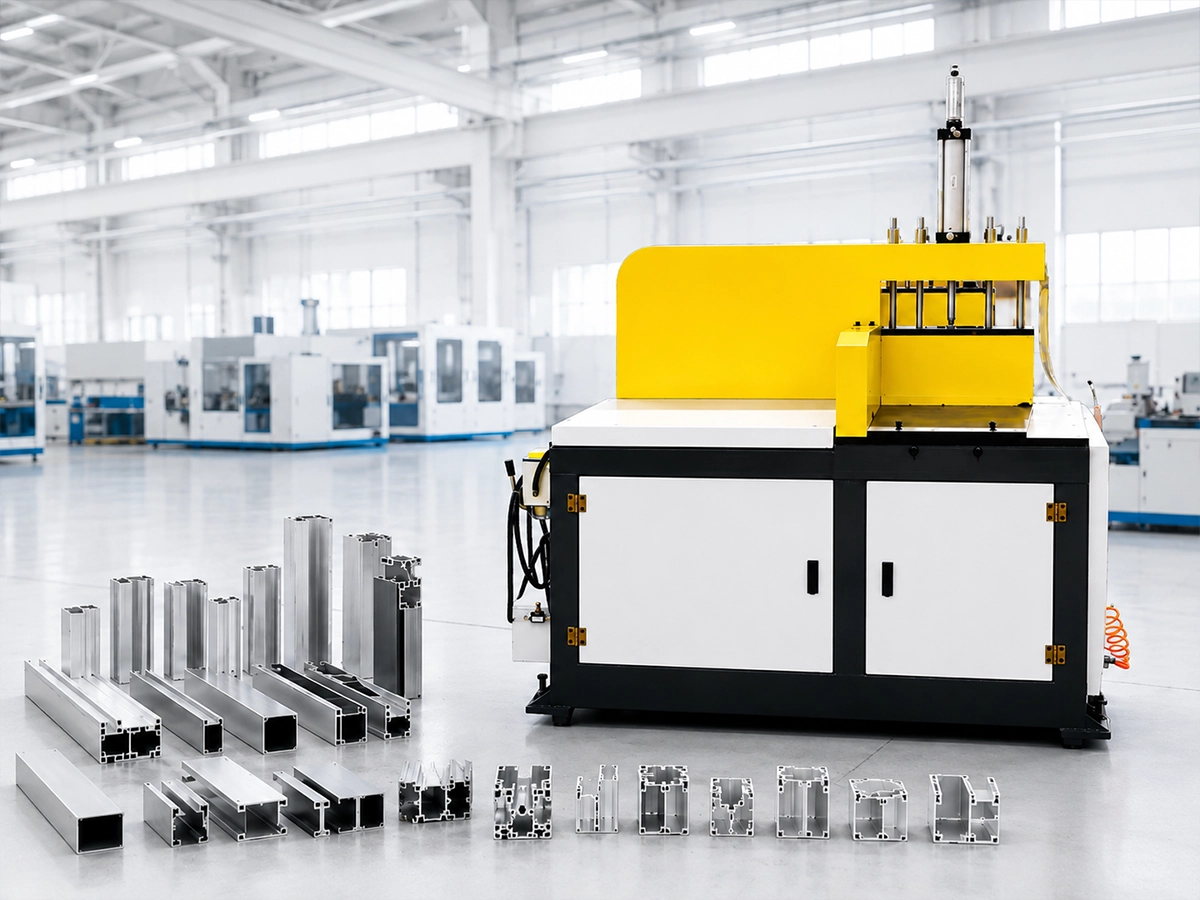
Choose a small set of representative actual jobs before a trial is scheduled. Include a repeated family, a small urgent order, a section that challenges holding or support, and a job whose cut end matters to downstream assembly, if those are in the real portfolio. Supply the current drawings, material condition, required end result and customer-approved tolerances. Ask which cases the bidder can trial with the offered configuration and which remain unproven. Do not substitute an easy short offcut for a full-stock feeding question.
Witness an order sequence, not only isolated cuts. Record the starting stock, machine and options, blade and fixture identity, program or stop setting, setup and first-piece decisions, accepted quantity, rejects, rework, and any manual movement between stations. A dry run can expose program or information issues but cannot release cut parts; see our program dry-run approval guide. If the candidate cannot safely or practically demonstrate one family, retain that limitation and decide whether it stays outsourced.
For a mixed order book, label samples by order and drawing revision. A part from the right length but the wrong customer revision is not accepted output. If the trial uses a supplier’s demonstration material or tooling, document how it differs from the shop’s intended stock and order release. Neither a photograph nor a generic machine video is a substitute for the trial record.
Compare cost at the same accepted-output boundary
Use one defined study period and the same set of eligible orders for every route. For an in-house saw, include the actual quoted equipment and site work, blades and consumables, stock presentation, staff time for loading and setups, accepted-part inspection, rejected cuts, maintenance, and the cost of any operations still performed elsewhere. For outsourced parts, include quoted accepted parts, transport, receiving work, lead-time protection and the recovery path for a rejected or late lot. Mark uncertain values as assumptions rather than turning them into zero.
Do not compare a per-cut machine calculation with a delivered, inspected part price. If one route delivers a labelled kit and another delivers loose lengths, add the missing kit and traceability work before ranking them. The NIST MEP pre-purchase guide asks buyers to consider installation, users, maintenance and lifecycle questions when comparing equipment. It is general buying guidance, not a JiurunCut machine-performance claim.
Also test a bad week. What happens when an urgent order interrupts a planned batch, a profile arrives bowed, or the first piece is held? Who can approve an alternate route and who tells the customer? A faster nominal cycle may not reduce late accepted deliveries if the real bottleneck is release or missing stock. Write the response path into the buying case rather than assume the machine solves every order problem.
Specify the handoffs that make the purchase usable
Ask each supplier for a configuration-specific reply covering the section and stock portfolio, blade and holding options, feeding and outfeed, program and drawing revision handling, operator training, documentation, maintenance and spares. Name the site owner of incoming material, first-piece approval, part identification and downstream work. Where another supplier provides a loader or receiver, obtain a separate accepted interface and test plan. A sales quotation that lists only the cutting enclosure does not price those handoffs.
Finish with three purchase gates. First, the offered scope must cover the job families you intend to retain and explicitly exclude the rest. Second, a representative mixed-order demonstration must produce documented accepted parts and reveal the staffing and changeover work. Third, the full route cost and support plan must be comparable with buying prepared parts at the same receiving condition. If a gate is open, request a revised offer or retain the affected family outside the saw purchase. The point is an honest, production-ready decision, not a promise that every job belongs on one machine.
The video below is general Jiurun Machinery saw and feeding footage from our channel. It helps visualize a machine and material-flow boundary. It does not depict this job shop, its materials, the quoted configuration, mixed-order changeovers, customer trial, accepted output or performance result.
Planning a job-shop saw purchase? Send JiurunCut a short, anonymized portfolio of released profile drawings, stock forms, batch sizes, cut and downstream acceptance needs, and the jobs you may retain in-house. We can discuss which saw configuration and trial questions are relevant to that work. Any capacity, section fit, support or finished-part result must be confirmed for the particular offer. Contact JiurunCut with the job portfolio.