
Aluminum cutting outsourcing can be useful when a buyer needs finished parts without immediately installing a saw. Bringing cutting in-house can also make sense when a verified job, a prepared team and a suitable production route support the investment. The decision starts with the parts you need to receive.
Compare both routes at the same handover point: identified, accepted parts ready for the next agreed operation. A quote for rough blanks and a proposal for an installed cutting station describe different responsibilities. These five checks help make the difference visible before choosing a route.
Start with three practical questions
- What exactly must be delivered: cut blanks, machined parts or complete kits?
- Who owns each step from material receipt to acceptance and dispatch?
- Which route can handle the actual mix, changes and delivery requirements?
On this page
1. Define the scope of aluminum cutting outsourcing
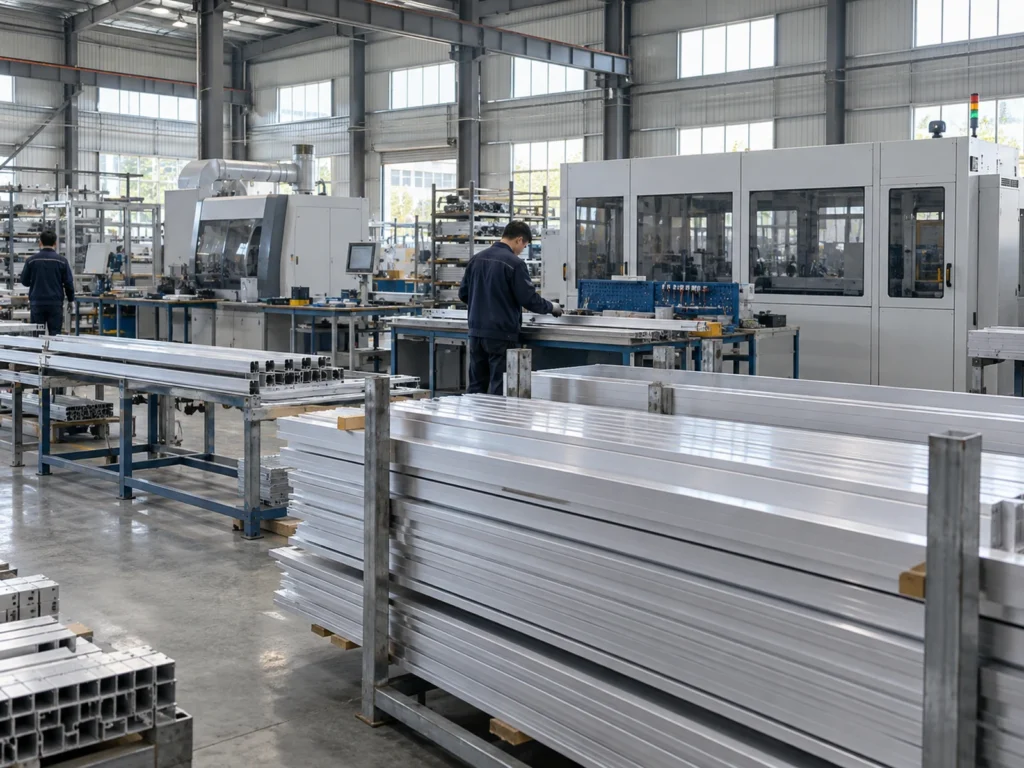
Write a part-level supply description before asking for either proposal. Include the material specification, section drawing, finished dimensions, cut angles, visible surfaces, quantities and drawing revision. Identify the point at which the parts become acceptable for your next operation.
A cut-to-length blank may still need holes, threads, edge work, cleaning or assembly preparation. Put these operations on the route sheet. If the outsourced supplier includes them but the internal proposal includes only sawing, the two offers do not yet cover the same finished scope.
As an industry example, Hydro’s machining and fabrication overview lists sawing alongside drilling, milling, threading and other added-value activities. This shows why an aluminum part supply request should identify its operations separately. It does not establish the scope or availability of a particular quotation.
For a service example, Metal Supermarkets’ services page lists production cutting, miter cutting, drilling and delivery, and asks customers to check availability with a store. Treat a published service list as a starting point for inquiry; confirm your section, dimensions, quantities and delivery location directly.
Keep responsibility for material equally clear. State whether you supply stock or the contractor sources it, and how its identity stays connected to the finished parts. Define how leftover stock and rejected parts are recorded and handled in the proposed arrangement.
2. Describe the demand that each route must handle
A monthly piece total alone hides much of the job. Divide the demand by profile family, part length, angle, batch size and delivery sequence. Mark which quantities are confirmed and which are forecasts. Show the likely drawing changes instead of presenting every planned order as settled demand.
For outsourcing, ask about the proposed order releases, minimum batch conditions, revision cutoffs and delivery stages. For an internal station, describe how the same work fits around other jobs, available people, changeovers and downstream operations. Neither route should rely on an unexplained average.
A small development batch and a recurring production family may need different arrangements. You can evaluate an external route for the changing work while separately assessing a machine for a stable family. This requires clear allocation of parts and records, rather than assuming that all future work follows one route.
There is no universal piece-count threshold in this guide. A useful decision depends on the actual profile mix, accepted-part requirements, site readiness and proposals. Establish those facts before using a volume total to justify buying a saw.
3. Assign responsibilities from stock to accepted parts
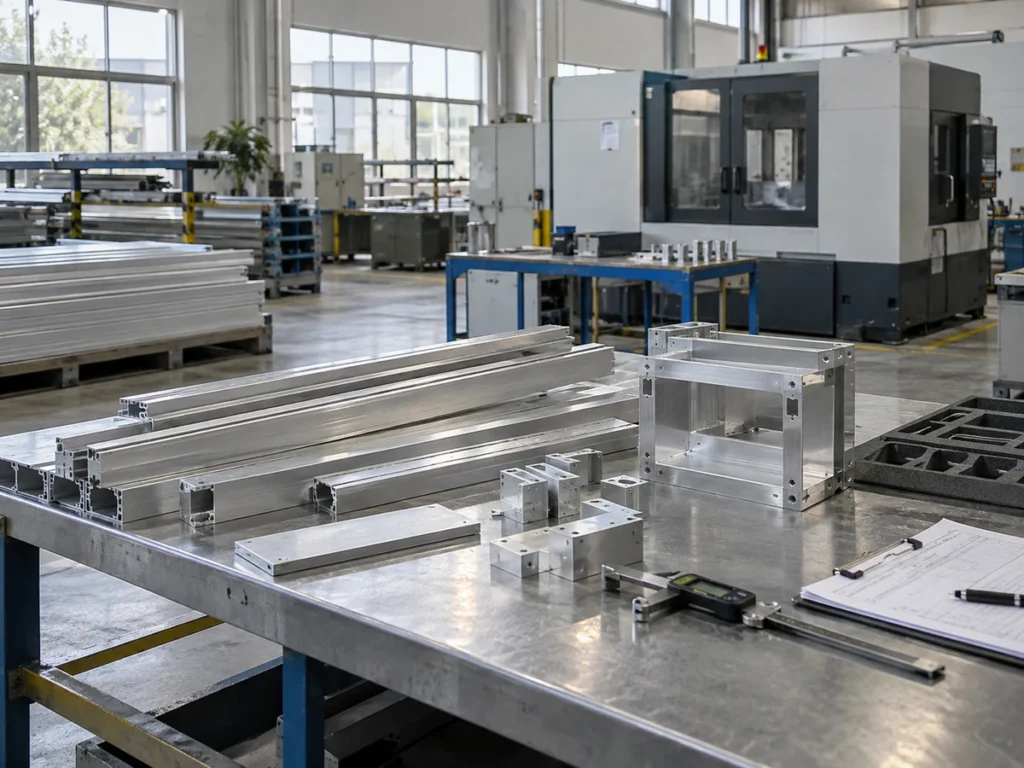
Moving work outside the factory changes who performs the steps; it does not remove the need to define them. Identify who checks incoming stock, controls revisions, approves the setup, inspects the parts and resolves a discrepancy before the next operation.
For an in-house route, name the owners of installation, training, tooling, stock handling, routine maintenance and inspection records. Check that these responsibilities have people, space and a workable schedule. A purchased saw does not by itself create a complete production process.
For an external route, ask which steps the proposed supplier performs and which remain with your team. Specify the records that accompany each delivery, how mixed variants are separated and who decides whether a disputed result requires further inspection. Keep the applicable drawing and measurement method attached to that discussion.
Use the same trial parts for both route reviews where practical. Agree the selected sections, required features, inspection method and handover records. The sample cutting trial checklist can help you organize the machine review. A satisfactory example does not automatically prove every future part family.
4. Compare equivalent delivery boundaries
Before comparing quoted amounts, list what each proposal includes, excludes or leaves unresolved. Use the same revision, accepted quantity, delivery point and downstream scope. Keep unknown items visible so a short quotation does not appear complete merely because it has fewer lines.
| External route: confirm | Internal route: confirm |
|---|---|
| Stock sourcing and ownership of remaining material. | Stock purchasing, storage and usable-remnant control. |
| Cutting and any included machining or finishing. | Saw operation and separately required downstream work. |
| Inspection records and handling of nonconforming parts. | Inspection resources, records and disposition ownership. |
| Packing, transport and the agreed handover point. | Internal movement, packing and dispatch responsibilities. |
Consider a fictional comparison: Offer A covers delivered, drilled members with inspection records. Proposal B covers a saw and operator instruction. Neither proposal is necessarily unsuitable, but B needs a defined drilling, inspection and delivery route before it can be compared with A on the same basis.
This example provides no prices, savings or machine performance claims. Its purpose is to expose scope gaps. If you later compare cost per accepted part, use your own verified records and identify the included costs and reporting period.
Also distinguish quoted lead time from the time when usable parts reach the next operation. Approval, stock availability, inspection, packing and transport may have separate conditions. Record those conditions for both routes without converting a provisional date into a firm delivery promise.
5. Plan an alternative route before a disruption
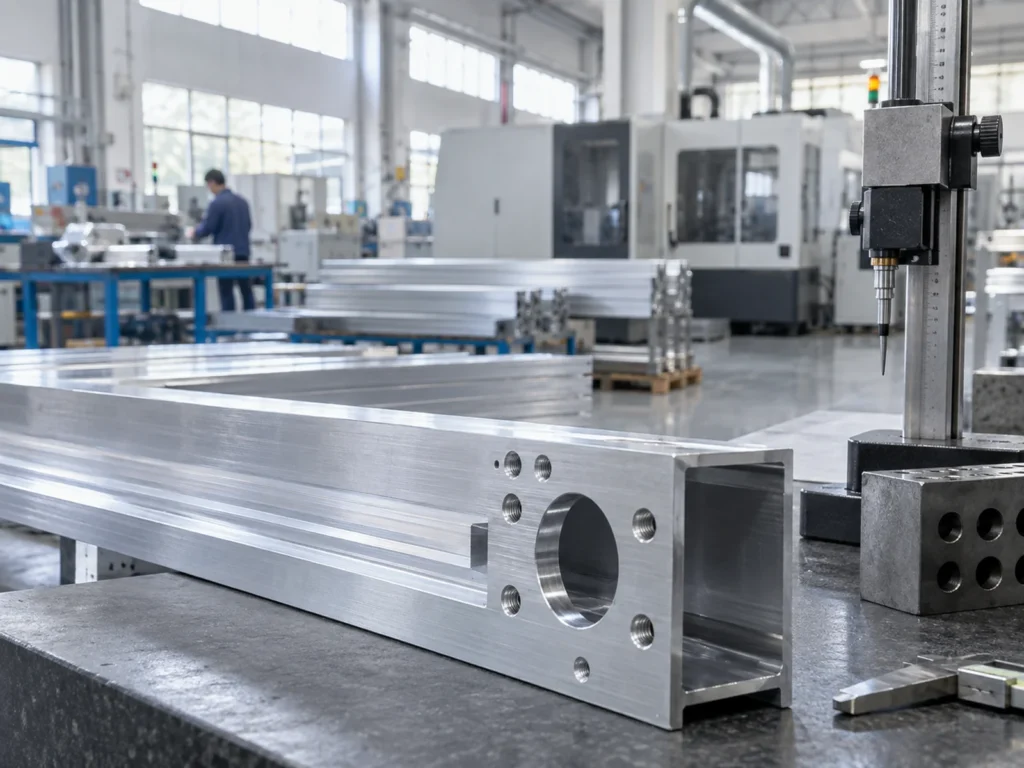
If the main route becomes unavailable, an alternative needs more than an address or an unused machine. It needs the current part definition, suitable stock, reviewed process capability, acceptance method and agreed handover records. Validate the intended scope before relying on it for urgent orders.
A hybrid plan can separate routine batches from unusual sections or temporary peaks. Give each part family a route owner and identify where the decision is recorded. Prevent the same job from being released to two routes unintentionally, and keep accepted quantities connected to the correct batch.
Revisit the decision when the drawing, product mix, delivery requirements or available internal resources change. A route that worked for an early trial may need a fresh review for recurring work. Set a review trigger that your team can recognize, such as an approved revision or a change in the required operations.
Make the decision reviewable
Prepare one comparison sheet with the finished-part scope, demand assumptions, process owners, trial evidence and unresolved items. Record why the preferred route fits the current job and what must be verified before release. The result should be understandable to procurement, production and quality.
If an internal station is under consideration, send JiurunCut the profile drawings and cutting requirements for a machine review. Describe which operations remain outside the proposed saw. Use the machine RFQ checklist to organize the request. Confirm the proposed configuration and trial scope before making a purchase decision.
Buyer questions about aluminum cutting outsourcing
Is outsourcing always better for small batches?
No universal rule follows from batch size alone. Review the part scope, available internal route, supplier conditions and required delivery stage. A small batch with unfamiliar operations may need a different review from repeat work on an established station.
Can we outsource only some part families?
Yes, a proposed plan can split the work by defined family or operation. Establish separate route ownership, revision control and acceptance records, and verify that the combined deliveries provide the parts required for assembly.
Does this guide mean JiurunCut offers contract cutting?
No contract cutting service is established here. JiurunCut’s inquiry in this guide concerns evaluating a proposed aluminum cutting machine. Confirm any requested service directly with its provider.