
Aluminum saw compressed air requirements need more than a pressure number. Ask the supplier to state pressure at the machine connection, flow and consumption with their reference conditions, required air quality, and the equipment included in the quotation. Have the responsible site team confirm the supply against that documented configuration.
This guide helps buyers compare utility information before ordering. It does not specify a compressor size, piping design, regulator setting or installation procedure for an unidentified machine.
A useful quotation answers three questions
- What must the site deliver at the agreed connection?
- What preparation and connection equipment does the supplier include?
- How will the documented requirements be checked at handover?
On this page
1. Read aluminum saw compressed air pressure at the right point
Start with the exact machine model, ordered options and quotation revision. Utility requirements should belong to that configuration. A brochure for another saw, or a photograph of a similar clamp, does not establish the requirement for your purchase.
Ask where the stated pressure applies. A value at the compressor, a value on the workshop distribution system and a value at the machine inlet describe different locations. Write the agreed connection point into the utility schedule.
Ask whether the supplier’s statement covers a static condition, an operating condition or a permitted range under the specified demand. Retain the supplier’s units and pressure convention. A number without its location and operating basis leaves the site team with an avoidable question.
A visible gauge value is an observation at a particular time. It does not, by itself, document the complete supply requirement or establish that the supply remains suitable during the agreed operating cycle. Let the supplier and site team define the appropriate verification.
Keep air information alongside the other installation requirements. Our power-supply quotation guide addresses the electrical schedule separately. Neither utility schedule substitutes for the approved installation documentation.
2. Separate flow, consumption and the cycle definition
Pressure and air quantity answer different questions. Record the required pressure separately from the supplier’s stated flow or consumption. Avoid comparing two quotations by pressure alone.
Elumatec’s SAS 142 technical page, for example, lists compressed-air pressure and air consumption per working cycle as separate entries. It also distinguishes consumption with a minimum-volume lubrication system. This illustrates why configuration and the consumption basis belong together. Its figures are specifications for that supplier’s machine, not requirements for a JiurunCut model.
Ask what the supplier means by a working cycle. Does the stated quantity include the agreed feeding sequence, clamping actions, cutting operation and selected auxiliary equipment? Obtain the documented definition instead of assuming that one cycle always equals one accepted finished part.
Retain the volume reference conditions. A quoted air volume may use a reference basis that differs from the actual compressed volume at the machine. Ask the supplier to identify that basis and units before converting or combining figures.
Distinguish average use from demand during an individual action. A daily total does not describe when that air is needed, and a flow requirement is not automatically a daily consumption estimate. Have the responsible engineering team review the demand profile and concurrent site loads.
A small accounting example
Suppose a fictional utility sheet states 100 liters per cycle on a clearly defined reference basis. For 20 such cycles, the stated quantities sum to 2,000 liters on that same basis. This is arithmetic for the example, not a measured value for any saw.
The sum does not specify compressor capacity, peak flow or storage. It also says nothing about accepted output unless the part quantities and their status are separately recorded. Our cycle-time and batch-output guide explains that separate production question.
3. Request a complete air-quality statement
“Clean air” is useful as an intention, but incomplete as a procurement requirement. Ask the machine supplier to provide the required quality specification and identify where it must be met.
Festo’s air-preparation explanation separates maintaining air quality from pressure control. It describes quality in terms of solid particles, water and oil, with separate classifications under ISO 8573-1. It also explains that preparation units can combine components according to the application. A general component example does not assign a quality class to your complete saw.
Keep the supplier’s full designation, referenced standard and edition in the utility schedule. Do not replace a documented requirement with a shorthand label such as “filtered,” “dry” or “oil-free.” The responsible team needs the actual criteria for the ordered equipment.
Ask which preparation functions are supplied on the machine and which remain the site’s responsibility. Request the relevant maintenance documentation and component identification with the order. The physical appearance of an assembly does not prove its filtration performance or quality rating.
Keep pneumatic air preparation separate from cutting-fluid selection. A fluid used at the cut and the air quality required by a pneumatic circuit are different entries in the equipment documentation. Our saw-lubrication quotation guide covers the cutting-fluid scope.
4. Put the connection and supply boundary in writing
A machine price can leave utility items outside its scope. Ask both supplier and site team to review one boundary drawing or connection schedule before the order is finalized.
Identify the connection location and the documented interface. Record which party supplies the final connection equipment and which party is responsible for its installation and verification. Let qualified personnel determine the equipment and arrangement under the applicable documentation.
Check the scope of the complete ordered system. An automatic loading arrangement, a lubrication option or another auxiliary package may have its own requirements. Ask whether the quoted utility statement covers the full package or only the base saw.
Use a short responsibility list:
- Machine supplier: confirmed requirements, included components, connection details and configuration-specific documentation.
- Site team: review of available supply, distribution and concurrent demand against those requirements.
- Agreed installation party: work and verification within its documented scope.
- Handover owner: retention of the approved schedule, results and unresolved items.
These are review topics rather than instructions to modify a pneumatic system. Operating pressure, isolation, stored energy and safety functions must follow the manufacturer’s documentation and the responsible site’s procedures.
Our installation planning guide helps connect utilities with layout, access and delivery preparation. A utility-ready site still needs the rest of the agreed installation scope.
5. Close the quotation with a clear handover record
Before acceptance, bring the approved utility schedule and delivered configuration together. Have the responsible parties identify the required checks, the relevant operating conditions and the evidence to retain.
Record the connection point, supplier requirements, verification date, equipment or method used, observed results and the person responsible for the decision. Retain the acceptance decision separately from the observations.
If a review item remains open, name it and assign an owner. “Air available” is not the same record as “the defined requirement was checked under the agreed conditions.” A temporary observation should not quietly become a permanent acceptance statement.
Keep revisions visible when an option or site arrangement changes. Update the requirements and responsibility schedule through the agreed change process. An earlier review may not cover a later configuration.
For a machine inquiry, send JiurunCut your profile drawing, intended cutting work, planned options and the utility information available from your site team. Request a configuration-specific quotation and ask for the confirmed connection requirements with the proposal.
Common compressed-air purchasing questions
Is matching a pressure number enough?
No. The connection point, operating basis, flow or consumption, volume reference conditions and air quality still need to be documented for the ordered configuration.
Can consumption per cycle size a compressor by itself?
No. A cycle quantity alone does not describe peak demand, the timing of actions or other equipment using the same supply. The responsible team must assess the complete documented demand and site arrangement.
Can a machine photograph confirm the air-quality class?
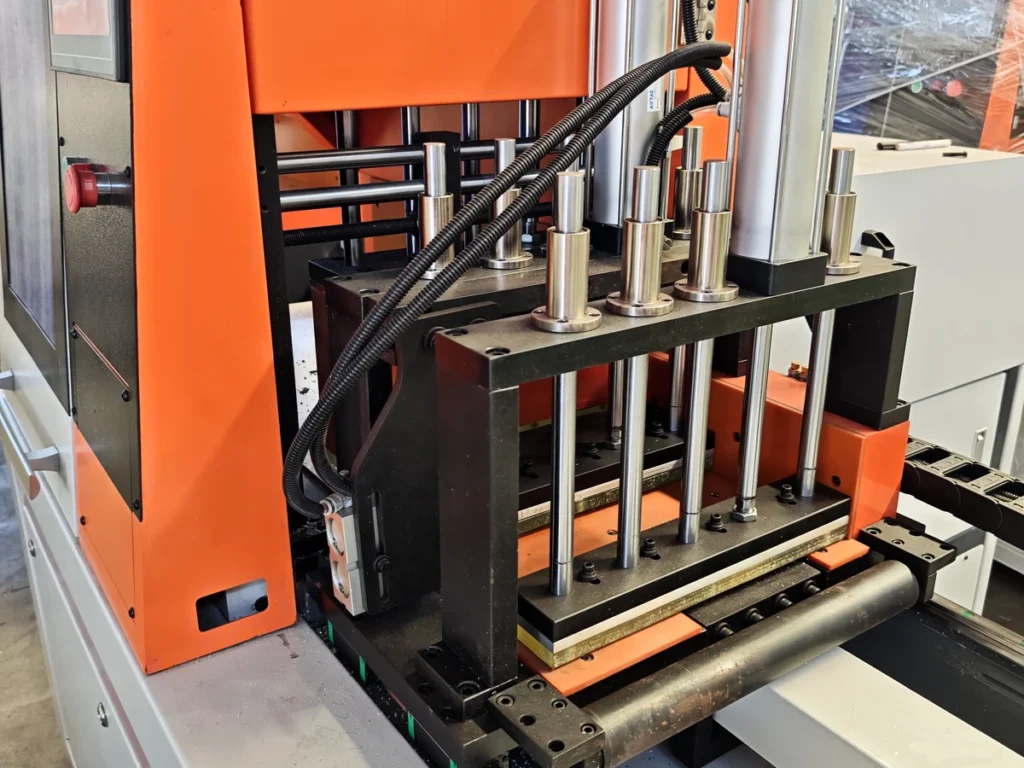
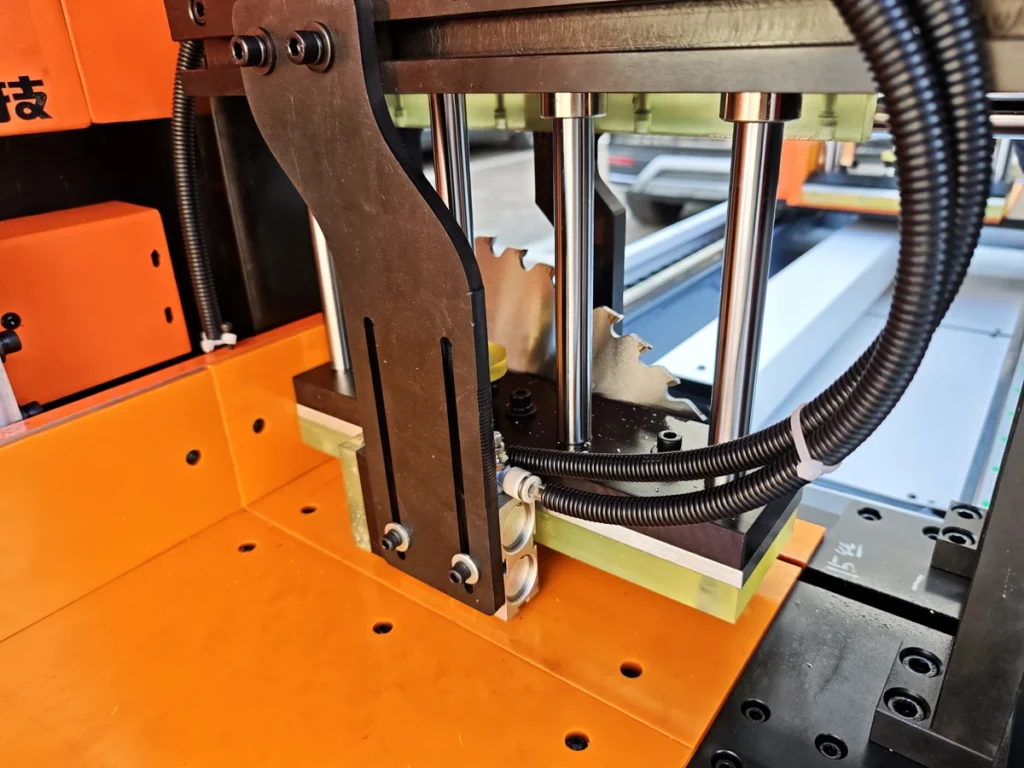
No. Request the supplier’s specification and relevant component documentation. Visible hoses, cylinders or clamp assemblies do not establish a quality designation or an acceptance result.
Is a compressor included with an aluminum saw?
Only the quotation can establish the supplied scope. Confirm the complete ordered package and the items the site must provide before comparing purchase prices.