
A cut finishes, the saw head returns, and the feeder is ready to advance the next length of aluminum extrusion. Yet one clamping jaw is still close enough to rub the stock. A controller may have sent an “open” command without confirming that the jaw actually cleared the profile.
For an automatic saw buyer, the useful question is not simply whether the machine has pneumatic clamps. It is what evidence permits the next feed movement on the quoted configuration.
This aluminum saw clamp release check belongs in a witnessed machine trial with the supplier. It does not prescribe a sensor design or a safety circuit. The machine maker must define its own approved sequence, protective functions and test method for the actual machine and profile.
Aluminum saw clamp release: command versus clearance
An output to a valve describes a command. A cylinder position signal, if fitted and correctly configured, reports a position. Neither label by itself proves that every jaw, pad and workpiece has the required clearance. SICK’s cylinder-sensor guidance distinguishes end-position detection and clamping-cylinder monitoring; Festo’s sensor overview explains how a cylinder sensor produces position feedback. Those sources describe possible sensing methods, not the circuit or safety rating of a JiurunCut saw.
Ask the supplier to identify the physical moving parts, the feedback used by the installed machine, and the condition that allows the next stock movement. A machine may use different architectures. Do not assume a particular switch, controller tag, pressure threshold or timing value from a brochure photograph.
Follow one complete part-to-part sequence
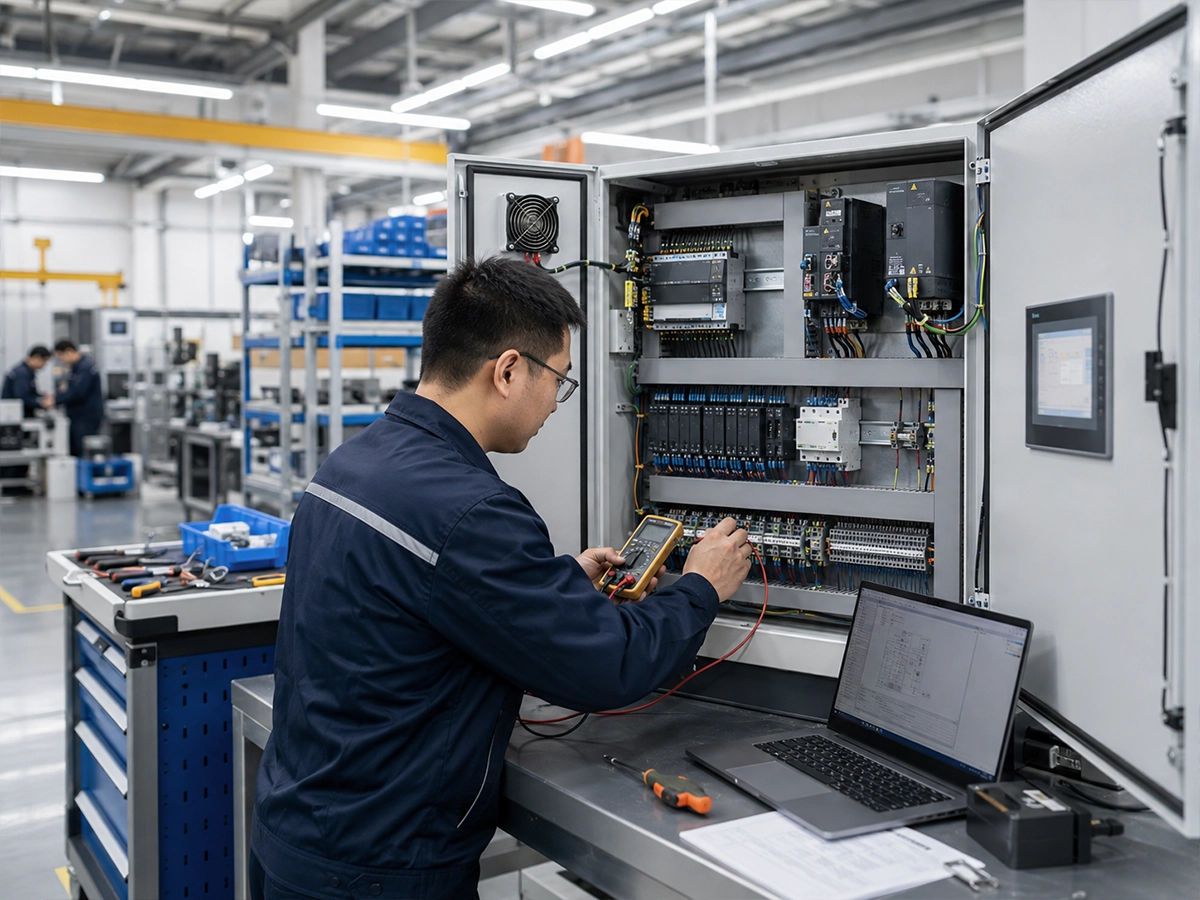
For an aluminum saw clamp release trial, request a short sequence chart for the proposed profile and machine revision. Begin at the end of an accepted cut: where is the blade, which clamps still hold the good part and the remaining bar, and which device takes the weight of each piece? Then record when each clamp is commanded open, what feedback the control checks, and when the next feed axis is allowed to move.
On an automatic saw, the infeed and workholding arrangements are configuration dependent. For example, elumatec’s SAS 142 description separates the material infeed axis from clamps on either side of the blade; it is an example of why the motions must be mapped rather than collapsed into one “automatic cycle” label.
Use a production-representative extrusion, including its surface finish and any approved protective film. Mark the contact faces on the drawing. A narrow return lip, thin wall or projecting feature may require a different clearance check from a rectangular bar. The supplier should show the authorized viewing point and method while the machine is stopped or in its approved test mode. No operator should reach into a moving or unprotected cutting zone to prove clearance.

Write a trial that distinguishes three outcomes
Normal cycle: the supplier demonstrates an accepted cut, clamp release, clearance and the next feed on the released profile. Observe the physical movement and the documented control state. Record the part and stock identifiers, fixture arrangement and software or machine revision so a later supplier quote describes the same setup.
Incomplete release: within the maker’s safe, approved test procedure, ask what happens if the expected release feedback is absent or delayed. The acceptance point is whether the machine responds according to its documented design and prevents an unintended next feed. This is a supplier-led validation, never an instruction to defeat a switch or create an unsafe fault on the shop floor.
Restart: after a controlled stop, ask which operator action and state checks are required before the next movement. A previous article covers the different case of recovery after air loss. Here the narrow issue is permission for the next feed after the previous cut and clamp-release step. Keep both records separate so a successful normal cycle is not mistaken for proof of a fault or restart response.
What the buyer should receive
For aluminum saw clamp release, a useful quotation names the machine variant, clamp type and positions, feed arrangement, relevant feedback points if supplied, and the maker’s documented response when the expected state is missing. It also states the profile range for the demonstrated setup, the person who performs the trial, and the first-off receiving check. A sensor shown in a component catalogue is only a possible part; it is not evidence that the quoted saw monitors every jaw or that its signal is used for a protective function.
Put a simple witness sheet beside the quote: released profile drawing and revision; stock finish; jaw and support contact locations; observed normal sequence; approved incomplete-release test and response; restart disposition; and accepted first part. If the machine has several clamps, identify each one. If the proposed solution changes jaws, pads, profile height or control logic, ask the supplier to state which part of the trial must be repeated.
For related buying checks, see our discussion of clamp pressure during a cut and length-stop contact. Pressure, length datum and release feedback answer different questions. Combining them into a single “clamp works” box makes a factory acceptance record hard to interpret.
Related equipment video
The video below shows a JiurunCut JR-455Q equipment view. It illustrates a related saw environment; it does not demonstrate the clamp-release feedback, automatic feed permission, the profile in this article or a safety-performance result.
One aluminum saw clamp release RFQ question
For the aluminum saw clamp release decision, send the supplier the released profile section, cut length range, finish condition and the expected part-to-part sequence. Ask: “On the proposed machine, what documented condition confirms the relevant clamps have cleared this profile before the next feed, and how will that condition be witnessed during acceptance?” Ask for the response to missing feedback and the restart route as separate line items. That request is more useful than asking for a generic “clamp sensor” without a profile, motion or acceptance boundary.
Planning a machine trial? Contact JiurunCut with your profile drawing and target cut list. We can discuss the quoted configuration and the supplier-led demonstration to request; any final control or safety function must be confirmed on that actual machine.