
A forklift clips the perimeter of an aluminum saw cell. The clear panel is still in place, but one post has moved and the door no longer closes as it did before. The purchasing question is not simply how many extrusion lengths to order. It is whether the affected guard can be restored as an approved module, whether individual members can be replaced within the original design, or whether the guarding system needs a wider redesign. Aluminum saw cell guard frame damage changes both a parts order and the conditions for returning the cell to service.
This guide is for a buyer coordinating a damaged external perimeter guard around a cutting cell. It does not diagnose a particular machine, approve a repair, or substitute for the site’s competent safety assessment. Isolate and control the affected equipment under the site’s procedure, identify the guard system and its designer, then obtain an approved restoration scope before production resumes. The saw, guarding, door/interlock equipment, and building anchors may have different responsible suppliers.
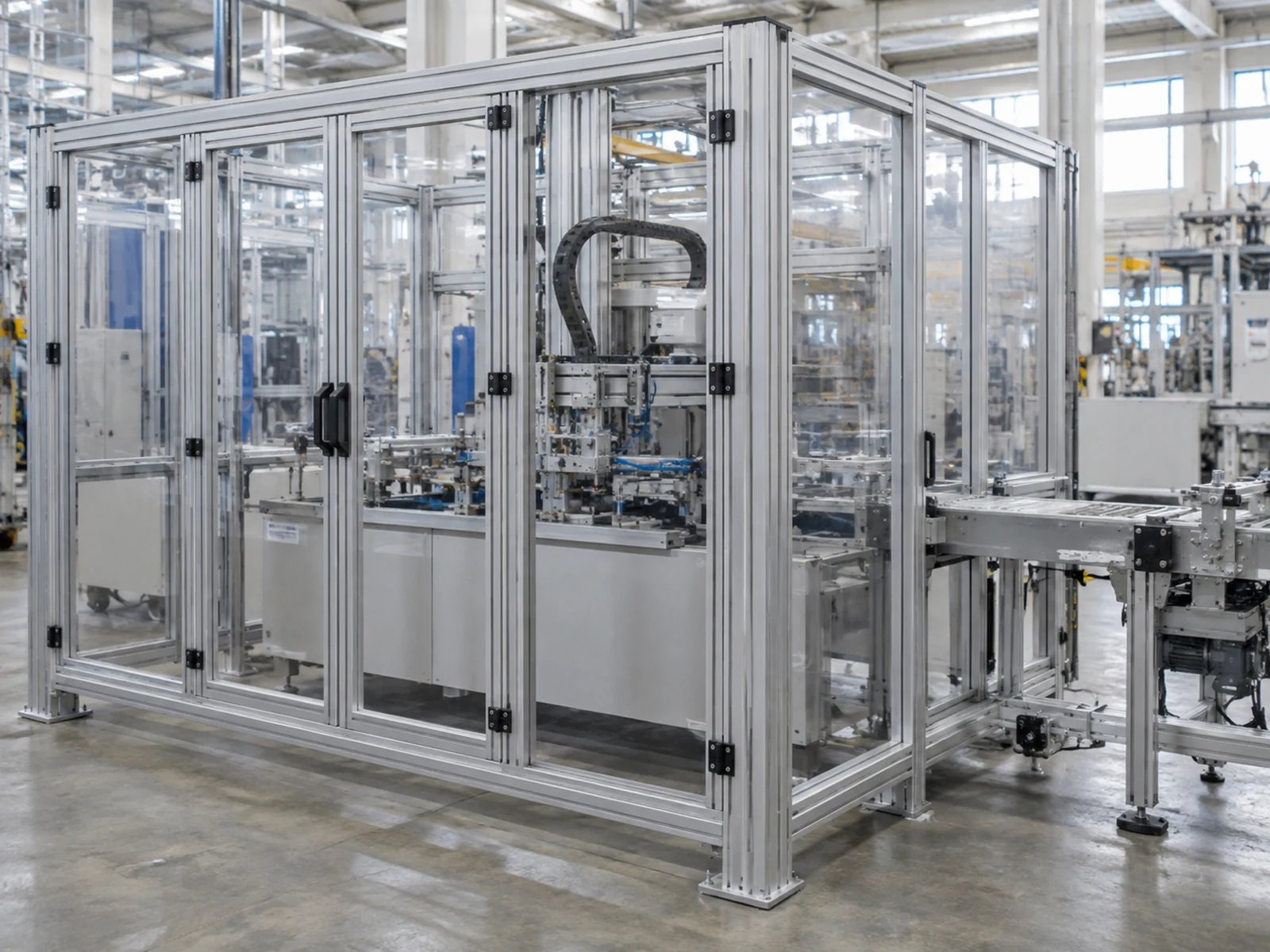
Aluminum saw cell guard frame damage: what moved?
Record the event without trying to straighten a post merely to make the door close. Photograph the whole perimeter, the point of contact, both sides of the affected bay, the door and latch, adjoining panels, baseplates and anchors. Preserve the guard drawing and revision, machine identification, module or member labels, and any previous approved changes. Compare the current assembly with an unaffected bay only as a reference; visual similarity is not proof that the damaged bay still meets its original design.
Separate four observations in the incident record: visible damage to a replaceable member, displacement of a complete panel or module, movement at a joint or floor anchor, and changes to a movable guard or interlock. A bent extrusion can be only one symptom. A quotation based on that extrusion alone may leave a shifted base, distorted panel frame, misaligned door, or compromised connection outside the purchase order.
Compare three purchasing routes
Approved replacement module. Ask the original guard supplier or responsible designer for the identified bay or module, with its panels, joints, fasteners, base interfaces, door hardware and documentation defined. This route can reduce the risk of mismatched individual parts, but the quotation must still state what is reused and who checks the surrounding structure.
Replacement cut-member kit. This can make sense only if the responsible party confirms that the existing guard design, adjacent parts and joining method remain suitable. The cut list needs the released extrusion profile, section and finish, exact member references, cut-end geometry, machining, handedness and labeling. The saw supplier or cutting subcontractor can make specified members; cutting them is not approval of the protective design or the reconstructed guard.
Redesigned bay or perimeter. If the impact exposes a layout, reach, access, anchor, or interface issue that the original drawing does not resolve, treat the work as a design change. Request a revised drawing, risk assessment and acceptance plan from the responsible competent party. Do not label a changed barrier as a like-for-like spare merely because the extrusion cross-section looks familiar.
Keep the decision in a simple comparison sheet: the approved design reference, scope of supply, retained components, installation owner, safeguard checks, documentation deliverables, cost and planned downtime. A low component price has limited meaning if the quote omits design authorization or recommissioning.
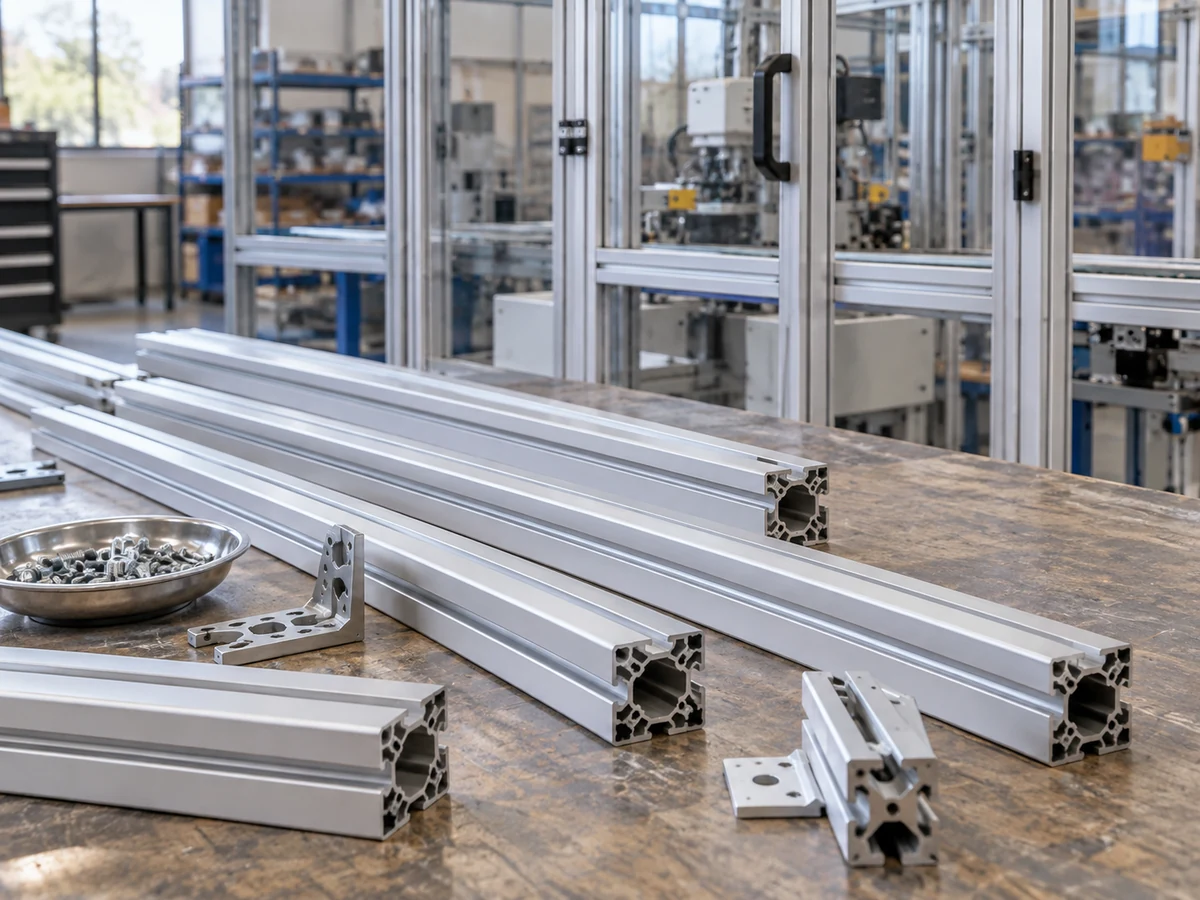
Build an RFQ that identifies the protected system
Send the guard supplier or responsible designer the machine and guard identification, revision-controlled layout, incident photos and a marked drawing of the affected bay. State whether the enclosure is fixed or includes movable access, which openings and conveyors pass through it, and which neighbouring bays connect to the damaged frame. Identify the site’s existing anchoring and floor conditions for review, without asking a cutting shop to certify anchors it has not assessed.
Ask for a line-item response: parts to replace, parts permitted to remain, work excluded, interfaces needing site measurement, fastener and panel scope, installation and adjustment, documentation updates, and the specific checks needed before release. If the replacement is supplied as cut profiles, distinguish bare cut lengths from drilled, joined, paneled and installed assemblies. A buyer should know exactly which stage the quoted price reaches.
For a movable door, include the door leaf, hinges, latch, travel, gaps and any interlocking device in the responsible party’s assessment. A correctly cut rail does not establish that the door or its safety function has been restored. ISO 14120 describes general requirements for fixed and movable guards, while ISO 14119 covers principles for interlocking devices associated with guards; use the applicable system documentation and competent assessment for the actual design.
Keep cutting acceptance separate from guard acceptance
If a new aluminum member is ordered, its supplier can be asked to verify the released profile and finish, part identity, cut length and end geometry, required hole or machining positions, and protection during packing. Supply a drawing with datums and a revision; do not convert a generic machine feed-positioning claim into finished-member accuracy. Where the geometry is unusual, request an agreed first piece and a documented fit check before the remaining pieces are cut.
The guard owner must separately accept the rebuilt protective system. The acceptance plan may include frame and panel fit, secure connections, anchor review, access clearances, door operation and the function of any associated safeguard. The actual checks depend on the approved design and local requirements. A photograph of the completed frame, or a saw trial on loose profiles, cannot replace those checks.

Control the return-to-service decision
Set the restart gate in writing before the parts arrive. Identify who has authority to release the design, perform the installation, verify the guard and interlock where applicable, and return the saw cell to production. Keep a record of the as-installed revision, any deviations, the completed checks and the release decision. OSHA’s U.S. machine-guarding rule describes guarding against point-of-operation and related hazards; its lockout/tagout guidance calls for safeguards to be replaced and equipment inspected before re-energization after servicing. These sources illustrate why a parts receipt and a production restart are different decisions; the site must apply its own jurisdiction and procedures.
Do not treat a temporary barrier, an open door held shut, or a successful cut as evidence that a damaged perimeter is safe. If the responsible party cannot establish an acceptable restoration scope, keep the affected equipment out of service until the decision is resolved. For aluminum saw cell guard frame damage, that prevents a hurried purchasing shortcut from becoming the operating assumption.
Copyable buyer request
- Identify the saw cell, guard-system supplier, drawing revision and affected bay.
- Attach incident photographs, marked layout, condition of adjoining modules, door and anchor observations.
- Request a recommendation for an approved module, individual member kit or redesigned bay, with reasons and exclusions.
- Separate cut-profile supply, panel/hardware supply, installation, safeguard verification and return-to-service authority.
- Ask for a revision-controlled quote, acceptance evidence, lead time and disposition of reused parts.
For adjacent purchasing decisions, see our guides to guard-door replacement, planned guard-frame extensions, and saw guard spare parts. Those scopes differ from an impact-damaged perimeter bay. If you need cut aluminum guard-frame members after the design has been released, send JiurunCut the approved profile drawings, quantities and required cut/packing scope for a fit-for-quotation discussion.
General equipment video
The video below is a general Jiurun aluminum-cutting equipment example. It does not show this guard system, impact event, repair, approved configuration, customer, trial or safety performance. Use it only to understand a cutting process; evaluate the damaged perimeter from its own records.
Sources and scope
OSHA 29 CFR 1910.212, General requirements for all machines; OSHA, Release from lockout/tagout; ISO 14120:2015, guards; and ISO 14119:2024, interlocking devices associated with guards. The ISO pages describe the standards’ scopes; this article does not claim to reproduce their full requirements. Confirm applicable rules, original equipment documentation and competent sign-off for the actual cell.