
An aluminum saw carbon footprint estimate attached to a quotation is only useful when the buyer knows what was measured, what output it covers, and which parts of the production route were left out. Two suppliers can quote the same saw power rating yet assume different job mixes, compressed-air supply, extraction equipment, operating hours, and reject rates. A purchasing team should establish a common measurement brief before comparing any emissions estimate.
This guide is for a factory buying a saw to cut released aluminum stock into accepted blanks. It explains how to request comparable operational greenhouse-gas information for that cutting step. It does not claim a measured footprint for a Jiurun machine or a finished aluminum product.
Define the aluminum saw carbon footprint question first
Start with the decision. If the buyer wants to compare the electricity associated with two proposed cutting arrangements at one plant, ask for a site-specific operating scenario and measured or explicitly estimated energy for that scenario. If a customer requests the carbon footprint of the delivered aluminum part, a saw-only electricity estimate is one input to a wider product study. The upstream aluminum, transport, downstream processing, and any other activities within the chosen product boundary must be handled separately.
The GHG Protocol Product Life Cycle Accounting and Reporting Standard addresses life-cycle emissions of a product. ISO 14067:2018 gives principles and requirements for quantifying and reporting a product carbon footprint or a partial footprint. Neither reference turns a saw nameplate power figure into a verified product footprint. Agree whether the RFQ requests a comparison of the cutting operation, a partial product footprint input, or a full product study. Label the result accordingly.
Choose an accepted output, not an ambiguous production count
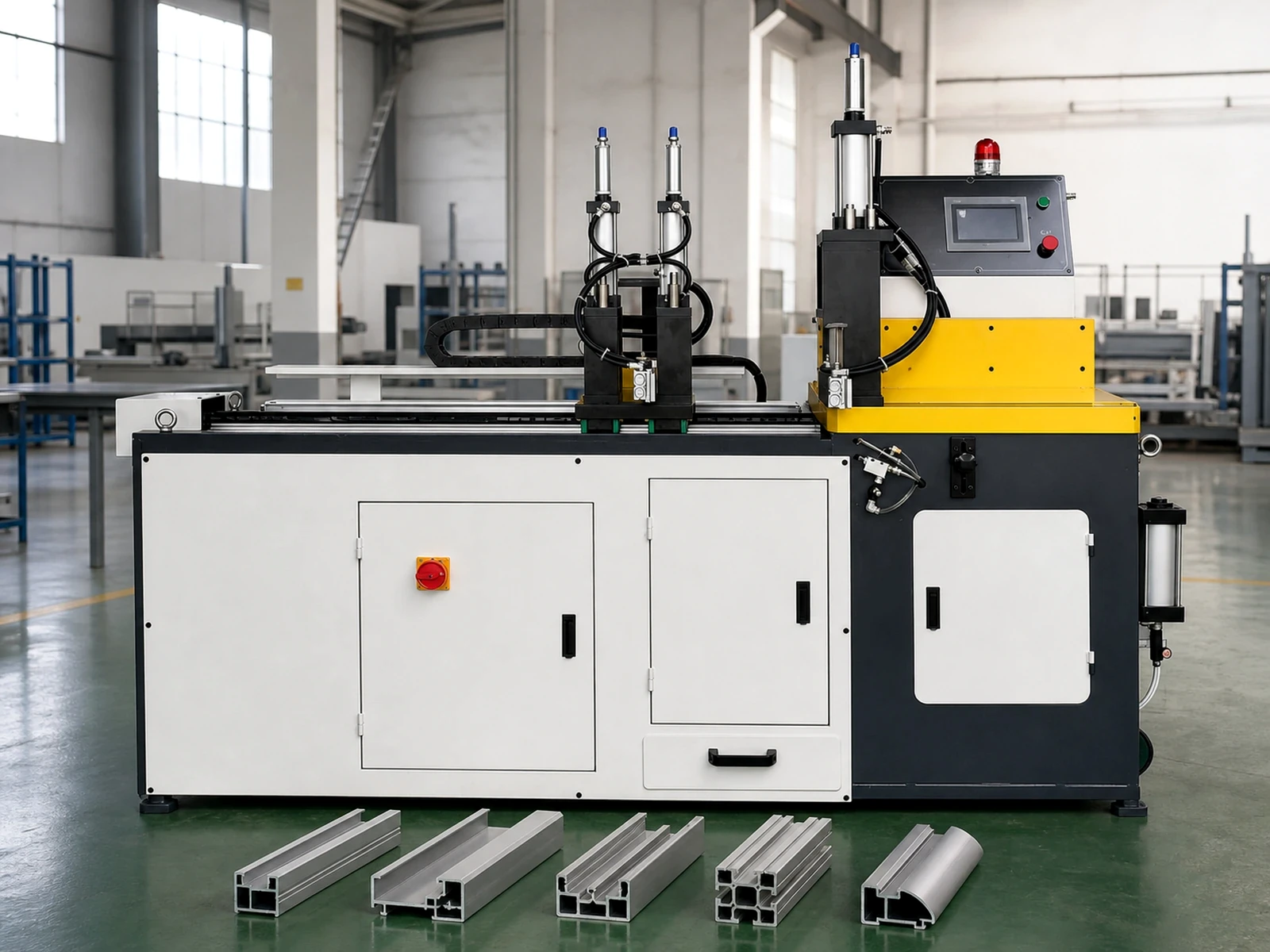
Define the unit of comparison before collecting energy data. An RFQ could request energy per accepted cut blank for a stated part family and batch, or total cutting-step energy for a specified order. The unit must identify the input stock form, section range, released cut lengths, angle mix, finish-sensitive faces, and acceptance checks. A gross cut count is inadequate if one route makes more rejected parts or requires extra handling before the next operation.
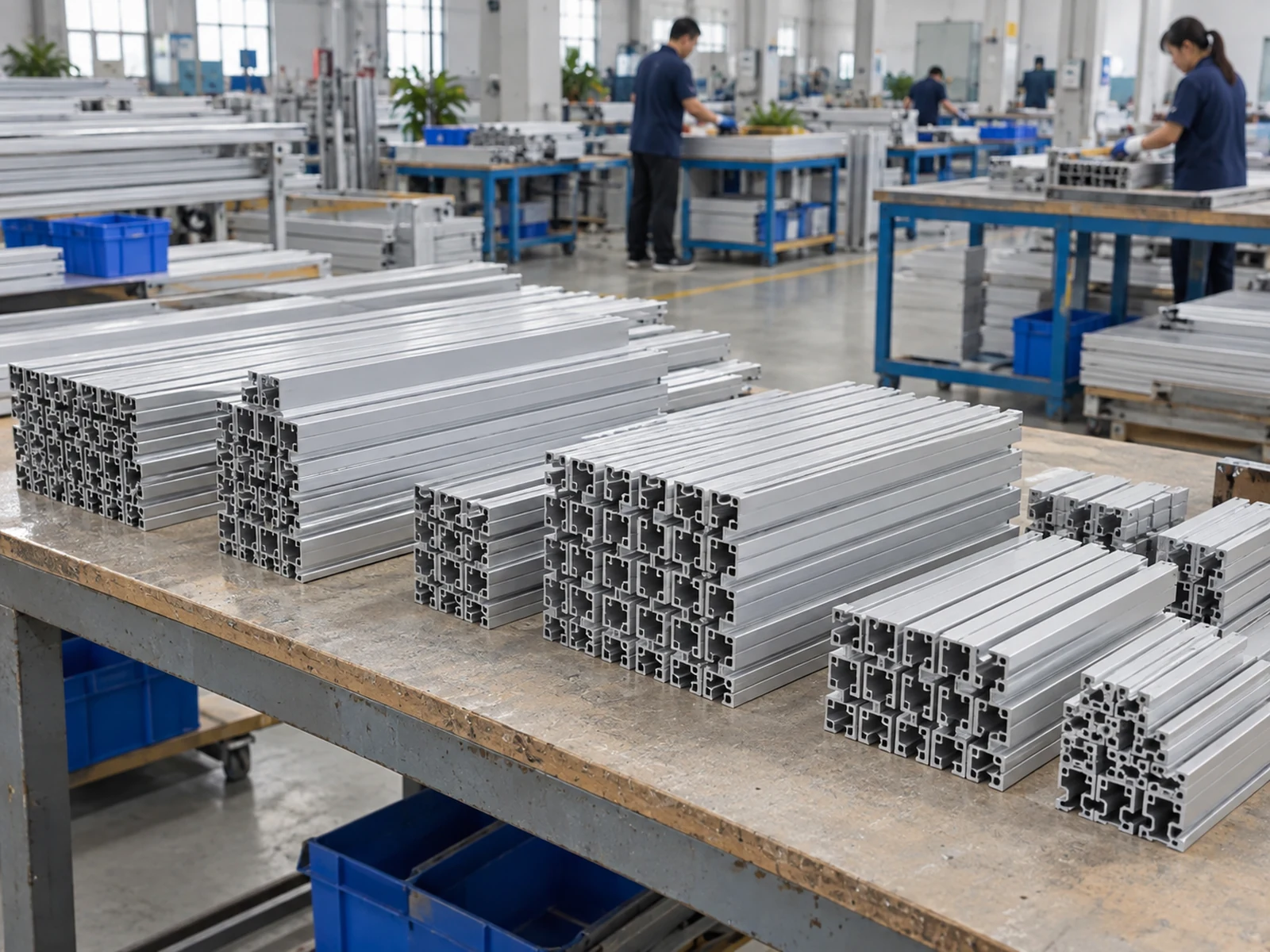
Keep the cut blank distinct from a finished assembly. If the buyer purchases a prepared kit or a completed frame from another supplier, compare the alternatives at the same accepted receiving stage. A saw estimate alone cannot be compared fairly with the emissions of a complete assembled item. For the material side of the comparison, record how many incoming lengths were used, how much usable remnant was returned to stock, and which pieces were rejected. The site may then connect this evidence to its chosen product accounting method without claiming an unverified recycling credit.
The related cutting-yield guide explains why pieces, input length, offcuts, and accepted output answer different questions. Use those distinctions in the carbon worksheet as well.
Draw the operating boundary around the complete cutting job
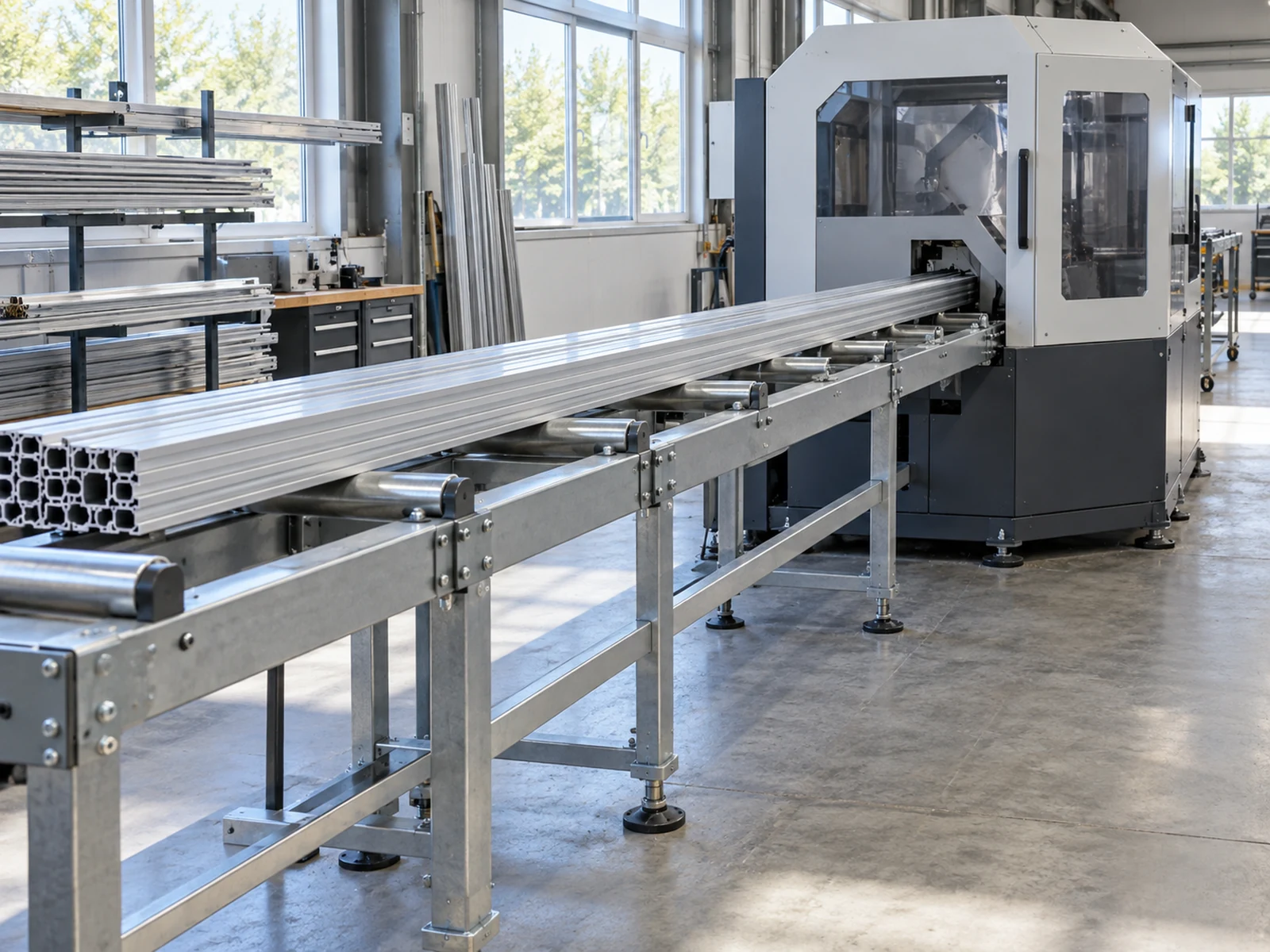
A machine motor rating is a design or nameplate reference, not the electricity consumed by a released production order. Ask the supplier to mark the measurement boundary on a simple process diagram. At minimum, list the saw drive, feed or positioning system, controls, hydraulic or pneumatic functions where present, and any included conveying. Then list services supplied by the site, such as compressed air, extraction, coolant preparation, and material handling. Identify who will meter or estimate each item.
Shared services require special care. A central compressor or extraction system can serve several cells. Its entire site consumption should not automatically be attributed to one saw. Equally, omitting it from one option while including it in another makes the quotes incomparable. Request the allocation basis, the time period, the other users covered, and the evidence available at the receiving plant. If the auxiliary load is unknown, leave it visibly unresolved instead of replacing it with a precise-looking assumption.
Include the states that occur during the buyer’s actual mix: setup, warm-up where required, productive cutting, waiting between parts, blade or fixture change, and scheduled idle. A high-volume demonstration of one easy profile may conceal the changeovers in a mixed-order factory. The saw energy-consumption boundary guide provides a companion checklist for the energy inputs themselves.
Ask for a representative trial and keep estimates separate
A useful trial sheet identifies the stock and drawing revision, planned order quantity, accepted cut count, setup and productive time, idle time, measured electrical energy, meter location, and auxiliary equipment included. Record blade and fixture configuration only to describe the tested route, not to imply that every future job will use the same setup. If the supplier cannot meter an item during a factory demonstration, ask for the estimation method and mark the result as estimated. A buyer may need a second observation after installation because site utilities and work patterns differ from the factory test.
Agree the test purpose before travelling to the factory. A factory acceptance test can demonstrate the proposed machine’s functions and collect measurements under a declared setup; it cannot by itself establish the plant’s annual carbon result. A site acceptance check can reconcile the installed utilities and actual job mix. The factory-versus-site acceptance guide helps separate these evidence gates.
Convert electricity to emissions with a traceable factor
When a buyer converts measured electricity into an emissions estimate, the conversion factor must be identified by geography, reporting period, source, and accounting approach. Record whether the calculation uses a location-based grid factor or an eligible market-based contractual factor, and retain the underlying evidence. A supplier’s generic factor from another region may be unsuitable for the buyer’s plant. Purchased compressed air or other energy carriers need their own boundary and source treatment.
For a scoped operational estimate, the basic structure is energy used within the agreed boundary × the documented factor, with each energy source handled separately and the results tied to the same accepted output. This is a calculation structure, not a claimed result. If the RFQ requires a product carbon footprint, the buyer’s LCA team must decide the product system boundary, allocation method, data quality, and reporting rules. Do not relabel a single process estimate as a certified footprint.
Put comparable evidence into every supplier response
| RFQ field | What the buyer should require |
|---|---|
| Output basis | Released part family, drawing revision, accepted blank definition, and order mix. |
| Equipment boundary | Included saw functions and handling equipment, with excluded site services named. |
| Operating states | Setup, cutting, waiting, changeover, and idle durations for the same scenario. |
| Energy evidence | Meter point, meter period, measured values, estimates, and allocation method for shared services. |
| Material record | Incoming stock, accepted pieces, rejects, usable remnants, and disposition records. |
| Emissions factor | Source, geography, reporting year, accounting approach, and any contractual evidence. |
| Claim status | Operational estimate, partial product input, or full product study, with verifier named only if one exists. |
Ask each bidder to fill the same fields and disclose unknowns. The lowest energy number should not win automatically if it describes a smaller scope or an easier batch. Compare total cost and delivery at the same time: additional meters, site service work, scrap handling, training, and acceptance effort can change the investment case. The cost-per-accepted-part guide can sit alongside the emissions worksheet, using the same accepted output definition.
Questions to close before placing the order
- Which exact product family and accepted receiving stage does the comparison cover?
- What equipment and utilities are included, excluded, or shared?
- Which operating states and changeovers appear in the representative job mix?
- Which readings were measured and which values were estimated?
- Who owns the site-specific electricity factor and other emissions factors?
- How are rejects, remnants, and outsourced steps documented without double counting?
- What will be rechecked at factory acceptance and after installation?
If a carbon figure appears in a saw proposal, ask for the worksheet behind it. The practical purchase decision is whether the quoted cutting arrangement can deliver the required accepted blanks at the stated cost and with an evidence trail the factory can use for its own reporting. Send Jiurun the released stock and cut list, expected batch mix, acceptance criteria, and the intended measurement boundary when requesting a machine review. Jiurun can discuss the cutting scope; site emissions factors and any formal footprint study should be supplied or approved by the buyer’s reporting team.
Related equipment video
The following Jiurun Machinery channel video is a general equipment example. It does not document the material, model configuration, customer, trial cut, energy use, or carbon performance discussed in this article.
Sources and scope
- GHG Protocol Product Standard: product life-cycle accounting context.
- ISO 14067:2018: product and partial carbon-footprint quantification scope; ISO lists this edition as current while revision work is underway.
- GHG Protocol Scope 2 Guidance: location-based and market-based accounting for purchased electricity in corporate inventories; apply its factor rules where relevant to the buyer’s reporting method.
These references define accounting context. The RFQ worksheet above is a buyer’s practical comparison framework, not an assertion of certification or a measured Jiurun result.