
An aluminum saw factory acceptance test and a test after installation answer different questions. A machine can run an agreed profile at the supplier’s facility yet still need its electrical supply, air, extraction, material flow and receiving method checked at the buyer’s site. The reverse is also true: a site trial cannot reconstruct every configuration and document check that should have been closed before shipment. Put both gates in the purchase agreement before anyone calls a short demonstration “acceptance.”
In this guide
Define the two gates against the same purchase specification
For this buyer guide, a factory acceptance test (FAT) is a witnessed review of the specified machine and agreed sample-cutting tasks before dispatch. A site acceptance test (SAT) checks the installed machine in its receiving environment, using the responsibilities and material path the parties agreed to test there. These are procurement milestones, not claims that one universal protocol applies to every saw. The contract should name the machine configuration, test location, supplied utilities and material, measurement method, acceptance limits, people authorized to sign, and treatment of unresolved items.
Keep the two scopes linked. If the FAT uses a different profile, blade, clamp arrangement, program or acceptance method from the purchase specification, record that difference instead of turning a passing demonstration into evidence for the intended work. If site services or upstream and downstream equipment were outside the supplier’s scope, say which SAT observations can still be made and which require the buyer’s installed system.
What should aluminum saw factory acceptance establish?
Start with the ordered configuration rather than the best-looking sample. The witness list should identify the equipment, options, blade specification, feed and outfeed provisions, guards, controls, drawings, software or program revision, manuals, and spares that the offer includes. Record the serial or other unambiguous machine identity. Compare each item with the approved order and agreed changes. A photograph of a similar machine cannot close this check.
Next, prepare a representative sample pack. State the actual alloy and temper if relevant, profile or tube section, stock length and condition, allowable bow or surface condition where these affect handling, intended cut lengths and angles, batch quantity, and any critical cut-face or burr requirement. A supplier may need several cases to cover the buyer’s extremes; a single easy section proves only that case. Agree who supplies the stock and how much is available for setup, trials, repeats and rejected pieces. Keep the drawings and revisions with the samples.
Then agree how each output is measured. Identify the datum, instrument, sample size, measurement location, temperature or handling conditions if material to the result, and the person who decides an out-of-limit finding. A feed-position setting is not a measured finished-part length. A clean-looking surface is not a documented burr or surface criterion. Record raw observations and rejects, not only a pass stamp or a promotional photo. The buyer and supplier can then determine whether a problem is repeatable, tied to one input, or caused by a changed setup.
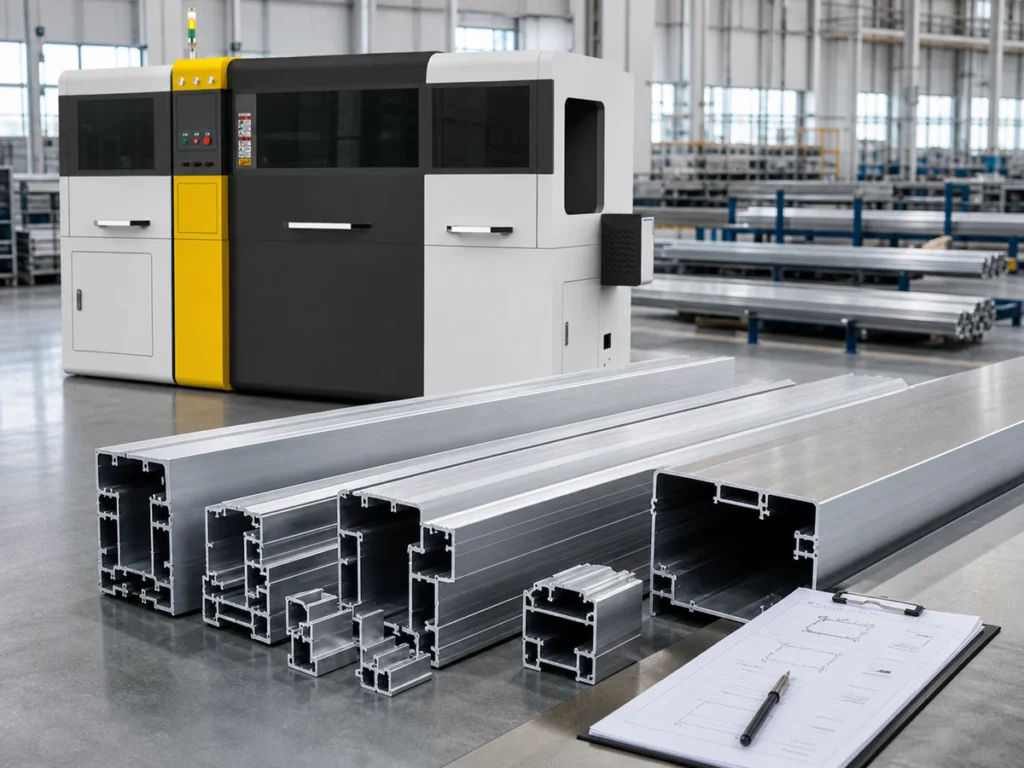
Illustrative factory-test imagery can help show where a witness might look, but it is not a record of this article’s machine, sample, customer order or performance. The actual FAT evidence is the agreed configuration and dated results for the identified unit.
Safety observations need a defined owner
Document what is observed about access to the cutting point, moving material, guards, interlocks and normal loading or clearing positions. The applicable legal and standards assessment belongs to the responsible buyer, integrator and supplier for the destination and installation. For example, the U.S. OSHA machine-guarding rule at 29 CFR 1910.212 addresses hazards including point of operation, rotating parts and flying chips, and lists power saws among machines that usually require point-of-operation guarding. That U.S. rule should not be presented as a certificate for a particular machine or as the complete rule set for another jurisdiction.
A factory witness can record the guarding and operating state available there. After installation, the site team must review its actual interfaces, operator access, adjacent equipment and local requirements. Do not postpone a known safety issue to SAT merely because the supplier’s demonstration cut succeeded. Conversely, do not assume a factory photograph proves the final site arrangement safe.
What changes after shipment?
Before the machine leaves, freeze a handover baseline: machine identity, approved configuration, test results and open items, programs and settings that matter to the agreed trials, supplied fixtures and blades, documentation, packing list and any conditions for transport or storage. Assign an owner and due date to each open item. A conditional release for shipment must say what remains unaccepted and what evidence will close it.
At the buyer’s site, the SAT starts with the as-delivered unit and the as-installed environment. Verify placement and access, electrical and pneumatic services as specified, extraction or chip handling where included, stock support and feed direction, the outfeed route, guarding interfaces, and any upstream or downstream handoff. Check the actual operator and maintenance access needed for the purchased workflow. A shop floor with a different profile path or support length can expose constraints the supplier’s floor did not reproduce.

The buyer should repeat the agreed critical cuts with identified material and method where practical, then add site-specific cases that were explicitly reserved for SAT. Record the source of each sample and the configuration under which it was cut. If the site cannot provide a required utility, material or receiver, mark that test as not performed with its reason; do not call it passed. If a site integration problem appears, separate equipment responsibility from buyer utilities, material condition and adjacent automation before changing the acceptance verdict.
Use a small evidence table, not an ambiguous pass/fail word
For every test line, record the requirement reference, FAT or SAT location, responsible party, input profile and revision, machine setup, measurement method, observed result, decision and corrective action. The acceptance sheet should also distinguish three states: passed as specified; open with a named action and retest; or not performed because a prerequisite was absent. A failed item should preserve the observed result and the agreed retest condition. Repeating the test after a repair is useful only if the setup and method are traceable.
Include the commercial consequence in the order. State whether FAT authorization permits shipment, whether SAT closes final machine acceptance, which documents are required for each milestone, and what happens when an item is open but does not block a different activity. Define who pays for additional witness time, samples, travel or repeat tests when the cause is disputed. The intent is to avoid treating a sales video, shipping release, installation completion and final acceptance as interchangeable events.
For a broader visit checklist, see our factory-audit scope guide. To reconcile the unit and accessories after arrival, use the delivery-check guide. The installation site checks cover preparation questions that should be settled before a site trial is scheduled.
A practical RFQ acceptance schedule
Ask each bidder to return a one-page FAT/SAT schedule with these rows: ordered machine and option identity; sample profiles and revisions; cut tasks and quantity; output dimensions or surfaces with agreed limits; measurement method and record format; guarding and access review; utilities and extraction responsibility; upstream and downstream interfaces; document handover; open-item disposition; witness and signatory names; and shipment and final-acceptance gates. Mark which rows are tested at the factory, at the site, at both, or outside the purchase. This makes competing offers easier to compare without pretending that every bidder has the same integration scope.
Send the real cut list, sample drawings, stock condition, site layout, available services, and required handoff information to the supplier. Ask which trials the quoted saw and configuration can support, what must be provided by the buyer, and which results will be documented. A useful reply is a bounded test plan, not an unsupported guarantee about every profile or production condition.
Video: general saw equipment footage
The Jiurun channel video below shows general aluminum saw equipment footage. It does not show the FAT or SAT for this article, the cited sample pack, a customer’s installation, an accepted configuration, or measured cutting performance. Use it only to visualize equipment and material-flow questions to put on the witness list.
Request a test plan for your actual cut list
If you are comparing aluminum saw offers, send Jiurun your profile drawings and revisions, cutting range, sample material, required output criteria, site utilities and material-flow layout. Ask for a proposed machine scope and a FAT/SAT responsibility table against those inputs. We can discuss what the proposed saw configuration should be asked to demonstrate; acceptance remains tied to the agreed unit, samples, methods and recorded results.