
Aluminum radiator cover frame cutting starts with a scope decision. Some covers use straight aluminum profiles and connectors to make a supporting box. Others are primarily fabricated or perforated panels with their own fixing method. A saw can make repeatable frame-member blanks from an approved extrusion; it cannot establish a radiator cover’s airflow, surface temperature, access, fixing or site clearance by itself. Before asking for a saw quotation, decide which parts your factory will actually cut and which parts arrive as a finished cover kit.
Two supplier examples show why this distinction matters. ALUSTECK describes a cut-to-size aluminum profile-and-connector frame with cladding selected separately. Gooding Aluminium describes made-to-measure radiator and vent cover panels, including removable concealed fixing choices. These are different product routes, not interchangeable specifications for a Jiurun machine or for your project. Your released drawing and supplier system must control the details.
1. Define aluminum radiator cover frame cutting scope
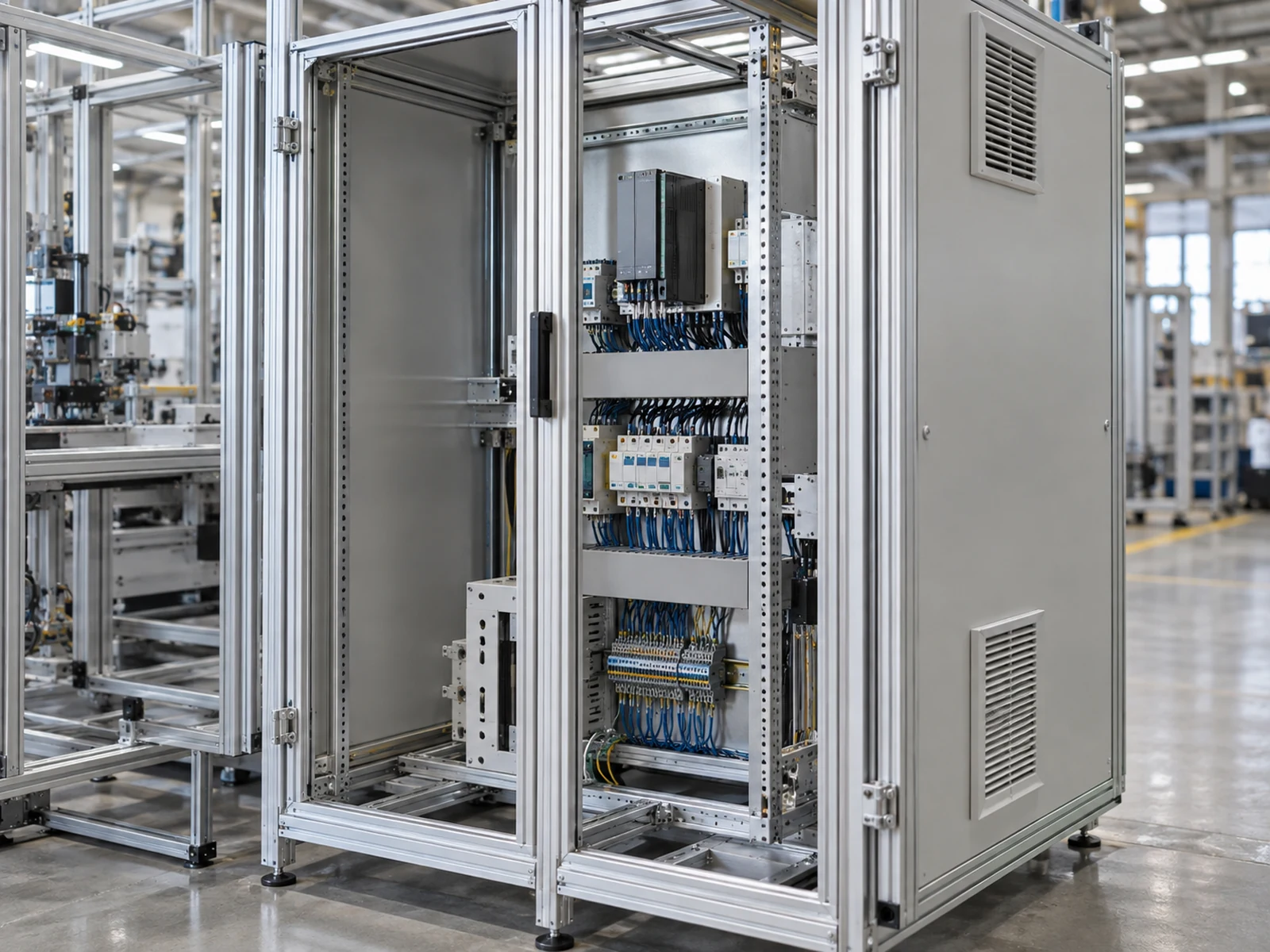
Start with the cover architecture, not a generic machine capacity number. If a supplier delivers a complete panel or guard, ask what is already fabricated, perforated, finished and fixed. If your factory receives straight frame extrusion, identify the exact profile series, finish, connectors and approved cut list. The same installed object can contain a front screen, top return, side pieces, feet, brackets and a removable service panel; only some of those may be saw-cut aluminum members.
Write one owner against each line item: extrusion supplier, saw station, panel fabricator, assembly team or installer. The purchase decision becomes clearer when the quotation separates cut blanks from drilling, notching, perforating, bending, finishing and fitting. A circular saw quote should not silently absorb those later operations. For a related boundary between frame members and a finished access component, see our access-panel manufacturing guide.
2. Convert the site survey into three different dimensions
A site survey records the available space and obstructions. A cover drawing defines the assembled outside size and the access it must preserve. A cut-member schedule gives each approved aluminum blank its individual length and end condition. Copying a site width directly into every saw program skips the joints, corner connectors, returns and finishing allowances that the chosen system may require.
Contour’s measuring guidance calls attention to the radiator’s overall width, height and depth, as well as skirting and pipework. It also gives clearances for Contour’s own guard design. Use that source as an example of what must be surveyed; do not transfer its numerical allowances to an unrelated aluminum frame. Ask the cover designer to issue the required outside envelope, panel openings, wall or floor interface, access direction and project-specific clearance requirements.
- Site record: radiator and valve envelope, wall offset, floor level, skirting, pipes and service access.
- Approved cover: outside width, height and depth, removable face or lid, vented area and fixing locations.
- Cut schedule: profile ID, stock length, blank ID, quantity, finished length datum and each end treatment.
If the radiator or surrounding surfaces vary between sites, keep site-fit work visible in the order. A factory-cut batch should be released only against a frozen drawing or a defined adjustment range approved by the cover system supplier.
3. Freeze the corner and panel interface before cutting
For a profile-and-connector cover, the corner determines much of the cut logic. Does a rail run between posts, overlap a post, or terminate in a proprietary connector? Is the finish visible at the end? Is the cover panel retained by a groove, clip, screw or independent bracket? A correct straight length can still produce the wrong outside size if the joint convention changes after the saw trial.

Request a section drawing and a small assembly sketch showing the selected corner. Mark the datum face, visible face, orientation and end label on every member type. If the design uses a fabricated perforated panel rather than a separate extrusion frame, move that panel to a distinct fabrication RFQ. Do not infer its hole pattern, airflow or attachment from a photograph of an aluminum frame.
4. Specify what the aluminum saw trial must demonstrate
Choose a representative profile from the released drawing, with its actual finish and the joint-critical end. Ask the supplier to show the stock support, locating face, clamp contact, feeding direction and cut-end inspection method. Thin or decorated sections may need different support from a solid rectangular member, but the approved section and trial results must determine the setup. Do not borrow precision, blade life or throughput claims from another profile or machine configuration.
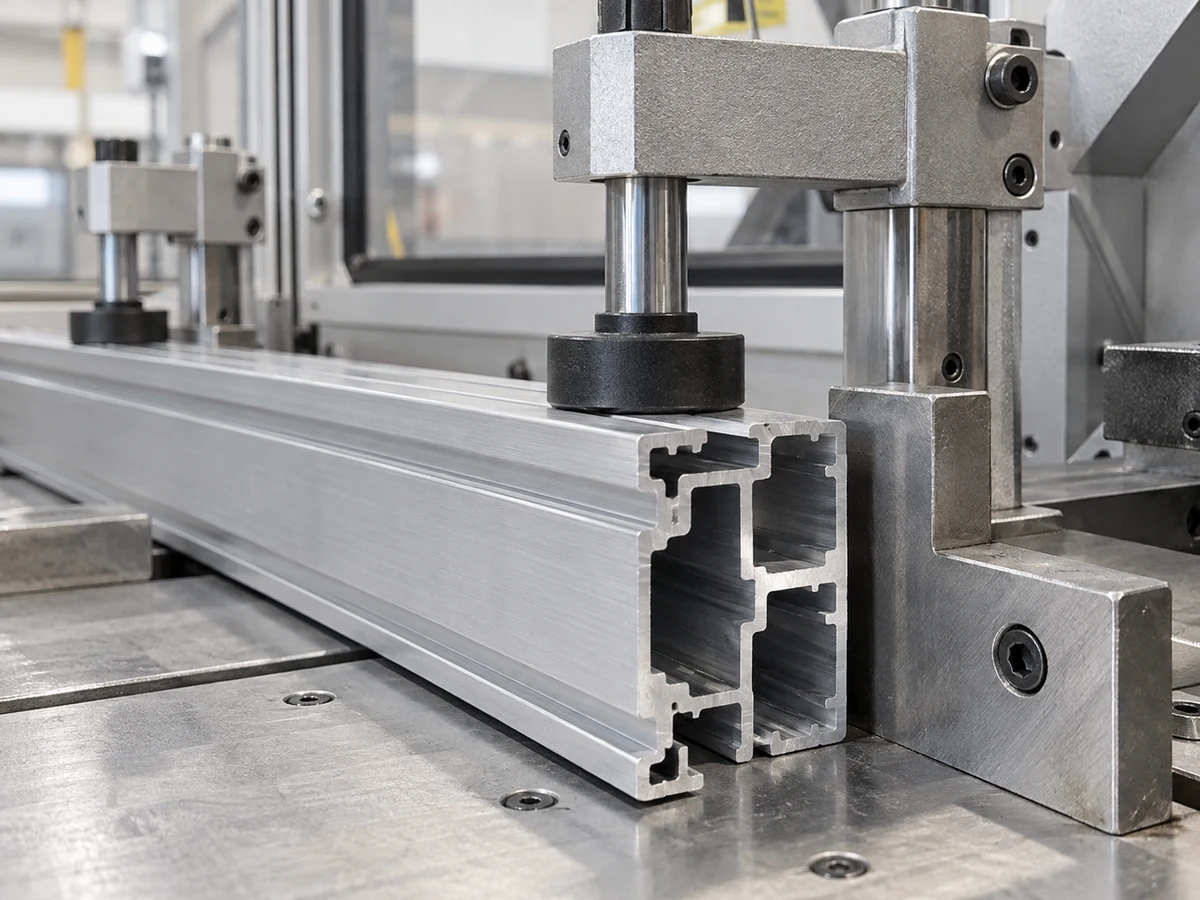
The trial acceptance sheet should name the measured length datum, end squareness or angle if required, burr acceptance, visible-finish protection and dry-fit assembly check. If drilling, corner notching or panel fabrication follows sawing, record its owner and acceptance separately. A useful result is a matched first-off kit that the cover designer can inspect, not an isolated attractive cut end. Our control-cabinet frame guide explains a related retained-frame purchasing decision.
5. Compare the three procurement routes
| Route | When to investigate it | Evidence to request |
|---|---|---|
| Supplier-cut profile kit | Project sizes vary or the connector system remains with the profile supplier. | Approved member list, finish, connector set, labeling and replacement-part terms. |
| In-house frame blank cutting | Repeated approved aluminum sections and cut schedules justify a controlled saw station. | Representative stock sample, drawing revision, first-off kit, fixture access and accepted count. |
| Complete fabricated panel or guard | The design is mainly a perforated, formed or removable cover assembly. | Panel drawing, fixing method, access and site-fit responsibilities; a frame-saw quotation may be irrelevant. |
For aluminum radiator cover frame cutting, compare the total handoff, not only the price of each cut. Include receiving and identification of long stock, trial stock, changeovers, rejected pieces, panel fabrication, assembly labor, packaging and site corrections. The lowest saw-cycle estimate has little value if a later team must remake corners or manually rework visible ends. No route is universally best; use your actual order mix and the supplier’s released design.
6. Use a first-off kit as the release gate
Build one cover frame from the first accepted blanks and the actual connectors. Check the outside envelope against the approved cover drawing. Fit the intended panel or approved sample, confirm removable access, and inspect the joint and visible surfaces. Where the installed product has thermal, ventilation, hygiene or safety requirements, the responsible cover designer must validate them through its own product process; a cutting trial does not certify those requirements.
Keep an open-issues list. If a bracket clashes with the valve, if the panel cannot be removed, or if the cut end remains visible when it should be concealed, revise the approved assembly information before releasing the batch. Record whether the correction changes only the cut schedule or also the extrusion, connector, panel or installation route.
Copy this radiator-cover frame RFQ checklist
- Cover route: supplier-cut frame kit, in-house saw-cut frame members, or complete fabricated guard?
- Approved drawing revision and owner of changes?
- Site survey: maximum radiator and valve envelope, wall/floor conditions, skirting and pipework?
- Frame member schedule: profile ID, material/finish, length datum, quantity and end condition?
- Joint and panel interface: connector, visible face, panel retention and access direction?
- Post-saw operations: drilling, notching, perforation, bending, finishing, assembly and installation owners?
- Representative saw trial: actual stock sample, first-off inspection and full frame dry-fit criteria?
- Supply handoff: accepted kit count, labels, finish protection, replacements and unresolved site-fit work?
Machine video: a related equipment view
The following video is from Jiurun Machinery’s own YouTube channel. It shows a CNC aluminum cutting machine and visible positioning/cutting equipment. It does not show a radiator cover, the proposed frame stock, a customer trial, a specific quoted configuration or performance evidence. Use it only to frame questions about feed, support and clamp access; require a trial with your approved section for a purchase decision.
Common buyer questions
Can the site-survey width be used as the cut length?
No. The site width helps define the cover envelope; the selected frame system determines individual member lengths through its corner, connector and panel details. Obtain an approved cut schedule.
Does a good saw-cut sample prove the cover will work around the radiator?
No. It can support a frame-blank acceptance decision. The cover designer and installer still own clearance, access, ventilation and any applicable product safety validation.
What if the radiator cover is a shaped perforated panel?
Ask for the panel fabrication and fixing scope first. A straight aluminum profile saw may serve a separate subframe, but it does not replace panel forming or perforation.
Send a drawing-led frame cutting inquiry
For aluminum radiator cover frame cutting, send Jiurun the approved aluminum profile drawing, sample stock, cut-member schedule, joint sketch and first-off inspection criteria through our contact page. State which parts your factory will saw and which cover, panel and installation tasks remain with other suppliers. We can then discuss a suitable equipment trial and quotation around the released frame members, without treating a general machine video as proof of this application.
Source basis: ALUSTECK profile-and-connector cover example; Gooding Aluminium panel example; Contour site-measurement example. Their designs and dimensions remain supplier-specific.