
An aluminum saw for access panel manufacturing is a sensible purchase only when your factory actually cuts repeatable aluminum frame members. An access panel is an assembly: an outer frame meets the wall, ceiling or floor opening, while a hatch or removable door, inlay, hinges, latch and finish may follow different supply routes. Buying a saw against the nominal panel size alone leaves the buyer unable to say which blanks the machine must make. Begin with the released product family and a list of the metal parts your team will retain.
The component distinction is visible in published access-panel systems. Knauf describes an aluminum access frame used with a separate panel, while its A@TCH product description identifies an aluminum framework and a detachable panel door. These are examples of how systems can be divided, not dimensions or performance claims for a Jiurun saw. Confirm the exact construction of your own approved panel before requesting a machine quotation.
Decide which access panel parts stay in your factory
List the outer frame, movable hatch frame, infill board or sheet, hinges, latch, seals and fixings as separate bill-of-material lines. For each line, mark whether you buy a finished item, buy a prepared kit, or receive straight stock and process it. An aluminum saw can prepare extrusion lengths and end geometries; it does not, by itself, make a finished access panel or certify a completed wall or ceiling installation.
Three supply routes deserve an explicit comparison. If a supplier delivers complete, accepted panels, the saw has no access-panel job unless other products justify it. If a supplier delivers cut frame kits, compare kit cost, lead time, revision response and incoming inspection against the work you would bring in-house. If you retain straight aluminum profiles and assemble frames yourself, define the precise cut list, required end forms and downstream operations. Drilling, fastening, fitting the inlay and testing the latch may remain separate stations even when cutting is internal.
Keep the outer-frame and hatch-frame routes separate. They can use different profiles, lengths, end angles and visible faces. A single attractive sample corner does not establish that both families will run on the same clamp, support and blade setup. If only one family is retained, the purchase case must use the volume and changeovers of that family rather than the volume of complete panels.
Translate the drawing into saw-ready member references
The catalogue opening size, overall frame size and individual cut-member length are different references. Ask engineering to identify the reference edges and corner construction on a released drawing. State whether each member is straight-ended or mitered, which face is visible after assembly, and where a hinge or latch feature will be added. Do not calculate the saw setting from an opening dimension until the actual profile geometry, joint allowance and assembly method are agreed.
A useful cut-list row contains a part identifier and revision, profile identifier, stock condition, member length reference, end geometry at both ends, quantity per panel, visible-face orientation and the downstream operation. Add the accepted drawing or sample that defines the inspection method. A mixed family needs a row for each distinct member, not one “frame profile” line that hides hatch and outer-frame differences. If a supplier changes a profile or corner connector, recheck the cut list before reusing the previous machine trial.
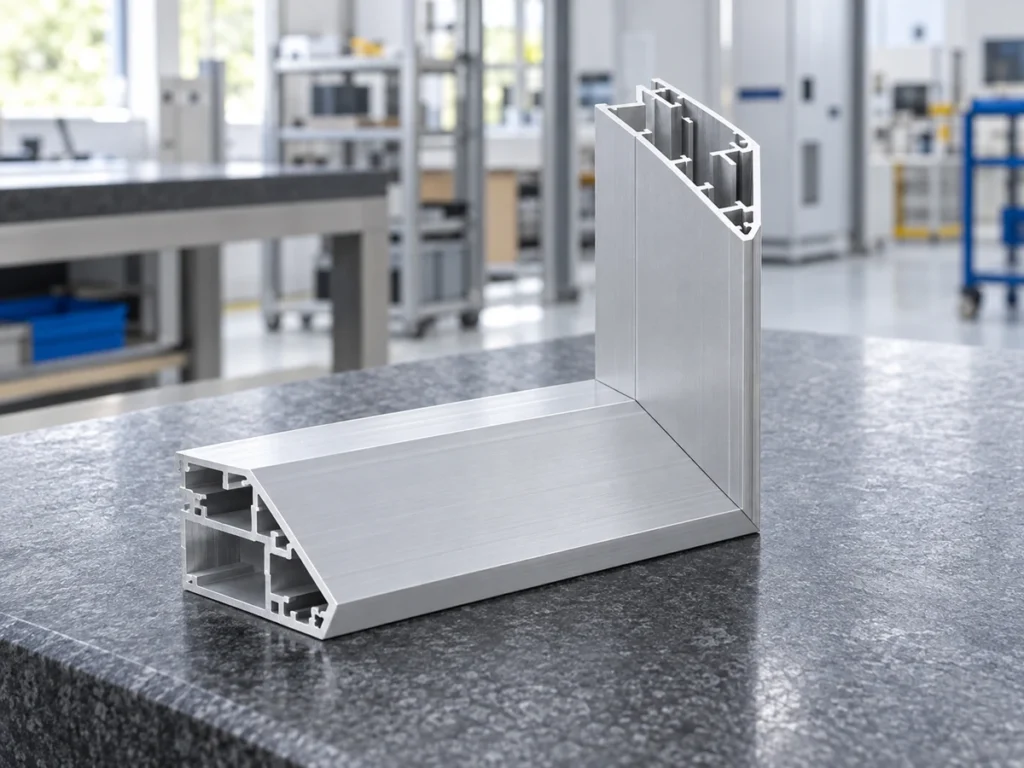
Section shape matters as much as the nominal width. Present the actual extrusion cross-section and representative stock to the saw supplier. A profile with a thin lip or asymmetric cavity may need a different locating and clamp contact strategy from a compact section. The RFQ should name the surfaces that may be contacted, the surfaces that must remain visually acceptable, and the position in which the bar will enter the machine. Avoid treating published feed-positioning information as a guarantee of finished-frame fit; inspect the cut part and assembled joint.
Run an acceptance trial around the assembled panel
Bring representative outer-frame and hatch-frame stock in the finish condition you intend to buy. Include the longest and shortest production members, each required end geometry, and a profile that makes clamping or orientation difficult. Mark the preferred datum and visible face before cutting. Record the blade and fixture arrangement, the actual input stock, the program or stop setting, and the produced part IDs. This makes a repeated trial comparable instead of relying on a machine video or an unlabeled pile of samples.
Video example: the following clip from Jiurun Machinery shows a general aluminum-cutting machine and feeding process. It does not show an access-panel frame, the machine configuration for your job, a customer trial, or measured fit and performance for this article. Use your own released profiles and assembly checks for acceptance.
Inspect cut ends for burrs, distortion and visible-surface damage using the acceptance method on the drawing. Measure the specified member references; then assemble a complete representative frame and hatch with the intended joining method. Check corner mating, opening fit, hatch movement and hardware clearance. Record which issues arise at the saw and which arise during drilling, inlay fitting or final assembly. A square-looking loose corner is useful for discussion, but the assembled unit is the purchasing decision.
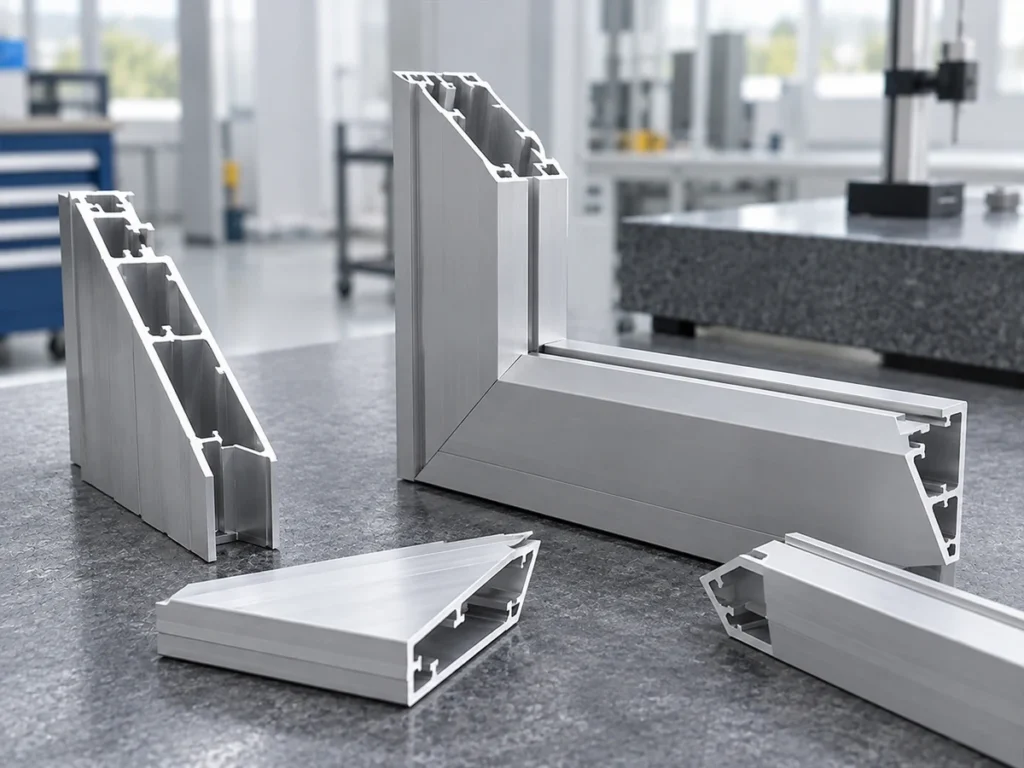
Separate product acceptance from machine acceptance. An installation requirement, fire or acoustic classification, sealing requirement or site-specific rule belongs to the approved panel system and its responsible designer or test evidence. A saw trial cannot establish those claims. If a requirement changes the frame profile, finish or joint, provide the revised approved input to the machine supplier and repeat the affected cut and assembly checks.
Compare the complete production route, not the cycle alone
Estimate demand by accepted frame kit, with the outer frame and hatch counted independently. Include stock receiving, profile segregation, cutting, part marking, deburring if specified, inspection, assembly and kit packing. The shortest saw cycle may have little value if a small mixed-order shop spends most of its time changing stops, restoring an approved setup or sorting nearly identical members. Conversely, a stable repeated profile family may justify dedicated fixtures and a simpler program route.
Request a practical changeover demonstration when several panel sizes or profiles share one machine. The operator should show how the correct stock and drawing revision are selected, how a visible face stays oriented, where the first accepted member goes, and how offcuts and rejected parts are separated. A buyer should be able to see the path from raw bar to labeled outer-frame or hatch-frame kit. This also reveals the floor space, infeed support and outfeed handling needed beyond the saw itself.
For a make-versus-buy comparison, put prepared-kit price and lead-time risk beside the internal costs of stock, fixture work, labor, inspection, offcuts and capital. Use your own order history rather than a generic payback claim. A supplier may be the better route for low-volume or highly variable panel styles, while in-house cutting can be useful when released profiles repeat and revisions or replenishment justify the control. The correct answer depends on your retained work and approved product design.
5 RFQ checks for an aluminum saw for access panel manufacturing
- Provide the released outer-frame and hatch-frame drawings, profile sections, material and finish condition, with separate annual and typical batch quantities.
- Identify every straight or angled end, the accepted member-length reference, visible face, contact restrictions and assembly joint.
- Describe the stock format, longest and shortest member, mixed-profile changeovers, current floor layout, infeed and outfeed route.
- State which drilling, deburring, hardware fitting, inlay assembly and product-system tests occur outside the saw quotation.
- Ask the supplier to show representative cut samples, measurement records, assembled-corner checks and the exact included fixture and service scope.
If you are still deciding between a complete panel, a precut kit and in-house extrusion cutting, ask for three quotations against the same accepted panel family. Do not compare a finished-panel price with a bare machine price as if both deliver the same output. For a related but different application, see our machine-enclosure retrofit buying guide; its guard and panel scope should not be transferred into an access-panel specification without checking your own system.
Planning a trial? Send Jiurun the released profile drawings, sample bars, required member list and the way a complete outer frame and hatch will be accepted. We can discuss a saw and trial scope for the cutting work you actually retain, while your product designer remains responsible for the final panel and installation requirements.