
Buying an aluminum saw for control cabinet frame manufacturing starts with a boundary question: will your shop deliver cut extrusion members, a checked frame kit, an assembled enclosure shell, or a wired control cabinet? Those are different products with different suppliers, inspections and liabilities. A saw can prepare the agreed aluminum members; it cannot, by itself, establish enclosure protection, electrical compliance or the fit of every purchased panel and fitting. Use this guide to define the retained cutting work, compare sourcing routes and ask for evidence before selecting a machine.
Start with the cabinet family and the accepted deliverable
List the cabinet families you actually expect to supply. For each one, identify the approved drawing revision, external dimensions, frame system, aluminum profile sections, door arrangement, panel and mounting-plate interfaces, and whether the result is indoor, outdoor or another application. Do not treat a marketing photo as a production drawing. A cabinet family may mix extrusion members with sheet-metal panels, hinges, seals, rails, wiring and bought hardware. Mark each item as cut in-house, bought prepared, assembled in-house or supplied by another contractor.
The first commercial decision is the handover point. If the buyer accepts loose frame members, the saw supplier should be evaluated on those members and their identification. If the buyer accepts a frame kit, add the correct quantities, left/right orientation, matched corners and packaging needed by the assembler. If the contract is for a finished enclosure or wired cabinet, include the other manufacturing and verification work in a separate scope. Do not price an extrusion saw as though it includes that downstream work.
Real enclosure systems illustrate why the handover matters. ROSE’s modular aluminum control enclosure example describes profiles, front and rear components, hinges and customer-specific machining. It is an example of how complete enclosure scope extends beyond sawing; it is not evidence that a Jiurun machine makes that product or meets its stated rating. Bosch Rexroth’s aluminum profile kit likewise shows that sections and connection technology form a system. Use the approved system drawings and connector instructions for your own project.
Separate cut members from doors, panels and electrical work
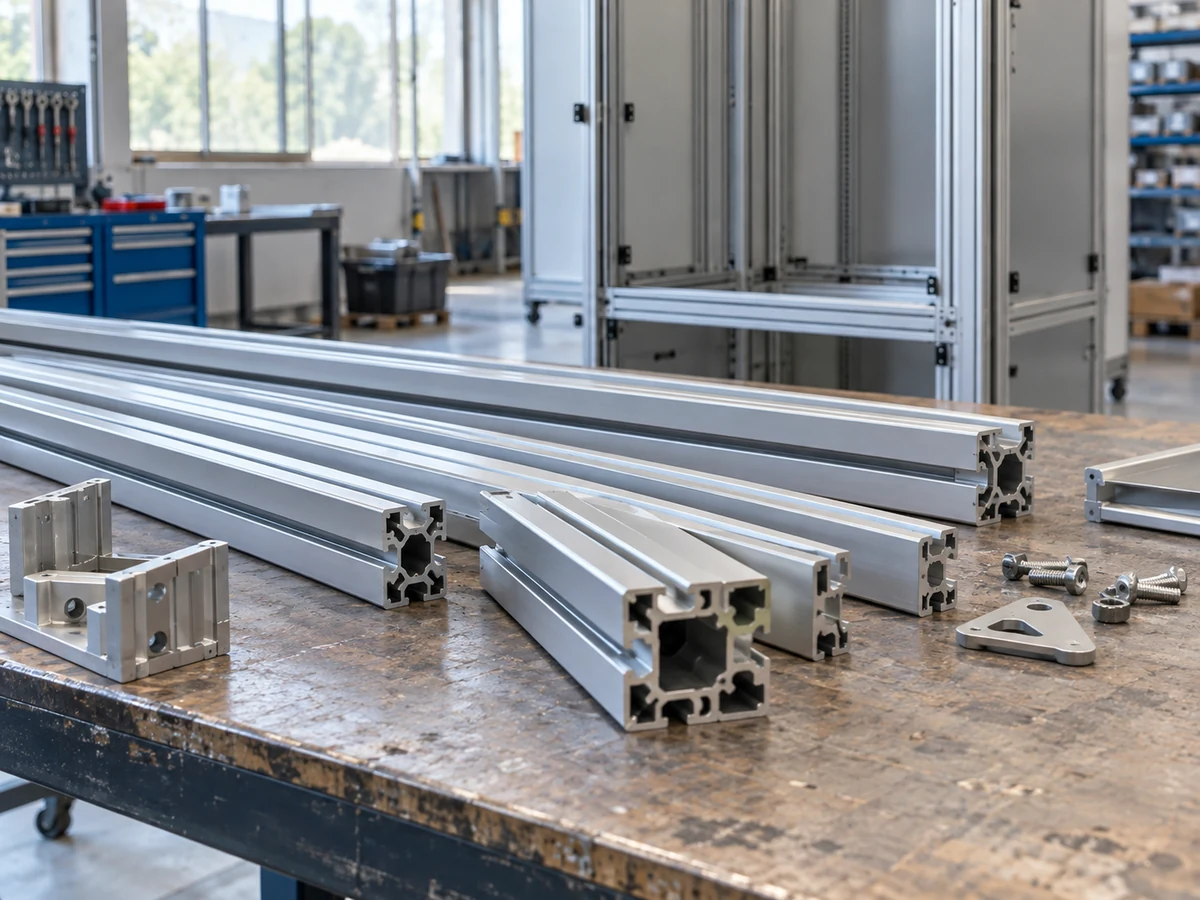
Build a bill of members before requesting saw quotations. Include vertical posts, top and bottom rails, intermediate supports, door-frame members and any removable frame inserts that are genuinely made from the specified aluminum stock. For every member, record its section ID, alloy or supplier designation if supplied, finish condition, stock length, required finished length, end geometry, orientation, quantity per cabinet and assembly reference. Mark holes, slots, threads or notches as separate operations unless the proposed machine and quotation explicitly include them. A straight cut does not silently include drilling, milling or installation.
Keep bought items on the same schedule but outside the saw output count: mounting plates, panels, hinges, seals, cable glands, terminals, electrical components and fasteners. This makes two common errors visible. One supplier may count a bought cut-to-length profile as in-house work; another may quote a saw for every profile shown in a complete cabinet drawing even when most pieces arrive prepared. Ask both bidders to price against the same retained member schedule.
Choose among three practical sourcing routes
Route 1: buy prepared members or finished frames. Retain drawing control and assembly checks while a profile-system supplier or fabricator supplies the cut parts. This can suit low or irregular demand, many design changes or a shop without a stable operator and inspection process. Compare purchased-part price with lead time, minimum batch, revision control, damage handling and the cost of urgent replacement members. The cheapest line item may be expensive if a missing left-hand member stops a cabinet build.
Route 2: cut approved members in-house. Buy a saw for the recurring sections, lengths and end forms you can actually release and inspect. Retain drilling, assembly and enclosure tests with the responsible teams. Compare installed machine cost, fixtures, blade and maintenance supply, operator time, stock loss, first-off checks, part labels, floor space and support. If a corner or short part requires a different setup, show that in the capacity calculation. A catalogue cycle time for one long straight section is not a cabinet-kit output rate.
Route 3: integrate a wider frame preparation cell. A higher-volume builder may need controlled cut lists, part identity, additional operations and kit reconciliation alongside the saw. Price the interfaces, software and labour separately. State which party owns each operation and records exceptions. An integrated cell is justified by the agreed member portfolio and accepted kit output, not by a generic claim that automation is always better. For the narrower data boundary, see the order-to-result software buying guide.
Specify an aluminum saw for control cabinet frame manufacturing
Send each bidder representative profile cross-sections, stock and finished lengths, end drawings and expected batch mix. Include the widest and tallest section, delicate finished surfaces, thin walls or internal cavities where relevant, and any asymmetric orientation that matters for the connector. Ask how the proposed clamps, supports and datum contact the real profile without damaging a visible face or changing the dimension reference. A statement that a machine cuts aluminum is not a fixture plan for your particular member.
Separate length positioning from accepted part length. The buyer should define the drawing datum, measuring condition, end-angle reference, burr or edge condition and any surface requirement. A quoted feed-positioning figure describes one part of the machine process; it is not a guaranteed finished-cabinet fit. Agree the finished-member acceptance method with the assembler. Where panels or hinge locations control the build, ask for a representative dry fit before committing to a large run.
For each family, show how many different sections and end forms occur in one production campaign. Record setup changes, tool and fixture changes, rework, one-off replacement members and the proportion of repeat runs. This reveals whether a semi-automatic route with disciplined kits or a more automated route has a credible workload. It also prevents a high-volume claim based on only the easiest rail while short posts and door parts accumulate elsewhere.
Test the interfaces that make a frame fit
The frame is accepted through its interfaces, not by the saw display. Identify which cut ends meet at corners, which faces are exposed, where connectors bear, where the door or panel closes and which dimensions are checked after assembly. Do not invent a universal tolerance: the approved profile system, assembly method and finished-product drawing determine the allowable result. A one-piece length sample is useful but incomplete if the critical risk is cumulative frame fit.
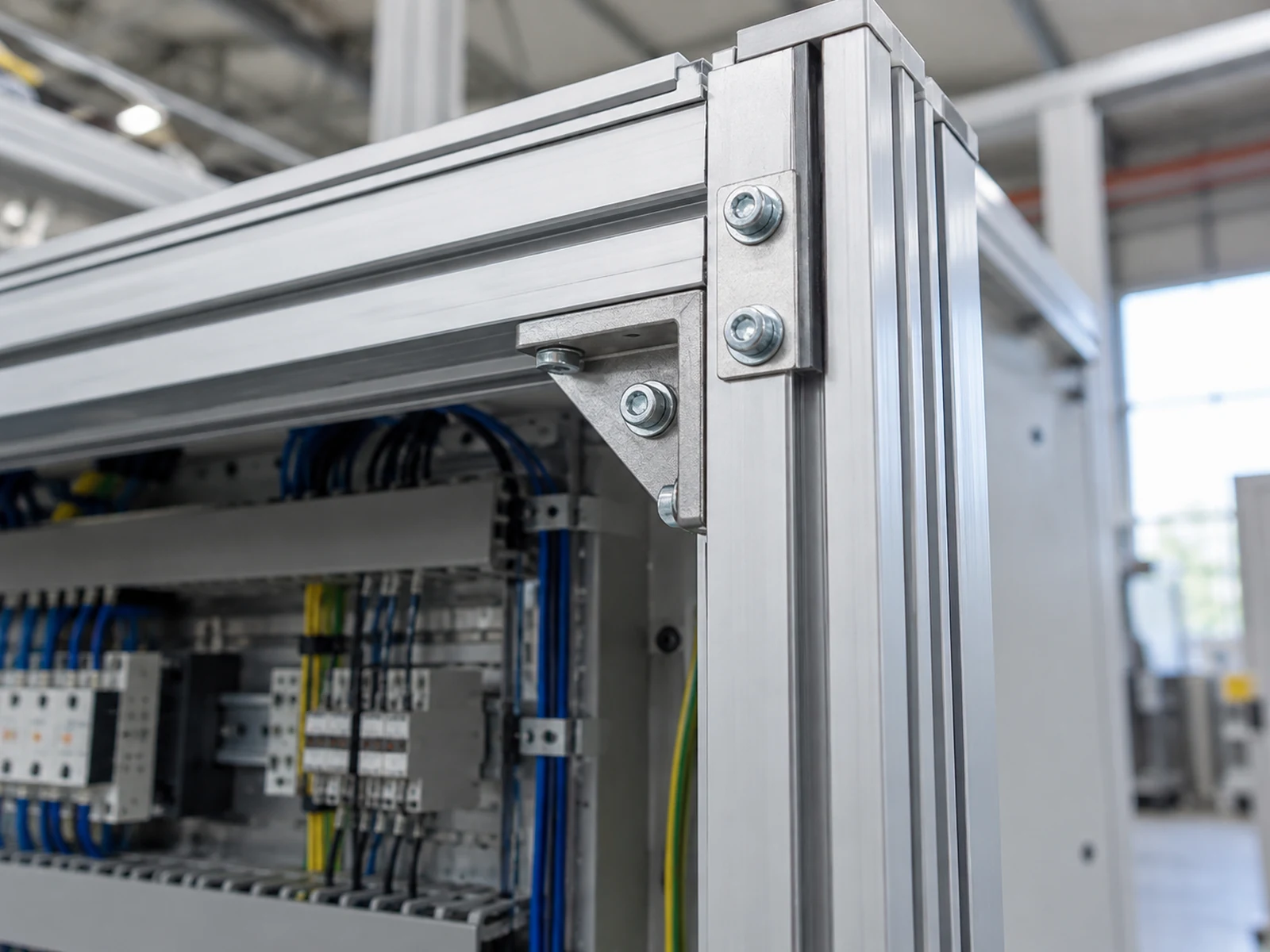
Build a small first-article set that includes a straight member, the most difficult end, a short member and one complete corner or representative frame section. Check individual members against the agreed drawing, then assemble with the actual connector and neighboring parts. Record any gap, twist, finish damage or rework separately. A photo of a neat corner cannot establish production capability, an enclosure rating or electrical safety. The signed test must identify the material, configuration, machine setup, inspection method and accepted result.
Make quotations comparable on the same complete package
Give each supplier one RFQ pack: released part list, representative drawings and profile samples, annual and peak kit mix, incoming stock condition, required part identification, acceptance method and site constraints. Request a marked response for each item: included, customer-supplied, third-party, optional or excluded. This makes scope differences visible before a purchase order is written.
- Machine and tooling: identify the exact proposed model, cutting range against the real sections, fixture approach, blade specification, guards and extraction connection; request configuration-specific evidence rather than a generic brochure.
- Installed scope: price delivery, commissioning, operator and maintenance training, site utilities, spares, support and any software or interface work as separate lines.
- Output and scrap basis: compare accepted members and complete kits after normal section changes, first-off checks and material handling; state assumptions instead of promising a rate from an isolated cycle.
- Acceptance: name the drawings, sample stock, inspectors, measuring method, representative kit and sign-off sequence. Specify what happens if a member or assembled frame fails.
- Ownership: assign drawing release, stock quality, cutting, secondary machining, assembly, electrical installation, enclosure testing and final customer acceptance to named parties.
Do not transfer a third-party enclosure’s protection or certification claims to cut profiles. For example, ROSE describes a protection level for its complete SL 4000 product; that statement does not rate a separately cut member or an untested cabinet assembled from other components. Any required enclosure, electrical or environmental qualification needs its own responsible party and evidence.
Decide from the accepted frame package
Choose prepared members when your demand and revision pattern make outsourced preparation dependable. Choose an in-house aluminum saw when the retained cut-member workload, fixture method and inspection responsibility are stable enough to justify it. Consider a wider preparation cell only when the complete kit and data handoffs are defined and its additional cost can be tested. The purchase decision should end with a signed scope and a representative assembled result, not a machine photo or an unqualified throughput promise.
Video: general aluminum saw equipment example
The following Jiurun Machinery channel video shows general aluminum saw equipment footage. It does not demonstrate this cabinet material, a quoted model configuration, a customer frame, a trial cut, an enclosure rating or a performance result. Use it only to see an example of the equipment category while the actual requirement is checked against your drawings.
Play Jiurun Machinery equipment footage
To compare machine routes, send JiurunCut the released aluminum member drawings, profile sections, expected cabinet-kit mix and the cut-part acceptance method. We can review the cutting-machine side and identify the configuration evidence needed for a quotation. Enclosure assembly, electrical work and any product qualification must be scoped with the parties responsible for those results.