
Different aluminum profile shapes can share the same outer size. That does not make their cutting jobs identical. When buying a saw for several sections, show the actual cross-section of every profile and ask how the quoted setup will support, hold and change between them.
The outside rectangle does not describe the whole profile
A width and height describe the space a section occupies. They do not show where its metal, openings, walls or projecting features are. Two section drawings can have the same outside dimensions and look very different inside that boundary.
For example, a closed rectangular tube and an open channel could occupy a similar outside space. A profile with grooves or projecting lips adds another shape to the discussion. Show those details rather than sending only a box around the section.
The Aluminum Extruders Council’s shape guide explains that a hollow extrusion contains a fully enclosed space within its cross-section. The actual drawing remains more useful to a saw supplier than a broad label such as “tube” or “profile.”
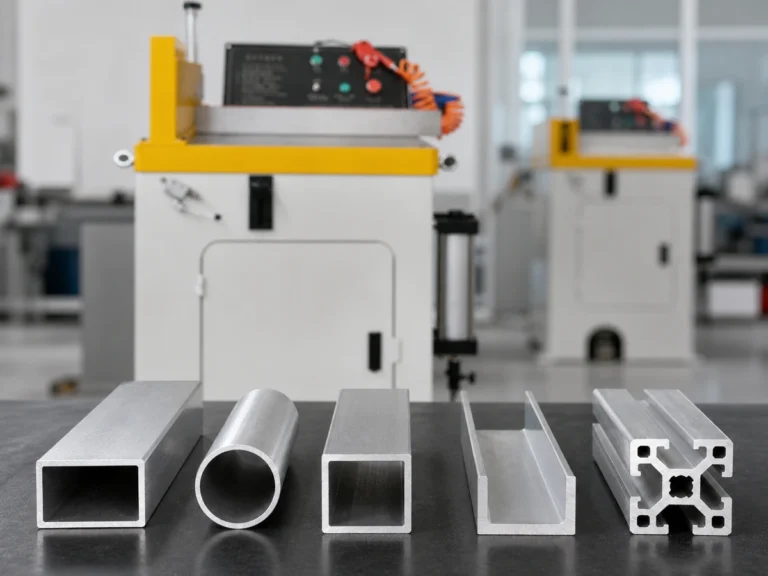
Will the saw serve one profile or a product mix?
Share the full range you expect to cut, including the sections that differ from your most common job.
Think about an order with two profile shapes
Imagine a workshop making straight members from a rectangular tube and angled members from an open channel. The outside sizes are similar, so the buyer starts with one saw in mind.
The useful question is whether the proposed arrangement covers both finished parts. Ask the supplier to explain the stock orientation, support and holding arrangement for each section. Then ask what changes between the two jobs and whether the required equipment is included.
Give each profile a clear code. Connect that code to its finished lengths, end shapes and surface requirements. This prevents a proposal reviewed around the tube from being mistaken for an agreed setup for the channel as well.
Make the change between sections part of the quote
A setup that suits one listed part still needs a clear plan for the next. Ask whether the operator changes a fixture, moves a support, changes the profile orientation or follows another agreed job-change procedure. Have the supplier explain the work for the proposed configuration.
Keep the included items clear. If a profile-specific fixture or support is required, identify which profile it serves and whether it is included in the offer. Do not assume that an optional item shown elsewhere comes with your machine.

Jiurun’s brochure identifies this model as an automatic corner-cutting machine. Our multi-angle machine buying guide gives the wider buying context.
Give every section a place in the inquiry
Attach the profile codes and their finished parts so the proposal can be discussed section by section.
Define the finished result for every section
The product mix includes more than the stock shape. Show the faces that remain visible, the points used to measure a finished member and the way its ends meet the next part. A result accepted on one profile should not silently become the acceptance rule for every other profile.
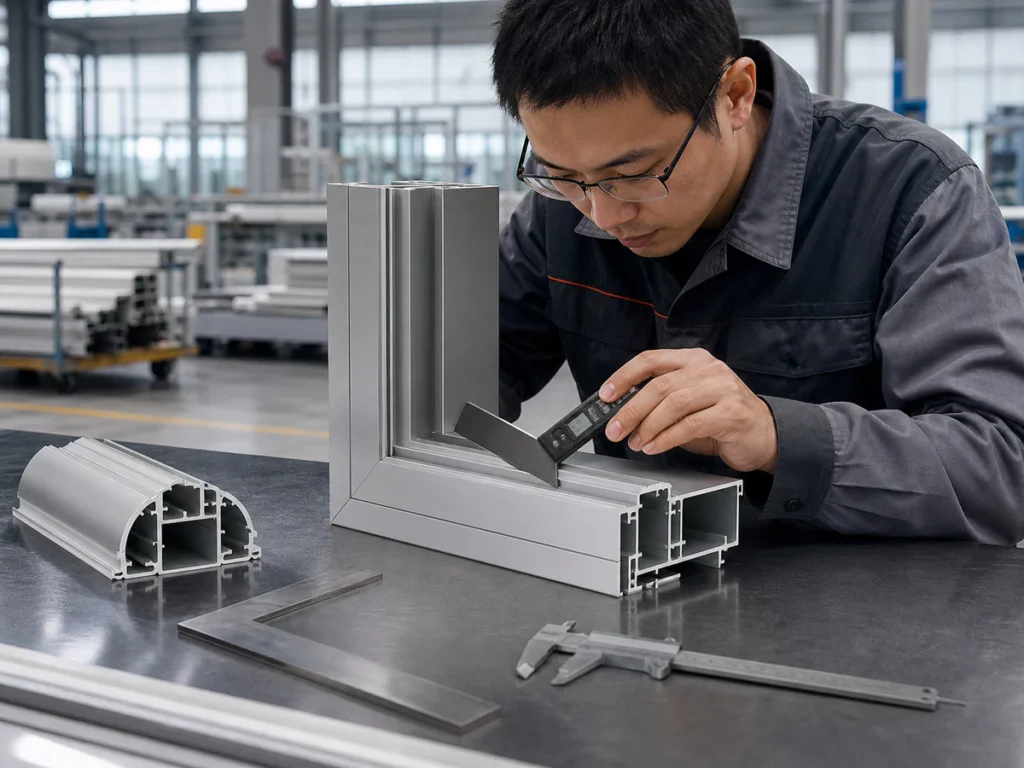
Separate today’s confirmed parts from possible future sections. Ask which parts are covered now and what would need another review if the range changes. That keeps one-machine planning useful without treating an unknown future profile as already covered.
See the profile-surface guide for visible and functional face questions, and the quote-scope comparison for included equipment.
Watch: Jiurun angle-saw demonstration
Use this machine reference when discussing the sections and end shapes in your normal orders.
Discuss your aluminum profile shapes with Jiurun
Send the current product range and ask for the covered parts, included equipment and job changes to be clear in the proposal.
Machine context: Jiurun brochure, physical PDF page 13, through Catalog & Downloads. The final cutting arrangement should be reviewed for the actual sections and finished parts in the quote.