
When you buy a saw for finished aluminum profiles, show which faces people will see and which faces must fit another part. Then ask how the proposed supports and clamps will contact that exact section. “Protect the finish” becomes a clearer requirement when the important faces are marked.
The same profile can have different appearance requirements
Imagine a frame around a front-facing panel. Its front face is on display, while the back is covered in the finished product. Now imagine the same profile used in a freestanding divider that people view from both sides. The second application brings the back face into the appearance review too.
The loose profile alone does not explain that difference. Send an assembled view or a marked photo showing how the frame will be used. This lets the saw discussion follow the surfaces that matter to your customer.
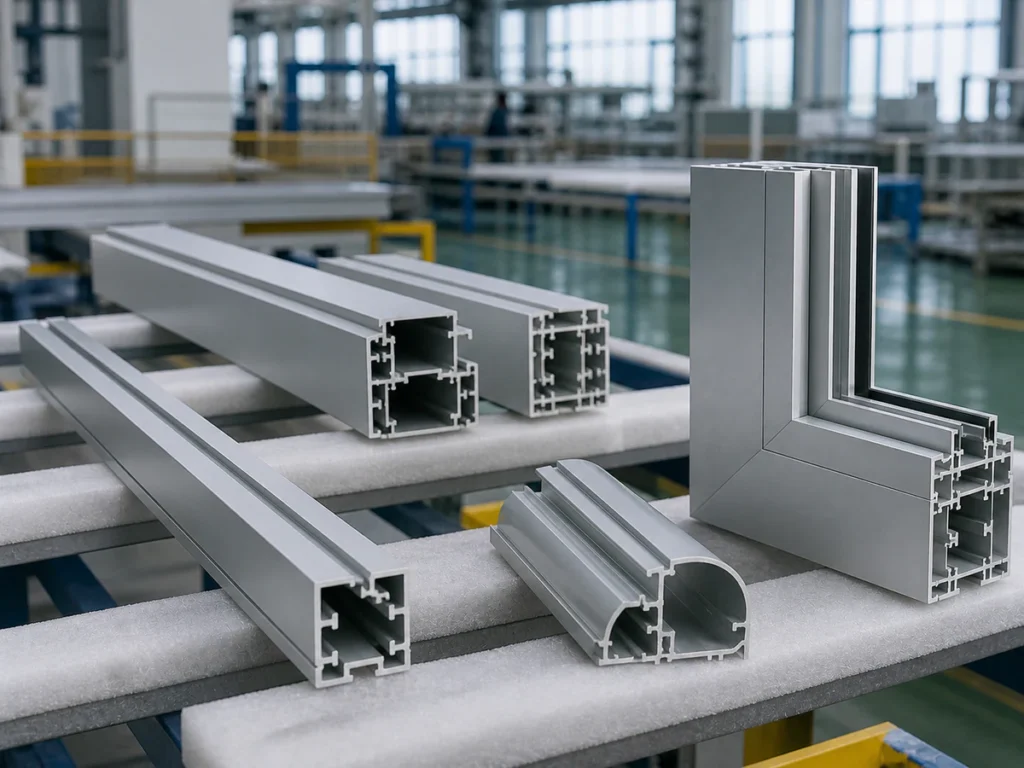
Which faces will your customer see?
Share the assembled view and mark those faces on the profile section.
A hidden face can still matter to the fit
A rear groove may locate a cover or connector even when nobody sees it. A mating edge may sit against another component. Keep those functional surfaces in the review rather than treating every hidden face as an unrestricted contact area.
Tell the supplier what the surface does. Is the requirement about appearance, assembly fit, or both? Use the part drawing to define what is acceptable. A broad request for “no scratches” does not explain a groove that must still receive its matching component.
For finished aluminum profiles, separate the incoming surface from the new cut end as well. Describe the coating, anodized finish or other condition present when the stock reaches the saw. State how the exposed cut end will be used in the joint.
Review the contact route for finished aluminum profiles
Show the marked section to Jiurun and ask where it will rest and where the clamps will touch it. Include the loading direction and required end cuts so the discussion covers the actual part.
Follow the contact route through the job: the supports used for incoming stock, the holding arrangement at the saw, and the place where the finished piece is collected. Ask which equipment is included and how its contact surfaces relate to your marked faces.
If the proposal uses pads, inserts or a special fixture, ask what their role is for this profile. Keep that arrangement in the quotation and any agreed trial. Ask the machine supplier to explain the suitable holding arrangement for your part.

Make the contact question easy to understand
Show the visible faces and any groove or edge that must fit another part.
Review the part after normal handling
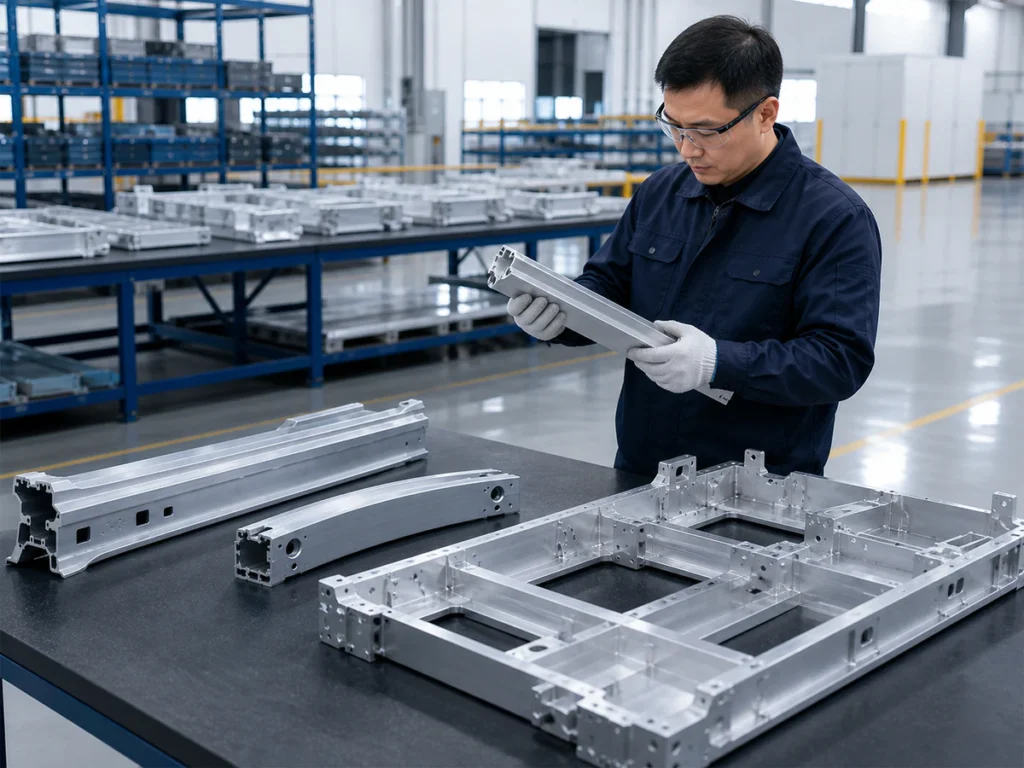
If a trial is agreed, use material with the finish you intend to load in production. Inspect the important faces after the part has been collected and handled, as well as the cut itself. Keep any observed mark linked to its location on the profile.
Agree the viewing conditions and appearance criteria with the supplier. Reference pieces or photographs can help explain your requirements, but identify the finish they represent. Keep the dimensional and assembly checks alongside the appearance review.
Our surface-handling guide gives a broader contact review. The sample-to-first-batch guide connects a sample result to the normal job.
Watch: Jiurun angle-saw demonstration
Use this machine reference when discussing your profile’s loading and holding arrangement.
Discuss your finished aluminum profiles with Jiurun
Send the section, incoming finish and assembled view. Ask for the proposed contacts and appearance checks to be discussed together.
For extrusion-design background, the Aluminum Extruders Council’s custom-extrusion white paper explains the value of identifying surfaces that will be visible. Jiurun machine identity is shown in the brochure, physical PDF page 13, through Catalog & Downloads. The proposed contact arrangement must be checked for your actual parts.