
Aluminum low pressure casting describes a filling route; a quotation still needs to define the actual component and delivery. Ask the foundry to connect the process description to the mold arrangement, material condition, completed features and required records.
Start with the released drawing. Then separate four questions: how the cavity is filled, what tooling is included, what arrives at your site and what evidence accompanies it. This guide helps a buyer make those entries readable before comparing offers.
Four scope checks
1. Read the aluminum low pressure casting route
Kurtz’s process explanation describes pressurizing the furnace so aluminum melt travels through a riser tube into the mold cavity. It then describes feeding pressure during solidification after filling.
That account identifies where pressure acts and how the melt enters the cavity. It is a manufacturer’s process description, rather than a qualified production plan for your part.
Ask the actual foundry to name its proposed arrangement. Keep the response connected to the component number and drawing revision, so a shortened process label does not replace the quotation scope.
For example, an offer saying only “permanent mold” leaves its filling route unidentified. Request the supplier’s fuller description and retain it in the comparison.
Likewise, keep squeeze-casting proposals recognizable under their actual route. A shared use of pressure is insufficient to establish that two suppliers offer the same process or delivered component.
If the supplier proposes a different route from the requested one, list the difference as a proposal. Obtain the responsible technical review before changing the released purchase requirement.
2. Identify the items behind the tooling price
Request an itemized tooling description against the actual part. Have the supplier name the mold, any core-making tooling and fixtures included in its proposal.
Keep each item connected to its function and drawing reference. An unexplained line called “tooling” may cover a different set of items in the next supplier’s quotation.
Ask which component features are formed by the proposed mold arrangement and which receive later operations. Use a marked drawing so the response can be checked against the released geometry.
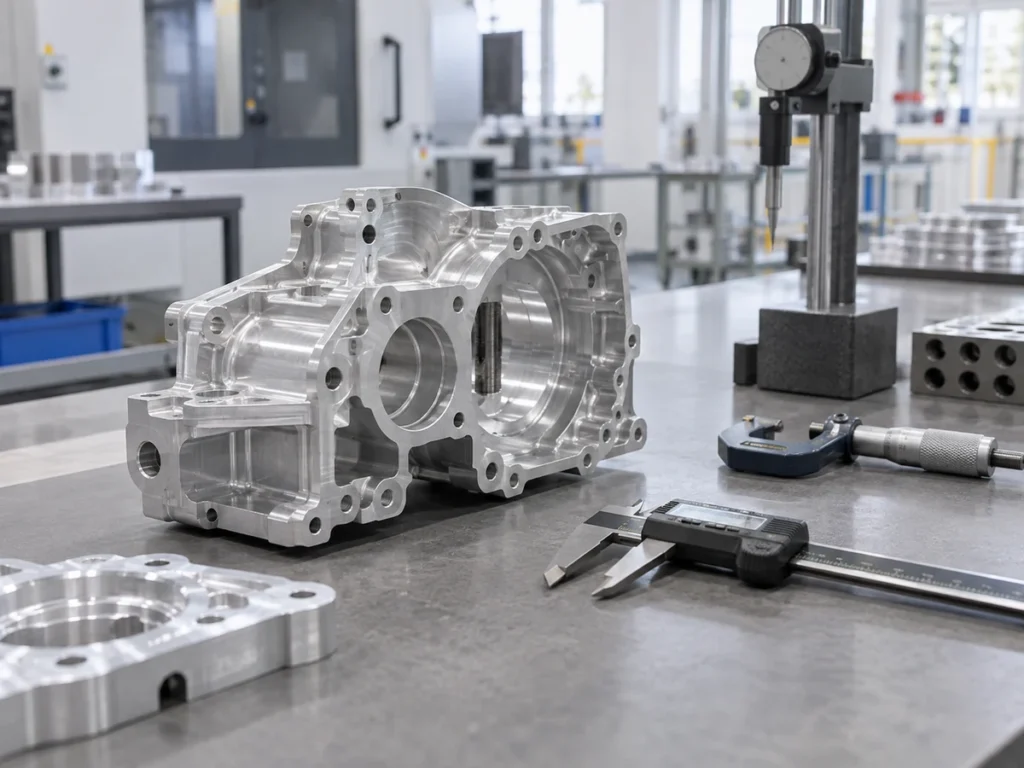
A passage shown in a finished-part model needs a clear delivery-stage explanation. Identify whether it exists at the casting handover or is produced afterward under the quoted operation list.
The sand and permanent-mold scope guide separates the mold containing the metal from other tooling items. Use the same clear item identities when reviewing the supplier’s actual filling proposal.
Keep commercial terms attached to the item list
Obtain the foundry’s actual tooling ownership, storage and revision terms. Identify the party responsible for maintaining each listed item under that agreement.
If tooling already exists, ask which identity and revision the offer references. Keep proposed modification work visible instead of treating an old tool number as approval of the new component drawing.
For a drawing change, request the affected items and revised scope. Record the accepted response beside the change so purchasing and engineering can read the same decision.
3. Define what arrives at the quoted handover
Describe the supplied component stage in one clear entry. State whether the quotation covers the casting alone or includes defined machining, finishing and associated inspection.
Mark mating faces, bores, holes and end details that must be finished by delivery. Retain the applicable drawing requirements beside each feature rather than relying on a general phrase such as “ready to use.”
State the required alloy and supplied condition in the controlled documents. Preserve the exact offered material when it differs, and have the responsible reviewer resolve that proposal.
Keep exclusions beside the included operations. If another supplier performs a later step, identify that handover and the component information it needs.
| Entry | What to retain |
|---|---|
| Filling route | The foundry’s named arrangement for the identified part. |
| Tooling | Included items, references and revision responsibilities. |
| Delivery stage | Material condition and completed features. |
| Evidence | Required records and the delivery they represent. |
Use this sheet to reveal gaps between offers. It does not select a casting route, approve component design or assign a property requirement.

4. Connect evidence to the supplied component
Request the records required by the approved purchase and inspection documents. Identify the part revision, delivery identity and stage represented by each record.
If the project requires dimensional, material or functional evidence, retain the actual specified method and acceptance basis. Ask the responsible quality team to resolve any missing requirement before the inspection is purchased.
A brochure explaining aluminum low pressure casting is background information. Keep it separate from the issued evidence for the delivery under review.
Use the material-certificate review for the document-to-material connection. A report naming the correct material still needs an identifiable relationship to the supplied component.
When a later operation changes the represented stage, retain the earlier record under its original scope. Identify which additional finished-feature checks belong to the next handover.
An original fictional comparison
Imagine housing L38, revision C. Offer A supplies the defined casting. Offer B supplies that casting plus machining of mating face F and bore B. Both offers name aluminum low pressure casting.
Ask Offer A to identify the delivered condition of F and B. Ask Offer B to identify the completed requirements and inspection records included for those features.
The difference is now visible: the buyer can identify remaining operations after each handover. This fictional example contains no measured casting properties, defect limits or actual supplier results.
Please use housing L38, revision C, as the comparison basis. Identify the filling route, supplied material condition, completed features F and B, and records included at handover. List any remaining work separately.
Keep revisions readable across the suppliers
Retain the approved part drawing with the current quotation and operation list. Identify earlier proposals clearly when a design or delivery requirement changes.
If a sample was reviewed, keep its configuration and supplied condition identifiable. Have the responsible team assess its relevance to the revised component rather than carrying approval forward without review.
Record the unresolved field by name. “Bore B delivery stage missing” gives the supplier a clearer question than a broad request to confirm all quality.
Carry the defined stock requirement into a cutting review
Some projects also include separate aluminum bars or profiles. Give that stock its own section identity, material condition, lengths and cut references.
Send JiurunCut the aluminum stock drawing and cutting brief for that portion of the project. Keep the foundry tooling, process approval and cast-component acceptance with the responsible organizations.
Does the process name define the delivered stage?
Ask which features and operations are included at handover.
Does a finished housing image establish the filling route?
Request the supplier’s actual process description for the identified component.