
Aluminum handrail cutting starts with a part definition, not with a saw demonstration. A project can contain upright posts, horizontal rails, sloping rails, short joining pieces and parts with different exposed surfaces. They may all be called “handrail tube” in an inquiry while requiring different lengths, end conditions and identification. A machine quotation based on one convenient sample can leave the rest of that production mix unresolved.
The purchasing question is whether the proposed cutting system can produce the approved component families under clearly stated conditions. First establish those families and their connector interfaces, then compare the machine’s confirmed scope with the whole order. The cutting inquiry should follow an approved project design; it does not establish the railing’s loading, anchorage, accessibility or compliance.
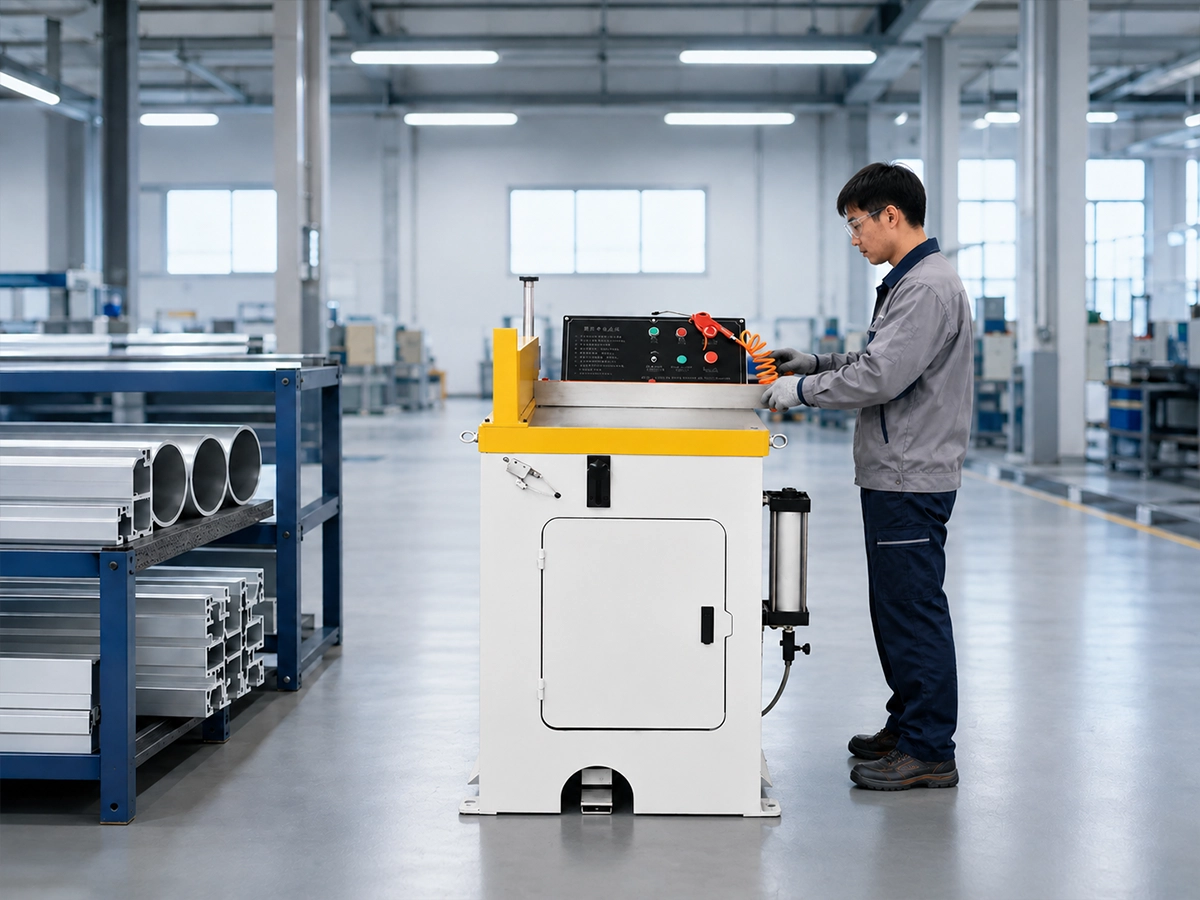
Define aluminum handrail cutting from approved component records
A project drawing describes an assembly. The cutting department needs individual parts. A horizontal distance between supports, the height of a completed rail and the length of tube entering a fitting are different dimensions. Treating them as interchangeable can produce an accurately cut component that is wrong for its intended position.
The Kee Systems guardrail assembly reference distinguishes assembled dimensions from tube lengths and shows that fitting-specific dimensions affect those relationships. This is an example of why the selected assembly needs its own applicable component information. Do not borrow a deduction from a different fitting, size or joint arrangement.
Ask the responsible project designer or system supplier for approved cut-part drawings or a controlled cut list. Each record should identify the part, drawing revision, stock section, finished cut length, reference surfaces and end requirements. Where those fields are missing, mark them as unresolved rather than letting the operator invent an allowance at the saw.
For purchasing, group genuinely identical requirements into component families. Separate a straight post from a sloping rail even if both start from the same tube. Keep a short insert separate from a full-length visible rail. Record whether the order is one repeated family, several repeated families or many individual lengths; this affects the usefulness of a production demonstration and the information needed for a quotation.
Worked example: a connector revision changes the cut-list basis
Consider an invented purchase review. The buyer sends an assembly drawing at revision B, a cut list at revision A and a sample tube made to the earlier list. The supplier demonstrates that it can repeat the sample length. That result answers a limited cutting question. It does not resolve whether the demonstrated length belongs to the assembly now being ordered.
Ask the party controlling the assembly information to reconcile the records before using the demonstration as a purchasing acceptance. Identify the connector reference and revision associated with each affected component. Request an approved individual cut-part record for the current assembly rather than calculating a new deduction from a photograph of the fitting. Retain the sample’s earlier identity so that it remains useful evidence of what was actually demonstrated.
The revised component schedule can show which rows remain unchanged, which require an updated cutting requirement and which are still open. Ask the equipment supplier to respond to the changed rows against the named machine configuration. If the required end also needs a separate operation, record that downstream scope explicitly. A revised component record is not evidence that the quoted saw has gained a new manufacturing function.
This comparison helps decide whether the existing evidence can support the equipment order. It avoids discarding every old observation while also avoiding an unqualified acceptance of the new component mix. The designer or system supplier remains responsible for the assembly requirements; the cutting supplier confirms its own manufacturing scope.
Specify the connector interface before choosing the end-cut process
Handrail assemblies do not all join in the same way. Kee Safety’s Kee Lite fitting range is one example of a modular pipe-fitting approach. Other approved systems may have different connections and part requirements. The connector selected for the actual project determines what must be present at the end of the cut component.
For each end, identify the required face geometry and its drawing reference. Ask whether the component needs a square face, an angled face, a profile-specific shape or a further operation after cutting. Do not assume that a tube saw also supplies drilling, notching, welding preparation or connector assembly. Request confirmation of the cutting scope and list the remaining processes separately.
The distinction matters when evaluating machine alternatives. A confirmed straight-cut application may support one component family while leaving another outside its scope. If angle cutting is required, compare the actual angle requirements with the quoted model and configuration. A photograph of an adjustable-looking machine is not confirmation of its operating range or suitability for the section.
The following matrix helps define the inquiry. Its entries are questions for the approved part records, not recommended handrail dimensions or a production recipe.
| Component family | Cut-part question | Separate interface question |
|---|---|---|
| Upright post | Which drawing fixes the tube length and each end? | What fitting or base interface is required? |
| Level rail | Is this an individual tube length or an assembly spacing? | How is the selected connector represented? |
| Sloping rail | Which end geometry and reference orientation apply? | Is another end-preparation process specified? |
| Short joining piece | Is the complete length within the proposed cutting scope? | How will its identity survive transfer to assembly? |
Generic pipe and tube size terminology also needs care. Send an actual section drawing with dimensions and material information rather than expecting a nominal size label to identify the stock. The fitting’s approved material and section requirements remain a separate matter for that assembly.
Compare machines against the complete part mix and stock condition
Build a comparison sheet from the approved component families. Include the section envelope, wall and geometry information, stock length, required cut lengths, end angles where applicable and specified dimensional requirements. Ask the supplier to identify which rows are confirmed for the proposed machine configuration and which need clarification or a different process.
The longest visible rail and the shortest joining piece can create different handling questions. Ask how each is supported and transferred in the proposed arrangement. Stock support, feeding, clamping and output handling must correspond to the actual section and length range. Do not infer suitability for short pieces from a successful demonstration of a long rail.
Record the incoming stock condition as well. Bare, coated or otherwise finished material may have different handling expectations. Identify the faces that will remain visible and the conditions the purchaser wants checked. If protective film is supplied, describe the actual stock and ask for an applicable handling proposal rather than assuming any film can remain in place during cutting.
Ask what contact points and output arrangement would be used for representative material. Request a demonstration or other agreed evidence that makes surface observations possible. A photo can record an observation under its stated conditions; it does not prove that every finish or future batch will behave the same way. The existing guide to visible aluminum surfaces during cutting covers that separate handling issue.
Compare the supplier’s confirmed cutting functions with the downstream route. A component that also needs holes or other features is not complete merely because it leaves the saw. Account for transfer and identification between those processes when assessing the proposed cell, without attributing unconfirmed operations to the cutting machine.
Plan mixed batches around component identity, not just total piece count
A total quantity can conceal an incomplete delivery to assembly. For an invented purchasing example, suppose a release requires 40 components in family P, 60 in family R and 20 in family J. The order contains 120 parts. These letters and quantities are illustrative, not a handrail design or an actual customer order.
If the cutting record contains 40 P, 70 R and 10 J, it also totals 120. The total is correct while the family requirement is not: R has ten extra pieces and J is ten short. A single daily piece counter would miss that difference. Review output by controlled part identity, not only by the overall count.
Where parts look similar, preserve the association between the cutting record and the destination. Ask how the proposed work arrangement would distinguish families without confusing their exposed surfaces, length references or revisions. This may be a handling and documentation decision rather than an automatic function of the machine. Confirm any identification feature offered in the quotation instead of assuming it exists.
Keep stock grouping and order completion as separate views. Cutting several families from the same section may simplify one stage, while assembly still needs the right identified components. Ask the supplier to explain the proposed work sequence for your mix and its handovers. Do not claim a material yield or output advantage until there is an applicable, checked calculation or production evidence.
Define what happens to an unidentified or disputed piece. It should have a recorded disposition rather than silently being counted toward a different family. Before transfer to the next operation, reconcile required quantity, observed quantity and unresolved pieces. The example demonstrates a record check, not an assurance of machine performance.
Worked example: two correct cutting batches cannot be treated as one assembly release
Suppose an invented schedule contains two identified rail families, R1 and R2. Their section and nominal length look alike, but their approved end records differ. The receiving assembly team requires both families in stated quantities. A cutting report that combines them as rails can show enough pieces while leaving the actual release incomplete.
Keep the family references through any separate end preparation and transfer. Compare each observed batch with the applicable drawing and quantity before assigning it to the required destination. A piece held for clarification should remain a disputed piece in the record, rather than becoming an R2 merely because that family is short. Its disposition needs to identify the resolved requirement and who accepts it.
For machine purchasing, use this example to ask what identification and handover work the proposed production arrangement actually includes. If the offer contains a labeling function, request its confirmed scope. If identity depends on a separate process, include that work in the manufacturing plan and cost comparison. The example does not prescribe marks, handling positions or operating steps; those decisions must suit the actual components and responsible work arrangements.
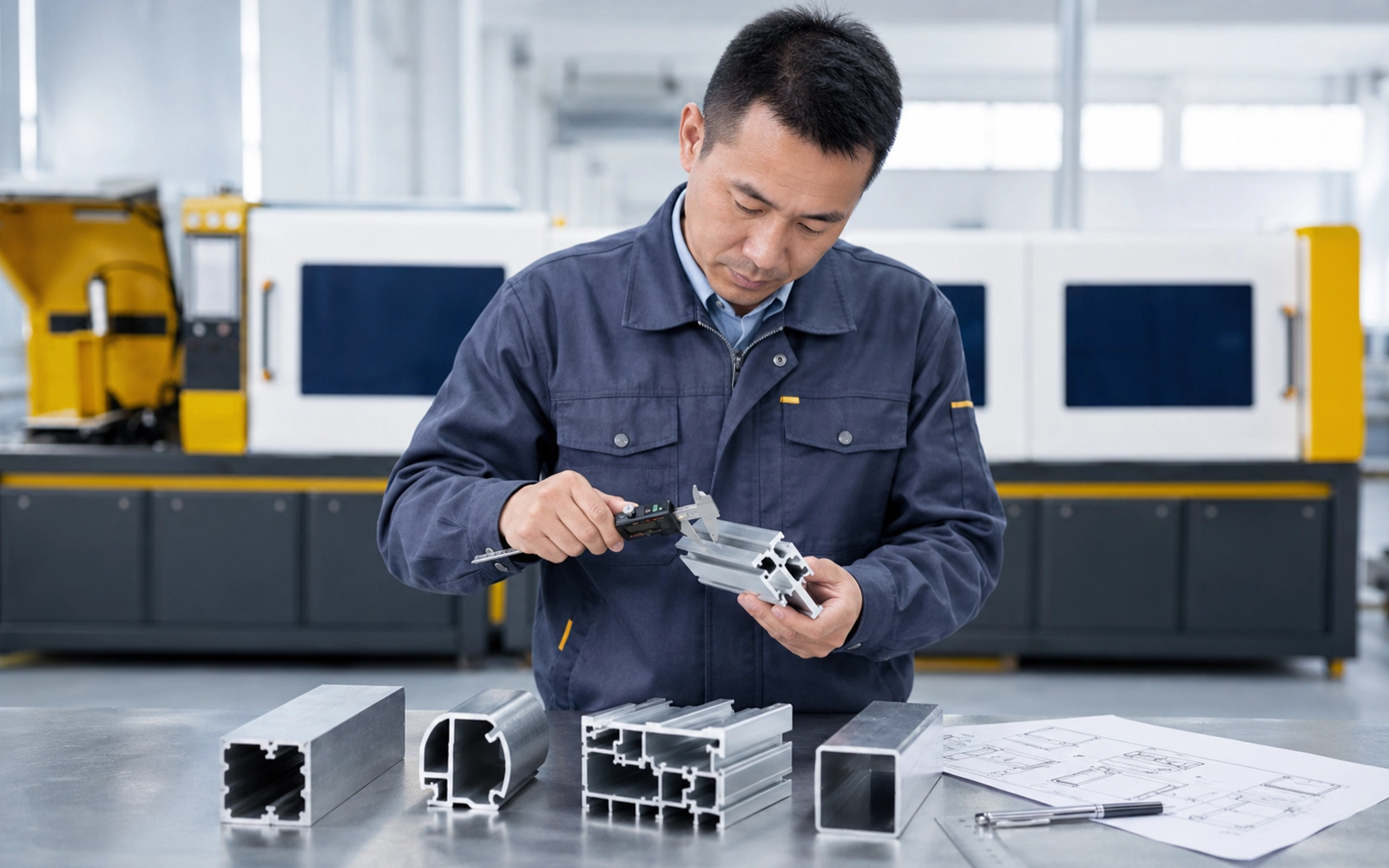
Request representative evidence that answers the unresolved purchasing questions
Select examples from the actual component mix rather than sending only the easiest tube. Include the families that raise distinct cutting or handling questions: different section shapes, end requirements, lengths or finishes. Explain what each example is intended to resolve so that the supplier can respond to that question directly.
Agree how the part will be referenced and measured against its approved record. Separate the dimensional observation from the surface observation and the downstream interface decision. A saw’s feeding repeatability is not automatically the finished component’s accuracy, and a satisfactory face on one sample does not establish connector fit for another drawing.
Retain the material identity, drawing revision, machine configuration and stated conditions with the results. If the supplier cannot confirm a requirement from the information provided, ask what additional drawing, sample or scope clarification is needed. An explicit unresolved row is more useful than an unqualified claim that the machine cuts all handrail parts.
The purchaser should also decide who accepts the component for the next process. Cutting observations do not approve the completed railing or establish its structural suitability. Keep the applicable design, installation and system requirements with the responsible project parties while using the cutting evidence to assess the machine’s defined manufacturing scope.
Send a handrail cutting inquiry with a usable component schedule
Send the approved component schedule together with representative section drawings and the expected production mix. Include the cut-length ranges, end requirements, material and finish, specified dimensional requirements, incoming stock lengths and downstream processes. Identify drawing revisions and explicitly list any missing decisions.
Ask the quotation to state the proposed machine model and configuration, confirmed component families, support and handling scope, remaining operations and the evidence needed for unresolved requirements. Where a function is optional or excluded, have it stated clearly. This makes different offers comparable against the same manufacturing problem.
Send Jiurun your aluminum handrail cutting requirements with the actual part drawings and production mix. Request a proposal for the cutting scope that can be confirmed from those inputs. A useful response connects the proposed equipment to your approved components; it does not replace the handrail system’s design or installation approval.
Use a cutting video as equipment context
This Jiurun equipment video illustrates a cutting job. It does not demonstrate approved handrail components, connector fit or the complete manufacturing scope for your order.