
Aluminum furniture frame relocation is a transport and reassembly decision before it is a cutting order. An industrial table, mobile fixture stand or modular workstation may look easy to move because its aluminum members are bolted together. Yet the old frame may have a fixed installation datum, a top with attached services, non-interchangeable corner hardware or a revised load and use at the destination. The buyer must choose whether to move the intact unit, dismantle and reassemble its documented members, or order a new cut-member kit. Those routes assign different work to the furniture owner, mover, frame assembler and cutting supplier. A saw quote alone cannot approve the relocated workstation.
This guide is for an existing aluminum-profile furniture or workbench frame moving to a new bay or facility. It is separate from a caster conversion, a routine spare-member order and first-time kit receiving. The decision begins with the actual built unit and the destination layout, not with a guessed list of replacement lengths.
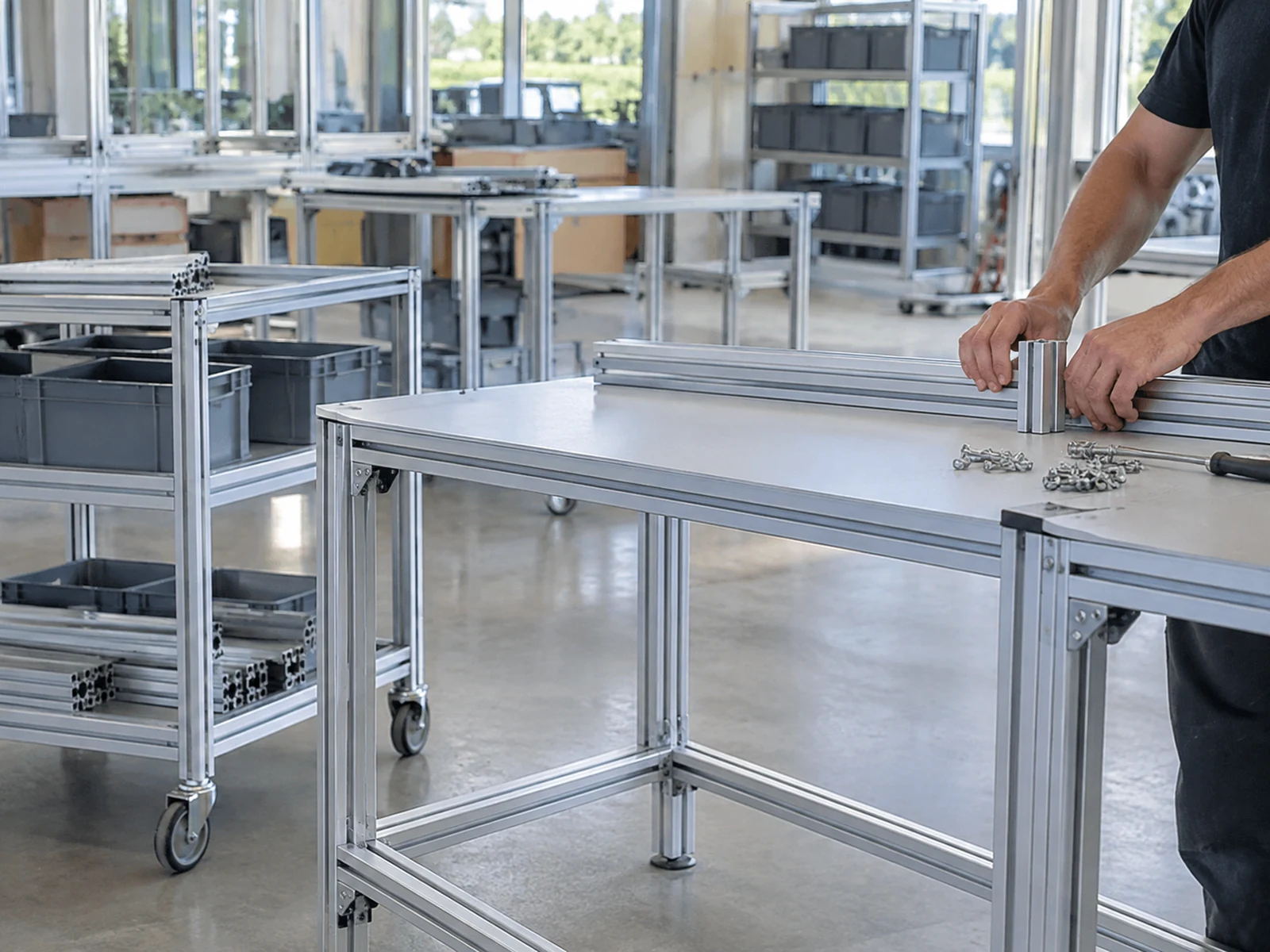
Aluminum furniture frame relocation: define the unit and the new site
Give every frame a stable identity before removal: current drawing or revision, frame footprint, member profile family, top and accessory list, joint type, leveling or anchoring method, and any installed power, air, lighting or ESD provisions. Photograph all sides, the underside and each unusual connector while the unit is still assembled. Mark the actual top orientation and the datum used for a fixture or mounted device. If an accessory has its own safety, electrical or ESD release, its competent owner must define the isolation and recommissioning steps; a metal-cutting supplier cannot sign them off.
Compare the destination doorway, lift route, floor, intended orientation, operator access and neighboring equipment with the as-built envelope. Note what must remain attached and what may be removed under the frame designer’s instructions. An intact frame may fit the new working position but fail the transport path. Conversely, dismantling a frame simply because the doorway is narrow may destroy the only reliable record of its assembly geometry. Resolve the route before booking transport or requesting replacement members.
Modular aluminum systems can be reconfigured, but that is a system-specific feature, not a blanket permission to reuse every connector. Bosch Rexroth describes disassembly and reconfiguration of its structural framing system. item describes configurable industrial workbench systems. These examples explain why a documented rebuild can be practical; neither source certifies this particular frame or JiurunCut’s assembly scope.
Compare three purchase routes before asking for aluminum cuts
Route 1: Move the complete approved frame
Use this route only when the responsible frame and transport owners approve the lift points, temporary protection, route clearances and destination use. Record the assembled envelope including feet, top, handles and projections. Identify what may be removed for transit without losing the frame’s alignment. The mover owns securement and handling; the receiving team owns inspection after unloading. The purchase may be for transport protection and reinstallation rather than any new aluminum. Do not order substitute members merely because the unit is changing address.
Route 2: Label, dismantle and reassemble the existing members
When whole-unit movement is impractical, obtain a released disassembly sequence. Tag member and joint positions before loosening them, with orientation marks that survive packing. Keep fasteners, brackets, end caps, covers and shims associated with their stations. Photograph each joint before removal; a bag of similar-looking hardware is not a reassembly instruction. Have the system owner specify which fasteners are reusable and which must be replaced. Protect visible faces and cut ends, and keep the top and accessories in their own identified package. At the destination, reassemble to the released drawing and check the defined datums before fitting the work surface.
Route 3: Buy a new revision-controlled member kit or frame
Choose new members when the destination geometry changes, existing pieces are damaged or the owner cannot release reuse of the old joints. Decide whether the purchase is a set of saw-cut blanks, members with secondary holes or threads, an assembled bare frame, or a complete workstation. List old and new revision identities separately. A cutting supplier can quote a defined profile, quantity, cut-end drawing and representative sample; it cannot infer the frame’s safe load, anchorage, electrical suitability or operator layout from the old member lengths.

Survey reuse before turning damage into a cut list
Sort each observed issue into four bins: a reusable member, replaceable connector or fastener, member needing a separately approved machining operation, or member requiring a new cut. Measure against the released drawing and identify the measurement datum. Look for crushed slots, distorted ends, stripped threads, damaged visible faces and lost or mixed hardware. Do not equate a visually square joint with an accepted workstation. The frame owner must decide whether a damaged connector can be replaced alone or whether the surrounding member must be remade.
Keep the route comparison economic but complete. An intact move avoids new cutting yet may require more handling protection and a larger transport envelope. A knock-down move reduces envelope but adds tagging, packing, joint inspection and reassembly labor. New members add material and cutting work, but may be the correct choice for a changed footprint or uncertain damage. Price those activities separately, along with downtime, site access and acceptance responsibility. If the frame supports a fixture or critical process, specify who verifies the mounted equipment again; the article cannot supply that release criteria.
Write a replacement-member order that a saw shop can answer
For every new aluminum part, issue a member ID and revision, profile section and finish, required quantity, cut length with its reference faces, end form, visible-face orientation and packaging label. Distinguish a straight saw cut from a miter or later machined hole. Mark drilled, tapped, milled or slotted features on separate drawings and name the party doing that work. If an existing member is being copied, confirm its identity and measure it against the approved assembly drawing; wear, deformation or field alteration may make the old part a poor master.
Request one representative cut-and-fit sample where the assembly interface is uncertain. The trial should show member ends and the intended connector or top interface, with an agreed inspection method. It does not establish workstation load capacity or certify a moved frame. For adjacent decisions, see the existing furniture-frame spare-member guide and the frame saw-trial guide. Those pages address replacement supply and cut-end fit; this page decides the relocation route.

Set the receiving and recommissioning gate
At the new site, check package IDs against the dispatch list before opening mixed hardware. Inspect finish and ends, count every member and connector, then assemble to the approved revision. The frame owner should define the checks that matter for this application: footprint, squareness, top interface, level, adjacent-machine clearance, stability and any accessory reconnection. Record who resolves missing or damaged components and who signs the return to use. A clean delivery note is not the same as an accepted workstation.
If new members were ordered, match their labels to the receiving schedule before assembly. The furniture-frame kit receiving guide covers that distinct package-completeness step. Keep the old frame or at least its as-built record available until the new-site acceptance is signed. Do not discard a questionable member simply because a replacement was ordered; it may be needed to resolve a drawing or fit discrepancy.
Send one quotation package for the chosen route
Tell bidders whether the scope is whole-frame transport, controlled knock-down and rebuild, cut-member supply, or a complete new assembly. Include the current and destination layouts, photos and frame identity, approved revision, route clearances, observed damage, member schedule, hardware disposition, surface protection and required delivery format. State what the buyer supplies, who measures the existing unit, who releases design changes, and who performs final installation and acceptance. Ask each supplier to list assumptions and exclusions instead of quietly filling missing drawings with guesses.
If the released decision calls for saw-cut aluminum members, send JiurunCut the profile specification, approved cut drawings and a representative sample. We can discuss cutting scope and sample verification for those members. The frame owner and assembly or site team retain the relocation design, transport and return-to-use decisions. Contact JiurunCut with the defined member package.
Video: general aluminum-cutting equipment footage from JiurunCut’s own channel. It does not show this furniture frame, its material or configuration, a customer’s move, an assembly trial or performance result.