
Aluminum extrusion vs die casting is a manufacturing-route question. Compare the geometry, material requirements and completed delivery scope before comparing a price. A quote for cut profile blanks and a quote for finished cast components may cover different stages of the same project.
Start with four RFQ checks: the complete part drawing, the stated material and condition, the tooling scope, and the operations included in the delivered part. Ask the relevant manufacturing supplier to review the route. Bring the approved extrusion section and cut list into a cutting-machine review once that route is defined.
On this page
Aluminum extrusion vs die casting: understand the routes
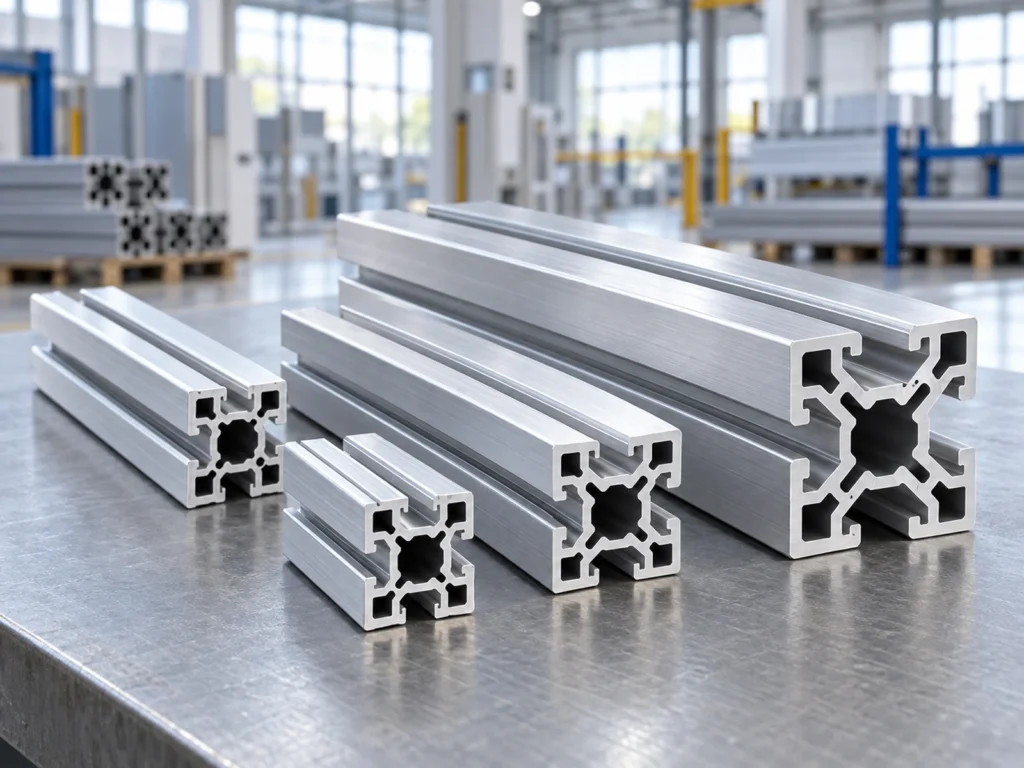
The Aluminum Extruders Council’s process overview describes a solid billet softened by heating and pushed through shaped tooling. The resulting profile can undergo further treatment, finishing and fabrication. Its manufacturing route is distinct from injecting molten metal into a mold.
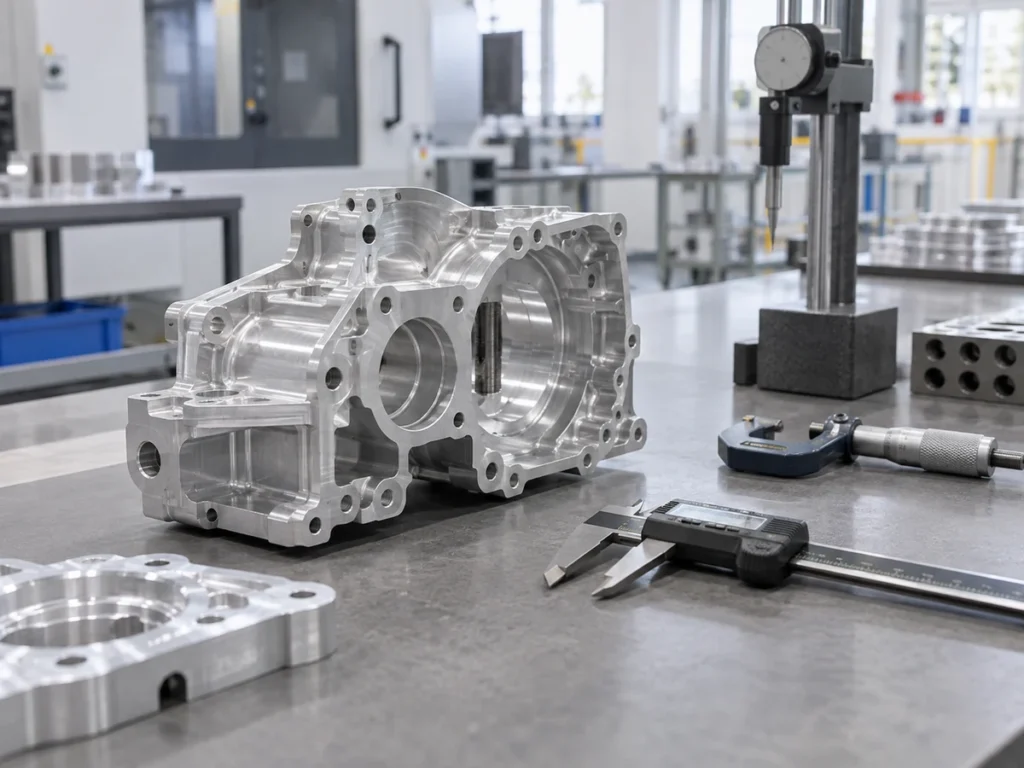
The North American Die Casting Association’s FAQ describes high-pressure die casting as injecting liquid metal into a reusable steel die, followed by solidification. It also explains that cast features can include fastening elements and cored holes. The particular features and later operations still need a supplier review.
These descriptions establish the process difference. They do not establish a universal winner on cost, strength, finish or accuracy. Use them to identify which questions belong in each route’s quotation rather than to approve a replacement part.
Check 1: show the complete geometry
For an extrusion proposal, show the section that repeats along the profile and the required cut lengths. Identify features created later, such as local holes, end machining, pockets or assembly interfaces. A section drawing alone does not describe every feature of the finished component.
For a die-casting proposal, provide the complete component geometry and the required finished features. Ask the casting supplier to identify how the proposed process creates those features and which ones require later work. Keep supplier-proposed geometry changes visible for design review.
Do not assume that a local boss, opening or angled interface is included simply because it appears in a render. Assign each required feature to an identified operation or component. Our extruded enclosure guide illustrates why the body, end panels and later interfaces need separate identities.
Retain the same assembly requirements when comparing routes. If one proposal replaces several components with one part, include the changed interfaces and approval responsibility. If another uses a cut body and separate panels, retain the panel and assembly work in its scope.
Check 2: keep the material requirement explicit
State the material designation and required supplied or finished condition for each proposal. Ask the route supplier to identify the applicable material specification and supporting documents. An aluminum family name does not establish that two proposed materials meet the same design requirement.
Keep a proposed material change separate from a price comparison. If the casting proposal uses a different designation from the extrusion proposal, send that difference to the responsible design team. Do not rename one material as the other to make a comparison table look consistent.
Identify which properties matter to the application and which documents demonstrate them. The material certificate guide explains the separate task of matching a document to the supplied stock. A certificate for one route does not become evidence for another route’s component.
Also retain the finish and inspection stage. Specify whether dimensions are required before finishing, after finishing or at final assembly. A route comparison can become misleading when one offer is inspected as a blank and another as a finished component.
Check 3: clarify tooling and revision responsibility
Ask each supplier to describe the tooling included in its proposal. Keep the tool identity, ownership or use terms, revision coverage and approval stage visible in the quotation. Request project-specific terms rather than assuming a tooling policy applies to every supplier.
For the extrusion route, distinguish section tooling from later cutting, locating and machining work. For the casting route, distinguish the casting die from later fixtures and operations. A line labeled “tooling” may not cover the complete route.
Confirm what happens if the design revision changes. Identify which component features change and ask the supplier to explain the affected tools, verification work and delivery plan. Do not assume that a new cut length and a changed local feature have the same revision consequences.
Keep the approved drawing revision beside the quotation. An offer against an earlier drawing should remain identifiable until it is updated. The drawing revision guide covers the separate control of drawing and cutting-list changes.
Check 4: compare the same delivery stage
Write a short delivered-part definition for both offers. State whether each price covers an unprocessed form, a cut blank, a machined component, a finished component or an assembled kit. Include the required count and the inspection record for that stage.
| RFQ field | What to compare |
|---|---|
| Geometry | Same drawing revision and required interfaces, with proposed route changes identified. |
| Material | Stated designation, condition, specification and required evidence for each route. |
| Tooling | Included tools, approval stage and responsibilities for design changes. |
| Delivery | Same finished scope, quantity, later operations and acceptance reference. |
Ask suppliers to list exclusions beside the price. A lower blank price may omit machining or assembly. A more complete component price may include those tasks. Neither observation alone establishes the cheaper accepted part.
Retain packing, identification and inspection as explicit fields where they matter to the order. Do not fill missing quotation fields with assumed factory practice. Compare the stated scope first, then resolve the open fields.
A fictional two-route RFQ
Suppose project H26, revision C, needs 60 housing assemblies. Offer A proposes 60 cut extrusion bodies with separate end panels supplied later. Offer B proposes a die-cast body route with subsequent machining. These invented offers illustrate scope comparison, not actual JiurunCut products or quotations.
Before comparing them, identify the panels, fastening interfaces and required finished dimensions in each proposal. Ask whether Offer A includes the panels and whether Offer B includes the specified machining and delivered assembly. “60 bodies” does not necessarily mean “60 complete assemblies.”
Now suppose revision D changes a local connector opening while retaining the overall assembly length. Request updated route and tooling comments from both suppliers. Keep revision C quotations separate until the revised geometry and delivery scope are confirmed.
The useful result is a clear comparison of two defined routes. It is not a numerical break-even quantity invented from a general process article. Use actual project quotations and approved requirements for that decision.
When to review profile cutting
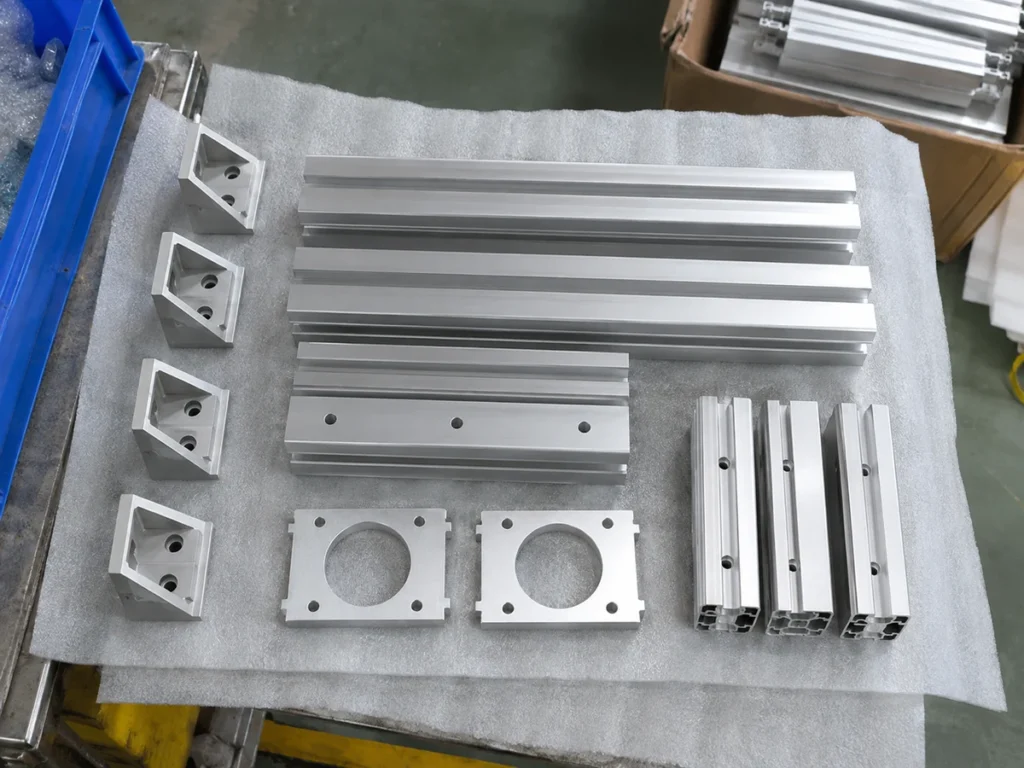
If the selected route uses extruded stock, prepare the approved section drawing, material condition, incoming lengths, cut list and required delivery stage. Identify later operations and the relevant datums. Provide representative stock for a machine and handling review.
Ask JiurunCut to review the profile-cutting requirement using that information. Keep cutting-machine selection separate from approval of extrusion tooling, casting design or material substitution. A profile saw review does not validate the complete manufacturing route.
Use the contact page to share the section and cutting requirements. If the route is still open, say so and identify which questions remain with the extrusion, casting or design supplier.
Buyer questions
Is die casting always cheaper at a particular quantity?
A universal quantity is not enough for this comparison. Obtain quotations for the actual geometry, tooling, material, operations and delivery scope. Keep excluded work visible.
Can a cast part replace an extrusion without a drawing change?
Record the proposed route and material changes for the responsible design review. Similar appearance does not establish equivalent geometry, properties or accepted assembly behavior.
Does an extrusion quotation include every hole and thread?
Read its stated scope. Identify the section features and the local operations separately. Ask the supplier to confirm which finished features are included.
Which information should a cutting-machine supplier receive?
Send the approved extrusion section, supplied condition, cut list, acceptance requirements and representative stock. Identify later operations so the cutting review addresses the correct blank stage.