
Aluminum drawer divider profile cutting is a narrow but important purchasing decision: is the supplier delivering a loose length of coated profile, a finished cut member, or a divider kit that already includes adapters? A saw can release a length and end condition. It does not establish that a third-party organizer fits a drawer, protects its finish in use, or includes every accessory.
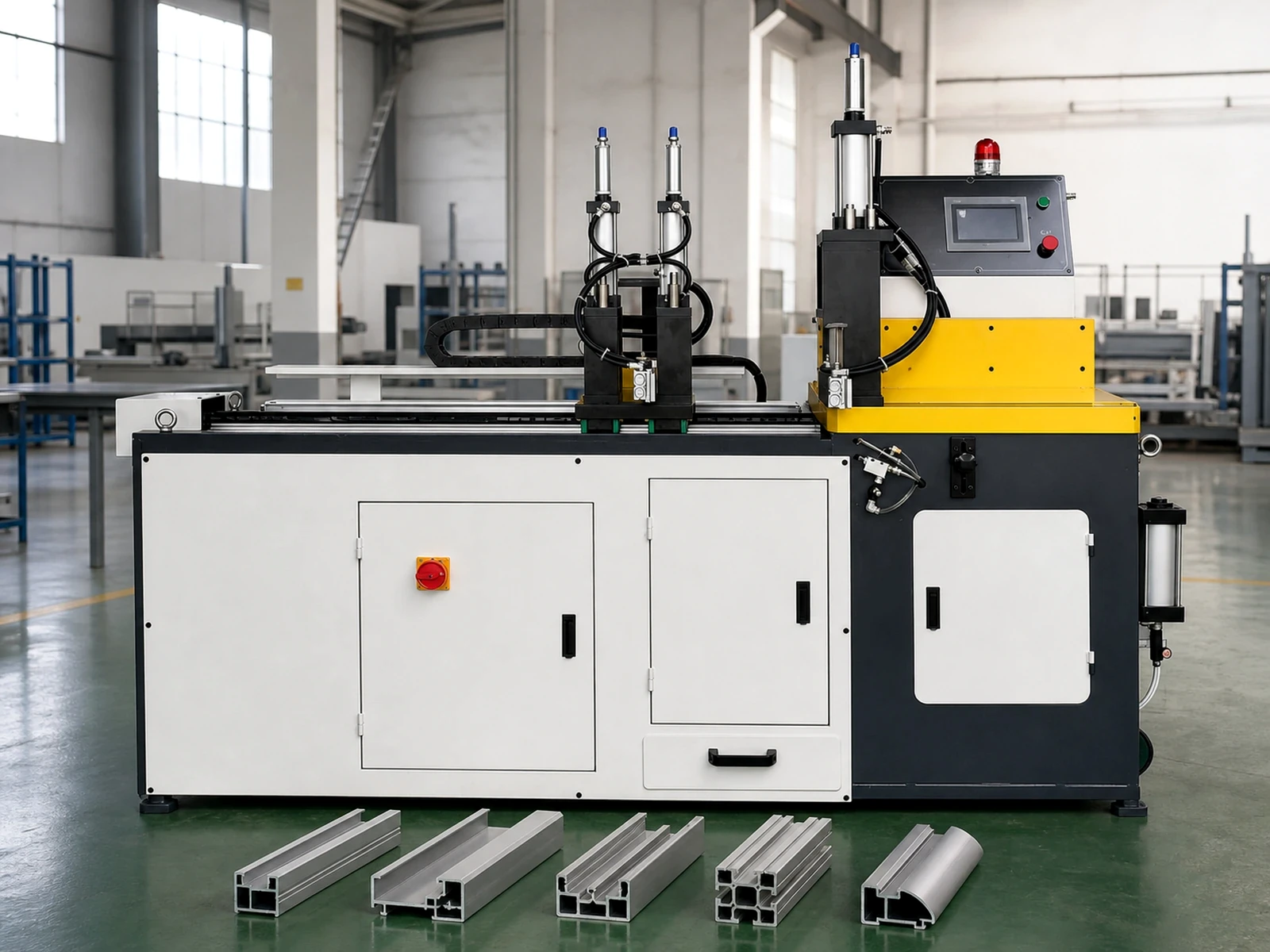
Image note: The photographs in this article show related aluminum stock, furniture members and saw equipment. They do not depict a specific drawer-divider product, approved section, customer job or performance trial.

First identify the item you are actually buying
Hettich describes one OrgaStore profile as a powder-coated aluminum part supplied in a 2,000 mm length for cutting to suit customized cabinet widths; its adapters and lengthwise dividers are listed as separate system accessories. Blum likewise lists aluminum cross and lateral dividers as parts of an inner-division system. These are examples of different product architectures, not specifications for a Jiurun saw or permission to substitute one brand’s parts for another. The drawer system owner must release the exact member drawing and assembly interface. See the Hettich product listing and Blum ORGA-LINE overview.
| Quoted supply stage | What should be counted | Who proves the next interface? |
|---|---|---|
| Uncut profile bar | Approved section, finish, bar length and quantity | Buyer or downstream cutter releases cut lengths |
| Saw-cut divider member | Member count, measured length, cut-end and protected face | System owner checks adapter and drawer fit |
| Divider kit | Cut member plus specified adapters, inserts and packaging | Kit assembler proves completeness and assembly fit |

Aluminum drawer divider profile cutting: seven RFQ checks
- Release the exact profile identity. Specify the system, member number, revision, material condition and finish. Do not infer the section from a photo of an assembled drawer.
- Define the length datum. State whether the dimension is metal end to metal end, between finished adapter faces, or the complete installed kit. Show where the tolerance is measured and which end is the reference.
- Separate adapters from cut stock. List their part numbers, quantity and supply owner. A profile length that meets its drawing may still fail the assembly if the end component is wrong or omitted.
- Mark the visible and contact faces. Powder-coated or anodized stock needs an agreed support and clamp-contact plan. A first-off sample should be checked for marks under the lighting and viewing conditions the buyer accepts.
- Trial the actual section and range. Give the saw supplier representative short and long lengths, profile orientation, bar length, batch size and expected changeovers. Ask for a witnessed first-off on the approved section rather than a generic machine-capacity claim.
- Define cut-end acceptance. State permitted burr, chips, edge damage and end-face condition for the real adapter interface. If deburring or touch-up is needed, name the party and stage; a sawed end alone is not a finished assembly.
- Preserve job identity through packing. Separate lengths, revisions and finishes, identify the accepted bundles, and protect visible faces in transit. Record remnant ownership when the buyer supplies the coated bars.
The burr-direction RFQ guide helps specify which assembly edge matters. The cut-bundle traceability guide covers the identity handoff after the saw.
Approve a short trial before comparing equipment prices
Use a released section, two representative finished lengths and the actual mating adapters. Measure the bare metal member separately from the assembled kit. Record the datum, end face, surface condition and the person approving adapter fit. The supplier’s saw trial can establish repeatable cut output for that sample; final fit, finish appearance and system suitability remain with the drawer-system owner. If the purchased item is a complete organizer, compare complete accepted kits, not only saw pieces per hour.
A related machine video, with the right scope
The Jiurun video below shows general long-profile feed and guarded aluminum-saw operation. It is a related equipment view only; it does not verify the drawer profile, coating, adapter fit, output rate or end quality discussed here.
Send a complete, checkable request
For aluminum drawer divider profile cutting, release the metal member and the accessory package as separate deliverables before requesting a machine quotation.
For a useful quote, send the approved member drawing and revision; profile/finish identification; metal-length datum and tolerance; short/long job mix; bar supply route; critical visible face; cut-end acceptance; adapter and kit boundary; first-off approval owner; and packing/traceability requirements. Ask the supplier to identify exclusions and show the accepted cut member before discussing volume assumptions. Contact JiurunCut with that package to review the saw-cut portion of the route.