
Aluminum cutting machine import documents should tell one consistent story: which saw was ordered, what is physically packed, where it is handed over, and which party will clear it at the destination. A correct-looking invoice cannot fix an omitted accessory or an unknown package weight. Before dispatch, ask the supplier for review copies and let the importer or its customs broker check the destination requirements. Resolve discrepancies while the machine and packages can still be inspected.
This is a purchasing workflow for a new industrial saw, not a universal customs form list or a claim about a particular Jiurun shipment. Document requirements depend on the destination, delivery term, buyer, product and route. The buyer should agree the required packet with its broker and supplier for the actual order. The U.S. International Trade Administration likewise advises exporters to start with the importer or forwarder when identifying required documents.

Begin with one approved machine baseline
Use the accepted purchase order and final quotation revision as the reference. Record the ordered model and variant, voltage and control language if specified, blade and lubrication supply, feed and outfeed equipment, special fixtures, guarding, interfaces, and the included manuals and spare parts. A catalog model name alone may conceal an option that changed after the original quote. If a configuration change was approved, attach the dated change record instead of silently overwriting the baseline.
Ask the supplier to identify the actual unit or units in a way that can be traced to the order, such as its internal job number and machine serial number when assigned. Do not assume a photograph of a similar machine establishes this identity. Our machine documentation guide addresses the operating and maintenance handover; here the question is whether the commercial and physical shipment records describe the same purchased equipment.
Compare the invoice with the physical packing list
A commercial invoice describes the sale and value; a packing list describes the packages and their contents. They have different jobs. The International Trade Administration’s document guide says a packing list is not a substitute for an invoice and that the information on both should agree. Ask for draft versions early enough to correct them before cargo collection.
- Parties and references: check buyer, seller, consignee or notify party as appropriate, purchase-order number, invoice reference and dates against the agreed transaction.
- Machine description: use a meaningful description and the agreed model or variant; reconcile quantity, unit identity and ordered options with the purchase baseline.
- Included items: list separate fixtures, blades, spare parts, guards, support stands, manuals or control cabinets that are actually supplied. If an item is installed on the machine, say so; if it travels in another package, identify that package.
- Value and currency: reconcile invoice line values and totals with the commercial agreement. Let the importer’s broker decide any destination-specific declarations or classifications; do not invent a tariff code from a machine nickname.
Run a line-by-line exception review. “One cutting machine” on an invoice can be commercially concise, but the packing list still needs enough detail for a receiving team to find a separate control cabinet or accessory carton. Conversely, a list of extras must not imply they were purchased if they were only shown in a factory demonstration.

Review every package before it is closed
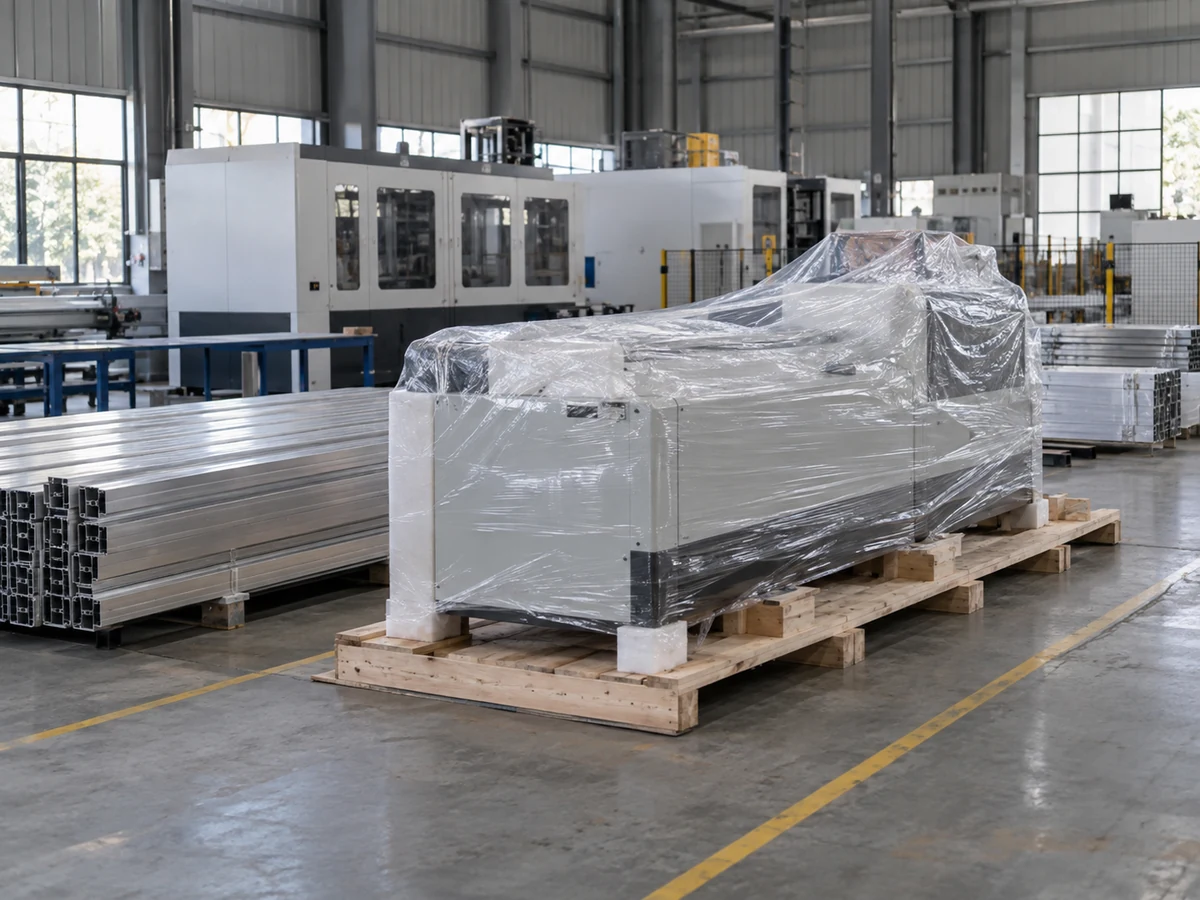
For each crate, pallet or carton, request the package number and visible mark, contents, quantity, external dimensions, net and gross weight, and handling information needed by the carrier and receiving site. Check that the totals add up across the draft packing list. If a long infeed support, hydraulic unit or control cabinet ships separately, its identity must survive the move from workshop to crate to receiving dock. Our shipping-dimensions checklist explains why the machine envelope and the transport package are different measurements.
Ask for dated photographs of the actual machine identity and each open package before closure, followed by the closed package and its marks. The photographs are supporting evidence, not a replacement for measured dimensions or a signed list. If the machine is partly dismantled for transport, identify the removed assemblies and reassembly instructions. Agree who will check the items on arrival and how a shortage or damage exception will be recorded.
Separate delivery terms from document ownership
Quote the agreed delivery rule with its named place and version in the order, then write down which party books the carriage, supplies each document, arranges export and import formalities, and receives the carrier’s transport record. The ICC’s Incoterms 2020 guidance explains why the named place matters to delivery and risk. A phrase such as “shipping included” is too vague for a document handoff. Use our delivery-terms checklist for the commercial boundary.
The ocean bill of lading or air waybill is normally issued through the transport process; a buyer may therefore review its intended parties, route and cargo description before dispatch and compare the final issued record afterward. Do not demand a final carrier document before the carrier has accepted the goods. Keep a named owner for obtaining the final copy and sending it to the importer or broker in time for clearance.
Let the destination determine extra requirements
Certificates of origin, conformity records, inspection certificates, translations or other declarations are not automatically required for every saw shipment. The International Trade Administration’s special-documents guidance says the importing country may require additional papers and recommends asking the foreign buyer early. Give the broker the actual machine description, intended use, origin information and destination, then record the documents it requests, who obtains each one, and the date needed.
If solid wood packaging is proposed, ask the forwarder or broker whether destination wood-packaging rules apply and what treatment or marking evidence is required. The IPPC’s ISPM 15 implementation guide is a starting reference for wood packaging. Do not infer compliance from a photograph of a pallet. Equally, do not apply a wood-packaging requirement to non-wood packaging without checking the actual rule.
Use a pre-dispatch document review gate
Create a single register with the approved order revision, draft invoice, draft packing list, package photos, transport-booking instructions, and destination-document requests. Give each item an owner, revision, due date and status. Compare the machine identity and line items first, then the package totals and marks, then the parties and delivery point. A green “received” label is insufficient if two documents disagree.
For each exception, write the conflicting fields, the source of truth, who can correct it, and whether the correction changes the goods or only the paperwork. Stop the release when a mismatch prevents the importer from identifying the purchased machine or a physical package. Ask the supplier to send the corrected document set together, so the broker does not act on an old invoice and a new packing list. After carrier collection, reconcile the issued transport document with the final shipment and circulate the final packet.
Questions to send with the purchase order
- Which machine and option revision will appear on the invoice, packing list and unit-identification record?
- What travels installed, what travels separately, and which package contains each accessory or spare?
- Who measures the closed-package dimensions and gross weights, and how will the marks match the packing list?
- Who will approve draft documents before closure and dispatch, and what is the correction cutoff?
- What destination documents has the importer’s broker confirmed, and who supplies each one?
- Which delivery rule and named place govern the handover, and who sends the final carrier document after issue?
- What exception process applies if the received package count or contents differ from the signed list?
Keep these answers with the order, rather than relying on a later email search. The purpose of the aluminum cutting machine import documents review is to catch a wrong unit, missing item or unworkable document handoff while it is still practical to correct. It does not certify customs acceptance or guarantee arrival on a particular date. For schedule assumptions, use the separate build-slot and dispatch lead-time guide.
Related equipment footage
The video below is general equipment footage from Jiurun Machinery’s own YouTube channel showing a JR-455CNC saw. It is an equipment example only. It does not show or prove the material, ordered model configuration, buyer, packing list, import documents, shipment, factory test or performance described above.
Request a shipment-ready quotation
Send your profile drawings or section photos, required cut lengths, production mix, delivery destination and proposed delivery rule through the JiurunCut inquiry form. Ask the supplier to identify the proposed machine configuration and list the included accessories, documents and package-planning assumptions in writing. Then have your importer or broker confirm the destination packet before dispatch authorization.