
Aluminum saw shipping dimensions should describe each complete packed item, with its outer length, width, height and gross weight. Keep those figures separate from the assembled machine dimensions and the space needed to operate it. Request the actual packing plan for the quoted configuration before arranging transport.
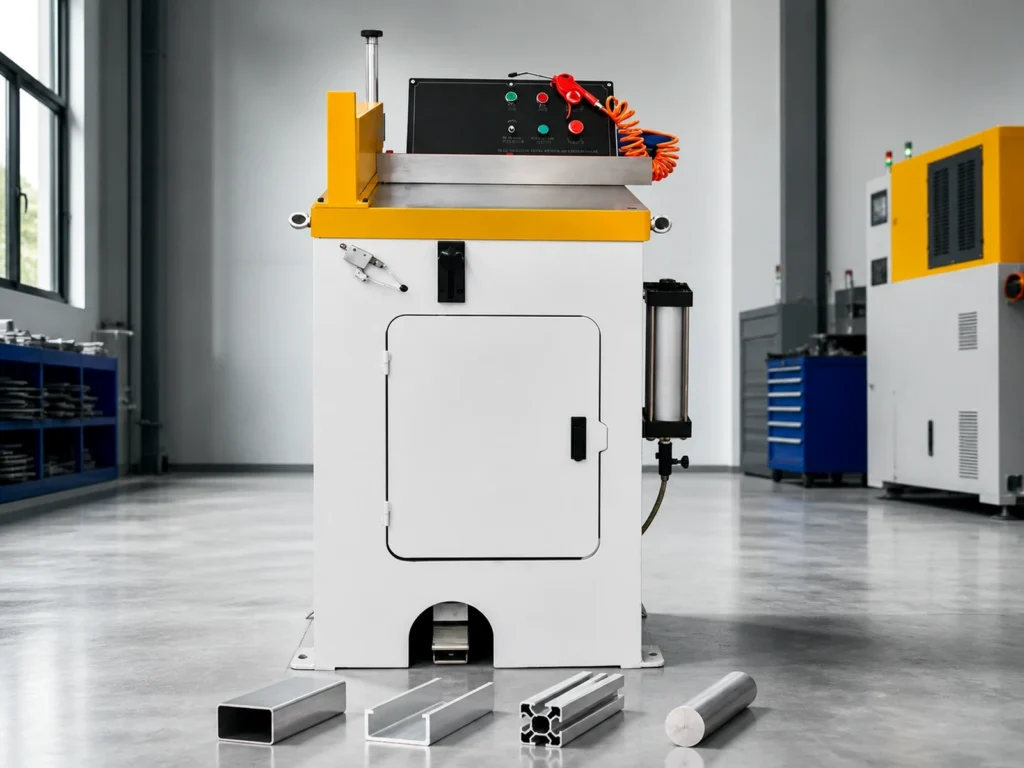
A compact machine photograph can leave long supports, separate accessories and protective packaging outside the frame. This guide explains five checks that connect the equipment proposal to a clear shipment record.
Keep three size records separate
- Assembled equipment dimensions identify the physical configuration.
- Packed outer dimensions describe each transport item.
- The site layout includes work, handling and required access space.
On this page
Check 1: identify what the dimensions describe
Ask whether each size refers to the bare machine, assembled equipment, a shipping configuration or the outside of a completed package. Record the basis next to the figures so that the logistics team does not need to infer it.
A machine’s assembled size can include fitted components that are packed separately. Conversely, a crate or skid can make the transport envelope larger than the bare machine. Do not add an assumed packaging allowance to a brochure dimension and present it as a confirmed shipping size.
Keep the quoted configuration with the record. A support extension, separate collector, control station or other accessory may alter the packing plan. Request a revised plan when the included equipment changes.
For each packed item, identify length, width and height explicitly. Include the stated units and a sketch where orientation could be misunderstood. Ask the supplier or forwarder how protrusions and irregular shapes are represented in the booking data.
Do not use the packed footprint as the working-space requirement. The installation planning guide covers the separate review of stock handling, utilities and access at the receiving site.
Check 2: count and identify every packed item
Request a package-by-package list for the complete supply. Give each crate, skid or separate item an identifier and connect it to its contents. Keep accessories packed inside a main crate distinct from accessories that form additional transport items.
Ask where long supports, loose tooling, documents and separate equipment are packed. A photograph of the saw alone cannot confirm that every purchased item is included or show how many packages the carrier will collect.
Use the same identifiers on the packing record and relevant package markings. If the supplier changes the packing arrangement, update the list rather than keeping the old package count beside new photographs.
A quantity of two crates does not necessarily mean two identical crates. Record individual dimensions and gross weights. Avoid applying the size of the main machine crate to every accessory item.
Mark whether the packing data is an estimate, a planned value or a final measured record. Name the expected confirmation step and responsible party where the supplier cannot yet provide final figures.
FedEx Freight’s packing guidance describes several packaging forms, including pallets, crates and freight boxes, and calls for attention to applicable labeling and handling requirements for large or specialized items. These are general carrier resources. The supplier and transport provider still need to confirm the packaging and handling plan for the actual equipment and route.

Check 3: keep net weight, gross weight and volume distinct
Identify what each weight includes. A net equipment figure and a gross packed-item figure have different scopes. Ask for the actual gross weight of each transport item, including its packaging and supports, rather than copying a bare machine weight into the booking.
State the weight unit. Keep individual item weights alongside the total shipment weight so the receiving team can review both the overall delivery and each separate handling requirement.
Volume is a size calculation, not a physical weight. For a rectangular packed item, multiply its outer length, width and height after using consistent units. A result in cubic meters does not by itself provide a carrier’s chargeable weight or final freight price.
DHL Global Forwarding’s chargeable-weight guide distinguishes actual gross weight, including packaging and pallets, from dimensional weight derived from shipment dimensions and an applicable density ratio. It explains that transport mode and carrier rules affect the calculation. Confirm the basis for your specific quote instead of applying one remembered divisor to every shipment.
Include all packed items when preparing the size and weight record. Do not describe the entire shipment by the main crate alone or treat an unmeasured accessory weight as zero.
A fictional packing record: two packages, two size calculations
Suppose a fictional shipment has package A with outer dimensions of 2,000 × 1,000 × 1,500 mm and package B with outer dimensions of 3,000 × 500 × 500 mm. These are invented transport examples, not dimensions of a JiurunCut model.
Convert the dimensions to meters before calculating volume:
| Packed item | Rectangular outer volume |
|---|---|
| Package A | 2 × 1 × 1.5 = 3 m³ |
| Package B | 3 × 0.5 × 0.5 = 0.75 m³ |
The sum of the two rectangular volumes is 3.75 m³. This does not prove that the items can be stacked together, fit a container or qualify for a particular transport service. Those decisions require the actual packing arrangement and route review.
If the fictional gross weights are 500 kg and 100 kg, their gross total is 600 kg. Do not replace that total with a net equipment weight from another scope, and do not add it to 3.75 m³ as though the two units describe the same quantity.
The arithmetic illustrates record consistency only. It is not a packing design, loading plan, freight quotation or approval of a handling method.
Check 4: review the actual route and receiving constraints
Give the transport provider the complete item list, outer dimensions, gross weights and supplier’s handling information. Ask it to confirm the service and routing proposed for those items. A volume total alone does not establish acceptance of the longest or heaviest package.
Clarify collection and delivery conditions, including the available access, receiving area and the parties responsible for loading and unloading. Have appropriately qualified providers review the actual handling provisions; this guide does not specify a lifting method or authorize equipment disassembly.
Request the supplier’s transport instructions for the specific configuration. Confirm any planned separation and reassembly responsibilities through the approved packing and installation plan. Do not remove a machine component simply to match a desired shipping dimension.
Keep stackability, orientation and other relevant handling restrictions explicit. Do not infer these from a flat-looking crate top or from an equipment photograph. Ask the responsible parties to resolve conflicting instructions before collection.
Review the receiving layout separately. The crate’s size is useful for transport access planning, while the machine’s installed arrangement must also address stock movement and required operating and service access.
Check 5: confirm the final aluminum saw shipping dimensions
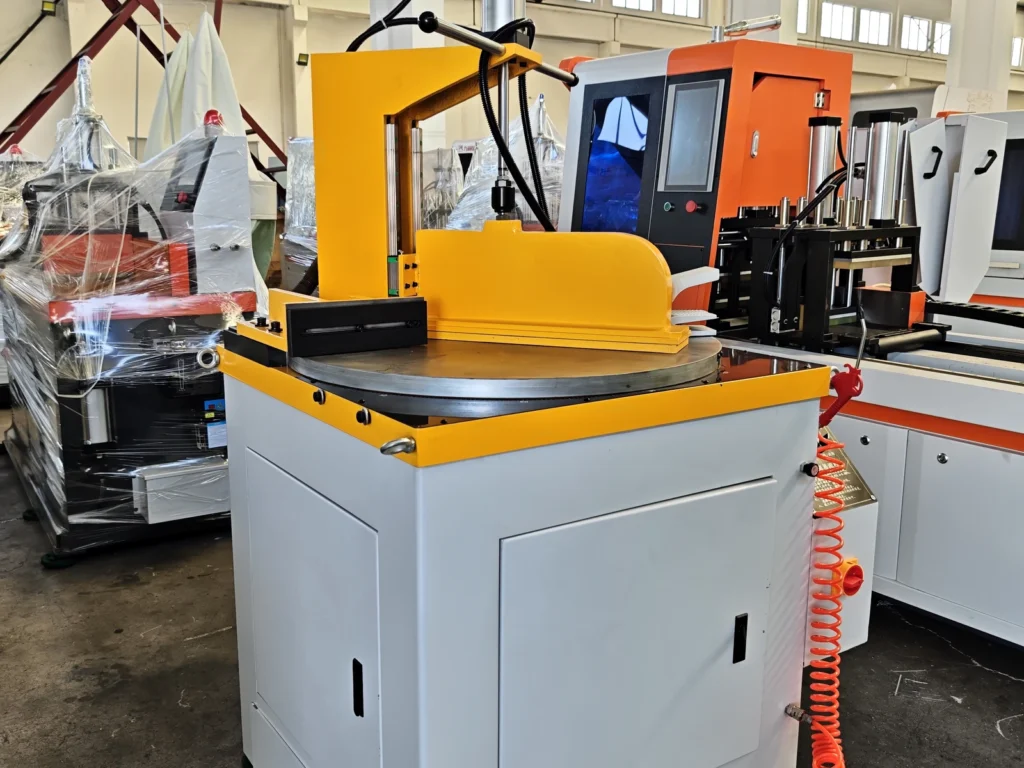
Before dispatch, reconcile the final package count, identifiers, contents, outer dimensions and gross weights with the agreed supply. Retain any updated packing drawing or record and communicate material changes to the transport provider.
Connect packing photographs to the actual package identifiers when available. Keep the final record separate from an early quotation estimate. Explain any difference rather than leaving the receiver with two conflicting size lists.
Confirm which documents and instructions travel with the shipment and which are supplied separately. Check that the receiving team can identify the equipment and accessories from the package list without opening every item to discover its contents.
Use the power-supply quotation review and site installation review for the next stage. A completed transport record does not by itself establish that the site is ready to commission the equipment.
Questions about aluminum saw shipping dimensions
Can I use brochure dimensions to book transport?
Only after the supplier confirms that they describe the actual packed items. Assembled machine dimensions and packed outer dimensions can differ.
Does one machine mean one crate?
No package count follows from the machine count alone. Request the complete packing list for the quoted equipment and accessories.
Does cubic volume determine the shipping price?
It is one input. Confirm the actual service, weight basis, package limits and other quote conditions with the transport provider.
Request packing information for your JiurunCut proposal
Send your cutting requirements and receiving-site information to JiurunCut. Ask for the proposed equipment scope, available packing plan and confirmation stage for the final package dimensions and weights.