
Aluminum cutting lead time is useful only when the quotation identifies its start and finish. A batch may be cut quickly once it reaches the saw, yet still need material release, another operation, inspection, packing and transport before the buyer can use it.
Ask the supplier to name the milestone behind each date. Then connect that date to the drawing revision, quantity and delivery scope being quoted. Five checks help turn a vague “ready next week” into a production discussion you can follow.
Three dates to keep visible
- When the approved job and required material are ready for production.
- When the specified finished quantity is accepted and ready for dispatch.
- When the shipment is expected at the agreed receiving location.
On this page
1. Define the aluminum cutting lead time boundary
Start with two questions: when does the quoted period begin, and what event completes it? “After order” can mean receipt of an inquiry, confirmation of a purchase order or release of a complete approved production package. Those dates can differ.
Likewise, “complete” may refer to saw cutting, the full finishing route, acceptance, packed readiness or delivery. Put the intended event beside the date so both teams can evaluate the same commitment.
The Lean Enterprise Institute distinguishes processing time from production lead time, and explains that order lead time also includes the time needed to get the product to the customer. Its time terminology guide provides the underlying distinction.
A measured saw cycle is helpful for reviewing one operation. It cannot, by itself, establish the calendar date for a complete order. Use our cutting cycle-time guide for that narrower measurement question.
Write the boundary beside the date
- Start event: approved drawing, cut list and agreed job conditions released.
- Finish event: the specified quantity at a clearly identified stage.
- Time basis: calendar days, working days or another agreed basis.
- Scope: particular part numbers, revisions, quantities and finishing requirements.
Have the supplier confirm the actual basis used in its quotation. Do not assume that its working calendar matches yours, especially where the production team and receiving team operate in different locations.
2. Confirm job release and material readiness
Ask which information must be complete before the supplier places the job into its production schedule. Depending on the order, that can include the finished-part drawing, profile identity, cutting list, surface requirements and approval of a sample or process proposal.
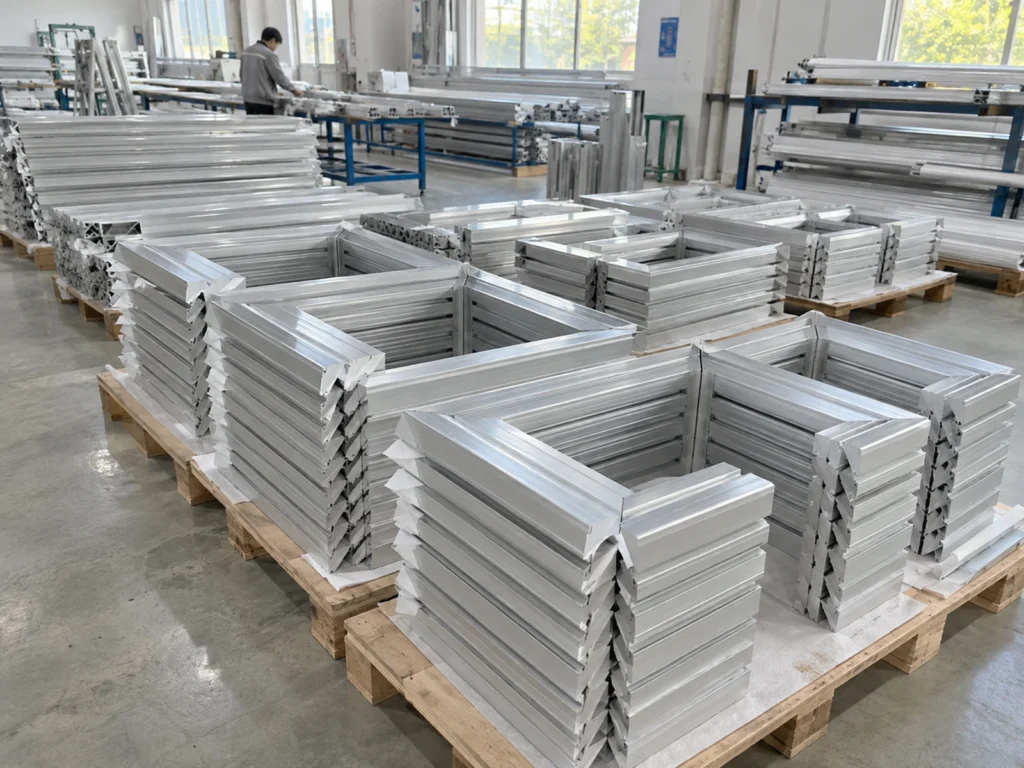
Separate the drawing release from material readiness. A profile shown in a photograph may be a different revision, alloy, finish or quantity from the order. Request confirmation of the actual material assigned to the quoted job.
If the buyer supplies the stock, define its expected arrival, identification and review. If the supplier provides the stock, clarify whether it is available for this order or still needs sourcing. A general statement that a profile is “in stock” leaves the exact job allocation unclear.
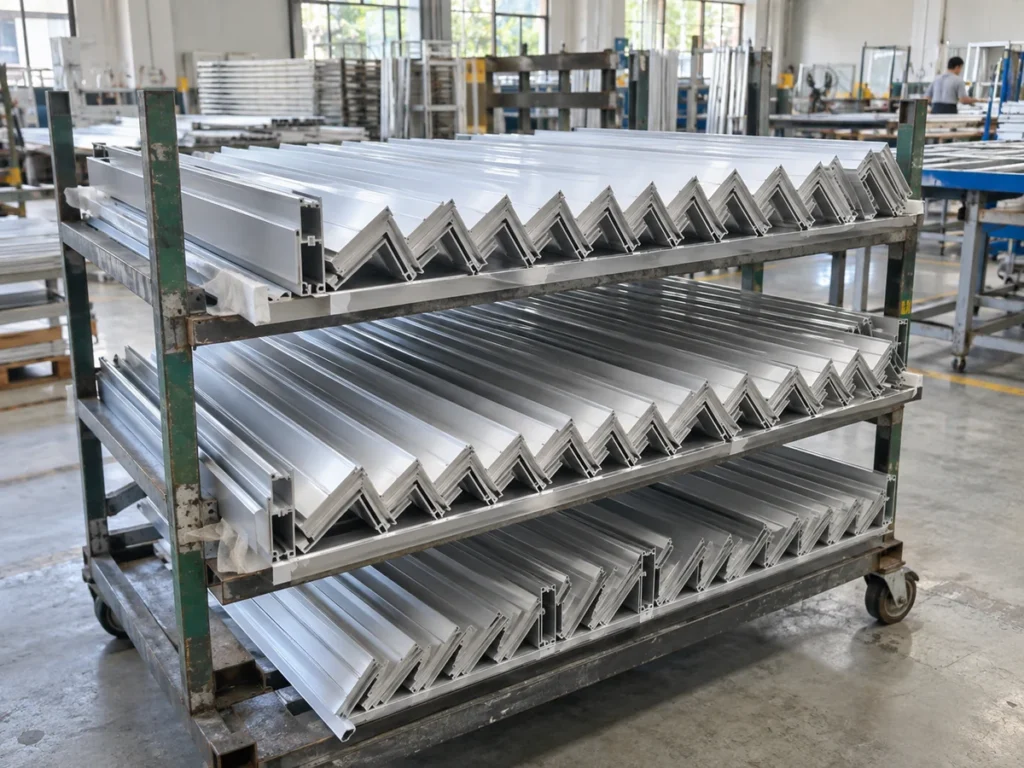
Document any outstanding item and who must resolve it. The useful scheduling question is whether the required condition has been met, rather than whether someone has received an email with an attachment.
For document identity, review our cut-list revision control guide. For material identity and records, see the aluminum material certificate checks.
3. Include the complete part route
Read the quotation against the finished component, not just the saw operation. A job can include edge finishing, drilling, machining, surface treatment, cleaning, identification or an assembly check. Include only the operations actually required by the approved route.
Ask which operations the supplier performs and which depend on another party. Identify the relevant handovers and the milestone used for each. If a second supplier controls a finishing date, keep that dependency visible in the schedule discussion.
Distinguish time spent processing from time waiting for an available resource or the next release. The machine’s automatic sequence does not describe the queue before it. A part can also wait after cutting while the next operation or inspection is arranged.
Do not add every reported task duration if activities overlap. Ask the production planner for the actual sequence and scheduling basis. A planning list is useful when it explains the route, dependencies and assumptions behind the date.
If the order includes holes or machined features, use our cutting and drilling route guide to clarify which operation delivers the finished feature. That route needs to be understood before its timing can be discussed usefully.
4. Define the accepted quantity behind “ready”
Specify whether the milestone covers the first sample, the first accepted part, a partial shipment or the complete order. Those are different deliverables. A successful sample review does not automatically mean that the full quantity is packed for collection.
For mixed parts or assembly sets, make the required mix explicit. Receiving many pieces of one rail while its mating member is missing may not provide the usable set the buyer needs. Identify part-level quantities and any agreed kit or paired-part requirement.
Connect the readiness statement to the inspection scope. If the agreed report is still awaiting review, describe that status accurately. Keep accepted quantity, quantity awaiting disposition and quantity awaiting an operation separate in the update.
A helpful progress note might say: “The listed pieces have completed cutting; the agreed inspection and packing milestones remain open.” That gives the buyer a clearer next step than saying the order is finished before the specified route is complete.
5. Separate ready for dispatch from arrival
Clarify whether a production date includes packing and carrier collection. Identify the shipment scope, collection location and receiving location. A packed order can still be waiting for transport, while a collected shipment is still in transit.
DHL’s Express pickup and transit-time guide shows that a delivery estimate uses shipment details such as origin, destination, date, package dimensions and weight. This is an example of a carrier estimate, not a promised service or transit time for your aluminum order.
Ask the actual carrier or freight provider for the applicable estimate and conditions. Record whether it covers the full route to the receiving site or a more limited transport stage. The mode and service must suit the shipment; do not assume that a parcel-service example applies to a large profile bundle.

Keep production readiness, collection, transit and receiving milestones distinct in updates. If the route or shipment details change, request a revised estimate using the actual package information. Do not treat an earlier estimate as a current confirmation.
A simple planning example
Consider a fictional job after its agreed release event. Assume its route contains five consecutive intervals, with no overlap or additional delays:
| Illustrative interval | Elapsed hours |
|---|---|
| Wait before the cutting job starts | 8 |
| Job changeover | 1 |
| Cutting-stage processing | 2 |
| Specified downstream operations | 3 |
| Agreed inspection stage | 1 |
The listed interval totals 8 + 1 + 2 + 3 + 1 = 15 hours. The cutting-stage processing occupies only 2 of those hours. Packing, carrier collection, transit and receiving are outside this example.
These invented values explain the boundary; they are not JiurunCut production data, a capacity estimate or a delivery promise. Fifteen elapsed hours also should not be converted into a calendar completion date without the actual schedule and working calendar.
Prepare a clearer timing request
Send the approved profile and finished-part drawings, cut list, quantity mix, finishing scope and receiving requirement. State whether you need a sample date, a complete accepted batch date or arrival at the site.
Ask for the start condition, expected milestones, unresolved dependencies and basis of the estimate. If a partial delivery is useful, identify the exact part mix and quantity that would make it useful.
For a machine inquiry, share the production mix and timing problem with the JiurunCut drawing review team. Reviewing the cutting stage alongside its upstream and downstream handovers helps frame a relevant trial without assuming that a shorter machine sequence will shorten the whole order by the same amount.
Aluminum cutting lead time: buyer questions
Is machine cycle time the same as order lead time?
No. A machine cycle describes a defined operation. The order period depends on its agreed start, finish, production route and delivery scope.
Does “ready” mean delivered?
Confirm the stated milestone. Ready for inspection, ready for dispatch and arrival at the receiving location refer to different stages.
Can a smaller batch always be delivered sooner?
Ask for the actual schedule and dependencies. Material availability, job release, changeovers, downstream work and transport can still affect the completion date.