
Aluminum cutting inspection sampling needs a defined lot, specified checks and an approved decision plan. Record which pieces were selected, what was examined and how the responsible team determined the lot’s disposition. A few visually neat pieces do not establish that every member in a batch meets every requirement.
This guide helps buyers prepare a clear inspection agreement and read the resulting record. It does not prescribe an AQL, sample size, acceptance number or measurement procedure for your product.
Keep the result understandable
- Name the lot and the features covered by the check.
- Separate individual observations from the lot decision.
- Retain the approved plan and responsible disposition.
On this page
1. Define the lot for aluminum cutting inspection sampling
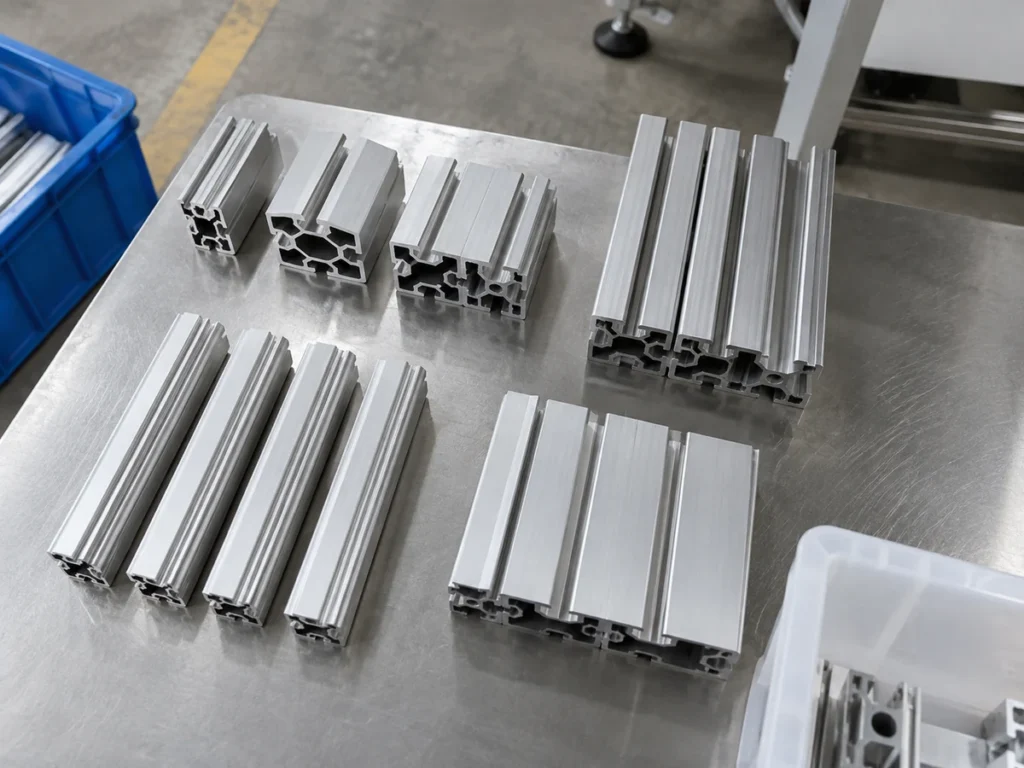
Identify the group of pieces to which the inspection decision will apply. Record the part identity, drawing revision and lot quantity. The approved definition should make it possible to distinguish that group from other stock or finished pieces nearby.
Do not let a physical rack become the lot definition by accident. A rack may contain different profile families, lengths or production groups. Keep the relevant identities visible in the inspection and receiving records.
If the agreed lot includes a specified part and revision, an additional or revised member should not silently join it. Route discrepancies to the responsible team. A sample selected before the change may no longer describe the agreed group.
The NIST introduction to acceptance sampling describes selecting a random sample from a lot and using it to make a lot-disposition decision. That decision requires a defined group and an applicable plan; the word “sample” alone does not supply them.
Our batch-traceability guide explains how part identities and their dispositions can stay linked. Use the same clear identifiers in the inspection record.
2. Define the feature and its acceptance requirement
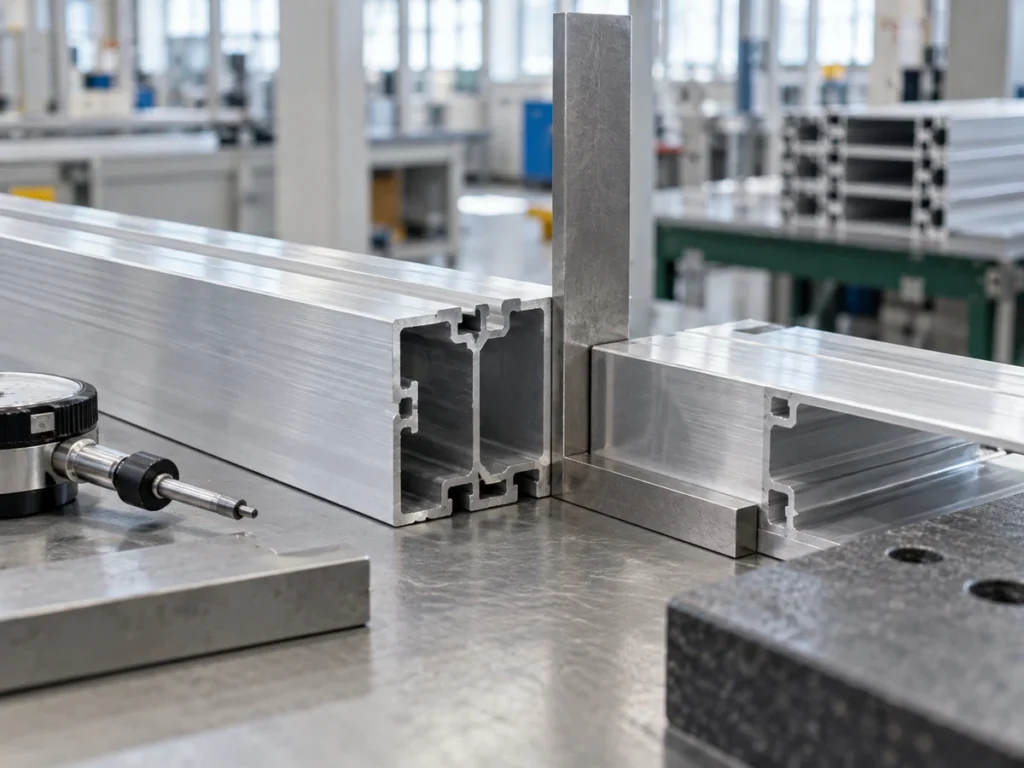
State what the inspection covers. Length, end angle, squareness, burr condition, surface appearance and an assembly check are different requirements. Passing a length check does not establish the others.
Link each requirement to the released drawing or approved acceptance reference. Include the length datum and units for a dimensional requirement. A recorded number needs a defined feature and basis before it can be interpreted.
Keep observed condition and measured value distinct. A photograph may help identify a visible issue. It is not a substitute for a required dimensional result, and an unverified image is not evidence that an approved measurement was performed.
For numerical measurements, retain the responsible team’s measurement and conformance-decision requirements. An instrument’s displayed resolution does not establish its accuracy or the uncertainty of the measurement. Our caliper-resolution guide explains those distinctions.
Also agree how the record counts findings. A nonconforming piece and a count of nonconformities are different quantities. One piece can have more than one reported issue. Use the definition in the applicable plan so the result cannot be misread.
3. Use the approved plan, rather than an improvised percentage
The sample size and decision rules should come from the responsible team’s approved plan. Do not choose an arbitrary percentage because it is easy to remember, or treat a machine demonstration as the plan for routine production lots.
ISO’s catalogue lists ISO 2859-1:2026 for sampling inspection by attributes using AQL-indexed schemes for lot-by-lot inspection. The catalogue identifies the standard’s scope; it does not give this article an applicable sampling plan or establish that your agreement adopts it.
If the purchase agreement names a standard, retain the applicable edition and the approved scheme details. Have the responsible quality team establish its use for the product and lot conditions. An AQL value written alone does not identify every required choice and rule.
Document the sample selection method as part of the plan. Choosing only convenient pieces or visually attractive members is different from the random selection described in the NIST acceptance-sampling introduction. Label demonstration pieces as demonstration pieces.
Distinguish production acceptance from startup checks or process monitoring. A first-piece review can answer a setup-related question. A planned process-monitoring record can track changes over time. Neither should silently become a complete lot-acceptance record.
For equipment acceptance, our factory acceptance checklist helps define planned checks and actual evidence. Keep that machine-review purpose separate from the routine release of a production lot.
4. Record the observation without expanding its meaning
A useful sample record identifies the selected pieces, requirements, results and any limitations. Retain the lot identity and the plan reference with it. The next reviewer should not need to guess which batch a photograph or worksheet concerns.
An invented example: ten checked pieces from a thousand
Assume a hypothetical lot of 1,000 pieces. Ten identified pieces are examined for one stated length requirement, and no nonconformities are found for that requirement in those ten. These numbers illustrate the wording of a record, not a recommended sample plan.
A clear observation is: “No nonconformities observed for the stated length check in the ten identified sampled pieces.” The observation does not say that all 1,000 pieces were inspected, that every piece has the same length, or that all other features conform.
The lot’s disposition still depends on the applicable approved plan and its responsible decision. Do not create an acceptance number or claim compliance with a standard from this example. No confidence level, quality rate or process capability has been calculated here.
NIST explains that acceptance sampling focuses on deciding a lot’s acceptability, rather than estimating its quality. Keep a plan-based lot decision labeled separately from the sample observations. Neither wording should become an unsupported zero-defect claim.
Where actual values are recorded, retain them with their units and applicable requirements. Do not replace a varied set of results with “accurate cuts” unless the approved report defines what that statement means.

5. Record who decides the lot disposition
Identify the responsible person or function that applies the approved decision rules. Keep the outcome connected to the lot, sample results and plan reference. A completed inspection form is not automatically a release decision.
Use distinct status labels for inspected samples, held pieces and the lot disposition. If additional review or another action is required, retain the actual reason and responsibility. Do not move unresolved pieces into the released count solely because the planned delivery date has arrived.
When a finding leads to a lot decision, record the applicable next action from the approved process. This guide does not prescribe automatic rejection, reinspection or sorting for every case. The agreement and responsible authority determine the required disposition.
Keep a changed lot or reworked material traceable to the relevant record. A result from the original group should not become approval of a different group without the required review. Preserve the relationship between the finding, action and subsequent decision.
Finally, make the receiving record consistent with the reported disposition. A shipment count, a sample count and a released-lot quantity describe different things. Our production-metric guide explains why the denominator and status need clear labels.
Common questions
Do ten conforming samples prove that a whole batch is perfect?
No. They describe the observed results for the identified sample and features. Any lot decision needs the applicable plan, and it does not mean that every piece received individual inspection.
Can a buyer specify only an AQL?
An AQL alone does not define the whole inspection arrangement. Retain the applicable scheme, lot definition, requirements, selection method, decision rules and responsibilities established by the quality team.
Is a first-piece check the same as acceptance sampling?
They answer different questions unless the approved process explicitly connects them. Keep setup or demonstration checks labeled for that purpose and retain the required lot-acceptance record separately.
Bring the acceptance requirements into the machine review
Ask JiurunCut to review your cutting and inspection requirements. Send the section drawings, required quantities, end conditions and approved checks. Define the evidence required from the proposed sample cutting review.