
An aluminum cut parts transit damage claim starts with two buyer problems: the cut parts may be unusable, and the evidence needed to establish when and where the loss occurred may disappear as soon as the package is unpacked. For an outsourced aluminum cutting order, the first decision is therefore an evidence hold. Identify the affected shipping units, preserve their condition, and keep production from silently consuming the lot while the commercial recovery route is agreed.
This guide addresses a carrier claim evidence packet for delivered cut members. It does not decide whether a part meets its drawing or who is legally liable. Those questions depend on the purchase terms, transport contract, actual inspection and the parties involved. The buyer, supplier, consignee and carrier should use the applicable route’s instructions rather than assume one universal claim deadline.
Start at the handover, before the package is changed
At the receiving point, match the carrier reference and package count to the packing list and purchase order. Record the condition of each pallet, crate, bundle or tote as presented. If damage is visible, make a specific exception on the delivery record or electronic proof of delivery: identify the affected unit and what can actually be seen. “Damaged” alone is less useful than an observation such as a crushed corner on pallet 2 or a torn wrap on bundle B. Do not describe internal parts that have not yet been inspected.
Photograph the complete shipping unit, its labels, the visible irregularity and the surrounding packaging before moving or discarding anything. Then document the unpacking sequence so the images of inner protection and the individual members can be connected to the same package. The UPS Supply Chain Solutions cargo-claims guidance asks receivers to note visible irregularities at receipt, retain packaging, photograph goods and packaging where possible, and protect cargo from further loss. The exact notification and claim rules remain subject to the service and contract used for this shipment.
Keep the shipping identity attached to the cut-part identity
A photo of a bent profile without a package label cannot by itself connect that profile to a particular delivery. Build a short chain: purchase-order line and drawing revision → supplier lot or cut-kit ID → packing-list line → shipping unit → carrier reference → receiving observation → part inspection record. If one shipping unit contains several profiles, record which members came from that unit. If the supplier packed multiple lots together, do not assign every defect to the carrier merely because one carton looks damaged.
For a repeat order, compare the damaged delivery with the released sample or pre-dispatch packing photos if those exist. A pre-dispatch image is a reference to compare, not automatic proof of the condition at carrier pickup. Keep the original files and dates, and label later annotations as annotations. For normal lot verification without a transport exception, see our outsourced cut-parts receiving guide.
Put the affected material on a traceable hold
Move the affected shipping unit or its contents to a controlled location only after its presentation has been recorded. Preserve labels and packaging, and mark the contents as awaiting a receiving decision. Separate apparently unaffected units so that an urgent assembly team does not mix them with the held material. The hold scope should be specific: package B and the members traced to it, for example, rather than the entire order by assumption. If inspection expands the scope, update the record.

The DHL Freight claim-preparation guidance for Denmark advises separating damaged goods, retaining packaging, avoiding onward transport and documenting both packaging and product damage. This is an example of a carrier’s process, not a deadline or liability rule for every route. Check the actual service, country, policy and contract before sending a notice or changing the goods.
Inspect the parts without erasing the evidence
After the package-level record is complete, inspect a controlled sample or all potentially affected members according to the drawing, critical interfaces and risk. Record the member ID, profile, finish, revision and measured feature alongside the observed condition. Distinguish a scratch on a protected face, a dent at a mating surface, a bent long member, a crushed cut end, and a count discrepancy. These lead to different technical and commercial decisions. Photograph the whole part and a close view with a scale or datum reference where useful; never substitute a photo alone for a drawing-based acceptance decision.
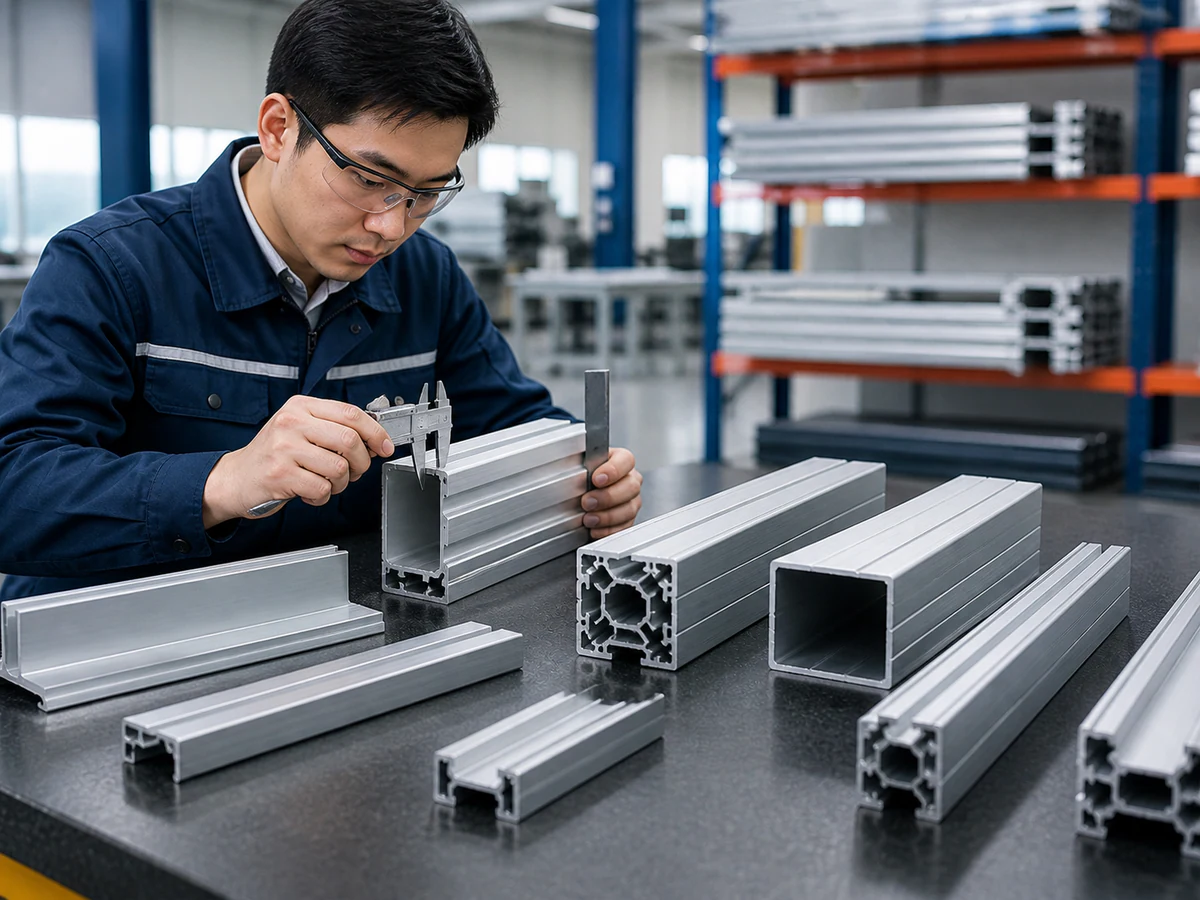
Keep transit condition separate from manufacturing conformity. A cut length outside the approved drawing could have existed before dispatch; a freshly crushed corner beside torn packaging may suggest a different investigation. Neither conclusion should be asserted without supporting records. The buyer’s quality team decides whether apparently unaffected parts can be released while the claim is open. A logistics or commercial team manages the claim route; do not let a carrier form substitute for technical acceptance.
Build the aluminum cut parts transit damage claim evidence packet
A useful packet is chronological and tied to identifiers, not a folder of unlabelled photos. Start with the purchase order, approved drawing revision, supplier lot or kit release, commercial invoice and packing list. Add the carrier booking or waybill, tracking reference, collection handover if available, and signed receiving record with specific exceptions. Follow with dated photographs of outer packaging, inner protection, labels and the affected members. Include the inspection report, accepted versus held quantities, and any repair or replacement estimate. Where the value of a partial loss is disputed, show how the claimed units and value were calculated rather than applying the full order value to a small affected subset.
Both UPS and DHL list transport and commercial documents, photographs, and inspection or repair evidence among the materials that may support a cargo claim. The requested set varies by carrier and contract. Identify who may file—shipper, consignee, insurer or another entitled party—before two teams submit inconsistent versions. Keep a log of the notice, acknowledgement, survey request and subsequent decisions. If the carrier or insurer requests an inspection, preserve the goods and packaging until the proper owner confirms the next step.
Separate the recovery decision from the claim filing
The production team may need replacement cut parts before the claim is settled. Treat that as a separate procurement decision. For each held member, agree whether the buyer can use an unaffected portion, whether an approved repair is possible, whether a new cut is required, and who approves a concession. Obtain written agreement on the replacement quantity, revision, finish, delivery date and cost route. A carrier claim is not itself a purchase order for replacement parts, and a supplier’s offer to recut does not settle carrier responsibility.
Our rejected cut-parts disposition guide addresses hold, rework, replacement and concession after a technical rejection. The present issue is narrower: retain the package-to-part evidence needed to investigate a possible transport loss. For long-stock protection and unloading responsibilities established before dispatch, see long aluminum extrusion delivery planning.
Use the incident to specify the next shipment more clearly
Once the case is stable, ask what would have made the evidence and prevention better: one lot per clearly labelled package, protected cut ends, restrained long members, a visible package count, a pre-dispatch photo set, or a defined receiving contact. Write only controls that suit the actual member geometry and transport route. A short profile in a partitioned tote and a long finished-face extrusion do not need identical protection. The buyer should specify the accepted shipping unit and the inspection point in the next RFQ, then ask the supplier and carrier to confirm how that unit will be handed over.
General equipment footage from Jiurun’s own channel appears below as context for the cut-member preparation stage. It does not show this shipment, material, model configuration, customer, transit event, inspection result or cutting performance, and it cannot prove a carrier claim.
What to send when requesting a cutting or recovery quote
Send the released drawing and revision, profile specification, finish and protected-face requirements, accepted cut-member or kit unit, affected and unaffected quantities, package-to-lot map, photographs and inspection findings. State whether the request is for a replacement cut, a revised packaging method, or a new saw-stage quotation. Name the owner of transport booking, pickup, receiving inspection and claim notification. Ask the supplier to identify assumptions and exclusions in its quote, and keep the carrier claim amount separate from the cost of a new order.
If you are evaluating an aluminum cutting route for repeat supply, Jiurun can review a representative profile, cut list and acceptance criteria to discuss a suitable saw-stage trial or quotation. The result must be checked against the actual material, configuration and buyer-approved inspection method; it is not a blanket guarantee of finished-part accuracy or transit protection.