
A silver cut end appears after a dark anodized extrusion has been sawn to length. The long faces may look flawless, yet the order may require every exposed end to match the finish. That mismatch is a process decision, not a saw tolerance dispute. For anodized aluminum profile cutting, decide whether the saw belongs before or after piece anodizing before you approve the cut list, sample and quotation.
This guide concerns industrial aluminum profiles and circular-saw cut blanks. It does not specify an anodizing process or promise that a particular Jiurun machine can meet an untested cosmetic limit. The buyer, finisher and saw supplier must agree what the delivered part looks like and which operation owns each requirement.
Start with the delivered end, not the stock label
Put an actual sample or drawing on the table. Mark the faces that remain visible in service, the end that disappears into a connector, and any cut end that will remain exposed. Ask whether the order requires an anodized film on the cut end itself, a uniform color around a corner, or only a protected long face. Those are different acceptance conditions. A saw can produce a cut face, but it cannot make an anodic film grow on material exposed by a later cut.
The Aluminum Anodizers Council (AAC) FAQ explains that anodizing converts the aluminum surface to oxide and that machining before hardcoat anodizing is generally easier on tools. Its finish-specification guide also explains why alloy, texture and pretreatment influence appearance. These sources support asking the finisher about the sequence. They do not establish a universal cut-edge acceptance rule for your product.
Route A: cut the bare profile, then anodize the pieces
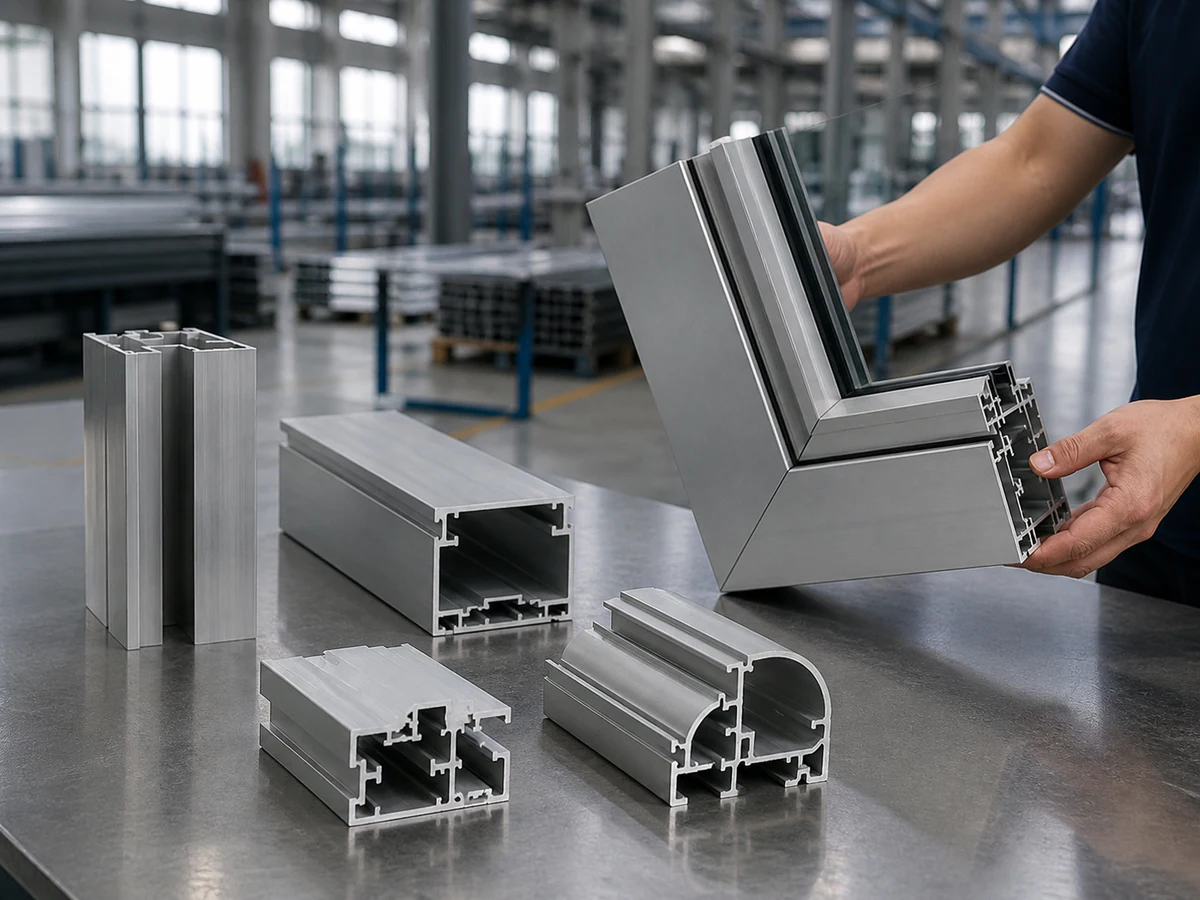
Choose this route for evaluation when the cut ends must receive the specified finish or when the finisher requires the geometry in its final form. Release the bare extrusion section, cut lengths, end forms and permitted surface condition to the saw supplier. Then ask the anodizer how the pieces will be held, contacted, cleaned and processed. Rack-contact marks, handling, pretreatment and part dimensions are the finisher’s review, not a capability implied by the saw quote.
Do not assume that a perfect bare-metal cut guarantees the appearance after anodizing. AAC notes that surface defects and texture can remain visible through the anodic oxide, while processing can change dimensions. If the connector fit is tight, have the designer and anodizer agree the dimensional allowance and measurement stage. Record a bare-cut inspection separately from the post-finish appearance and fit inspection. A passed saw trial cannot sign off the color or coating.
This route can create handling and identification work: short pieces need a way to stay traceable through finishing, and contact locations must not ruin a designated visible face. Ask the finisher for its minimum practical piece length and racking plan for the actual section. Those are project-specific questions; do not copy a limit from a different alloy or anodizing line.
Route B: anodize the stock, then cut finished lengths
This route deserves consideration when the anodizer and buyer approve a raw cut edge, or when an end is hidden by the released assembly design. The saw trial must then protect the pre-finished long faces as well as meet the cut dimensions. Name the permitted clamp and support contact zones. Identify any protective film, its removal stage, and whether film is allowed to cross the cut line. Check the first, middle and last retained pieces for scratches, chips, discoloration and edge condition under the agreed viewing method.
Do not turn a general corrosion statement into approval of a visible raw end. AAC’s pre-anodized coil discussion says designers can sometimes hide raw edges after cutting pre-finished sheet or coil. It explicitly distinguishes extrusions from that coil process. Use the principle as a design question only: will this extrusion’s actual joint cover the end, and does the buyer’s finish requirement permit it? The approved drawing and finisher answer that question.
Where a visible face slides over a roller or touches a stop, include that exact contact path in the trial. Our separate clamp-mark guide addresses how to map permissible fixture contact. This article’s decision is earlier: whether the finished surface should be present at the saw at all.
Run one paired comparison that can change the decision
Take the same released profile family and make two labeled sample routes, if both are technically available. In Route A, cut bare stock and have the intended finisher process the pieces. In Route B, cut stock already finished to the intended specification. Keep alloy, temper, section, drawing revision and inspected end condition visible in the sample record. If different batches are unavoidable, state that difference rather than calling the comparison controlled.
Inspect the parts at the points that matter. Before cutting, record the incoming surface and film condition. After cutting, measure the length and end geometry by the buyer’s method and photograph the designated visible faces. After finishing or assembly, check the specified appearance, end coverage and connector fit. A simple matrix makes a failed route clear:
| Question | Cut before anodizing | Cut after anodizing |
|---|---|---|
| Exposed end | Ask finisher to verify coverage on the actual piece. | Ask designer to approve the raw end or a real cover detail. |
| Visible long face | Check saw marks before finish and appearance after it. | Check incoming finish and every saw contact point. |
| Fit dimension | Specify whether acceptance is before or after finishing. | Measure finished-stock cut parts against the assembly datum. |
| Responsibility | Separate saw-cut approval from finisher release. | Separate finish supply from saw damage and assembly approval. |
Stop comparing routes if one is already disallowed by the product drawing or the finisher’s process constraints. The goal is not to make every supplier run two production paths. It is to expose the one condition that would make the chosen route unacceptable before buying the machine or ordering a batch.
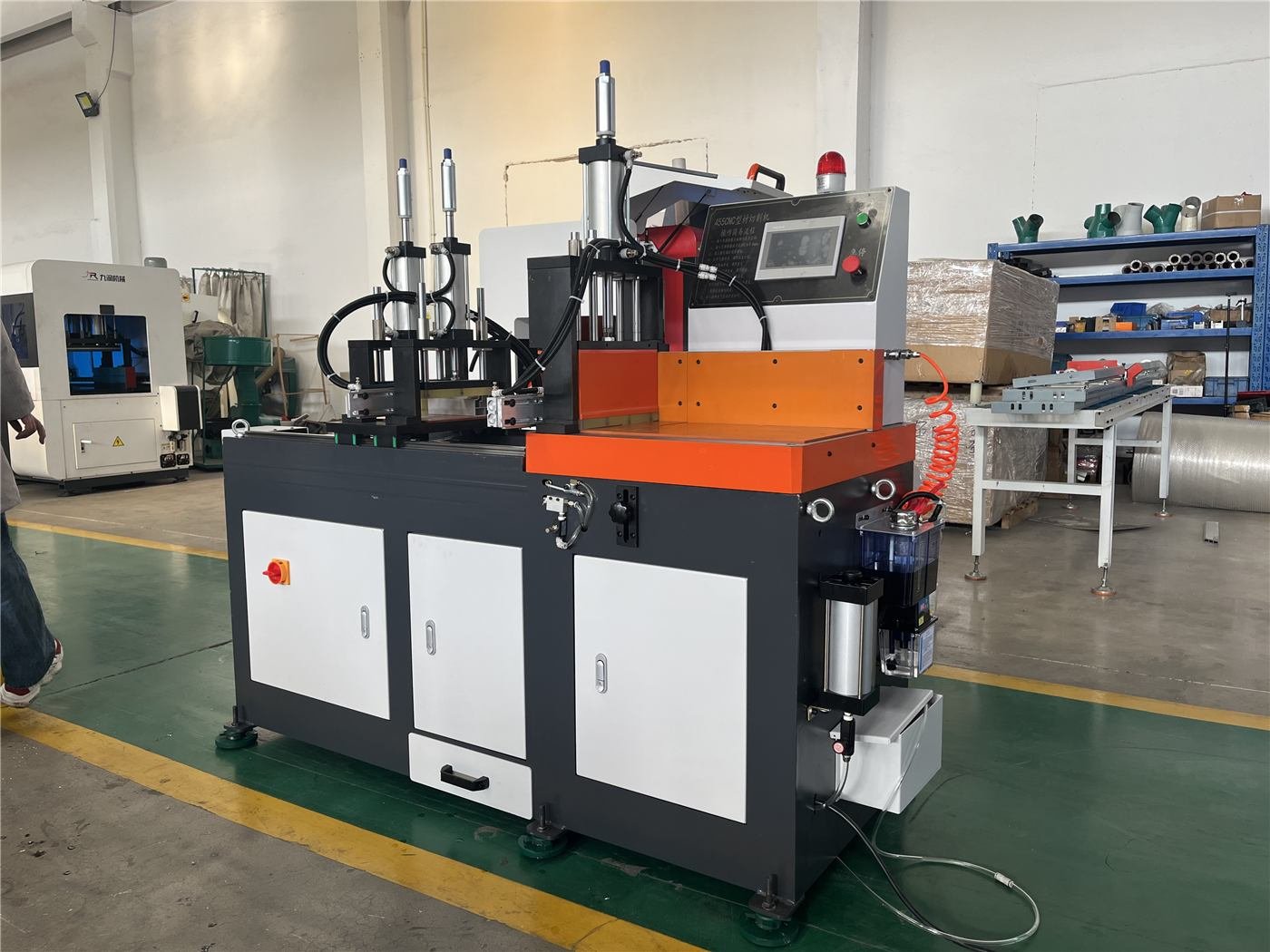
The Jiurun Machinery channel video below shows an automatic aluminum cutting machine and profile feed path. Watch the stock approach and cutting area when planning a witnessed surface-contact trial. The footage does not show anodized material, either sample route, a buyer’s machine configuration, coating quality or measured cut results.
Write the handoff so neither supplier inherits a hidden requirement
The purchase package should identify the released section, alloy and temper, stock finish state at the saw, cut lengths and end geometry, visible faces, clamp-contact exclusions, sample quantity and inspection method. Include the finish specification and which surfaces must be covered. Name the person who accepts raw cut ends, if permitted. If the finisher receives cut blanks, state the racking and identification handoff. If the saw receives finished stock, state the packaging and incoming-appearance standard.
Ask for a quotation that separates saw cutting, deburring, surface protection, anodizing, assembly and inspection. Do not let the word “finished” hide which supplier will deliver the final cosmetic and dimensional result. If the selected machine is offered with an option said to protect finished profiles, request a trial on your actual stock and record the fixture and contact surfaces. A catalog photograph cannot approve a finished surface.
For anodized aluminum profile cutting, the useful outcome is one approved process route with two clear sign-offs: what the saw delivered and what the finisher or assembler accepted. Send JiurunCut the profile drawing, finish specification, visible-face map, raw-end rule and representative stock. Ask which cutting setup can be trialed on that material, while your anodizer confirms the finish sequence and final acceptance criteria. Our white-mark investigation guide can help if appearance defects arise later, but the sequence should be settled before the first production lot.
Sources and limits: AAC’s anodizing FAQ and finish guide explain coating formation, surface appearance and process-dependent dimensions; its coil discussion describes a separate pre-finished material route. They inform the buyer’s questions, not a Jiurun machine claim or a substitute for the project’s approved drawing and finisher.