
An aluminum saw table insert can be easy to overlook when buying a machine. First confirm that the quoted saw actually has a separate wear part. The visible support surface says little about what happens when the area beside the blade opening is damaged. For a buyer cutting narrow or finished aluminum profiles, that omission matters: a worn local contact area can change how the stock sits during a cut. The purchasing question is whether the quoted saw has a separately replaceable insert or chip breaker, how that part is identified, and who restores the accepted setup after replacement.
Do not assume that every aluminum saw has this part. The machine drawing and supplier answer must establish the actual construction. A photograph of a table cannot prove that an apparent plate is removable, or that a replacement for one model fits another.
Start at the contact area beside the blade path
Ask the supplier to mark the support surfaces that touch the representative profile on both sides of the cut. Show the blade path, the fence or locating face, the clamp contact, and any local plate or block at the opening. The back-fence contact guide explains why a reference face needs its own check; a removable table part does not replace that check.
Some machine designs do make this area a separate service part. Hoffmann’s double-miter-saw catalog labels a chip breaker as a replaceable table insert. That is an example of a documented design choice, not a Jiurun specification. On the saw under consideration, request a marked drawing or parts-list entry before putting “replaceable insert” on the purchase order.
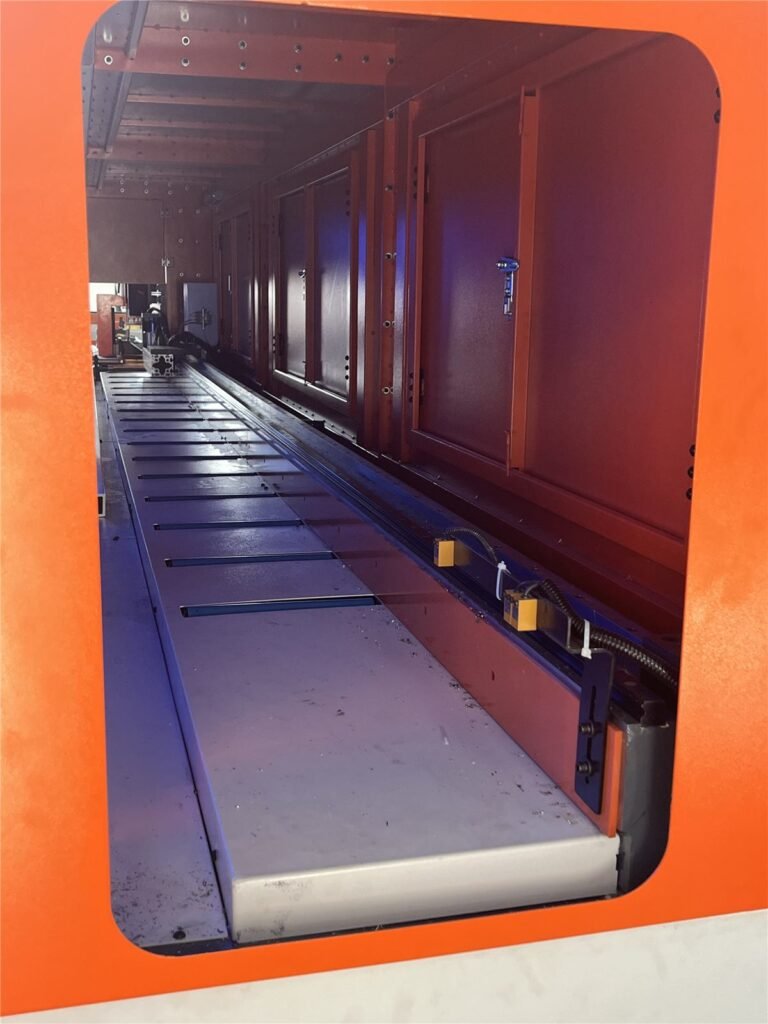
Aluminum saw table insert: make the service boundary visible
If the quoted aluminum saw table insert is a separate part, the quote should identify its exact part number and revision, quantity per machine, supplied material, location, fastening method, and any adjustment or shimming specified by the machine maker. Ask whether the initial machine includes a spare and whether the same part is stocked for later orders. A generic “wear parts included” line does not tell a maintenance buyer what will arrive.
If the support surface is integral to the table or fixture, ask for the manufacturer-approved repair or replacement route. The answer may involve a larger assembly and a different service interval. Compare the two offers using their actual service boundary, rather than assuming a small replaceable plate exists on both.
The receiving document should also separate the insert from the blade, fence, clamp pad and outfeed support. These components can share a photograph while having different part numbers and acceptance duties. The blade-change access guide addresses access to the blade; it does not establish table-part interchangeability.
Witness the installed support, then the first accepted cut
For a proposed machine, bring the actual stock section and the buyer’s approved cut criteria to the supplier trial. With the machine in its intended configuration, document where the underside of the profile contacts the table near the blade opening. A broad extrusion and a narrow hollow section may land on different points. Note any unsupported edge, trapped chips, rocking or visible contact with a plate edge. This is an observation to resolve with the supplier, not a claim that a particular machine will produce a defect.

Ask the manufacturer or qualified service team to demonstrate the approved inspection and replacement boundary under the machine-specific instructions. The buyer should record the part identification, the post-service setup checks and a representative first-off result. The acceptance record should use the job’s specified dimensions and finish criteria. A single clean-looking sample does not prove long-term wear life or every future profile.
If the part is not intended for field replacement, require that answer in writing. It changes spare planning and the space needed to service the machine. The service-aisle guide can help the site team check access around the installed equipment.
Compare the cost of the supported service route
Build a simple comparison for the same expected work: included table component, first spare, approved replacement labor, setup verification, and the support route if the insert is unavailable. Use supplier prices and the plant’s own downtime assumptions. Avoid assigning an invented lifespan to a part that has not been tested on the approved stock.
For a Jiurun inquiry, send the target machine model and configuration, the profile drawing and sample, the supported length and cut angle, and a marked photograph or sketch of the local contact area you want assessed. Request the parts drawing, spare scope and demonstration plan for that configuration. Send these details to Jiurun so the response can distinguish an actual replaceable part from a general table view.
Related saw footage
The Jiurun video below shows a semi-automatic aluminum saw and its guarded cutting area. It provides machine context only. It does not show a removable table insert, establish this article’s part numbers, or document a completed acceptance trial.