
A warehouse robot can cross hundreds of cells while the fabrication shop still needs to identify every cut member. A grid layout gives the footprint and travel directions; it does not, by itself, tell a saw operator which aluminum section to load, which end is the datum, or which joint receives the finished piece. For warehouse robot grid rail cutting, begin with an approved part schedule, then test whether cutting is even within your scope.
The featured photograph shows related long structural aluminum profiles in storage; it is not a verified robot-grid component or project.
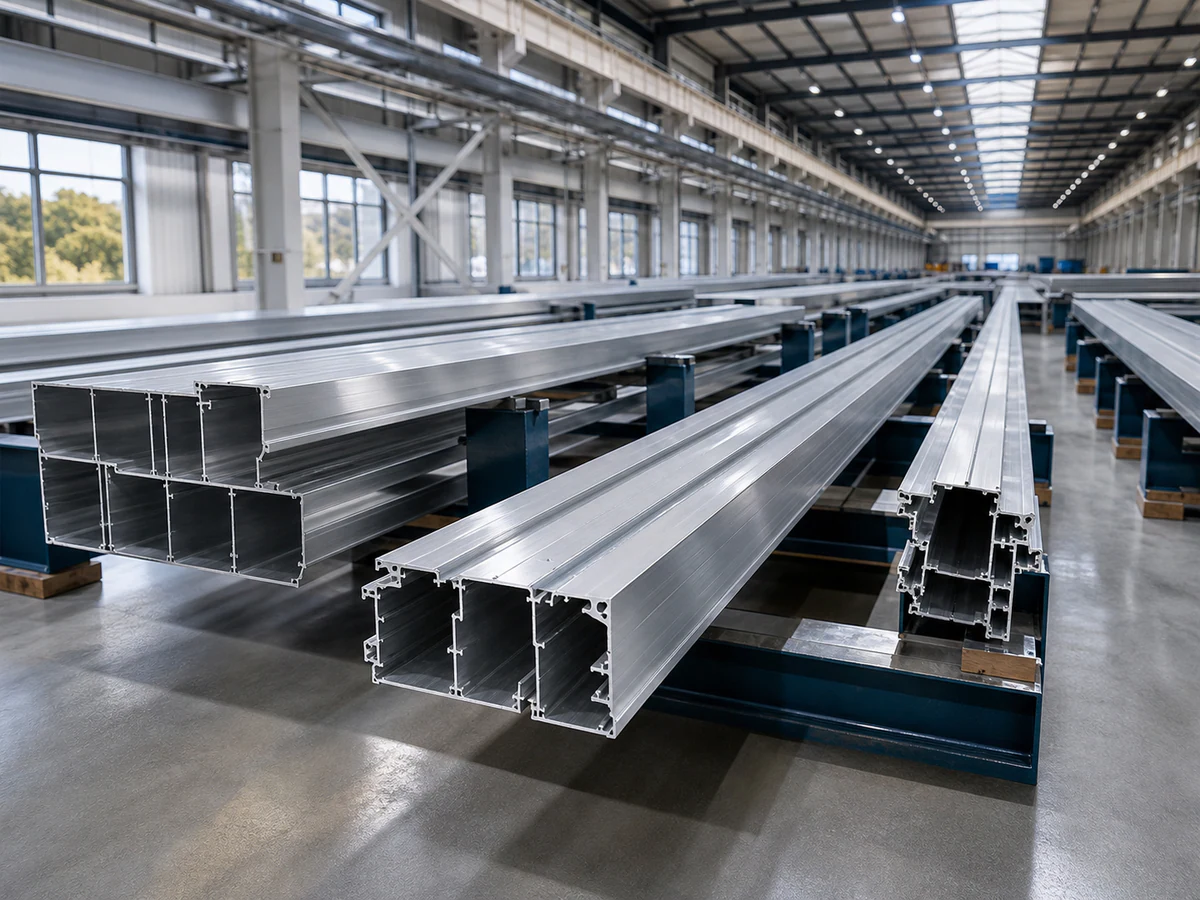
Public system descriptions make the distinction visible. AutoStore describes its Grid as an aluminum structure with robot tracks running in X and Y directions. That is useful context for a buying discussion, but it is not a manufacturing drawing or permission to substitute a rail. The system owner or authorized integrator must supply the released geometry and acceptance criteria for any part it permits a fabricator to make.
The cell map and the cut schedule answer different questions
A layout can show rows, columns and the location of access points. A cut schedule has to identify individual physical pieces. It must account for the approved profile family, orientation, length reference, end preparation and location in the assembly. A single grid may contain different structural members and top-track parts; treating all visible lines as one repeatable rail would erase those distinctions.
Ask the integrator to mark the drawing revision and identify each item by its own part number. If a section is supplied as a proprietary finished component, keep it out of the saw-cut scope. If a blank is explicitly released for local fabrication, record who owns the downstream drilling, joint hardware and final installation checks. That decision should appear in the purchasing record before a machine is selected.
Warehouse robot grid rail cutting begins with section identity
“X rail” and “Y rail” are useful location labels, not enough information to choose a blade, clamp or support. The physical section may differ, or the same section may be installed with a different orientation or end condition. The released drawing should settle that question. Record the cut length against a stated datum: overall tip-to-tip, a shoulder, a joint face or another specified feature. Never infer the datum from a cell pitch.
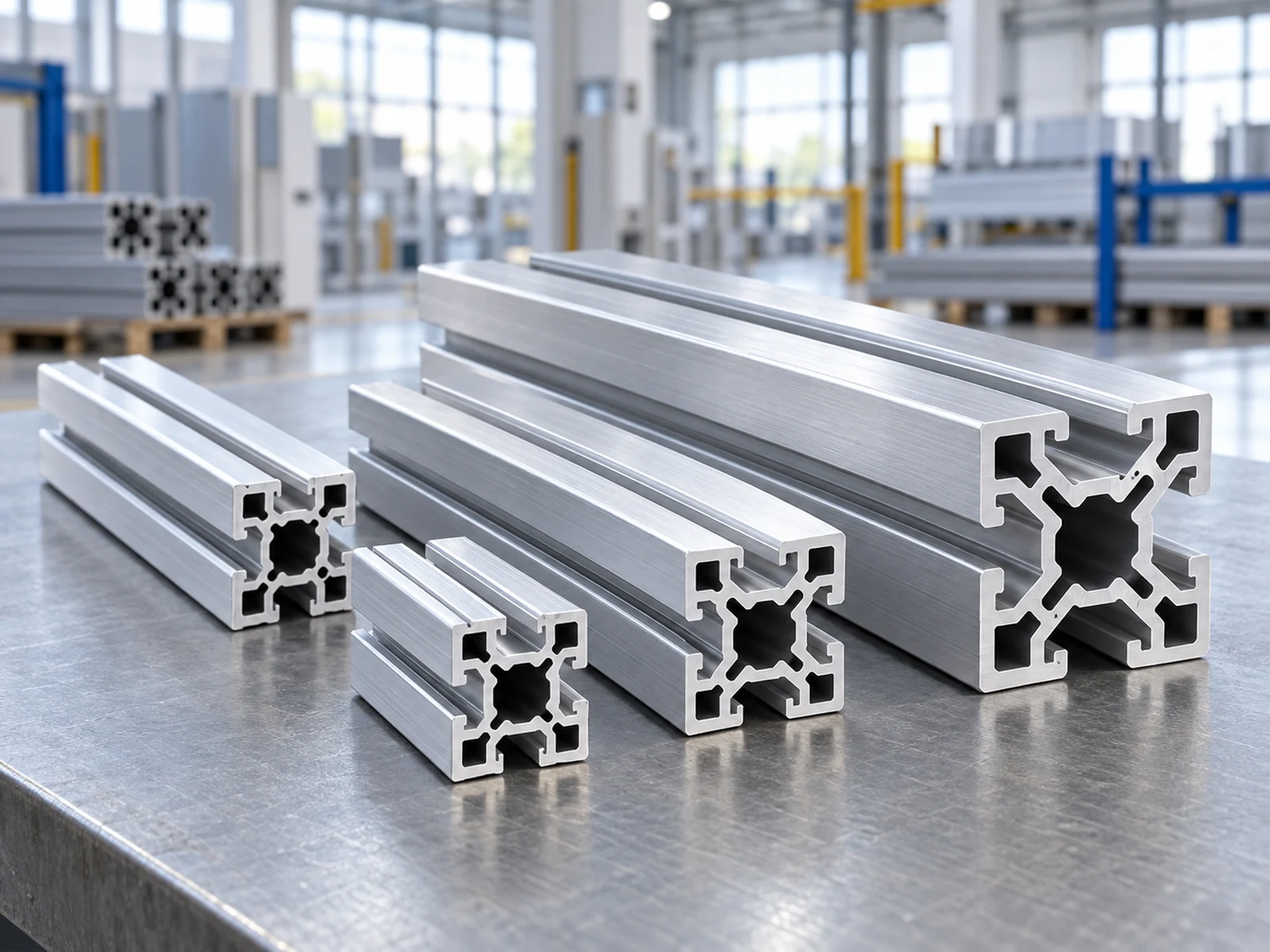
Mark the incoming stock with section, material specification and lot as required by the approved process. Keep any protective surface or contact restriction in the same record. The aluminum saw job traveler guide explains how a stock identity, cut list and release record can travel together; the grid application still needs its own authorized part data.
A saw demonstration proves a limited step
A candidate saw trial can answer practical questions about the approved blank: whether it can be supported along its length, clamped without damage to controlled faces, fed consistently, cut to the specified datum and discharged without mixing part identities. It cannot prove that a robot will run across a joint or that a completed grid meets system requirements. Those belong to the integrator’s assembly and acceptance process.
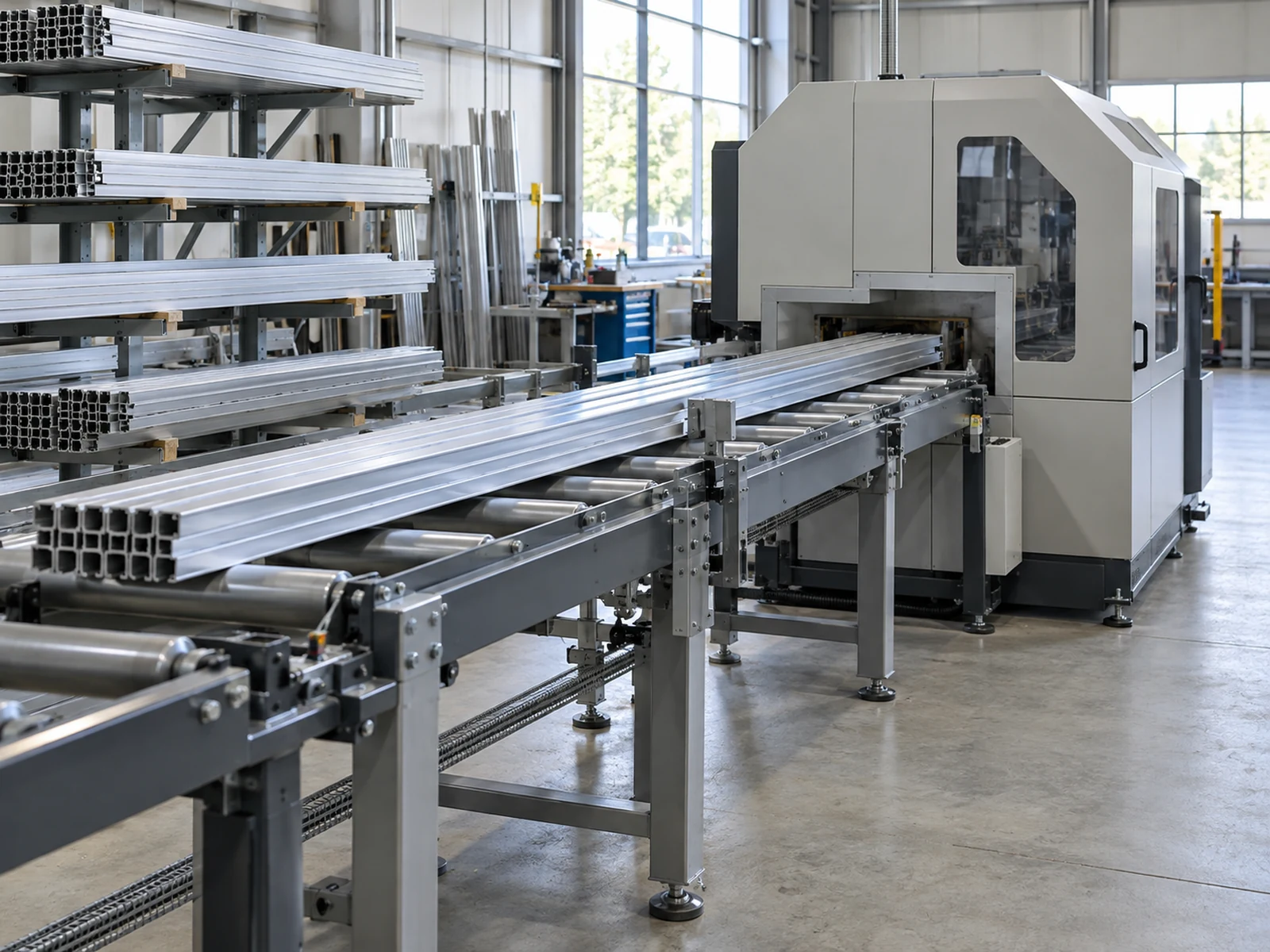
The short video below is from Jiurun Machinery’s own channel. It visibly shows a JR-650CNC-3A-1S aluminum cutter and a long profile at the feed and cutting area. It is an equipment demonstration only; the filmed material is not identified as a robot-grid rail, and the video does not verify a grid specification, joint, customer project or finished-system performance.
Keep the joint question outside the saw’s promise
Length alone does not determine whether a rail belongs in a grid. At each joint, the authorized drawing may call for a particular cut face, orientation, locating feature or further operation. The fabrication release should say which of those are completed before dispatch and which are completed during assembly. A visually clean cut is not acceptance evidence for the complete joint.
For a trial, select representative approved blanks that expose the real differences in section, length and end condition. Measure and document them by the specified method, retain the drawing revision, and segregate trial pieces from released production. If the system owner has not supplied a permissible tolerance or inspection method, do not invent one for a machine quote. Instead, flag the missing requirement for resolution.
Compare local cutting with approved finished supply
The right purchase may be a cutting machine, a subcontracted blank, or a finished component supplied through the system channel. Compare those options at the same receiving point. A local saw may reduce lead time for repeat blanks, but it also adds responsibility for stock control, tooling, measurement, labeling and rejected pieces. Buying approved finished rails may retain proprietary end operations and system accountability with the supplier.
For warehouse robot grid rail cutting, a useful comparison is therefore not pieces per hour alone. For each part family, state who owns the stock, cut, secondary work, inspection, joint hardware, packaging and final acceptance. Identify the volume and change frequency that justify in-house cutting. If the only available input is a layout image, the safe purchasing decision is to obtain the part schedule before asking for a cycle-time promise.
The handoff record that makes a quote meaningful
Send one representative packet to the equipment supplier: the authorized profile drawings and revision, a part list with quantities and length datums, the allowed contact faces, the planned stock form, and the inspection method. Ask the supplier to state which operations its quotation covers and which require separate fixtures or downstream work. Keep the resulting samples linked to their part IDs and drawings. The cut-part traceability guide covers that release link in more detail.
If you are planning an authorized warehouse grid fabrication line, contact JiurunCut with the released blank drawings and expected part mix. We can discuss a saw trial around those blanks and clearly state the equipment scope. Grid-system compatibility and final acceptance must be confirmed by the system owner or its authorized integrator.