
Roller shutter aluminum box panel cutting starts with a scope question: is the part on your cut list an extruded box panel, a roll-formed hood, a guide, or a finished shutter assembly? A saw quote for one cannot silently stand in for the others. This guide helps a shutter fabricator turn a box-system drawing into a controlled extrusion blank request, then decide which dimensions and assembly features belong to the saw operation and which belong downstream.
Actual roller shutter systems vary. For example, heroal describes its FME 90° as an extruded, four-part surface-mounted box. The same manufacturer’s FMC combination box joins a visible extruded front panel to roll-formed panels with an adapter. These are examples of different construction routes, not specifications for a Jiurun machine or the reader’s project. Obtain the actual system drawing before assigning a saw process.
Roller shutter aluminum box panel cutting: identify the part
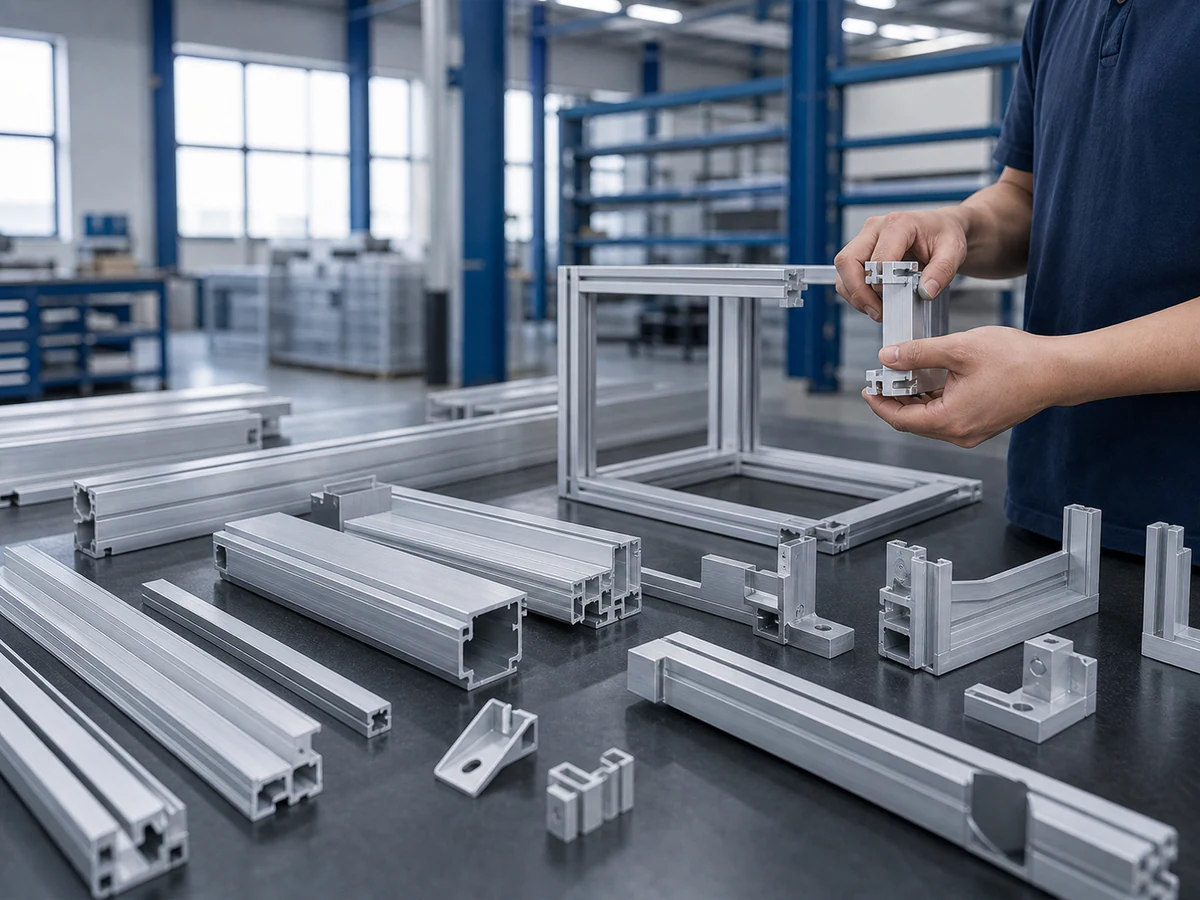
In roller shutter aluminum box panel cutting, a box assembly may contain a front panel, top or rear panel, access cover, end caps, adapter and guide interface. A cut blank is only the approved straight extrusion segment. It is not the completed headbox, and a photo of an aluminum profile cannot identify your system’s section. Separate the bill of materials by manufacturing route: extruded panel, roll-formed sheet part, molded or cast end component, and purchased hardware. Ask the system owner which pieces are delivered finished and which arrive as stock for cutting.
Some shutter products explicitly use a roll-formed box. The Aluroll E77 technical sheet, for instance, describes a roll-formed aluminum enclosure and separate extruded guide channels. Its material and build route must not be inferred from the word “aluminum” alone. If your drawing shows a formed hood, ask about its forming and trim sequence before quoting an extrusion saw.
Seven checks for a box-panel cut-blank RFQ
| Check | What to release | Why the buyer needs it |
|---|---|---|
| 1. Section identity | Drawing revision, section code, alloy and temper as specified by the system owner | Prevents a visually similar but incompatible profile from being quoted. |
| 2. Blank length datum | Which end and surface define finished cut length; allowance for later machining or site fit | Keeps a stock blank separate from the installed box width. |
| 3. End interface | End-cap, corner, adapter and access-cover fit features with the mating drawing | Shows whether the cut face is cosmetic, a locator, or a later machining reference. |
| 4. Face condition | Which visible faces require protection and whether coating is before or after cutting | Guides handling and acceptable witness marks. |
| 5. Holding method | Permitted contact faces, support points and a representative section sample | Thin walls and grooves may need different support than a solid bar. |
| 6. First-off checks | Length, squareness, burr and interface acceptance method from the drawing | Creates a measurable approval point before a batch. |
| 7. Handoff | Quantity by section, labeling, packaging and who completes drilling or assembly | Stops a cut-only quote from being mistaken for a complete box. |
Keep the box width separate from each panel blank
The width across an installed shutter opening is not automatically the saw length of every box component. End caps, rebates, joins, cover overlap, coating and field conditions can change the required blank. Ask the system designer for a component-level cut list. Record the nominal box width for context, then give each extrusion its own drawing-controlled length, end condition and quantity. Where a site-fit allowance exists, state which party will make the final trim and where the final measurement is taken.
For a first article, pair the drawing with a physical extrusion sample and its mating end component. Review the blade approach and clamp contact against the actual wall and groove geometry. A section that looks broad and stable from the front may have a narrow return that can move under force. The review is a proposed trial plan, not evidence that any particular saw has passed it.
Set a first-off inspection that protects assembly
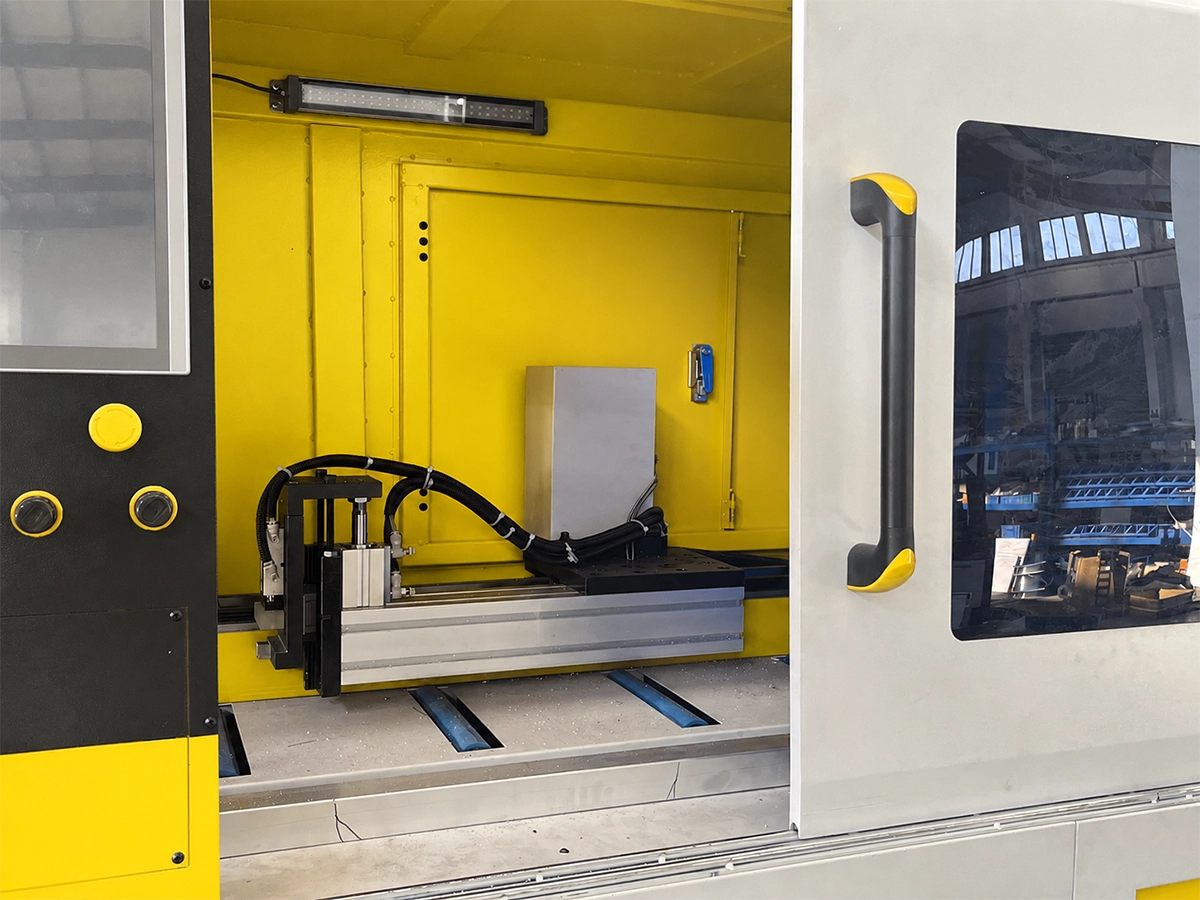
Measure the approved blank from the specified datum. Check both ends for burrs that could obstruct an end cap or adapter, and inspect any visible coated face for handling marks. If the box uses a removable cover, confirm the mating feature is still accessible after cutting and later finishing. The acceptance limits must come from the system drawing or an agreed sample; this article supplies no universal tolerance or performance claim.
A caliper on a different profile can illustrate how a feature is contacted, but it cannot verify the shutter panel’s own groove or box fit. The first-off report should identify the actual part revision, instrument, measured features, operator and disposition. Keep dimensional inspection of the blank distinct from functional inspection of the assembled shutter.
What the equipment video shows
The following video from Jiurun Machinery’s YouTube channel shows a saw operating on an aluminum profile. Watch it for a general view of feeding, holding and cutting. It is not a test of the roller shutter box section, the named manufacturer systems, a customer order or a performance specification. Arrange a drawing- and sample-based review before selecting a machine configuration.
A practical RFQ wording
“Quote saw cutting for the attached revision of the extruded aluminum roller shutter box panel only. Use the separate component cut list for blank lengths and quantities. Identify the protected visible face, allowed clamp faces and first-off inspection features. End caps, roll-formed covers, drilling, coating and final shutter assembly are outside this cut-blank scope unless specifically listed.”
This wording makes a supplier response easier to compare. It also gives the fabricator a clear place to add the actual system’s end detail and finish sequence. If your need is instead a guide-rail replacement, see our guide-rail RFQ guide. For an entire shutter production mix, see our roller shutter saw selection guide.
Before asking for a machine recommendation
Send the approved section drawing, stock sample, target cut list, end-component drawing, finish state and first-off acceptance criteria. Jiurun can then discuss an appropriate saw review and the scope of any sample cutting. Contact JiurunCut with those documents and state whether you need cut blanks or a finished box assembly.