
A roller shutter guide rail replacement begins with a system-identity question, not a saw setting. The rail controls where the curtain runs and may incorporate a specific insert, fixing arrangement, face cover or connection to the shutter box. A facility owner usually needs an approved replacement part or service package. A fabricator who owns a released aluminum system may instead buy approved stock and cut a new rail to its controlled member drawing. These are different transactions. This guide helps buyers separate them before requesting a price or a trial cut.
For example, heroal describes multiple guide-rail variants for standard, mini and Safe shutters, with extruded aluminum rails and rolled-in inserts. Its system overview distinguishes components, pre-assembled curtains and prefabricated elements. Those manufacturer examples establish why a generic U-channel photo or a nominal opening height cannot identify a compatible rail. They are not Jiurun customer drawings or permission to substitute parts between systems.
1. Identify the installed system and the authority to replace it
Record the shutter manufacturer, system family, rail part number if available, handed side, drawing or order revision, installation type, finish and original service documentation. Photograph both rails, box interface, fixing side, exposed face and insert condition for the system owner or authorized service provider. Ask whether the failure is localized rail damage, curtain misalignment, a damaged fixing substrate or another cause. A rail with the same outside width may differ inside where the curtain and insert run.
For a finished installed shutter, ask the manufacturer or authorized service channel whether the replacement is a complete guide assembly, a prepared rail with inserts and hardware, or a separately supplied member. Security, wind, weather and operational functions belong to the shutter system. Do not treat an aluminum cutoff quotation as system approval. This article is a purchasing and manufacturing-scope guide; it is not an instruction to remove, adjust or operate a shutter.
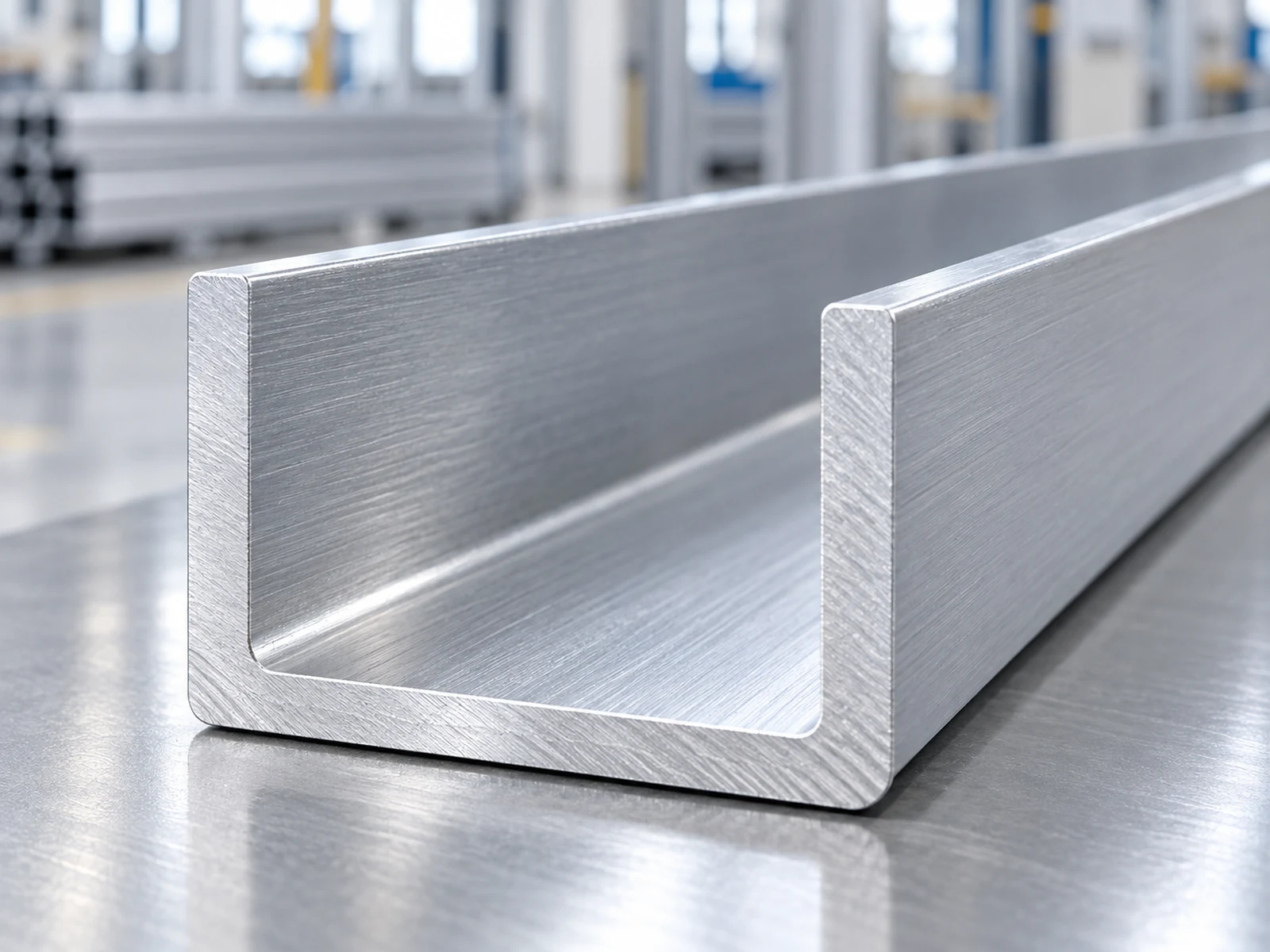
2. Choose the output stage before comparing prices
Three supply routes belong in the first column of the RFQ. Approved complete replacement: the system supplier provides the specified guide assembly, inserts, fasteners and any matching parts as required. This is usually the route for a facility buyer without fabrication authority. Prepared approved rail: a qualified fabricator supplies a system-specific extrusion already cut and processed to the released drawing, with downstream parts and installation responsibility stated. Bare cut member: an authorized manufacturer provides approved stock and asks a cutoff supplier or its own saw cell to make only the released blank. The buyer still owns inserts, holes, covers, finish, assembly and system verification.
Compare prices at the same output stage. A low bare-blank price cannot be compared directly with a complete replacement assembly. Include the cost and lead time of identifying the existing system, obtaining the correct part, any controlled machining or finishing, packing, delivery, qualified service and final system check. If the original part is obsolete, obtain a written design-owner disposition; do not choose a visually similar section from a catalog photo.
3. Turn an approved rail into a cut-member schedule
Only after the system owner releases a cutoff route should a saw RFQ begin. Supply the drawing revision and physical sample for each rail section, plus stock length, alloy and temper if specified, surface condition, member length, quantity, cut datum and allowed end condition. Mark which face may contact the fence or clamp and which sliding or insert surfaces must be protected. Identify handed or asymmetric sections, separate left and right labels, and state whether holes or slots exist before the cut or will be made later.
Distinguish the finished opening, installed rail dimension and bare blank length. They need not be the same reference. Box engagement, end closure, base condition, insert termination and any downstream machining may change the required blank. The approved drawing and system owner set those relationships. Do not infer a saw length from a site measurement or from another brand’s published profile dimensions.
4. Trial the actual section and its protected surfaces
If a fabricator retains the cutting step, trial the approved stock in the intended incoming condition. Check support over the real length range, orientation at the fence, clamp contact on thin or open walls, blade exit, offcut capture and preservation of a coated or visible face. An insert already rolled into the rail may require different handling from bare extrusion; the system owner must say whether it stays in place, is installed later or changes the permitted process. Record that decision before testing.
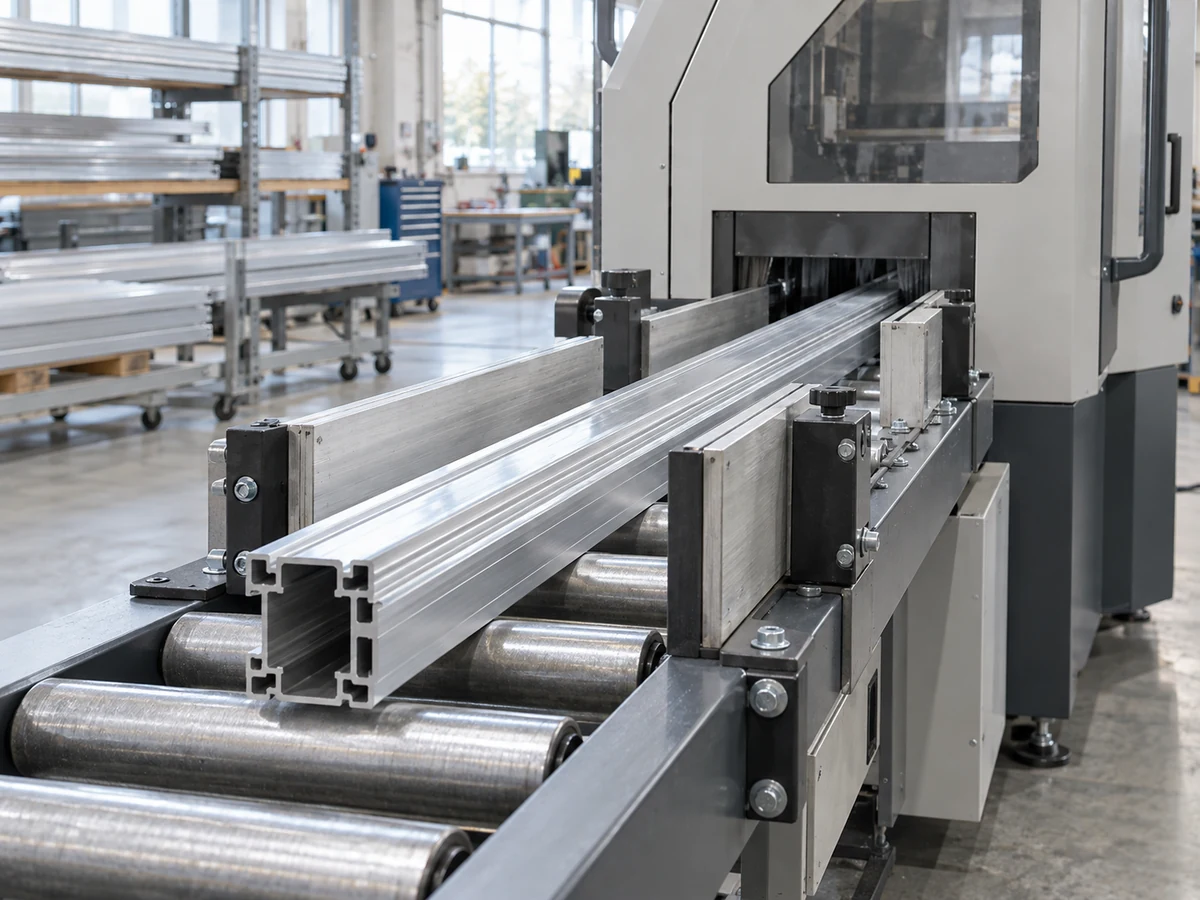
Measure the first-off against the released blank drawing: named datum, cut length, required end squareness, burr condition, damage to sliding and insert channels, distortion of thin lips and finish marks. Record the actual section ID, stock lot, setup and accept/reject decision. A first-off that passes blank dimensions still does not prove curtain travel, wind rating, security function, weather resistance or safe installed operation. Those checks remain with the shutter-system owner and qualified service process.
5. Decide how the rail will be packed and received
Protect long finished faces and open channels from transit dents, chips and abrasion. Keep each rail’s system family, revision, handed side, lot and output stage on the label. If inserts, covers, brackets or fasteners are supplied separately, list them explicitly; a “rail kit” without a component schedule can arrive incomplete. Segregate first-off specimens and rejected pieces from released replacements. On receipt, check identity and visible condition before passing the assembly to the authorized installer or next manufacturing cell.

6. Four practical RFQ decision routes
Installed shutter, no fabrication authority. Start with an approved replacement assembly or authorized service quote. Demand system identification, the correct part and handing, included hardware and a defined service scope.
Approved fabrication route, limited internal processing. Request a prepared rail from a qualified supplier. Demand the released drawing, processing boundary, first-off record and a complete list of kit contents.
Manufacturer owns stock-to-blank cutting. Request a saw trial for the approved extrusion. Supply an actual stock sample and demand the cut datum, contact limits, inspection record and named downstream owner.
Unknown or obsolete system. Request design-owner review before any cutoff. Demand a written compatibility and replacement disposition.
A procurement team can use these routes to refuse false equivalence. If the request is “replace a damaged shutter rail,” do not ask a saw vendor to certify the completed door. If the request is “cut these released aluminum guide blanks,” do not force the saw supplier to quote installation. Keep the two responsibilities visible in the same RFQ.
Roller shutter guide rail replacement RFQ checklist
- Name the shutter maker, system family, installation context, rail part/revision and left/right identity.
- State whether the required output is a complete approved guide assembly, prepared rail, or bare cut blank.
- For cutting, provide the authorized extrusion drawing, actual sample, material/finish, stock length and member schedule.
- Mark sliding, insert, visible and fixing faces; specify allowable support and clamp contact.
- Define first-off measurements, burr/finish criteria, lot identification, packing and receiving checks.
- Assign holes, inserts, covers, fasteners, installation and system-level verification to named owners.
If you are an authorized manufacturer cutting a released aluminum guide-rail extrusion, send JiurunCut the actual profile drawing, stock sample, length mix and protected-face requirements. We can discuss the physical saw-cut operation and a representative first-off trial. For the broader factory investment decision, see our roller shutter manufacturing saw guide. For revision handling, see our cut-list revision control guide. The shutter-system owner remains responsible for compatibility and finished-system release.
Related aluminum-profile cutting video
This Jiurun Machinery video shows a general aluminum-profile feed-and-cut process. It is a related process illustration, not footage of the replacement rail, a specified machine configuration, a customer trial or proof of shutter performance.
Sources and scope
heroal’s guide-rail product information describes variant-specific extruded aluminum rails and inserts. heroal’s roller shutter system overview distinguishes supplied components, curtains and prefabricated units. These manufacturer examples support the procurement distinctions above; they do not define a Jiurun customer rail or an interchangeable replacement part.