
Return air grille frame cutting starts with the grille drawing, not the saw catalogue. A grille can have a fixed or removable core, a surface border or a lay-in frame, visible or concealed fixings, and sometimes a separate filter rack. Each choice changes which aluminum pieces are actually cut and which dimensions govern the finished assembly. This guide helps an OEM or fabricator prepare a useful saw inquiry without treating every return grille as the same extrusion.
The scope here is straight or angled cuts in supplied aluminum profiles. A circular saw cannot by itself produce a complete grille, form blades, drill mounting holes, assemble corners or prove airflow performance. Those operations need their own processes and acceptance criteria. Before asking Jiurun to recommend equipment, separate the cut members from the finished product.
1. Define the border, core and optional filter parts
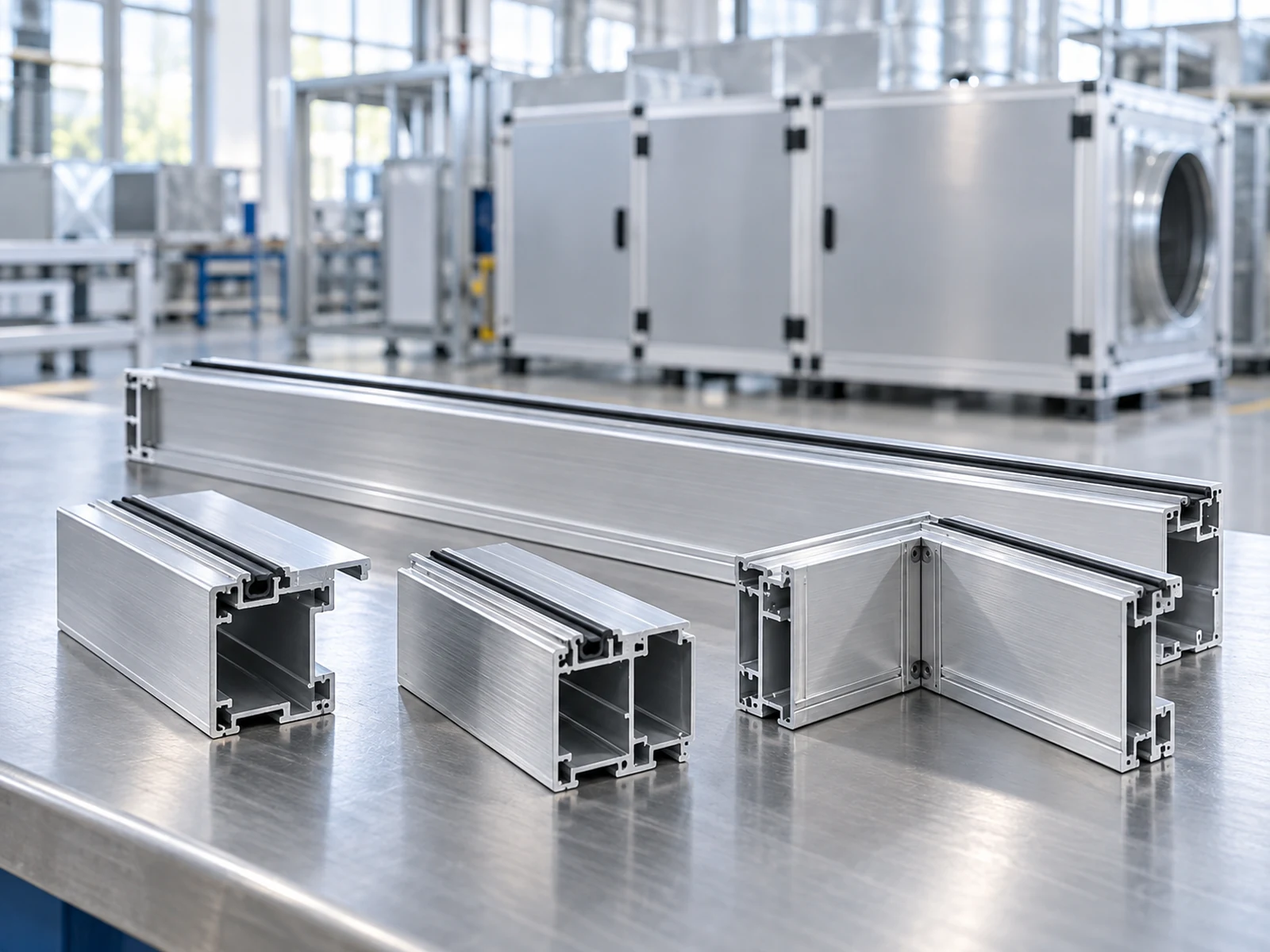
Start with a bill of materials and an assembly drawing. Mark the outer border members, blade or eggcrate core, any sub-frame, filter rack, corner keys, gaskets and fasteners. Identify which parts arrive as extrusion stock, which are formed parts and which are bought assemblies. This prevents a quotation for a frame-cutting saw from quietly becoming a promise to manufacture every grille component.
Product documentation shows why this distinction matters. Titus describes its 1700L as an extruded-aluminum grille with a removable reversible core and mounting holes accessible after core removal. A Greenheck return-filter-grille submittal separately identifies extruded-aluminum frames and roll-formed-aluminum blades. These are examples of different product constructions, not specifications for your grille or for a Jiurun machine. Ask your own grille designer which pieces are within the saw scope.
2. Put the listed opening and finished border on the same drawing
A common purchasing error is to send one width and height with no datum. The listed or duct opening, neck, outer face and cut member lengths can differ. The Greenheck submittal explicitly distinguishes opening, neck, core and overall sizes for its configurations. Do not transfer those dimensions to another manufacturer. For your part, provide the approved drawing showing the reference edges, profile cross-section, finished border width and height, corner method and allowed fit tolerance.
Ask whether each cut length is measured to the long point of a miter, the short point, or a square end before a corner connector is inserted. State whether coatings or gaskets affect the finished fit. If the grille is lay-in rather than surface mounted, identify the module and support interface; a frame that looks similar on the bench may require a different perimeter dimension. The saw supplier needs the actual stock and cut length, while the assembler needs the final opening and face fit.
3. Choose the corner route before quoting angle capability
A rectangular perimeter might use four miters, square-cut members joined by keys, or a hybrid. Do not request a double-head miter saw solely because the installed border has four corners. Conversely, a nominal square frame does not prove that all cut ends are square. Send a corner detail with fasteners, visible-face orientation, and any machining performed after sawing.

If a miter is specified, give the actual included angle and length datum on both the left and right members. If the border uses a square cut and separate corner key, show key engagement and any end clearance. A sample assembly is the right place to judge a visible gap; a cut-end photograph alone cannot show whether the core still drops in or the face sits square in the opening.
4. Protect the removable core and mounting access
Core access can determine the usable frame geometry. The Titus example allows its core to be removed so concealed mounting holes can be reached. Your design may instead use a hinge, a separate face, or fixed blades. Mark where a clamp pad, corner screw, burr or distorted lip could obstruct removal and reinstallation. If the frame carries a filter, include the filter loading path and the required service clearance.
For the RFQ, state whether the sawn member has a visible finished face, a return lip or a narrow blade-retaining slot. Give a protected-contact drawing that distinguishes surfaces the fixture may touch from those it must avoid. Specify whether protective film stays on during cutting, and who removes chips from accessible grooves. These are process inputs to test on the real extrusion, not generic claims that one blade or clamp arrangement will protect every grille.
5. Return air grille frame cutting: support the actual section
Send the supplier a section view with wall thickness, open side, ribs and any thin unsupported edge. A clamp that is safe for a closed box section may press directly on a fragile lip in an open border profile. Show the allowed support faces and the orientation in which stock enters the saw. If multiple grille sizes share one line, list the smallest and largest profiles plus the longest and shortest blanks instead of sending only an average sample.
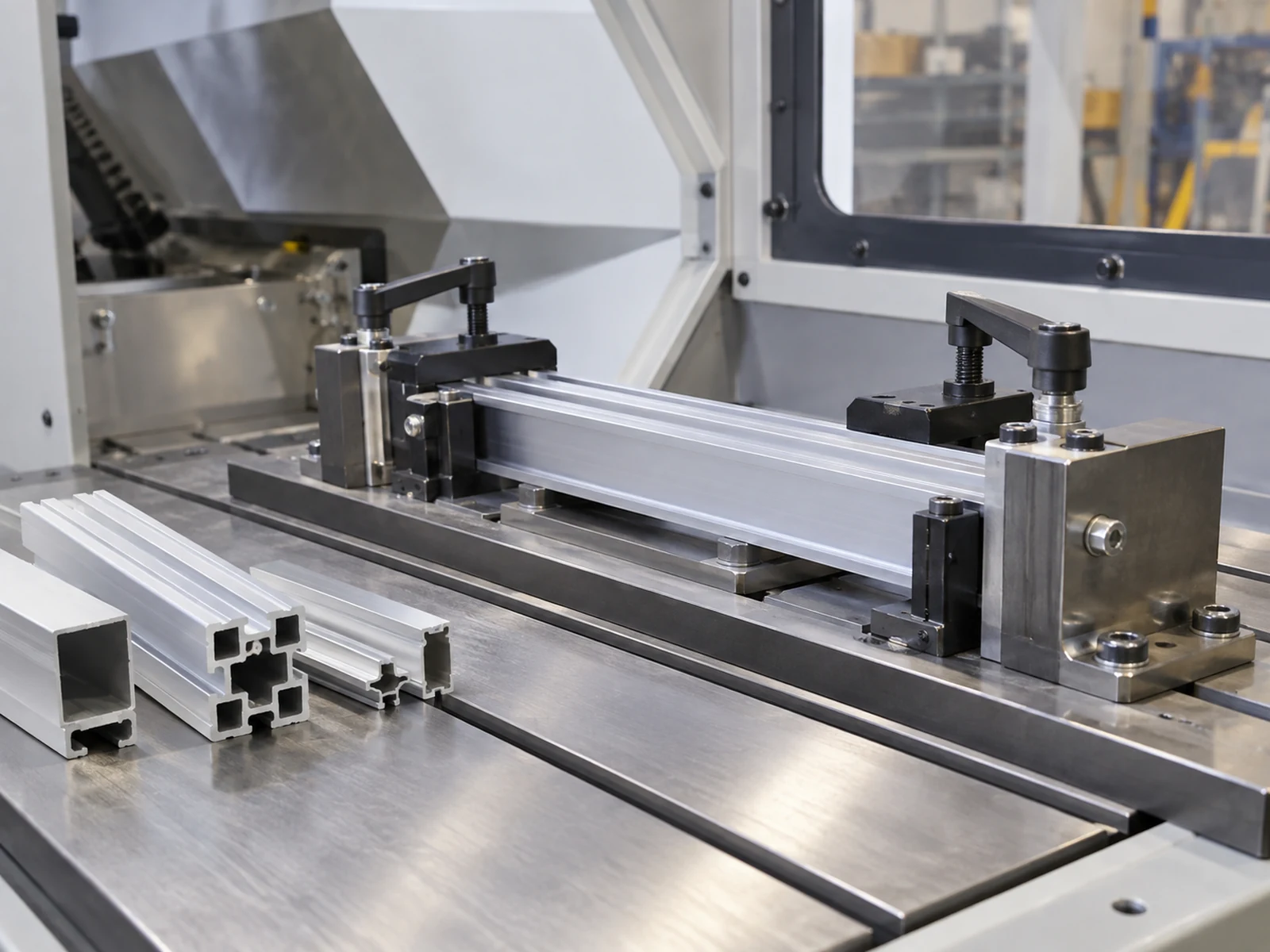
Ask the saw vendor to explain infeed support, fixed datum, clamp contact, cut-zone clearance and outfeed support for each representative section. A layout drawing is more useful than a general machine-capacity number when a broad face can flex or a narrow flange can twist. Also state whether the production route cuts single members, paired lengths, or mixed batches; this affects handling and measurement more than the grille’s marketing name does.
6. Separate cut quality from grille performance
Agree on observable cut acceptance before any trial. Useful checks include finished member length from the named datum, end-face squareness or miter angle, burr location, visible-surface marks, corner gap after assembly, and whether the core or filter still fits and can be removed. Record the inspection method, sample count and who signs off. The acceptable values must come from the customer’s drawing and assembly test; this article does not supply a universal tolerance.
A saw trial on the buyer’s actual extrusion should preserve the stock orientation, protective film, blade condition, fixture and material batch in the record. Photograph both the cut end and the assembled corner. Inspect the shortest and longest required members if support or handling changes across the range. Reject a machine comparison that gives only a single clean cut without the fit and access checks that drive the grille purchase.
7. Request the right equipment route
Jiurun supplies industrial circular saw equipment for aluminum and other nonferrous materials. A straight-cut semi-automatic route, a length-fed automatic route and an angle-cut route answer different production needs. The choice depends on the actual border extrusion, length mix, corner method, batch volume, operator handoff and inspection plan. Do not infer a particular Jiurun model, cutting precision, throughput or labor saving from the general examples here.
For return air grille frame cutting, a useful quotation should provide: (1) the border section drawing and stock length; (2) every cut length with datum and angle; (3) the corner and core-access drawings; (4) batch quantities and changeover frequency; (5) a representative stock sample; (6) visible-face and burr acceptance; and (7) the assembled grille fit check. Ask the supplier to state which tasks the proposed saw covers and which remain downstream. If your job is really a diffuser or a sealed filter assembly, see the separate guides on air diffuser manufacturing and air filter frames.
Machine footage in context
The following video from Jiurun Machinery’s own channel illustrates an aluminum cutting machine and its handling/cutting area. It is a general equipment view. It does not establish the return-grille material, border profile, model configuration, customer installation, measured accuracy or performance discussed above.
Send a drawing that supports a real decision
If you are planning return air grille frame cutting, contact Jiurun with the section drawing, cut list, border/core assembly detail and a representative stock sample. State the acceptance test you will use for both cut members and finished fit. Jiurun can then discuss an appropriate saw route against your actual manufacturing scope rather than assuming that every grille border, core and mounting system is interchangeable.