
An aluminum saw for air filter frames can make accurate cut members only when the buyer has already defined the frame system, the stock section and the downstream assembly work. A clean-looking cut is not a sealed filter bank. Before comparing saw quotations, decide whether your factory will receive complete filter-holding frames, assemble kits from prepared members, or cut approved aluminum profiles in-house.
This decision matters because the purchased unit changes with the route. A saw trial can demonstrate member length, end condition and repeatable handling under agreed conditions. It cannot, by itself, approve filter retention, gasket contact, frame-to-frame sealing or installed filtration performance. Keep those acceptance gates with the filter-system owner.
When an aluminum saw for air filter frames is the right purchase
Identify the actual filter family and the approved holding-frame drawing. Record the filter’s outside dimensions, orientation, depth, header or flange, retention method, sealing interface, access side and service clearance. Then show how the frames join to one another and to the surrounding housing. Do not use the visible opening alone as the cut-list dimension: the profile section, joint and sealing land can change the required member length.
Also distinguish an air-filter holding frame from the structural frame of an air-handling unit. The AHU casing may support panels and doors, while the holding frame locates a particular filter and its seal. One purchase can include both, but they need separate drawings and acceptance owners. Our AHU manufacturing route guide addresses the larger casing investment; the question here is who supplies and qualifies the filter-bank frame.
Choose the unit you will actually buy
There are three practical routes. Buy a complete, approved holding frame or bank module when the system supplier owns its geometry, retention and seal. Buy a prepared member kit when your team has an approved assembly process but does not need to saw stock. Buy profiles and cut members in-house only when you own the controlled cut list, joining method, inspection plan and assembly release. A low member price does not settle the choice if the downstream fit and sealing work has no owner.
| Supply route | What the buyer receives | Who must prove the remaining gate |
|---|---|---|
| Complete holding frame or bank | Approved assembled unit with the specified retention and sealing interfaces | System supplier and receiving/site team verify the agreed unit and installation interface |
| Prepared member kit | Identified, cut and protected profiles plus agreed connectors or other parts | Frame assembler proves joint, filter fit and seal according to the approved design |
| In-house saw route | Approved stock and a saw process that makes released members | Your production and quality teams release cut parts; the frame owner separately releases the assembly |
If the filter design is proprietary or the approved frame cannot be made from the stock you intend to cut, stop the saw RFQ at that point. Ask the system owner whether a cut-member route is permitted. Do not redesign the retention tabs or seal geometry to make an available saw appear suitable.
Release the member package before asking for a saw trial
Issue one controlled package that names the filter family, frame and profile revisions, stock supplier, member IDs, quantities, nominal lengths, end geometry, joint method and surface condition. Mark any features produced after sawing, such as holes, slots or fastening details, as separate operations. If a gasket is supplied separately, identify its specified location and the team that installs and checks it. This prevents a saw supplier from being credited with work that the saw never performs.
For each member, state the measurement datum and the acceptance method. Is length taken between square cut faces, from a miter apex, or between assembled reference planes? Which face must remain free of burrs because it meets a connector or sealing component? The drawing, not a generic catalog tolerance, must answer. Include permitted incoming-stock variation and the disposition of damaged or unidentifiable bars.
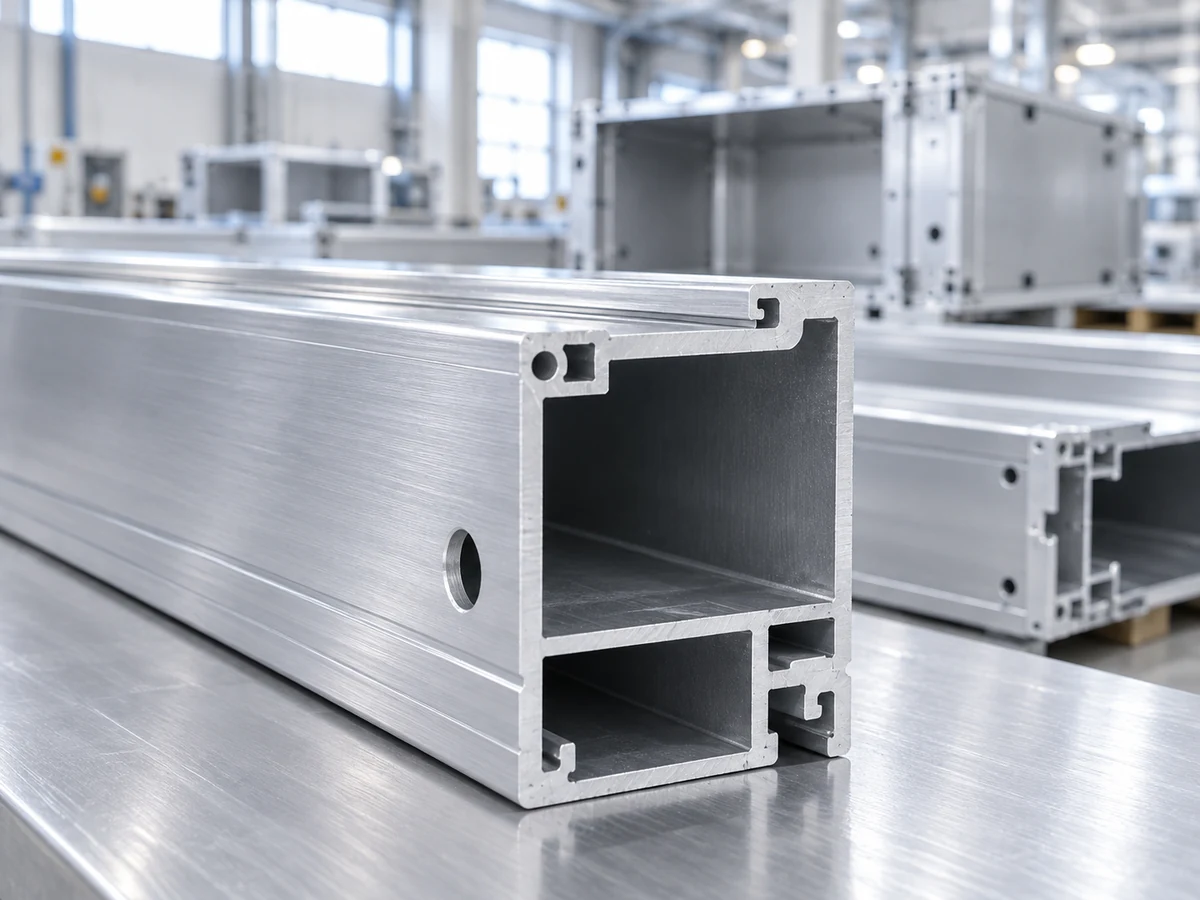
A short RFQ line such as “cut aluminum filter frames” is insufficient. A usable enquiry includes the material and section drawing, full input-stock length, worst-case cross-section, intended cut angles, batch mix, required output identification, and whether parts go to manual assembly or a line. The AHU frame-kit bill-of-materials guide gives a broader method for releasing profiles and connectors before the saw quotation.
Test the cut member and the assembled interface separately
For the saw trial, use approved stock that represents the production section and bar length. Include the member with the most demanding end or orientation and a normal production sequence rather than only a short convenient offcut. Record the stock identity, saw setup, clamping arrangement, cut order, measured member features, burr condition and any rejected trial pieces. If mixed member lengths will run in one shift, include a changeover and trace the output back to its released cut-list line.
Then assemble the trial members using the approved connector and filter-system instructions. Check joint fit, filter seating, retention, access and gasket or other seal contact at the defined locations. A joined corner that looks square in a photograph is still not evidence of bypass control. The responsible system or quality team must define and witness any sealing or installed-airflow test required by the project.

This separation follows the engineering reason for the purchase. ASHRAE’s air-cleaner guidance explains that a filter must fit and be sealed in its duct or frame because bypassed air is untreated. Camfil’s holding-frame example identifies a gasketed sealing flange and filter-retention hardware as specific product features. These sources support asking about the seal and retention; they do not approve any Jiurun saw, a particular frame design or a customer’s installed filter bank.
Compare cost at the accepted-output boundary
Compare the three routes at the same accepted unit: a frame that the owner has released for the specified filter and installation. For a bought assembly, include the supplied accessories, freight, receiving inspection and site fit. For prepared kits, include kit checking, assembly labor, connectors, seal material, rework and final inspection. For the in-house saw route, add stock yield, setup pieces, blade and other consumables, operator time, handling, member inspection, assembly, and the cost of holding rejected parts.
Do not insert a universal throughput or accuracy figure into this calculation. Request a witnessed trial for the actual section family and output mix. Ask each bidder to state exactly where its responsibility ends: accepted cut member, assembled frame, or installed and sealed filter bank. The cheapest saw-only number may be appropriate if you already own the remaining operations; it is not a comparable price for a complete frame.
Keep the drawing and release record with the batch
When a filter family or holding-frame revision changes, identify which existing members and open orders are affected. Keep obsolete profiles and cut pieces separate until engineering decides whether they can still be used. A revised filter header can change the retention or seal without changing the visible outside frame size. Recheck the member package and assembly interface before assuming an earlier saw trial remains valid.
For the first accepted batch, retain the drawing revision, stock lot, cut-list line, sample measurements, assembly-fit record, any sealing test required by the owner, concessions and release signatures. A return or field complaint can then be traced to a member or assembly decision instead of becoming an argument about the saw alone. If a test fails, classify whether the cause is incoming stock, cut geometry, downstream drilling, joint construction, filter selection or installation before changing a machine setting.
Video: general Jiurun cutting equipment
The Jiurun Machinery channel video below shows general aluminum-cutting equipment footage. It is an equipment-process example only. It does not show an air-filter holding frame, this material or frame revision, a specified machine configuration, a customer trial, a seal test or any performance result for the purchasing decision in this article.
General equipment footage; not evidence of the filter frame, sealing, customer application or accepted cut.
Questions to send with the RFQ
- What exact filter and holding-frame revisions are approved, and who owns the sealing decision?
- Are we buying complete frames, prepared member kits or in-house cutting capacity?
- Which stock sections, member lengths, end conditions and downstream features are released?
- What member-level saw trial and separate assembly or seal trial will be witnessed?
- How will mixed members, rejected pieces and drawing changes be identified and controlled?
- What is the comparable cost per accepted frame or bank at the same delivery boundary?
Send Jiurun the controlled profile drawings, cut list, stock lengths, member mix and required cut-end checks if you want to discuss an aluminum-saw trial. Keep filter selection, holding-frame design, gasket specification and installed sealing acceptance with the responsible filter-system team.