
Aluminum roof bow cutting is a small but consequential part of a truck-body or trailer-body build. A bow spans the roof, meets the perimeter edge and supports the specified sheet or panel system. The length printed on a replacement-parts list is not automatically the saw stop setting. Before requesting a cutting-machine trial or pricing a batch of blanks, the buyer needs the approved section, the end-seat datum and the point at which responsibility passes to roof assembly.
Real body designs show why the distinction matters. International Truck Body describes roof bows working with an extruded perimeter roof edge and its wall construction. Collins lists extruded I-beam bows beneath a single-piece aluminum roof sheet on one dry-freight body. ALPCO lists both extruded aluminum and galvanized-steel roof bows in its aftermarket range. Those are examples of different body systems, not interchangeable drawings, dimensions or performance claims for a Jiurun-cut part.
Define the purchase stage before naming the saw
Write the RFQ line item as a loose aluminum extrusion cut to the released drawing, a prepared bow with downstream holes or formed features, or a complete installed roof member. A saw quotation can address the cut blank, handling, end condition and identification. It does not silently include bow forming, drilling, fasteners, roof sheet attachment, sealing, structural approval or field repair. Name the body builder or engineering authority responsible for those later steps.
Separate an OEM build from a replacement order. A repair part must be checked against the actual vehicle model, production revision and approved cross section; the material alone is not an interchange rule. Do not assume that a galvanized-steel service bow and an aluminum extrusion can share the same saw trial, tooling or acceptance plan. For an OEM mixed run, list each body variant and roof-member family separately so the first-off sample represents the part being purchased.
Release the exact bow section and orientation
Ask for a section drawing with overall width and depth, wall or web thickness, flange shape, corner radii, alloy, temper, finish and revision. Identify which face contacts the roof sheet and which faces the interior. If the blank has a crown, bend or other shape along its length, provide the profile as supplied to the saw and the approved support method. A straight-stock photo cannot prove that a curved bow will feed or clamp correctly.
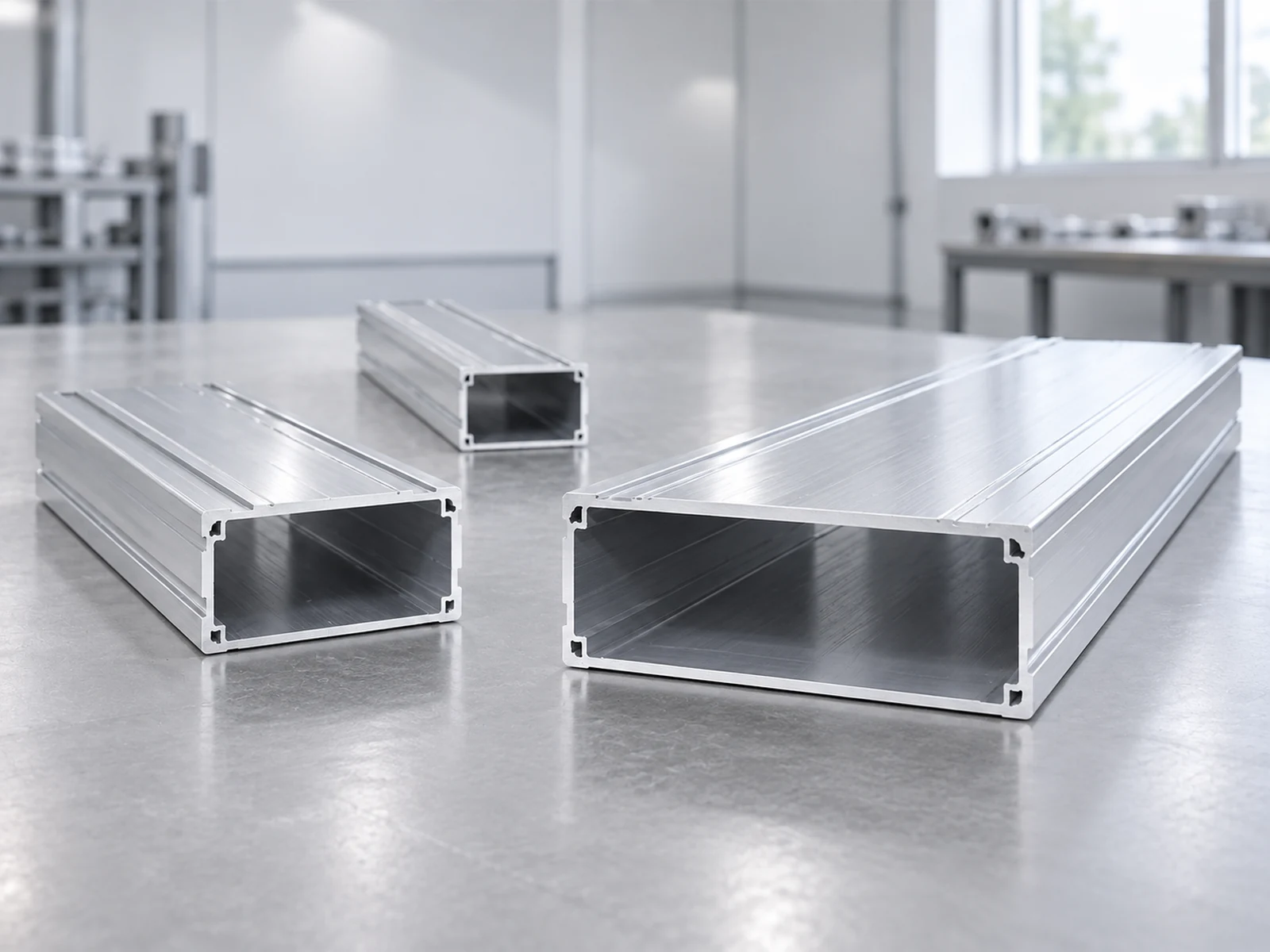
Record what the supplier must protect. A roof-facing flange, painted face, prefinished surface or edge that later receives a seal can have different handling requirements. Specify where temporary contact marks are permitted and how chips are removed from any cavities. The first-off inspection should compare the supplied section to the released drawing, not merely confirm that the piece is aluminum.
Turn roof-edge fit into a cut-blank datum
The body drawing should define the distance between the roof-edge interfaces and the cut reference at each end. State whether length is measured between raw end faces, end-seat shoulders or later-installed fittings. Provide the intended roof width, the edge extrusion drawing and the bow-to-edge attachment method as assembly context. A finished body span, a nominal roof width and a cut blank may be three different numbers.
Specify end squareness or any intentional angle, burr limits and the measurement state. If the bow end is subsequently notched, pierced or fitted into a cove, name that operation and its owner. If the drawing calls for a formed or cambered member, agree whether length is checked along the member, between projected end points or against an assembly fixture. Do not let a straight ruler measurement replace the designer’s datum.
Trial long-stock support and first-off acceptance
Give the saw supplier the incoming stock length, shortest and longest blanks, batch quantities, permissible remnant and handling space. Long, light members can shift at a stop or deflect under an unsuitable clamp. Show allowed contact zones on the actual section. During a representative trial, record the stop reference, clamp position, cut direction, end condition and any visible marks before discussing output or repeatability. A trial using a different profile is a setup illustration only.
Measure the first acceptable blank against the drawing, then let the responsible assembly team seat it in the actual roof edge with the specified sheet or panel interface. Check fit, orientation and the next operation’s access. Record the accepted part number, drawing revision, material lot and inspector. Keep a separate acceptance decision for the installed roof: leakage, attachment, structural loading and service suitability cannot be established by a clean saw cut.
For the broader mixed body-kit route, see our truck-body fabrication guide. The shoring-beam guide illustrates a different cargo-control member whose working span and end hardware must also be kept separate from a raw cut length. Neither page supplies an approved roof-bow drawing.
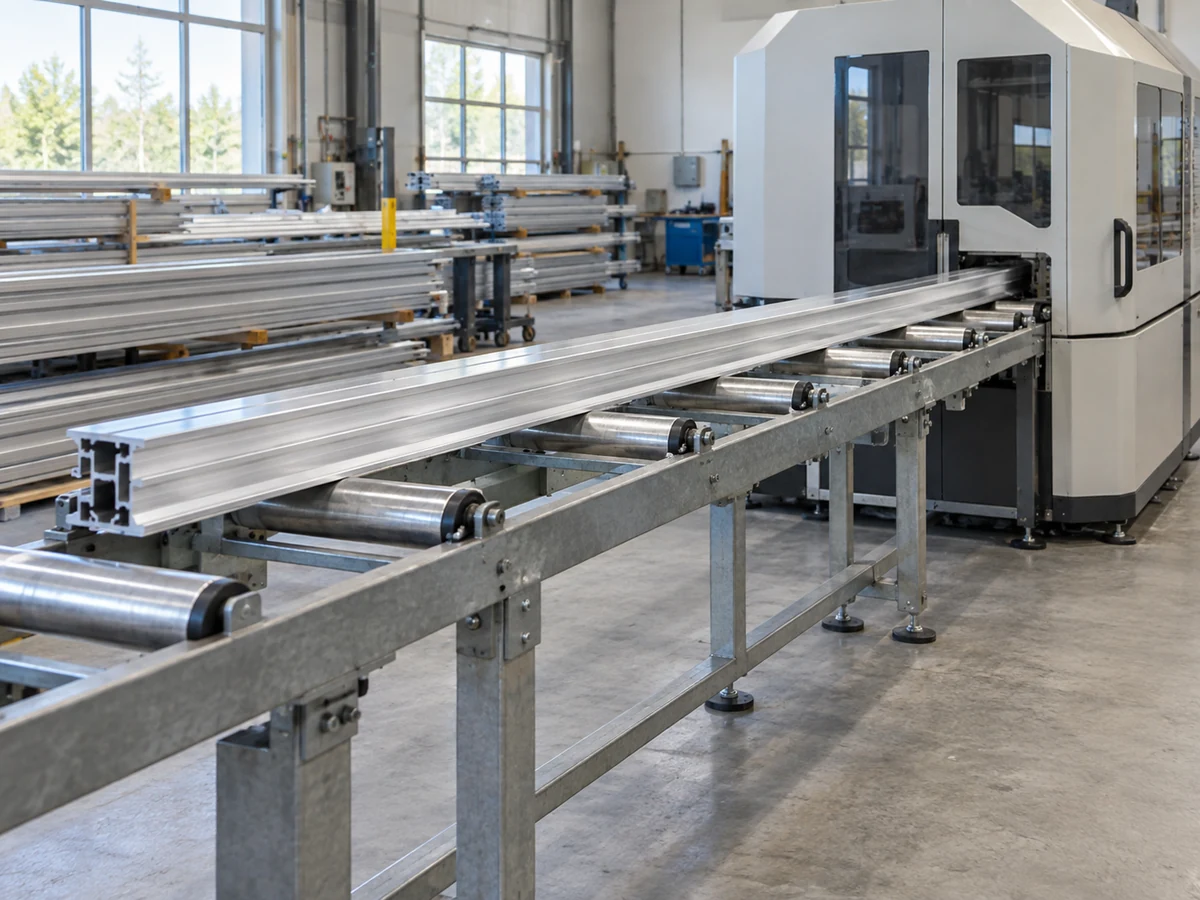
Jiurun channel equipment demonstration. This is a general aluminum-saw example; it does not show a roof bow, the specified stock, an approved clamp layout, a customer trial or measured performance for this RFQ.
Aluminum roof bow cutting RFQ checklist
- Attach the current roof-bow, roof-edge and body-variant drawings with revision IDs.
- State whether the quote covers loose cut blanks, prepared bows or installed roof members, and assign each downstream operation.
- List the approved section, alloy, temper, finish, incoming stock form and quantities by part number.
- Define each cut datum, blank length, tolerance, end angle, burr condition and inspection method.
- Mark allowed support and clamp contact zones, surface protection and chip-removal requirements.
- Request a representative first-off cut and an assembly fit check at the actual roof-edge interface.
- Name the body authority responsible for roof sheet attachment, sealing, structural validation and service approval.
Send Jiurun the released extrusion drawing, cut list, stock lengths, end-condition criteria and sample plan through the contact page. We can discuss the aluminum cutting trial and the evidence it should collect. The body designer and assembler remain responsible for the finished roof system and its safe use.