
Aluminum louver frame cutting starts with a released perimeter-member schedule, not a nominal wall opening. A buyer may need saw-cut head, jamb, sill and mullion blanks, a prepared frame kit, or a complete approved louver. Those are different deliverables. This guide helps an OEM or authorized fabricator send a quote request that identifies the actual aluminum input, cut references, remaining work and first-off evidence without treating a saw trial as approval of the installed louver.
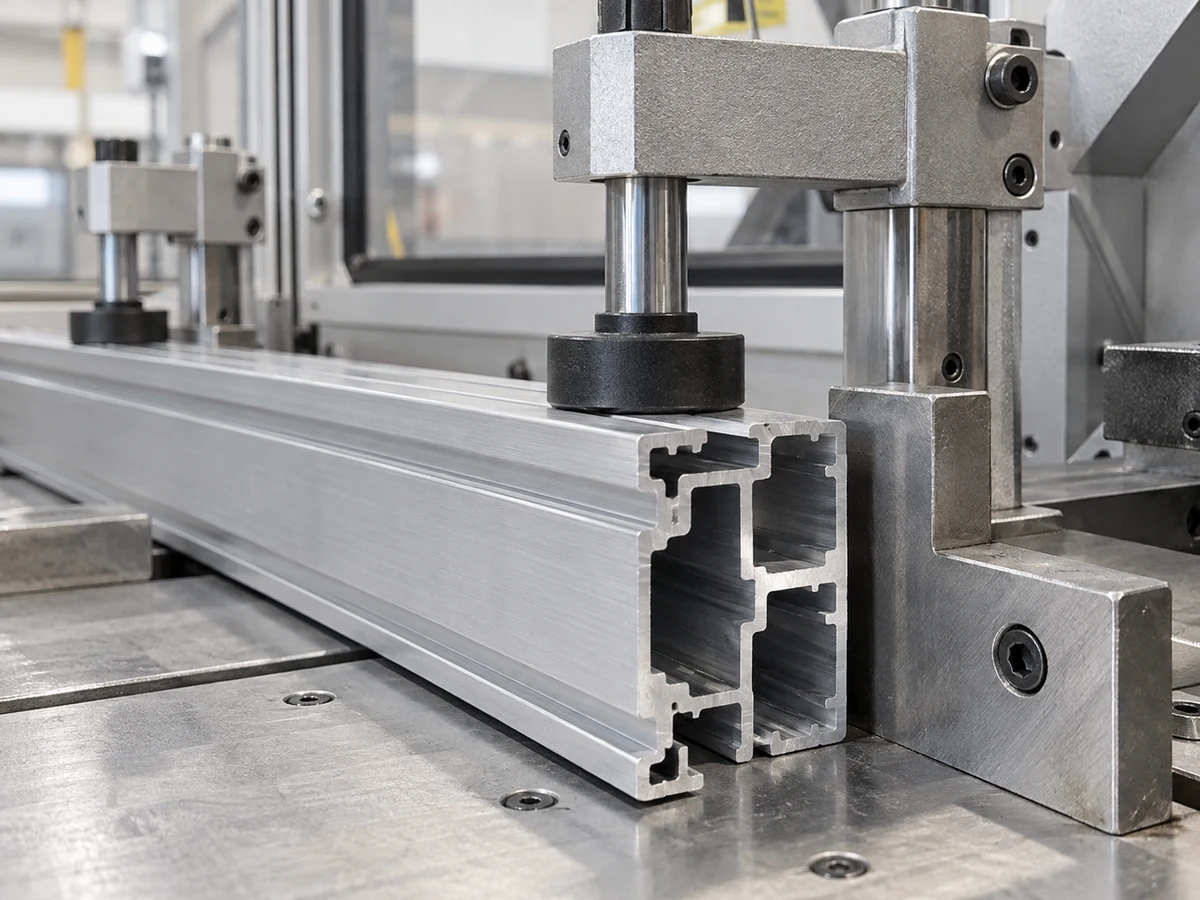
Image note: The featured photograph shows a related aluminum profile end, not the louver system, project, material grade or test discussed here. All images below are illustrative examples from JiurunCut’s existing media library.
Quick answer: For aluminum louver frame cutting, give the cutting supplier the approved member drawing and revision, head/jamb/sill/mullion identities, real stock condition, length and end-face datums, finish and handling limits, and a representative first-off acceptance plan. Keep blades, screens, anchors, sealing and completed-unit performance with the responsible louver-system parties unless they are explicitly in the purchase scope.
1. Start with the approved louver system and its supply boundary
Ask who owns the released louver schedule and which stage the cutting supplier is quoting. A wall opening, outside frame size and saw-cut member length can all be different dimensions. Ruskin’s published stationary-louver specification and installation details show head, jamb, sill, blade and mullion as distinct components and describe factory assembly by the louver manufacturer. This is a useful example of why an RFQ needs a component boundary. It is not a JiurunCut machine specification or approval for another design.
State whether the RFQ is for loose blanks, labeled perimeter kits, partly prepared frame members or a complete louver from another supplier. Do not ask a saw vendor to certify airflow, water resistance, wind load, installed fit or site fastening from a cut-end photo.
2. Separate head, jamb, sill and mullion identities
Put each member family on a short schedule: part number, drawing revision, section or profile identifier, cut quantity, end type, handedness and receiving kit. The head and sill may have different details even when their outside lengths look similar. A mullion may be absent on one size and required on another. If the system has a flange or special sill, specify its own approved member and drawing rather than silently applying a generic perimeter cut list.
Keep blade pieces and bird-screen parts on separate lines or outside the saw-cut frame order. The previously published louver blade cutting checklist addresses blade blanks; this article addresses the perimeter frame-member handoff. The distinction prevents a quotation for one component from being mistaken for a complete louver kit.
3. Describe the stock entering the saw
Identify whether the operator receives straight extrusions, prefinished stock, prepared sections or a mixed batch. Provide the profile cross-section and the surfaces that may touch stops or clamps. If finish, coating, seal channels or visible faces must remain protected, name the controlling drawing or handling instruction and the party that will inspect them. A photo of a similar section can clarify orientation, but it cannot replace the released profile.
Greenheck’s published adjustable-louver specification treats frame, blades and associated parts as a system. Use that distinction to ask which physical pieces are actually going through the saw. Do not transfer the document’s model, material or performance values to a different louver or to JiurunCut equipment.
4. Define cut datums, ends and the measurement stage
For every frame member, state where length is measured, which face sits against a locating stop, and whether the end is square, mitered or left for downstream preparation. If a corner joint, flange, drainage feature or seal path controls the end, send the approved detail. Ask the supplier to distinguish a saw-cut blank from a finished joining face. Include the measurement tool and the point at which the first piece will be checked; a nominal opening size alone cannot settle cut length.
A sample RFQ line can read: “Head blank H-01, revision C, approved extrusion P-12, measure from datum A to cut face B before coating; end preparation by assembly supplier; quantity 24 for kit K-6.” Replace every placeholder with the project’s actual released values. This line is an example of information structure, not a recommended dimension or process setting.
5. Aluminum louver frame cutting: test support and clamping
Ask for a first-off trial on the actual approved profile and stock condition, especially if the section has thin edges, open channels or a finish-sensitive face. Specify which features may be supported, where clamping is prohibited and who approves the setup. Compare the first piece to the released end-face and length criteria, then retain its part identity and inspection result. The trial should include a difficult representative member, rather than only the easiest straight rail.
6. Assign joining, finish and completed-louver checks
A cut member still needs the agreed downstream route. Name who handles corner joining, drilling, blade installation, screens, coating or touch-up, packing and field installation. If a frame is to be assembled before receipt, the acceptance evidence must say so. Do not let an apparently square corner photograph stand in for fit against the approved blade and installation system.
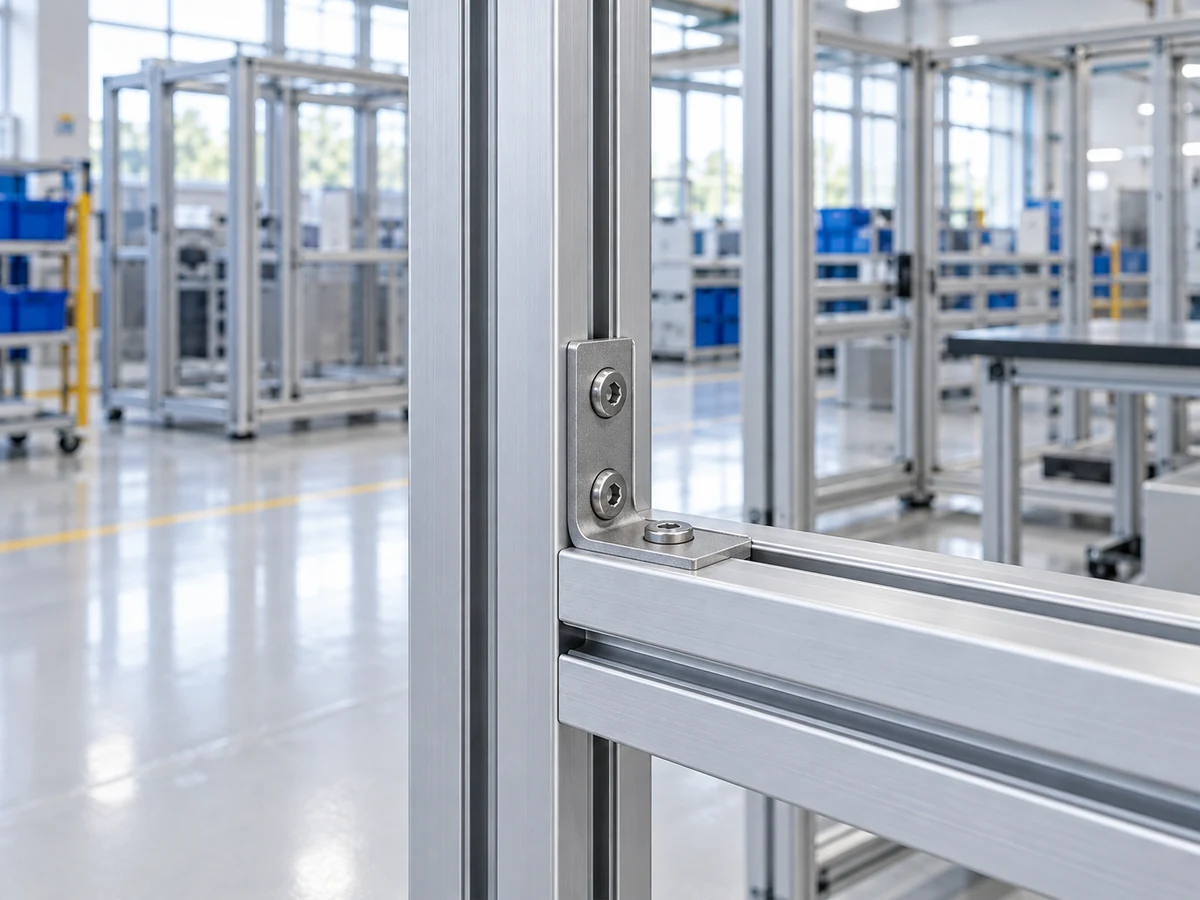
System performance and installed suitability must be verified by the responsible designer, louver manufacturer or installer under the relevant project specification. Saw acceptance supports only the defined cut-blank stage. This boundary matters even if the same company performs several steps.
7. Compare quotes at the same accepted deliverable
For aluminum louver frame cutting, ask each bidder to price the same member mix, stock condition, quantity, trial and receiving stage. A lower number for bare lengths is not equivalent to a labeled kit with first-off records and protected finished surfaces. Record exclusions explicitly: blades, screens, anchors, holes, coating, assembly, packaging and site work. If an item is included, attach its drawing and acceptance owner.
| RFQ field | Buyer-supplied answer | Evidence at handoff |
|---|---|---|
| Frame member identity | Part, revision and head/jamb/sill/mullion role | Labeled cut list and kit count |
| Input and datum | Approved section, stock condition and measurement reference | First-off length/end record |
| Scope boundary | Loose blank, prepared member or assembled kit | Receiving-stage sign-off |
| Excluded system work | Blades, screens, joints, finish and installation owners | Separate downstream approval |
If the buying decision is for a whole manufacturing route rather than this frame-member RFQ, read the separate architectural louver saw-purchase guide. It compares complete-system and retained cutting scope; it does not replace a released member schedule.
Frequently asked buyer questions
Can I quote from the opening dimensions alone?
No. Send the approved frame-member drawings and the measurement stage. The nominal opening, assembled outside size and individual saw-cut length may have different references. The responsible designer should resolve that relationship before the supplier commits to a blank list.
Does a clean first-off cut approve the complete louver?
No. It can support acceptance of the named cut blank under the stated trial conditions. Assembly fit, installed interfaces and any airflow, water or structural claims require their own system-level evidence and responsible sign-off.
Send a louver frame cutting RFQ
For an aluminum louver frame cutting RFQ, share the released drawings, member schedule, actual profile sample or section image, expected quantity and receiving stage with JiurunCut through the contact form. Ask for a trial and quotation against the real cut-blank scope. We can discuss equipment and sample-cut planning; the OEM or approved louver-system team retains final design and performance approval.
Related equipment video: This JiurunMachinery channel clip shows a general aluminum cutting machine scene. It is not footage of the louver profile, a customer order, a model configuration or proof of the performance discussed above.