
An aluminum saw for architectural louver manufacturing should be bought for the part of the project supply package your factory actually manufactures. A louver order can contain repeated blades, frame members, other specified components and assembly work. Some orders may instead be supplied as complete purchased units. The equipment decision depends on which of those routes you retain, and on the output your next operation must receive.
Begin with the approved louver system and your manufacturing responsibility. Do not select a saw by a blade photograph alone or count every architectural louver in the sales pipeline as internal cutting demand. Separate the approved system, the retained component work and the complete delivered unit, then assess the cutting station against the released component portfolio.
This guide concerns a complete industrial cutting-equipment purchase. It does not calculate airflow, water penetration, structural capacity or acoustic performance, and it does not approve a changed louver design. Those requirements belong to the specified assembly and its responsible authorities.
1. Define what the factory will deliver for the project
Establish whether the customer receives components, an assembled unit or a wider installation package. Then record which of those operations the factory performs and which are bought. Two businesses supplying the same visible facade can have very different internal cutting requirements.
A manufacturer cutting released blade and frame profiles needs an assessment of both retained member families and their receiving routes. A company buying complete approved units may have only separately defined local interface-member work. An installer purchasing a complete supply package should not count the whole unit as justification for a profile saw.
The Construction Specialties architectural-louver page illustrates the variety of product categories, accessories and finish options that can sit behind a louver project. That source describes its own range. It supports distinguishing project supply scope from a single cut component; it does not establish Jiurun’s louver designs, assembled-unit performance or a relationship between the companies.
Use the actual project documents to define your responsibility. Identify the selected system, the delivered unit reference and the retained manufacturing operations. Where a supply route is undecided, record the decision that remains open instead of treating the work as released demand.
Keep the equipment discussion tied to that boundary. The saw supplier can assess a stated cutting task and proposed configuration. It should not be asked to approve the architectural system merely because it produces an acceptable component sample.
2. Separate architectural louvers from other slatted products
Similar-looking slats can belong to different products and project requirements. Identify the actual architectural louver system before collecting component work for the buying case. Do not combine ventilation units, a pergola roof and an unrelated decorative screen merely because all three have repeated members.
Within the specified product portfolio, keep the approved blade family and frame family connected to the correct assembly. Their material and geometry come from that system’s released requirements. A familiar profile shape does not establish interchangeability with another product.
If the factory serves several system families, organize them separately. Describe their incoming stock, member requirements, end work and receiving points. The supplier assessment can then identify what the proposed station covers and which requests need another arrangement.
The distinction is particularly useful when the business buys some specialist assemblies and manufactures other units internally. Count only the cutting work that belongs to the retained and approved route. Purchased assembly performance does not transfer to a locally made look-alike.
State the limits of the proposed investment. It may serve a defined component portfolio well without becoming a universal machine for every slatted architectural product. A clear limit makes the offer comparison more useful and preserves the route for work outside the assessed scope.
3. Map blades, frames and purchased items separately
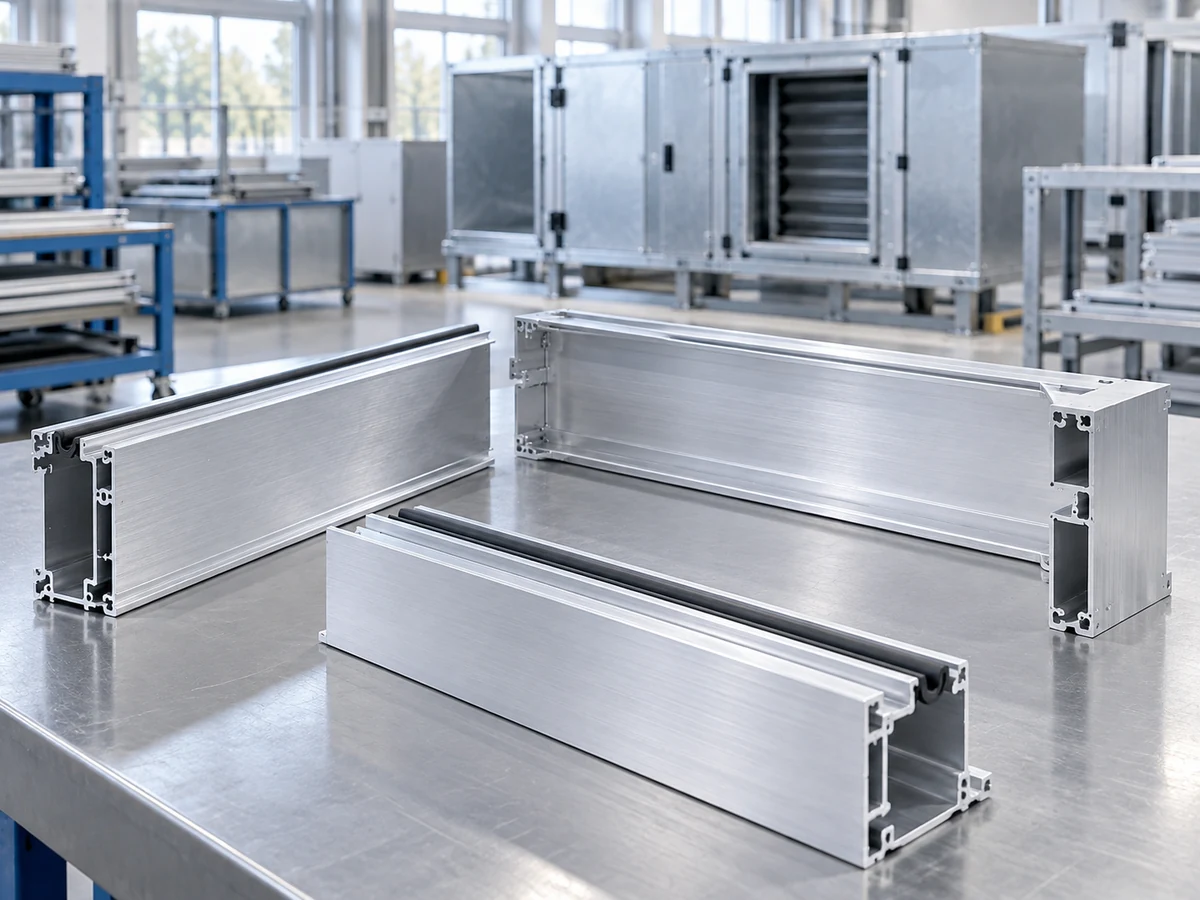
A louver project supply package is not a single profile family. Identify the actual blade members, frame members and any other retained aluminum components. Keep purchased accessories, screens, panels or assemblies visible as separate supply objects where the project calls for them.
| Supply object | Question for the factory’s buying case | Required cutting brief |
|---|---|---|
| Released blade members | Are they cut internally or purchased prepared? | Actual section, material identity, ends and next receiving requirement |
| Released frame members | Does the same internal route prepare them? | Actual frame profiles and specified cut-stage output |
| Other retained aluminum members | Which work belongs to the selected system? | Separately identified task and receiving owner |
| Purchased accessories or assemblies | What arrives ready from another source? | Only the explicitly retained local interface work |
| Complete bought louver units | Is there any internal cutting demand at all? | Do not infer demand from the unit’s aluminum content |
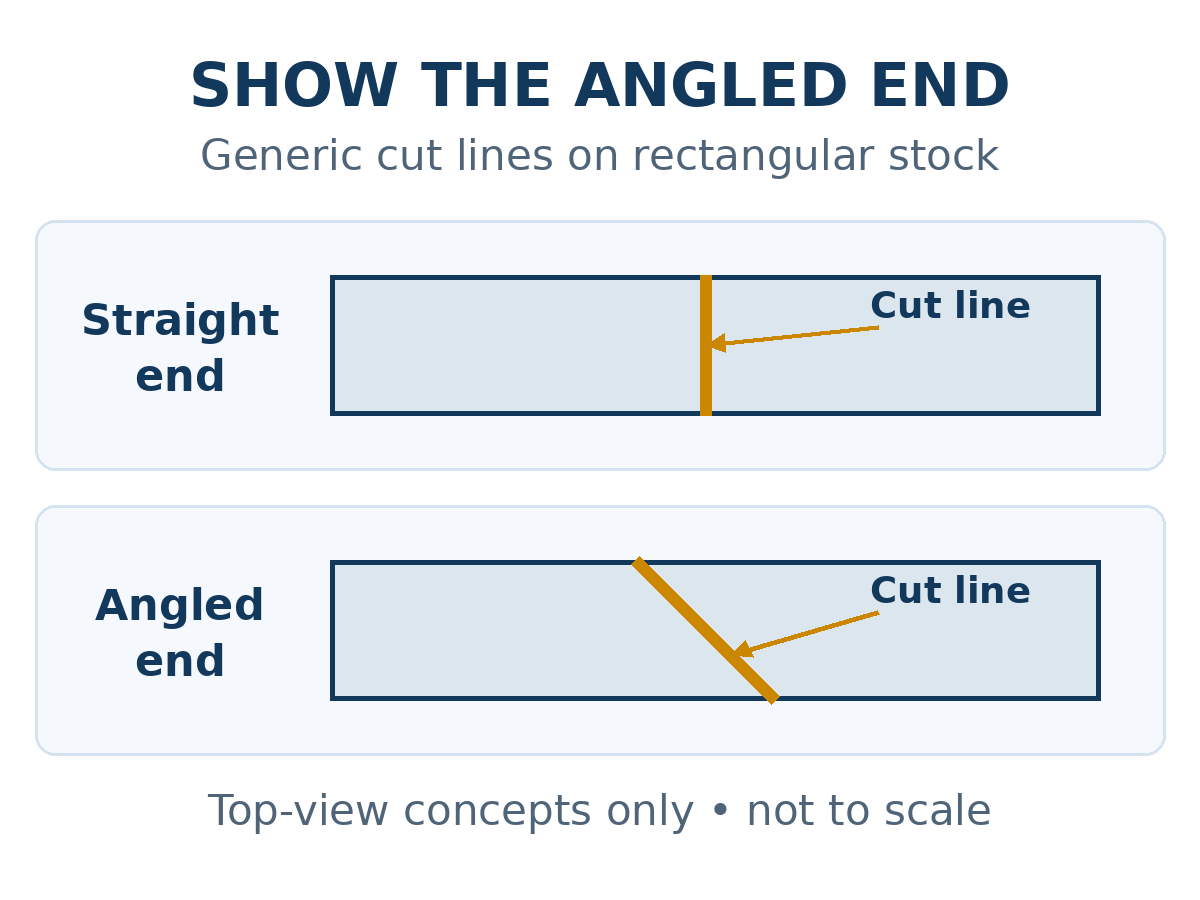
Compare the end requirements for the actual member mix. Repeated straight-end work and an assessed angle task should not be collapsed into one assumed machine capability. Ask for the proposed configuration and supporting provisions that address each released task.
Map later work as well. The cutting area may hand over blanks for another operation or accepted members for assembly. State that receiving condition so that a saw quotation does not silently promise work performed by another process.
This portfolio view is broader than an inquiry about one blade’s geometry. The equipment investment must address the retained project package, including frame members and the route to the next accepted operation. If blade cutting is the only retained work, state that smaller scope explicitly.
A comparison sheet for the actual blade-and-frame portfolio
Use one line for every combination that changes the quoted task. The following worksheet is deliberately unfilled: the factory supplies the drawings and quantities, and each bidder returns its response against the same line. It is a purchasing record, not a fabrication drawing.
| Record | Factory supplies | Bidder returns |
|---|---|---|
| Blade family B1 | Drawing revision; alloy and condition; stock length; finished member length; both ends; released quantity and unit allocation | Proposed configuration; assessed input; included support; sample result or remaining question |
| Frame family F1 | Actual section and orientation; end requirements; finish sequence; receiving dimensions; released project requirement | A separate response for this frame, including any changed equipment or supporting provision |
| Purchased unit U1 | What arrives complete; supplier responsibility; any retained local aluminum work | Only the equipment response to the explicitly retained cutting task |
| Common station | Available material path; staff roles; blade/frame work sequence; receiving owner | Included, optional and buyer-supplied provisions; documentation and training scope |
For example, a bidder might answer the blade line but leave the frame’s specified end unresolved. Record that as partial coverage. A second bidder may include a different arrangement for the frame. Compare both offers against the same portfolio before deciding whether one station, two different arrangements or purchased prepared members is appropriate. Neither answer should become a complete pass by copying the successful blade result into the frame row.
Do the same when production alternates between repeated blade orders and small frame batches. State how much work is released and how often the task changes; leave uncertain sales forecasts separate. Ask the supplier to assess the proposed sequence rather than quoting a universal changeover time. That information connects the purchase to this louver factory’s actual mixed work.
4. Preserve the specified finish and project identity
A project may distinguish unit locations, selected system families and specified finishes. Keep those identifiers connected to the actual stock and member packages. Similar dimensions do not by themselves make two project parts interchangeable.
Record the material and finish condition at the cutting stage. If the stock arrives finished, obtain the agreed handling and receiving requirements for that input. If finishing occurs later, define the handover condition and the responsible next operation. Do not assume one sequence applies to every approved system.
A member accepted as a preparation blank can have a different receiving requirement from a member ready for assembly. Preserve that distinction rather than describing every visually clean cut as a completed component. Feeding or positioning repeatability also remains separate from the accepted cut-piece result.
For a worked purchasing example, imagine two unit packages using a common member length but different specified finishes. The factory cannot treat a single pile of equal-length pieces as a complete supply response until the accepted materials and project assignments have been reconciled. This example addresses identification and scope; it recommends no finish process or substitution.
Include those conditions in the supplier assessment. A convenient unfinished sample can introduce the cutting task without establishing how the quoted station addresses another incoming finish or the project’s full receiving requirements.
5. Compare repeated blade work with complete unit readiness
Blade-member repetition can make one part of the cutting workload look attractive. The project still needs its complete assigned component package at the next receiving stage. Count both the repeated member work and the complete unit packages it actually supports.
Here is an invented requirement example. Six released unit packages each need 12 blade members and four frame members. The assumed cut-member requirement is 6 × 12 = 72 blades plus 6 × 4 = 24 frame members, or 96 members in total. These are example quantities, not a universal louver layout or a machine production claim.
If all 72 blade members have been accepted but the 24 required frame members have not reached the receiving point, the six example cut-member packages are incomplete. The 72 blades alone do not establish six assembly-ready packages. Complete unit assembly can also depend on other operations and purchased items.
Use the actual released bill of materials and receiving records for your own comparison. Do not forecast complete louver output from the best observed cycle on one easy blade member. Identify which retained operation or missing member limits the next stage.
A larger or faster saw may address one assessed constraint, but it will not create unavailable profiles, release an undecided frame requirement or supply a missing purchased item. Compare equipment and supporting workflow against the complete retained component portfolio.
6. Include the complete incoming-stock and output arrangement
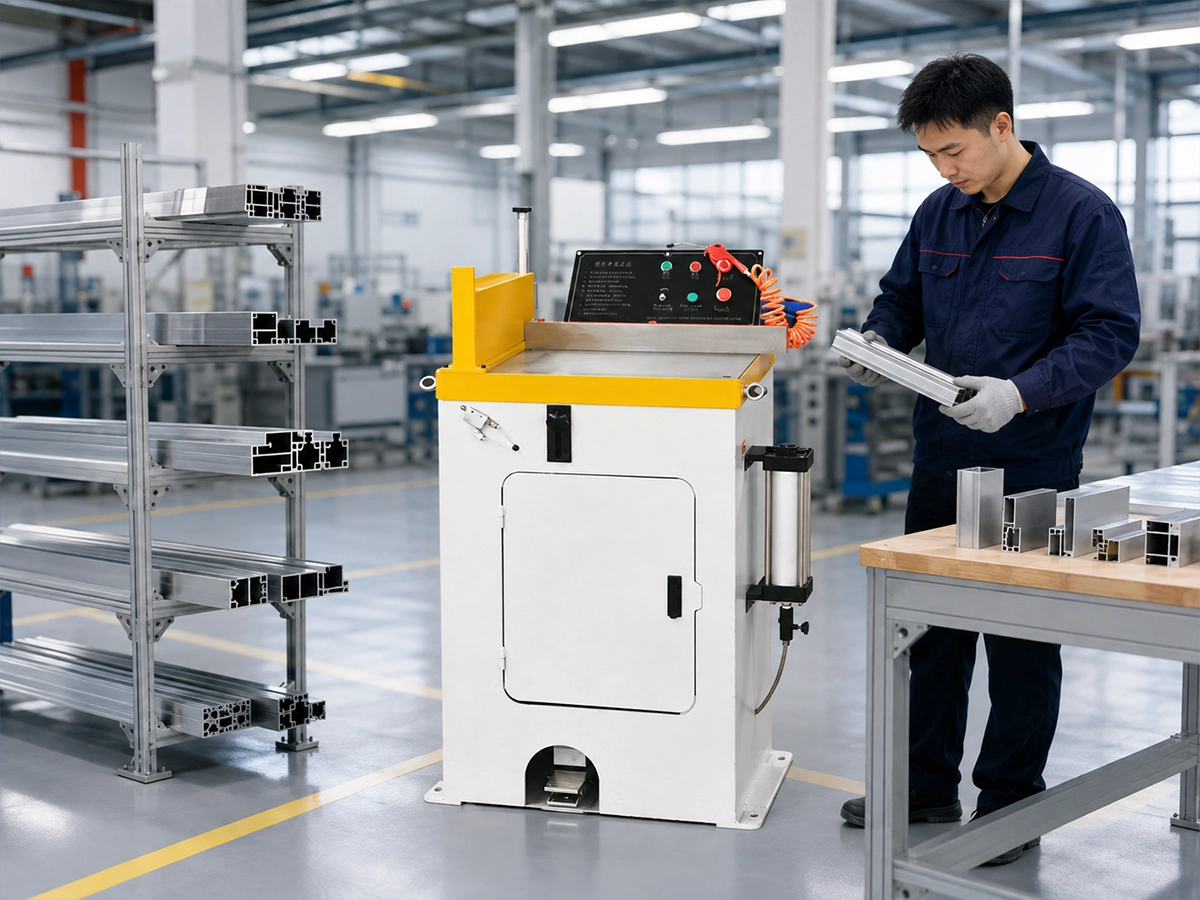
Give the supplier the actual incoming stock forms and lengths, not only the dimensions of a short finished sample. Ask for an assessment of the proposed stock-to-output arrangement for the retained members.
Include support, material presentation, accepted-piece collection and the working arrangement required by the quoted configuration. The machine enclosure fitting the available floor space does not establish that the complete material path fits.
Keep blade and frame stock distinguishable where their requirements differ. The plant should be able to connect a received member with its released task and project package. The equipment quotation should also identify which supporting provisions are included, optional or provided locally.
Ask about the actual training and documentation offered for that station. Describe the staff roles and languages involved and the work handled by other departments. A general demonstration video does not establish an included training commitment.
Compare proposals using the same complete scope. If one offer includes supporting provisions that another leaves to the buyer, make that difference visible before comparing the equipment prices. Do not fill a missing item with an assumption drawn from a photograph.
7. Compare internal component production with bought unit routes
The alternative to an internal saw can be purchased cut members, prepared component kits or complete louver units. They reach different points in the supply route. Choose a common receiving point for the comparison and account for the work that remains internally.
For a component-kit comparison, include the retained cutting station, preparation, later operations, finish route and the handover to assembly. For a complete bought-unit comparison, identify any local work and receiving responsibilities that still remain. Do not compare raw-profile preparation with a finished unit while ignoring the gap.
A mixed arrangement can be appropriate for a portfolio containing different approved product families. The factory may manufacture one released member package while buying another complete assembly. The saw should be assessed for the retained work rather than used to justify transferring every system into local fabrication.
Use actual comparable costs and response records where available. Keep assumptions explicit if the factory is planning a new route. Do not invent airflow performance, a sales conversion rate, an order volume or a payback period to support the equipment purchase.
Document the remaining decisions. A useful comparison states what each route delivers, what the factory still must do and what has been assessed. It does not need to claim that one arrangement is universally better for every architectural project.
8. Keep component and assembled-louver acceptance separate
The cut-stage acceptance identifies the member result the next operation needs. The completed louver has separate requirements under its approved system and project specification. An accepted cut sample does not automatically establish the assembly’s airflow, weather, acoustic or structural result.
Have the responsible people state the member acceptance basis. Identify the actual input and the agreed output, including any later operation. Ask the supplier to record the configuration and supporting provisions used during the assessment.
Do not use a feeding figure as evidence of assembled-unit performance. Keep the physical member result, assembly checks and any required performance evidence connected to their own sources. A general machine brochure cannot replace the project-specific basis.
If a supplier assessment leaves a member task unresolved, record the open question. Do not broaden a successful result on another component into a pass for the unassessed one. The equipment proposal should preserve the same boundary as the trial record.
For the individual task, an agreed sample-cutting assessment checklist can organize inputs and unresolved results. The wider purchase decision still needs the complete retained blade-and-frame portfolio and the receiving route.
9. Prepare an aluminum saw for architectural louver manufacturing inquiry
Send Jiurun the retained component package for the approved louver systems you actually supply. Include blade and frame profile information, material and finish identities, incoming lengths, specified ends and the next receiving operations. Separate bought units and purchased accessories from internal cutting demand.
Describe released project quantities and the way members are assigned to unit packages. Include the proposed site arrangement and supporting provisions, staff responsibilities and the work performed by other departments or providers.
Ask for an assessed cutting configuration and comparable station scope. Use the Jiurun aluminum cutting equipment range to introduce options, then obtain a response tied to the actual retained tasks. Do not merge unrelated catalogue features into one assumed machine.
Discuss your louver project manufacturing scope with Jiurun. Begin with what your factory supplies and the member work it retains. That brief is more useful than asking a saw to prove the performance of a complete architectural louver.
Questions about a louver manufacturer’s equipment purchase
Should all architectural-louver sales count as cutting demand?
Count the member work the factory actually retains. Bought complete units and other supplied assemblies may create little or no internal saw work.
Does completing the blade batch make the unit package complete?
Only the actual released component and receiving records establish package readiness. Required frame members, later operations and purchased items can remain dependencies.
Can a successful cutting trial prove the complete louver’s performance?
The trial supports its assessed component task. The assembly has separate project and system requirements. Keep each acceptance conclusion attached to its own evidence.
Is this the same purchase question as one louver-blade RFQ?
The blade RFQ describes one component task. A complete station purchase compares the retained blade and frame portfolio, bought-unit alternatives, project allocation and the complete receiving route.
Watch general Jiurun cutting context
This video introduces an aluminum cutting example. It is not a project-specific architectural-louver trial or evidence of a completed unit’s performance.