
LED high-bay heat sink extrusion cutting is a sensible saw RFQ only after the luminaire owner confirms that the part is an extruded length. High-bay products can instead use a die-cast aluminum housing, or combine a casting with separate extruded cooling fins. Treating all three supply routes as the same saw job risks buying the wrong equipment, quoting the wrong blank, and assigning thermal or sealing acceptance to a cut that cannot prove either. This guide is for the OEM or authorized fabricator defining an approved heat-sink blank—not for specifying a complete certified luminaire.

LED high-bay heat sink extrusion cutting: check the stock route
The distinction is visible in manufacturer documentation. A Signify Fail-Safe FHL high-bay specification describes a two-piece die-cast aluminum housing with additional extruded aluminum heat-sink fins. A different Signify Ledinaire high-bay product page lists a die-cast aluminum housing. Those are examples of different construction routes, not Jiurun customer projects or compatible machine claims. Ask the design owner for the actual approved part drawing and stock form before discussing a saw.
- Separate extrusion: the RFQ can define sawn heat-sink blanks, then route any drilling, contact-face machining, coating, and assembly to their named owners.
- Die-cast housing: a long-bar extrusion saw trial is the wrong acceptance test for the casting itself. Ask how the casting is supplied and finished.
- Complete luminaire: optics, driver, seals, electrical safety, thermal performance, and ingress protection belong to the approved system process, not to a saw-cut receipt.
Write the blank specification before asking for a machine quote
A useful purchasing packet starts with the revision-controlled extrusion drawing and a member schedule. Show the cross-section, alloy and temper if specified by the design owner, nominal stock length, finished blank length, allowed end condition, cut-count or batch range, and the production stage at which the saw receives the stock. Mark which broad base surface is the support datum, which face is the orientation reference, and whether the fins may face up, down, or toward a locator. Do not infer an acceptable clamp point from an attractive product photo.
State how the length is measured. A saw may control a bar stop from one end, yet the buyer may inspect between finished cut faces after deburring or coating. The drawing must resolve that difference. If a mounting interface is machined later, name its downstream datum separately; an extrusion saw should not be credited with final contact-face flatness, hole position, or a lens-to-housing seal. For the broader bar-versus-blank buying choice, see our heat-sink saw purchase guide.
Protect the fins while the base establishes the cut
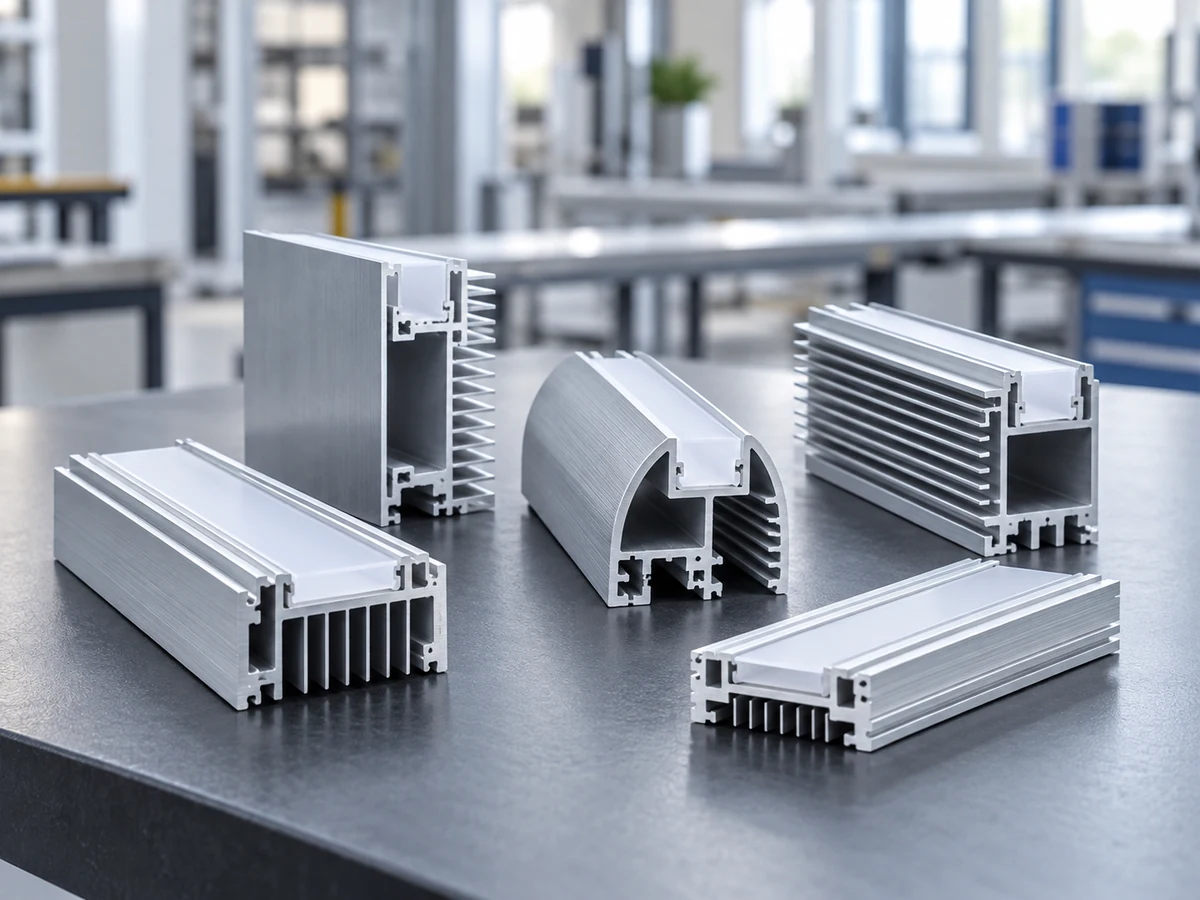
Fins create a handling problem before they create a cutting problem. Thin projections are poor clamping surfaces and may trap chips. Ask the trial team to identify a stable base or other drawing-approved contact surface, enough support along the stock, a side locator that does not twist the section, and a hold-down position that avoids direct fin loading. Photograph the actual set-up with the blade stopped; then repeat it with representative production-length stock. A first-off cut from a short hand-held offcut cannot establish how long stock feeds or how the last piece is supported.
Specify the chip and surface handoff, not an unmeasured “clean cut” promise. The receiver should know whether loose chips inside fin channels are allowed, who removes them, and how the edge is checked without bending fins. If cleaning, deburring, anodizing, or protective film is required, assign that stage explicitly. Our heat-sink chip handoff guide covers the separate question of chips remaining in fins after sawing.
Keep thermal validation with the luminaire designer
A straight, visually clean cut is not evidence of heat-sink capacity or luminaire life. Cree LED’s thermal-management note treats fin area, airflow and application geometry as design inputs. The design owner must validate the actual LED package, interface material, mounting pressure, airflow, orientation, environment and finished assembly. The saw acceptance record can report the approved blank dimensions and visible damage only. It should not substitute for temperature, electrical, photometric, ingress-protection or safety testing.
This boundary also prevents a false rejection. A cut blank can meet its drawing while a later assembly fails thermal testing for an unrelated reason; conversely, a luminaire can pass a thermal test while its incoming blank has a burr or bent fin that the purchaser did not specify. Name each gate and its responsible party rather than collapsing all results into a single pass/fail label.
Run a first-off trial that answers the buying question
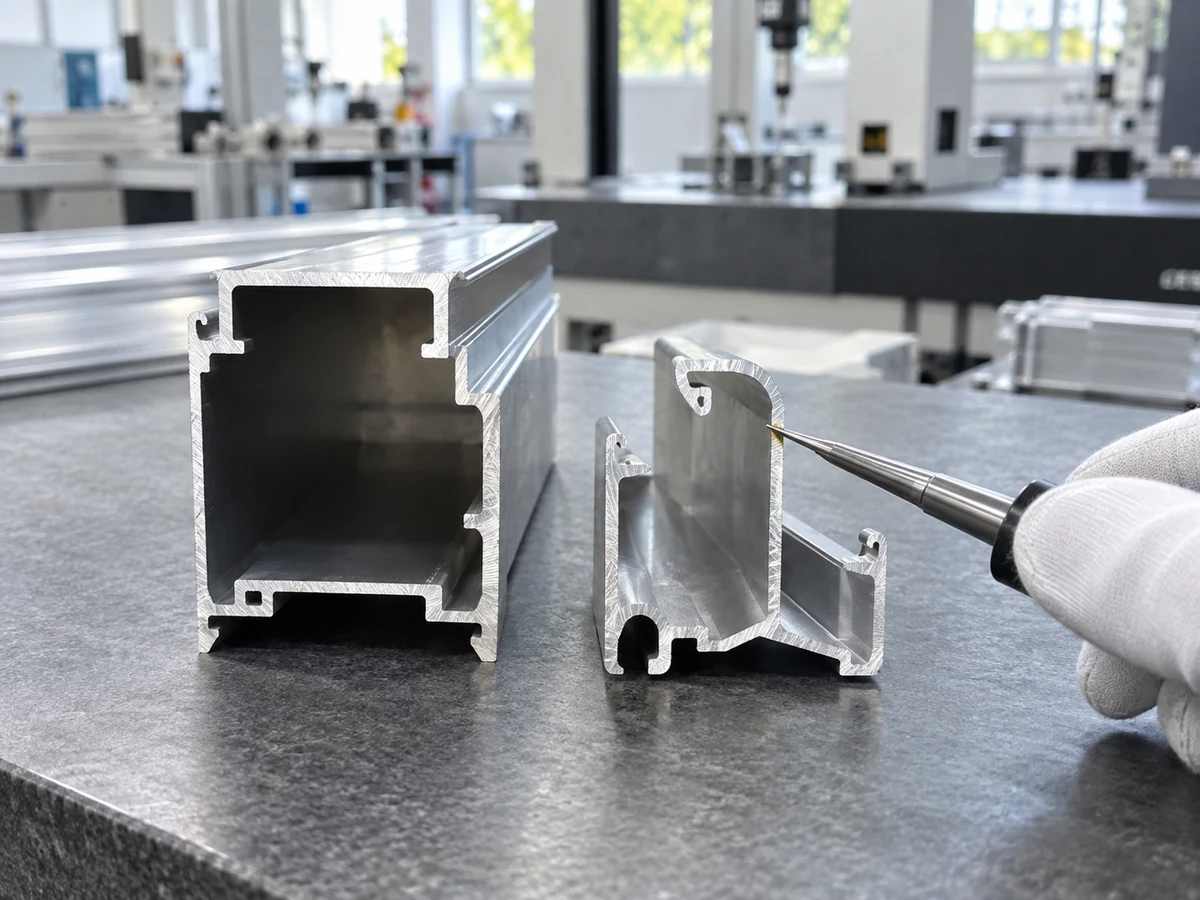
For LED high-bay heat sink extrusion cutting, the buyer should bring a real approved section or an explicitly labelled engineering surrogate, plus the drawing revision and a small acceptance sheet. Capture stock identity and orientation, saw set-up, support contact, chosen datum, target length, measured length, visible burrs, fin damage, chip residue and handling after the cut. Check the first and last pieces and a sample after any normal changeover. Record the instrument and method for each measurement. Do not write a tolerance into the RFQ unless the design owner has approved it.
If the purchased equipment is intended to process several high-bay heat-sink families, list each distinct section and length range. A successful cut on one thick-base extrusion does not establish the fixture for a thin-fin or asymmetric section. Ask which features can be adjusted and what needs a dedicated support or clamp.
Seven RFQ checks for the extrusion route
- 1. Stock route: Is the part a separate extrusion, a die casting, or a finished luminaire component? Attach the approved drawing and revision.
- 2. Section and range: What are the base and fin geometry, alloy/temper if specified, stock length, blank lengths and expected mix?
- 3. Datum: Which face supports the stock, which edge locates it, and where is finished cut length measured?
- 4. Workholding: Where may a clamp touch, what fin zones must remain clear, and how will the tail piece stay supported?
- 5. End condition: What burr, squareness, visible-fin damage and chip-residue criteria apply to the sawn blank?
- 6. Downstream operations: Who owns contact-face machining, holes, coating, cleaning, thermal testing and luminaire assembly?
- 7. Delivery evidence: What first-off record, part labels, revision trace, separation and protective packing must accompany the kit?
Watch a related saw-feeding demonstration
The following Jiurun Machinery clip shows a general long-member feeding and guarded-saw scene. It does not show this high-bay heat-sink section, demonstrate model compatibility, or provide a thermal, dimensional, customer or production-trial result. Use it only to frame questions about feed support, guarding and workholding in your own supervised trial.
Questions buyers often ask
Can a saw trial approve the luminaire heat sink?
It can help approve the saw-cut blank against its drawing and agreed first-off checks. Thermal and luminaire-level approval require the design owner’s complete assembly and test plan.
Should the saw quote include base flatness?
Only if the drawing defines a sawn-blank flatness check that the saw supplier can actually measure and control. A mounting-ready LED contact face may need a separate machining and inspection operation.
What if the housing is die-cast?
Separate the casting procurement from any extruded accessory or heat-sink insert. Do not assume a bar-cutting machine processes the casting merely because both parts are aluminum.
Send an RFQ the saw supplier can answer
If your OEM has approved an extruded high-bay heat-sink member, send the drawing revision, profile sample, cut schedule, permitted contact surfaces, first-off criteria and downstream ownership notes. Contact JiurunCut to discuss a witnessed saw trial against that defined blank. A machine quote should identify the verified section and test conditions; it should not promise a finished luminaire rating.